
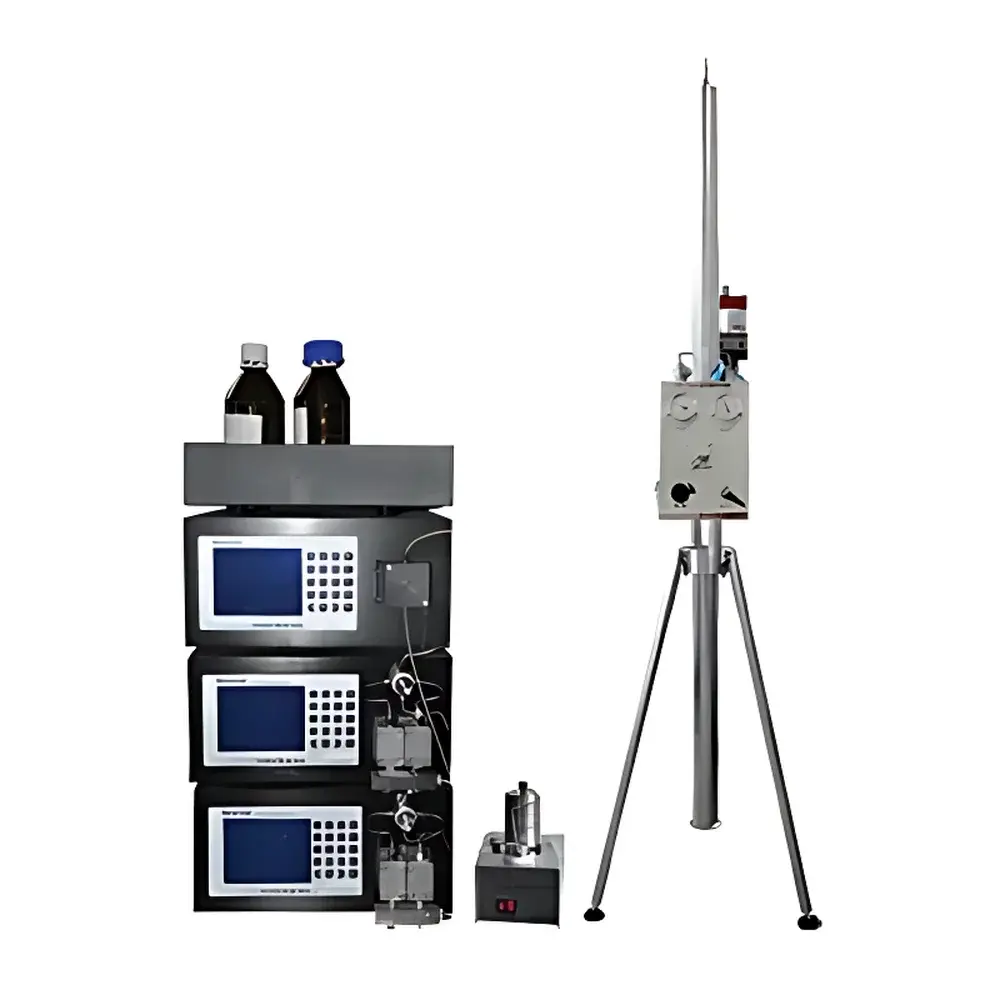
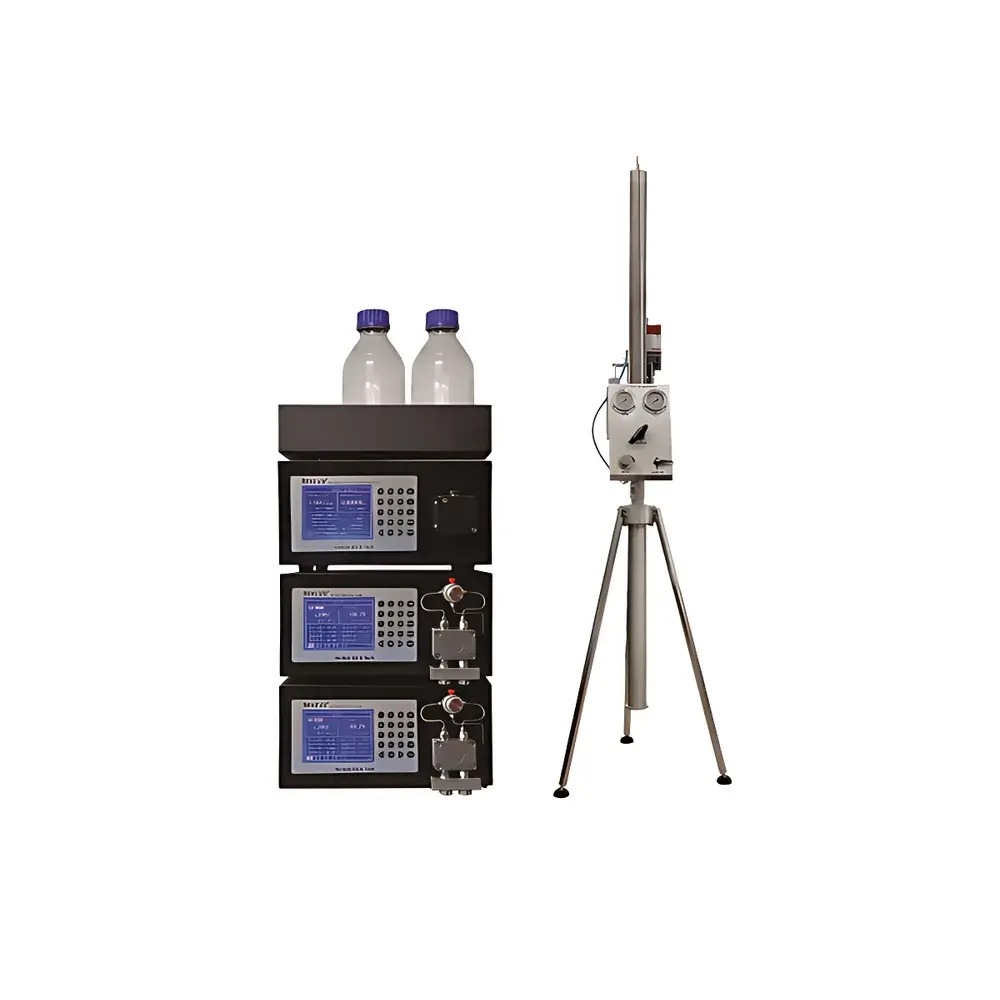
Hanbon NS4210 Laboratory-Scale Preparative Liquid Chromatography System
| Brand | Hanbon |
|---|---|
| Origin | Jiangsu, China |
| Manufacturer Type | Direct Manufacturer |
| Regional Classification | Domestic (China) |
| Model | NS4210 |
| Price Range | USD 14,000 – 28,000 |
| Application Level | Laboratory-Scale |
| Instrument Type | High-Pressure Preparative LC System |
| Flow Rate Range | 0.01–100 mL/min |
| Flow Accuracy | ±0.5% |
| Flow Precision (RSD) | ≤0.1% |
| Maximum Pressure Rating | 20 MPa |
| Wavelength Range | 190–700 nm |
| Wavelength Accuracy | ±1 nm |
| Wavelength Repeatability | ±0.2 nm |
| Baseline Noise | ±0.5 × 10⁻⁵ AU |
| Data Acquisition Frequency | 5 Hz |
Overview
The Hanbon NS4210 Laboratory-Scale Preparative Liquid Chromatography System is a high-pressure, dual-pump preparative HPLC platform engineered for method development, small-batch purification, and impurity isolation in research and early-stage process optimization. Based on classical reversed-phase and normal-phase chromatographic principles, the system employs positive-displacement plunger pumps and UV-Vis absorbance detection to deliver reproducible separations under controlled gradient conditions. Its modular architecture supports scalable column configurations—from analytical-scale screening columns to 10–50 mm internal diameter prepacked or dynamic axial compression (DAC) columns—enabling gram-level sample loading and recovery with high mass recovery and resolution. Designed for laboratories requiring flexibility without compromising robustness, the NS4210 operates within a maximum pressure limit of 20 MPa, compatible with common silica- and polymer-based stationary phases used across pharmaceutical, natural product, and synthetic chemistry applications.
Key Features
- Two independently controlled NP7010C preparative pumps (100 mL/min each), featuring electronic damping flow control for enhanced gradient accuracy and long-term flow stability
- NU3000C UV-Vis detector with dual-wavelength monitoring (190–700 nm), ±1 nm wavelength accuracy, and low baseline noise (±0.5 × 10⁻⁵ AU at 254 nm)
- Integrated dynamic mixer for precise solvent blending and reduced gradient delay volume
- Manual preparative injection valve (INJ-SP) with 20 µL–20 mL selectable loop capacity and low-dead-volume path design
- Standard inclusion of DAC-HB50 dynamic axial compression column (50 mm ID), enabling uniform bed packing and extended column lifetime under repeated high-load operation
- Onboard online filter (0.45 µm) and solvent tray with level sensors to prevent pump cavitation and ensure uninterrupted runs
- Network-enabled controller supporting remote monitoring and system integration via Ethernet
Sample Compatibility & Compliance
The NS4210 accommodates a broad range of compound classes—including peptides, alkaloids, flavonoids, synthetic intermediates, fermentation metabolites, and chiral molecules—across both polar and nonpolar mobile phase systems (e.g., water/acetonitrile, hexane/isopropanol). Its flow and pressure specifications align with ASTM D7260-18 (standard practice for HPLC system performance verification) and support method transfer from analytical to preparative scale per ICH Q5A(R2) guidance. While not certified for GMP production environments, the system’s hardware architecture and EasyChrom-1000 software support GLP-compliant documentation workflows, including user access logs, audit trail activation, and electronic signature readiness per FDA 21 CFR Part 11 when deployed with validated IT infrastructure.
Software & Data Management
EasyChrom-1000 is a Windows-based chromatography data system (CDS) tailored for preparative workflows. It provides real-time gradient programming, peak tracking, fraction triggering logic (time-based, threshold-based, or manual override), and customizable collection table configuration. All acquisition parameters—including flow rate, gradient profile, UV wavelength setpoints, and detector gain—are stored with timestamped metadata. Raw data files (.ecd) are structured for long-term archival and third-party reprocessing (e.g., in Chromeleon or OpenLab CDS). The software supports CSV export of peak tables, integration reports, and system suitability metrics (e.g., theoretical plates, tailing factor, resolution), facilitating regulatory submission packages and internal quality review.
Applications
- Purification of active pharmaceutical ingredients (APIs) and synthetic impurities for structural elucidation and toxicology studies
- Isolation of bioactive constituents from plant extracts and microbial broths during natural product discovery
- Desalting and buffer exchange of oligonucleotides and recombinant proteins prior to biophysical characterization
- Chiral separation using polysaccharide-based CSPs for enantiomeric excess determination and racemate resolution
- Process development support for downstream purification steps in biomanufacturing and fine chemical synthesis
- Method scouting and robustness testing prior to scale-up to pilot- or production-scale systems
FAQ
What column formats are supported by the NS4210?
The system is optimized for 10–50 mm i.d. prepacked cartridges and dynamic axial compression (DAC) columns up to 50 mm diameter; custom column adapters are available for alternative geometries.
Does the NS4210 support automated fraction collection?
Yes—when paired with an optional fraction collector, it enables retention-time-triggered, UV-threshold-triggered, or manually initiated collection with programmable tube indexing and volume tracking.
Is the EasyChrom-1000 software compliant with 21 CFR Part 11?
The software includes configurable audit trail, electronic signature, and user role management features; full compliance requires validation under site-specific IT policies and infrastructure controls.
Can the system perform gradient elution with two solvents only?
It supports binary high-pressure mixing via integrated dynamic mixer; quaternary gradients require external low-pressure mixing modules not included in standard configuration.
What maintenance intervals are recommended for the NP7010C pumps?
Seal replacement is advised every 6–12 months depending on solvent aggressiveness and daily usage; the floating piston design extends seal life compared to fixed-piston alternatives.





