
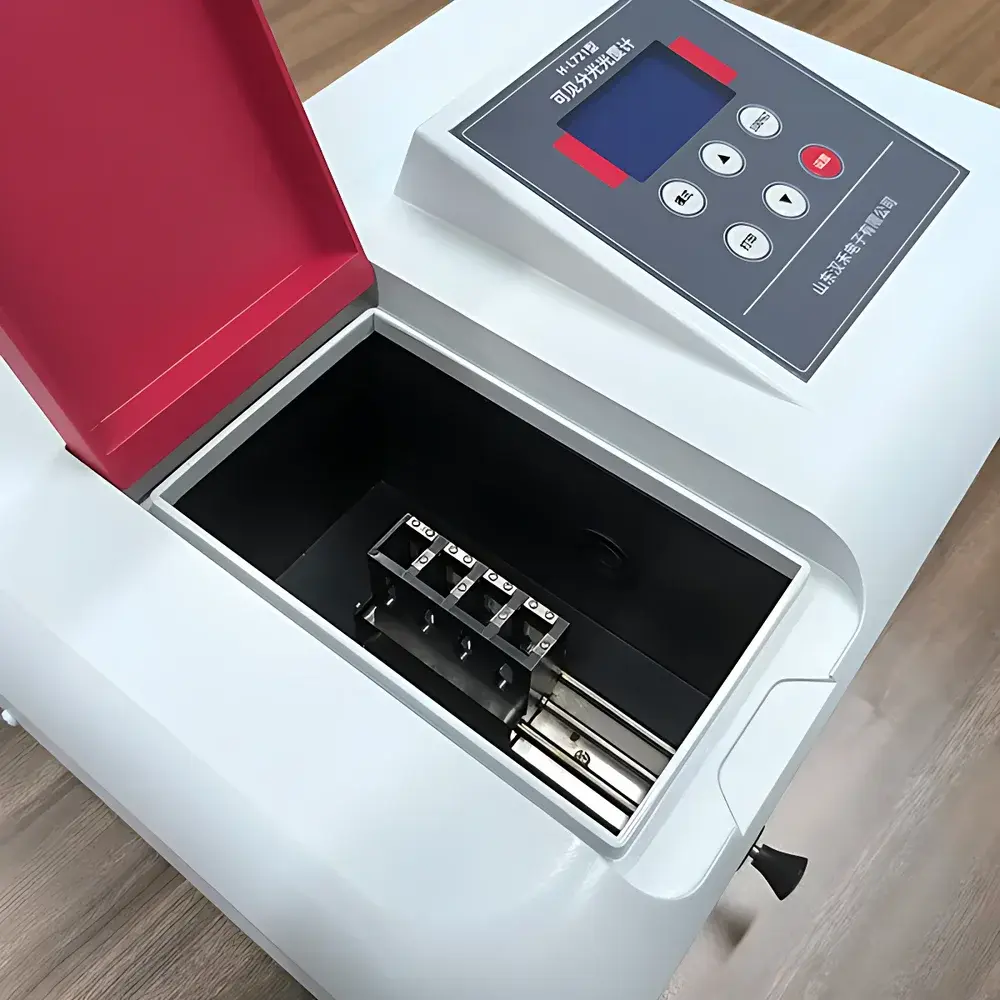
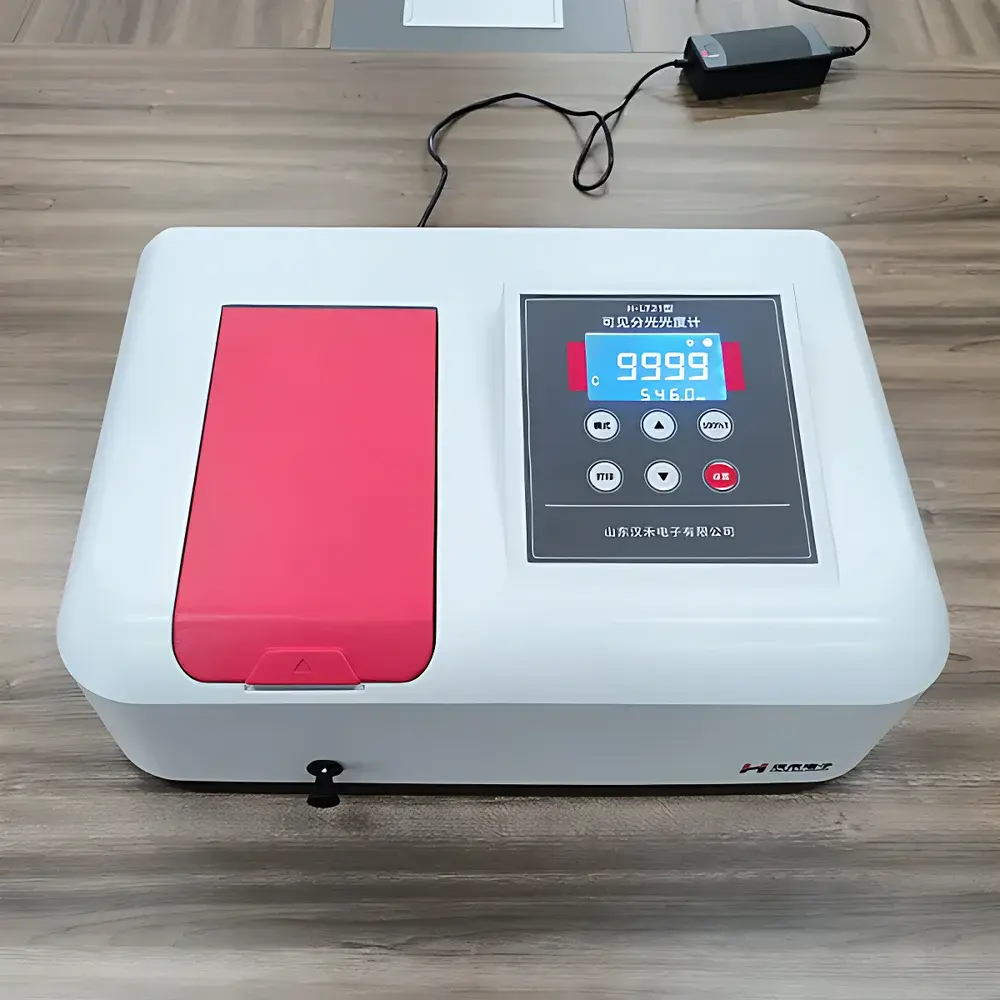
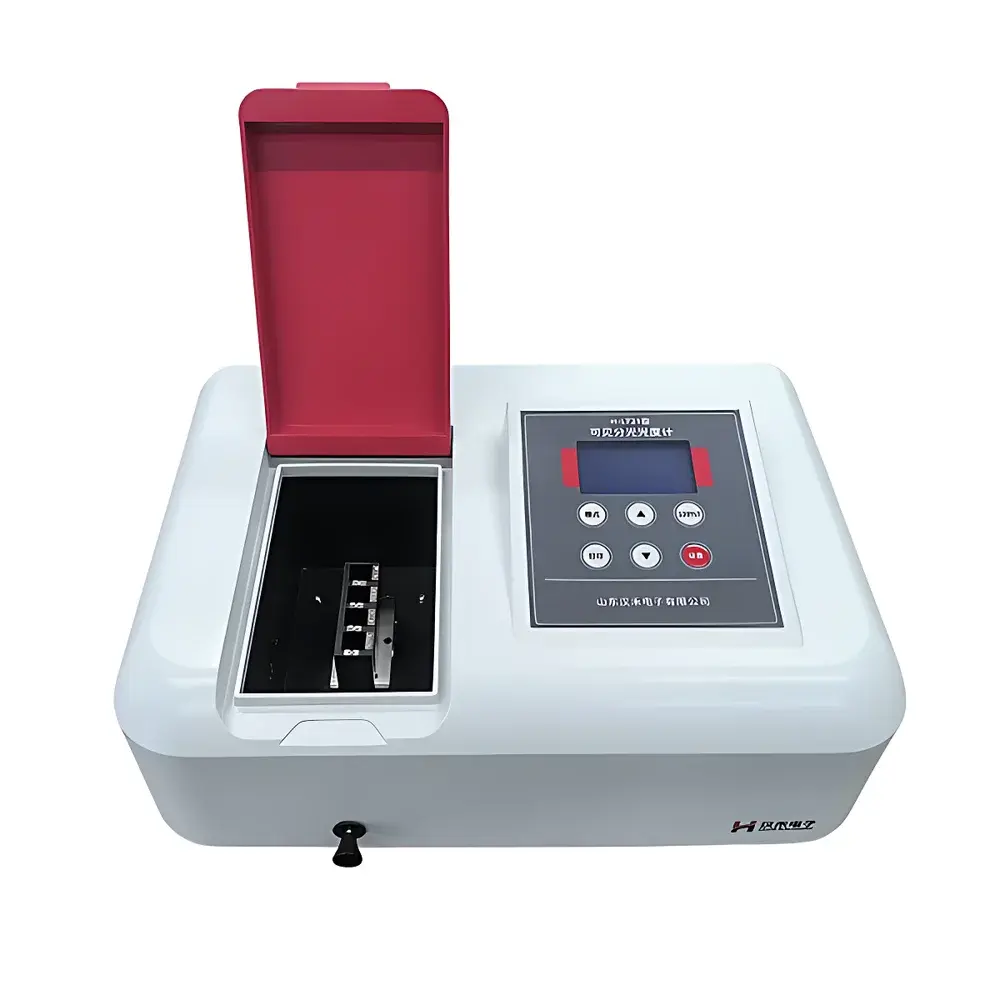
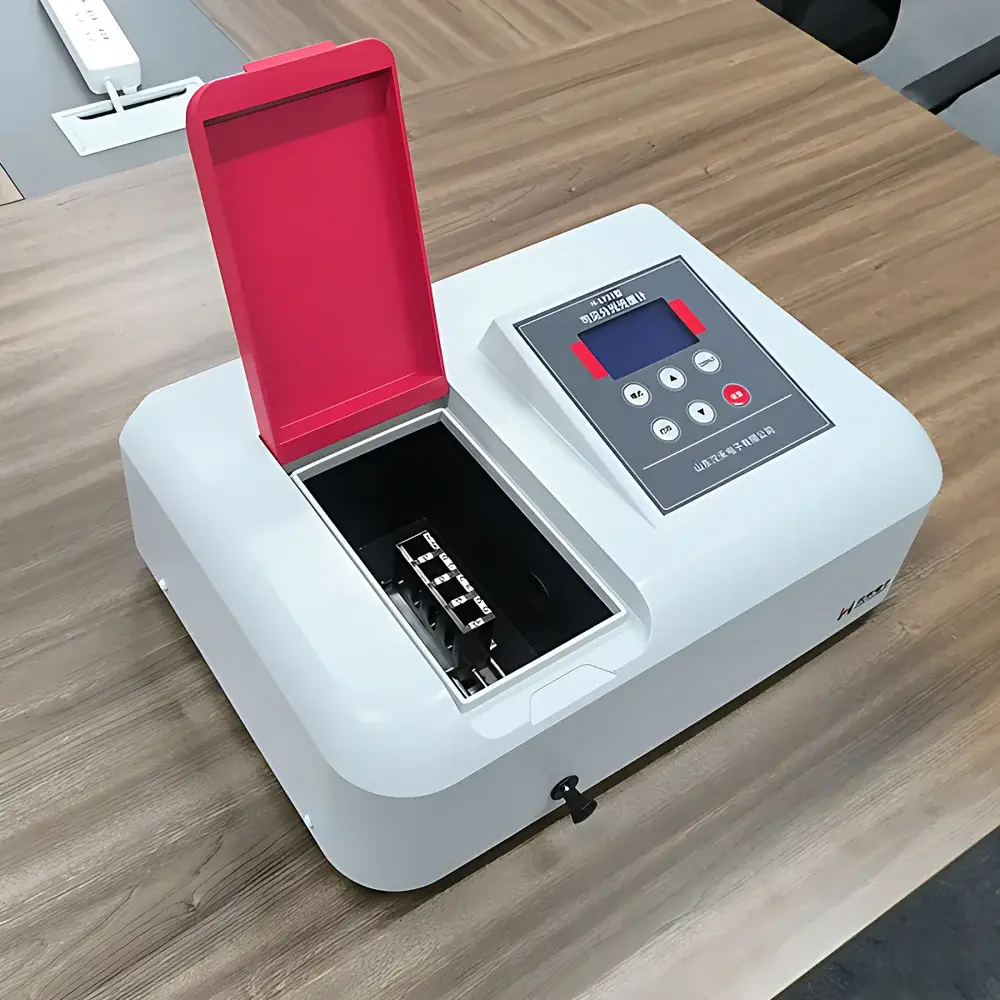
HanHe H-L72 Series Visible Spectrophotometer
| Brand | HanHe |
|---|---|
| Origin | Shandong, China |
| Manufacturer Type | Authorized Distributor |
| Product Origin | Domestic (China) |
| Model | H-L72 Series |
| Spectral Range | 350–1050 nm |
| Spectral Bandwidth | 6 nm |
| Wavelength Accuracy | ±2 nm |
| Wavelength Repeatability | ≤1 nm |
| Photometric Accuracy | Contact Technical Support |
| Baseline Drift | See Detailed Specifications |
| Baseline Flatness | Contact Technical Support |
Overview
The HanHe H-L72 Series Visible Spectrophotometer is a microprocessor-controlled analytical instrument engineered for routine quantitative and qualitative analysis in the visible spectral region. Operating on the principle of Beer–Lambert law-based absorbance measurement, it employs a fixed-wavelength scanning architecture with a tungsten halogen lamp as the broadband source and a silicon photodiode detector. Designed for laboratory environments requiring robustness, ease of operation, and regulatory traceability, the H-L72 delivers reliable transmittance (T%), absorbance (A), concentration (C), and energy measurements across a validated optical range of 350–1050 nm. Its mechanical and optical architecture complies with fundamental design expectations for Class II visible spectrophotometers per ISO 6944:2021 and aligns with general performance criteria outlined in ASTM E275–22 for spectrophotometric instrumentation.
Key Features
- Embedded single-chip microcontroller with real-time system management and self-diagnostic routines
- 128 × 64 dot-matrix LCD display supporting simultaneous visualization of wavelength, absorbance, transmittance, and concentration values
- Integrated auto-zero and auto-100%T calibration routines with motorized shutter control
- Motor-driven wavelength selection mechanism enabling precise, repeatable positioning across the full spectral range
- Automated lamp and filter wheel switching to extend source lifetime and maintain optical path consistency
- Adjustable sample compartment accommodating cuvettes from 5 mm to 100 mm pathlength (including standard 10 mm square quartz/glass cells)
- Multi-point calibration capability: up to ten standard reference points for polynomial or linear standard curve construction
- Direct entry of K (slope) and B (intercept) coefficients for rapid method deployment without physical standards
- Non-volatile memory storage supporting retention of multiple calibration curves and instrument configuration profiles—even after power interruption
- Dual interface options: standard parallel printer port (Centronics-compatible) and USB 2.0 host interface for PC-based remote control and data acquisition (optional software package required)
Sample Compatibility & Compliance
The H-L72 accommodates standard 10 mm pathlength glass or quartz cuvettes (supplied: four 1 cm square glass cells), as well as custom-length cells for specialized applications such as low-concentration or highly scattering samples. It supports liquid, solution-phase samples in transparent containers compatible with visible-range transmission. While not certified for GMP or GLP environments out-of-the-box, its hardware design—particularly the stable thermal management of the tungsten lamp and low-drift detector electronics—supports reproducible measurements suitable for QC/QA workflows in educational, environmental, food, and pharmaceutical R&D labs. Instrument validation documentation (e.g., IQ/OQ templates) and traceable calibration certificates are available upon request. The device meets electromagnetic compatibility requirements per GB/T 18268.1–2010 (equivalent to IEC 61326-1) and electrical safety standards per GB 4793.1–2007 (IEC 61010-1).
Software & Data Management
The H-L72 operates autonomously via front-panel controls but integrates seamlessly with optional PC-based control software via USB. This software enables advanced functions including time-scan kinetics, multi-wavelength quantitation, spectral overlay comparison, and export of raw data in CSV or TXT format for downstream analysis in MATLAB, Excel, or LIMS platforms. All measurement sessions—including date/time stamps, operator ID (manually entered), calibration parameters, and curve-fit residuals—are logged locally in non-volatile memory. Audit trail functionality is not embedded natively; however, external logging via connected PCs or networked data acquisition systems may be implemented to satisfy basic 21 CFR Part 11 record-keeping requirements where electronic signatures are not mandated.
Applications
- Quantitative determination of dye concentrations in textile effluents per ISO 105-X12
- Enzyme kinetics monitoring (e.g., NADH/NADPH assays at 340 nm)
- Water quality analysis: nitrate (at 350–360 nm), phosphate (via molybdenum blue method at 880 nm), and iron (o-phenanthroline complex at 510 nm)
- Pharmaceutical excipient purity screening using UV-Vis fingerprinting
- Food additive quantification (e.g., tartrazine, sunset yellow) in compliance with national food safety standards
- Academic teaching laboratories for fundamental spectroscopy experiments and Beer’s law verification
FAQ
What is the recommended warm-up time before measurement?
A minimum 30-minute preheating period is advised to achieve thermal equilibrium of the tungsten lamp and detector, ensuring optimal photometric stability (drift < 0.001 A/h at 500 nm).
Does the H-L72 support kinetic or time-scan modes?
Kinetic and time-scan capabilities are only available when operated via the optional PC control software—not through standalone panel operation.
Can I use quartz cuvettes for measurements below 350 nm?
No. The H-L72 is specified for 350–1050 nm operation. Below 350 nm, atmospheric oxygen absorption and limited lamp output render measurements unreliable; quartz cuvettes do not extend functional range beyond instrument design limits.
Is GLP-compliant data archiving supported?
The instrument stores metadata and results internally but lacks built-in user authentication, electronic signatures, or immutable audit trails required for full GLP compliance. External integration with validated LIMS or ELN systems is recommended.
What maintenance is required for long-term accuracy?
Annual verification of wavelength accuracy (using holmium oxide or didymium filters) and photometric linearity (using neutral density filters) is recommended. Cleaning of the sample compartment and optical windows with lens-grade tissue and isopropanol should be performed regularly.
Related Products





