
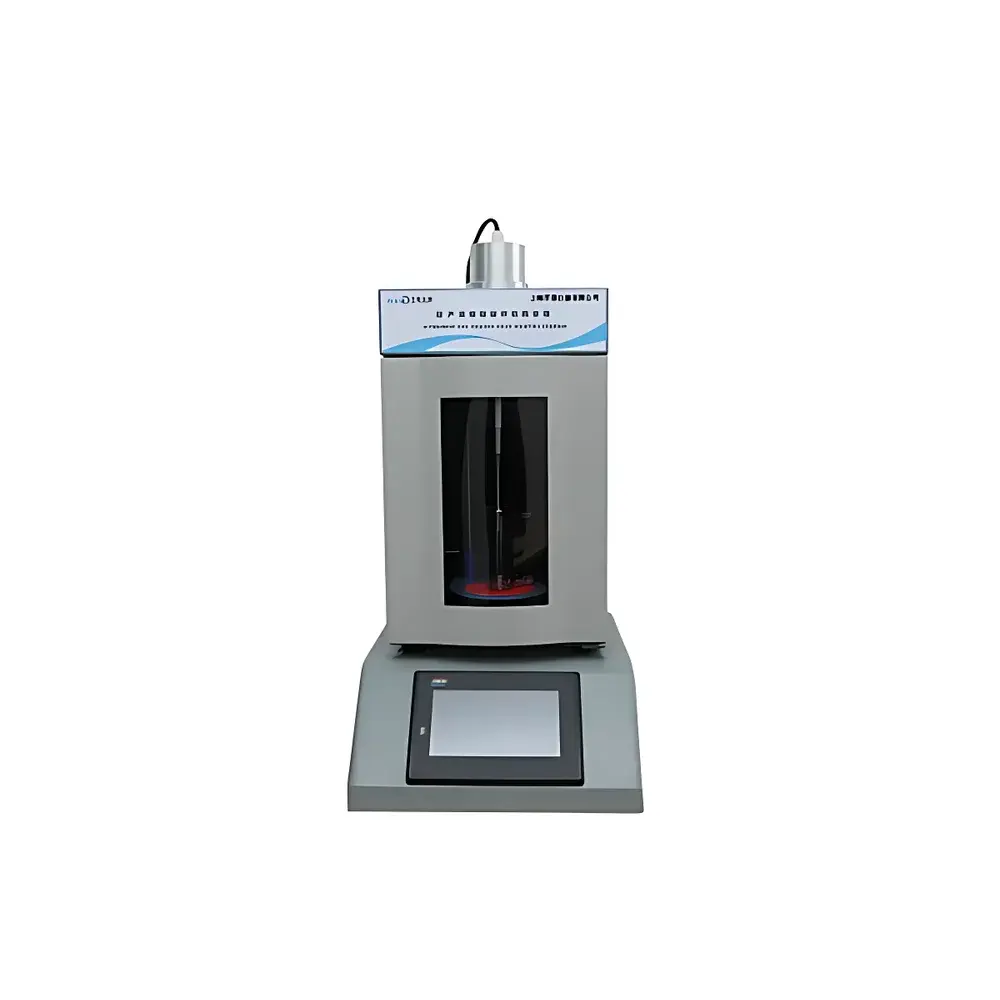
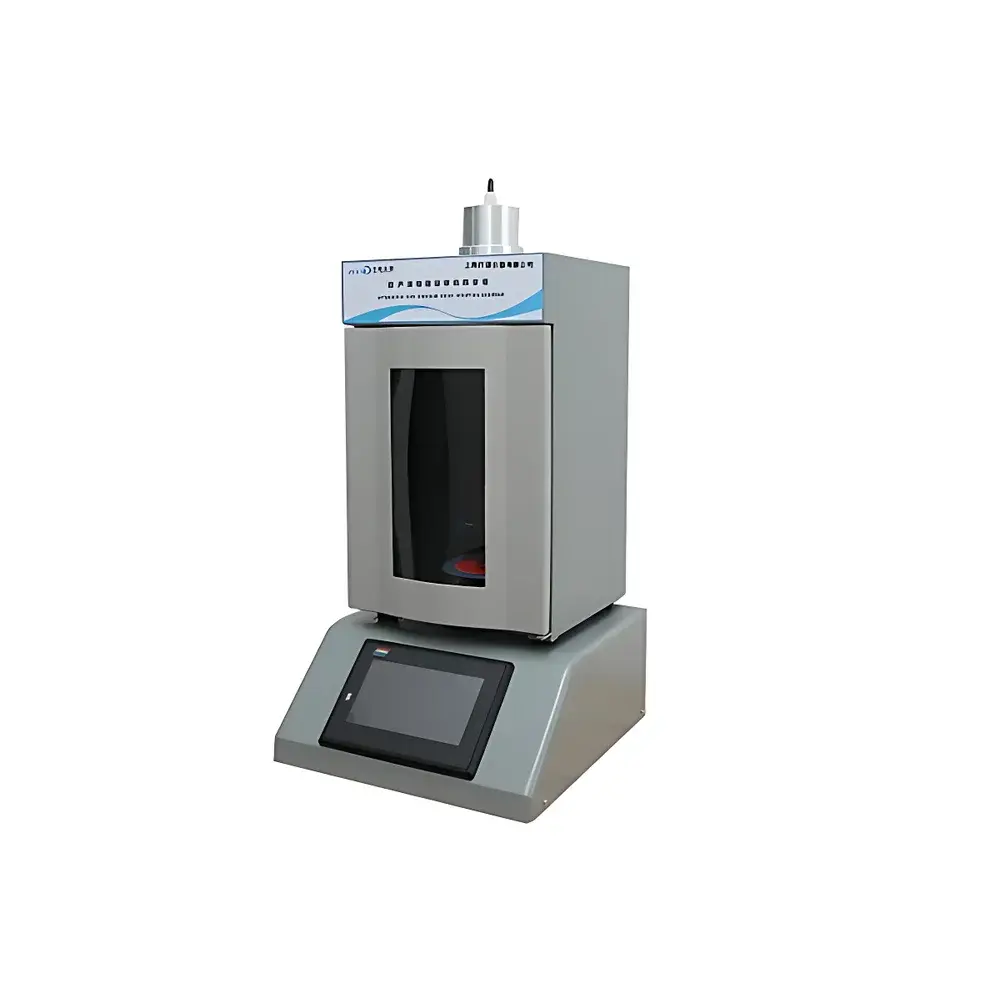
Hannuo Hannuo-950EW High-Power Ultrasonic Cell Disruptor
| Brand | Hannuo |
|---|---|
| Origin | Shanghai, China |
| Model | Hannuo-950EW |
| Ultrasonic Power | 950 W |
| Operating Frequency | 20–25 kHz |
| Temperature Control Range | Ambient to 90 °C |
| Sample Volume Capacity | 0.2–700 mL (with interchangeable probes) |
| Probe Diameter (Standard) | Φ6 mm |
| Pulse Mode | 0.1–99.9 s ON/OFF adjustable |
| Duty Cycle | 0.1–99.9% |
| Power Adjustment Range | 1–99% (10–950 W) |
| Display | 7-inch TFT touch screen |
| Data Storage | 20 user protocols |
| Communication Interface | RS-232/USB for PC connectivity |
| Safety Features | Overtemperature, overload, no-load, and self-diagnostic alarms |
| Optional Accessories | Cryogenic cooling module, motorized probe lift, acoustic isolation chamber |
Overview
The Hannuo Hannuo-950EW High-Power Ultrasonic Cell Disruptor is an engineered benchtop sonicator designed for controlled, reproducible cell lysis and sample homogenization via high-intensity ultrasonic cavitation. Operating within a stable 20–25 kHz frequency range, the instrument generates localized pressure differentials in liquid media sufficient to induce transient microcavitation—resulting in shear forces, microstreaming, and shockwaves that mechanically disrupt cellular membranes, organelles, and aggregated particulates. Its 950 W nominal output power enables scalable processing across volumes from 200 µL to 700 mL, supporting both low-volume precision lysates and high-throughput biomass preparation. The system integrates real-time temperature monitoring and active thermal management (ambient to 90 °C), critical for preserving thermolabile biomolecules during extended sonication cycles. Designed for compliance with laboratory quality frameworks, the Hannuo-950EW supports audit-ready operation through password-protected protocol storage, timestamped parameter logging, and configurable alarm thresholds aligned with GLP documentation practices.
Key Features
- Centralized microprocessor control with closed-loop frequency tracking ensures consistent acoustic energy delivery and minimizes probe drift during prolonged operation.
- 7-inch high-resolution TFT touchscreen interface displays real-time parameters including instantaneous power (%), amplitude (µm), temperature (°C), cumulative time, and pulse duty cycle—enabling intuitive protocol navigation and visual feedback.
- Dual-mode operation: continuous or pulsed ultrasonication with independently adjustable ON (0.1–99.9 s) and OFF (0.1–99.9 s) intervals; duty cycle tunable from 0.1% to 99.9% to optimize energy input and minimize thermal accumulation.
- Comprehensive safety architecture includes overtemperature shutdown (≥90 °C), overload current cutoff, no-load detection, and automatic error diagnostics with on-screen fault codes.
- Protocol management system stores up to 20 user-defined methods with password protection (admin/user levels), supporting multi-operator environments and method traceability.
- Integrated RS-232 and USB ports enable bidirectional communication with Windows-based PCs for remote control, data export (CSV/TXT), and automated report generation compatible with LIMS integration.
- Modular probe compatibility: standard Φ6 mm titanium alloy probe included; optional probes (Φ2, Φ3, Φ8, Φ10, Φ12, Φ15 mm) support diverse sample viscosities, volumes, and container geometries—including narrow-neck vials, centrifuge tubes, and jacketed reactors.
Sample Compatibility & Compliance
The Hannuo-950EW accommodates a broad spectrum of biological and material science samples—including Gram-positive/negative bacteria, yeast, mammalian cells, plant tissues, viral particles, spores, and subcellular fractions—without requiring chemical lysis reagents. For nanomaterial applications, it facilitates deagglomeration and surface functionalization of carbon nanotubes, graphene oxide, metal oxides, and quantum dots in aqueous or organic dispersions. In regulatory contexts, its programmable, repeatable operation supports adherence to ASTM E2499-22 (Standard Guide for Ultrasonic Processing), ISO 13320:2020 (Laser diffraction particle size analysis—where sonication is used for dispersion pretreatment), and USP (Particulate Matter in Injections) sample preparation workflows. Temperature-controlled operation and electronic audit trails align with FDA 21 CFR Part 11 requirements when paired with validated software and access controls.
Software & Data Management
The device operates natively via embedded firmware with no external software dependency. However, the included PC application (Windows 10/11 compatible) provides advanced functionality: synchronized parameter logging at 1 Hz resolution, graphical waveform visualization (power vs. time), batch export of protocol metadata and session logs, and customizable PDF report templates compliant with internal SOPs. All stored protocols include operator ID, timestamp, and modification history. Data integrity is reinforced by write-protected memory partitions and tamper-evident file headers. Exported datasets are structured for direct import into statistical analysis platforms (e.g., JMP, GraphPad Prism) or ELN systems.
Applications
- Molecular Biology: Chromatin shearing for ChIP-seq, nuclear extraction, plasmid DNA isolation, RNA integrity preservation during lysis, and ribonucleoprotein complex dissociation.
- Proteomics: Solubilization of inclusion bodies, membrane protein extraction, and preparation of native lysates for activity assays or affinity purification.
- Nanotechnology: Exfoliation of 2D materials, stabilization of colloidal suspensions, and synthesis acceleration of metal-organic frameworks (MOFs) and perovskite nanoparticles.
- Pharmaceutical Development: Emulsification of nanoemulsions, micronization of poorly water-soluble APIs, and excipient dispersion in topical gel formulations.
- Environmental & Geoscience: Extraction of heavy metals from soil matrices, dissolution of silicate minerals, and homogenization of sediment cores for metagenomic profiling.
FAQ
What is the maximum recommended sample volume for optimal cavitation efficiency?
For uniform energy distribution and minimal standing-wave artifacts, the Hannuo-950EW achieves highest reproducibility at 30–50% vessel fill level—i.e., 210–350 mL in a 700 mL beaker. Volumes below 200 mL require use of smaller-diameter probes (e.g., Φ2 or Φ3 mm) and reduced power settings.
Can the instrument operate under chilled conditions?
Yes. While the base unit supports ambient-to-90 °C operation, an optional recirculating chiller interface (not included) allows integration with external cryostats for sub-ambient processing down to −10 °C—critical for heat-sensitive targets such as kinases or cryo-EM sample prep.
Is probe calibration traceable to national standards?
Probe displacement amplitude is factory-calibrated using laser interferometry against NIST-traceable references. Certificate of Calibration (CoC) is available upon request with serial-number-specific verification data.
How does the system handle viscous or particulate-laden samples?
The adaptive frequency tracking algorithm continuously adjusts drive frequency to maintain resonance despite load impedance shifts. For highly viscous media (>1000 cP), use of stepped-tip probes (e.g., Φ8 mm with tapered geometry) and lower duty cycles (≤30%) is recommended to prevent probe overheating and acoustic shadowing.
What maintenance is required to ensure long-term transducer performance?
Routine inspection of probe threads and horn tip erosion every 200 operating hours; replacement of titanium alloy probes after 500–800 h of cumulative use (depending on duty cycle and load). Ultrasonic transducer service life exceeds 10,000 h under rated conditions with proper cooling and load matching.



