
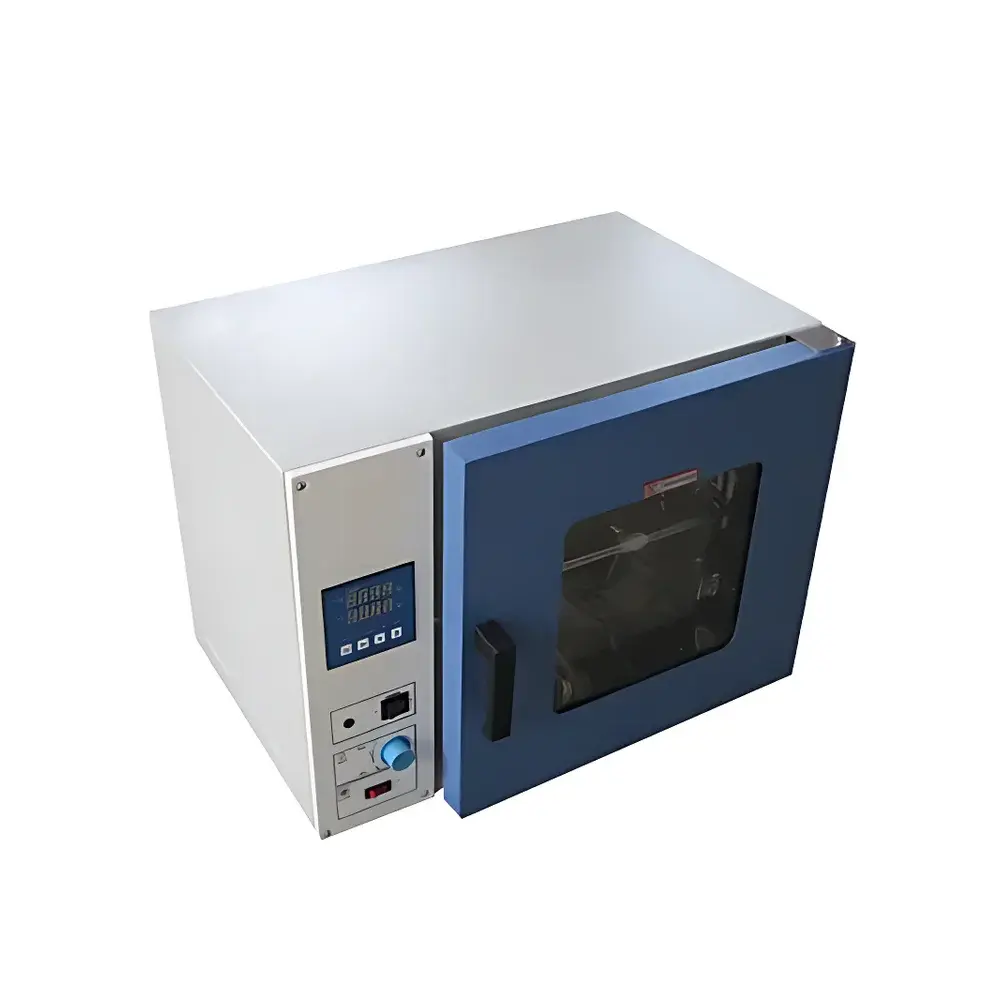
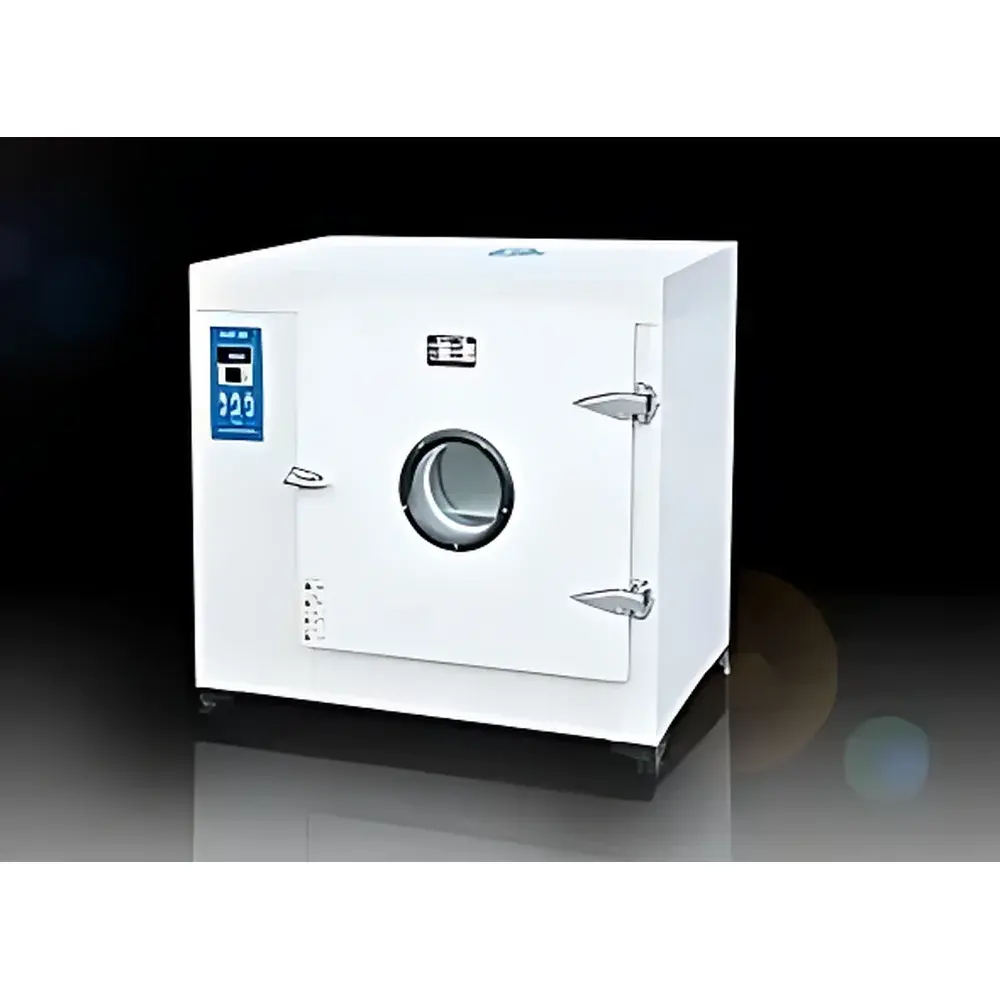
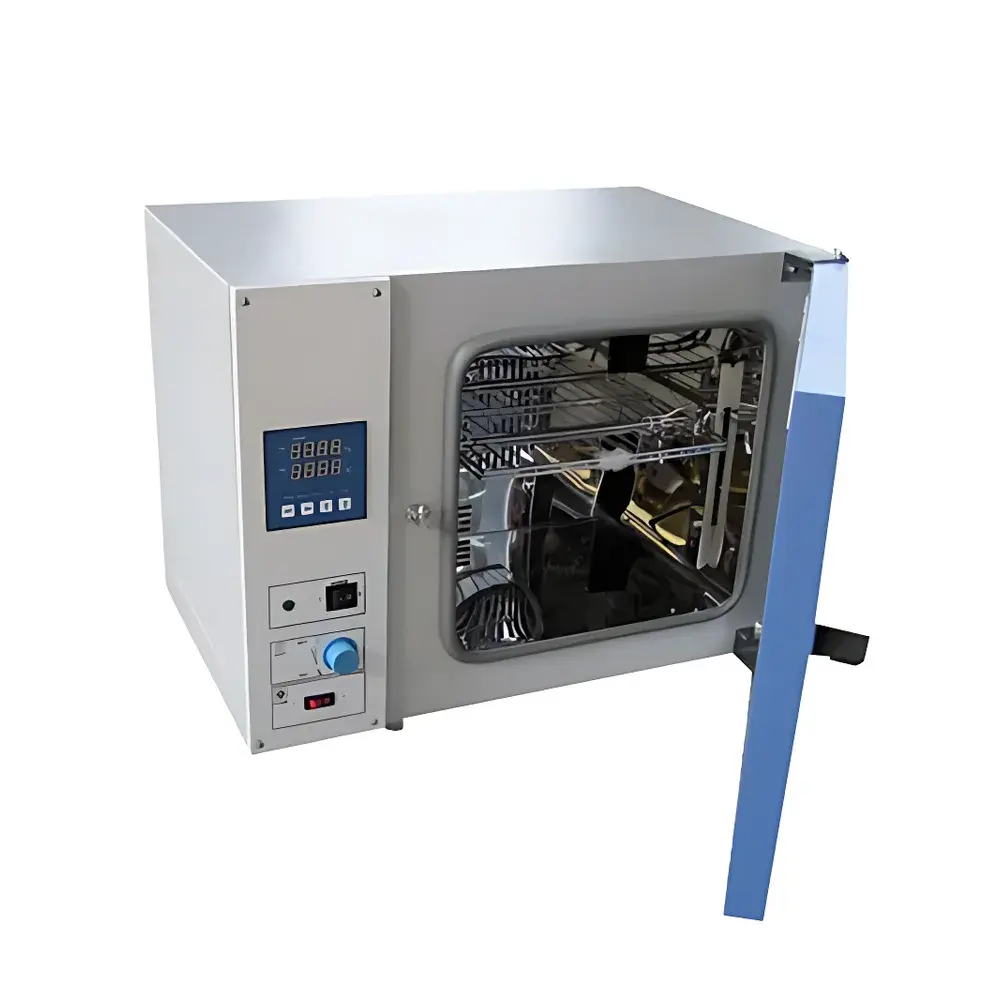
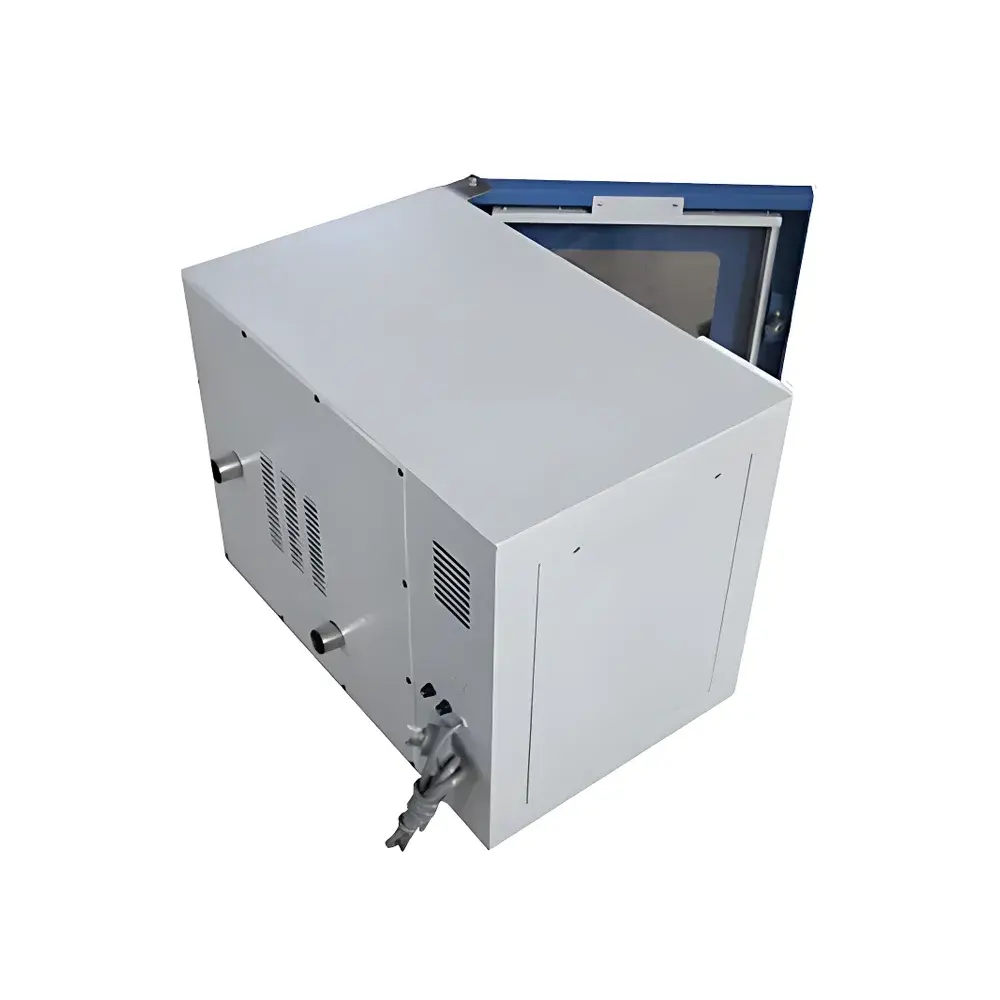
Hanuo DHG-9055A High-Temperature Forced-Air Drying Oven
| Brand | Hanuo |
|---|---|
| Origin | Shanghai, China |
| Model | DHG-9055A |
| Temperature Range | 200–300 °C |
| Temperature Uniformity | ±1 °C |
| Internal Dimensions (W×D×H) | 420×400×350 mm |
| External Dimensions (W×D×H) | 710×590×520 mm |
| Chamber Material | Mirror-Finish Stainless Steel |
| Heating Method | Forced-Air Circulation with High-Temperature Fan |
| Timer Range | 1–9999 min |
| Temperature Control Resolution | 0.1 °C |
| Insulation | High-Density Glass Fiber with Non-Metallic High-Temp Seals |
| Safety Features | Independent Over-Temperature Cut-Off (Optional) |
| Power Supply | Standard Single-Phase AC (Specified per regional variant) |
Overview
The Hanuo DHG-9055A High-Temperature Forced-Air Drying Oven is an industrial-grade laboratory drying and thermal processing instrument engineered for precision temperature control, uniform heat distribution, and long-term operational reliability in demanding environments. Based on the principle of forced convection heating—where a high-temperature-rated centrifugal fan circulates heated air through a calibrated duct system—the DHG-9055A ensures consistent thermal exposure across the entire working chamber. Unlike natural-convection ovens, this vertical forced-air architecture minimizes thermal stratification and achieves ±1 °C temperature uniformity at setpoints up to 300 °C, meeting critical requirements for drying hygroscopic materials, pre-conditioning polymer samples, residual solvent removal, and thermal stability testing per ASTM E145, ISO 188, and USP . Its robust construction supports routine use in quality control laboratories, R&D facilities, and GMP-compliant manufacturing environments where traceable thermal performance and repeatable process outcomes are mandatory.
Key Features
- High-temperature capability: Stable operation from ambient +10 °C to 300 °C, validated for continuous duty at maximum setpoint
- Mirror-finish stainless steel interior (SUS304) fabricated via argon arc welding—resistant to oxidation, corrosion, and cleaning agent degradation
- Precision digital microprocessor controller with 0.1 °C display resolution and PID-based regulation for minimal overshoot and rapid stabilization
- Programmable timer (1–9999 minutes) supporting unattended batch processing with automatic shutdown
- Double-layer tempered glass observation window with integrated seal—enables real-time visual monitoring without thermal disturbance
- Optimized airflow design featuring tangential inlet ducts and rear-mounted recirculation fan—validated for ≤2 °C internal gradient at 300 °C
- Thermal insulation composed of ≥80 mm thick ultra-fine glass fiber, with non-metallic high-temp gaskets at chamber-to-door interfaces to suppress conductive heat loss
- Optional independent over-temperature protection circuit (hardware-limited cut-off) compliant with IEC 61000-4-2 and EN 61010-1 safety standards
Sample Compatibility & Compliance
The DHG-9055A accommodates standard laboratory sample formats including Petri dishes, weighing boats, crucibles, glassware, metal trays, and polymer test specimens up to 420 mm wide × 400 mm deep × 350 mm high. Its stainless steel chamber resists chemical attack from common solvents (e.g., acetone, ethanol, hexane) and acidic/basic residues encountered during sample preparation. The unit complies with general-purpose laboratory equipment safety directives (EN 61010-1), electromagnetic compatibility (EN 61326-1), and thermal validation prerequisites for GLP and ISO/IEC 17025-accredited labs. While not certified as a sterilizer, it supports dry-heat depyrogenation protocols (e.g., 250 °C for 45 min) when operated under documented calibration and maintenance schedules.
Software & Data Management
The base configuration features a standalone microcontroller interface with tactile keypad navigation and LED display. For regulated environments, optional intelligent programmable controllers support RS-485 Modbus RTU output for integration into centralized lab data acquisition systems. Audit-trail-capable versions (with optional firmware upgrade) log timestamped setpoint changes, actual chamber temperature readings at 10-second intervals, alarm events, and door-open duration—meeting FDA 21 CFR Part 11 requirements when deployed with validated electronic signature modules and secure user access controls. Calibration certificates traceable to NIST or CNAS-accredited standards are available upon request.
Applications
- Drying moisture-sensitive powders, ceramics, and pharmaceutical excipients under controlled thermal profiles
- Baking and curing of coatings, adhesives, and composite substrates per ASTM D2247 and ISO 2812
- Residual solvent evaporation from HPLC vials and GC sample preparations
- Pre-heating and conditioning of test specimens prior to tensile, impact, or thermal expansion analysis
- Accelerated aging studies for packaging materials and medical device components (ISO 11607)
- Moisture content determination using gravimetric methods (AOAC 950.46, USP )
- Storage of temperature-stable reagents and reference standards at elevated holding temperatures
FAQ
What is the maximum continuous operating temperature of the DHG-9055A?
The DHG-9055A is rated for continuous operation at 300 °C, with thermal stability maintained within ±1 °C across the full chamber volume.
Does the oven include factory calibration documentation?
Standard units ship with a manufacturer’s verification report; NIST-traceable calibration certificates are available as a configurable option.
Can the DHG-9055A be used for sterilization?
It is not classified as a sterilizer per ISO 17665, but may be employed for dry-heat depyrogenation under validated SOPs in non-sterile manufacturing settings.
Is remote monitoring supported?
Yes—via optional RS-485 interface and compatible SCADA or LIMS platforms; Ethernet/Wi-Fi modules require third-party integration.
What maintenance is required for sustained accuracy?
Biannual verification of temperature uniformity and controller calibration is recommended; fan filter cleaning every 200 operating hours prevents airflow restriction.



