
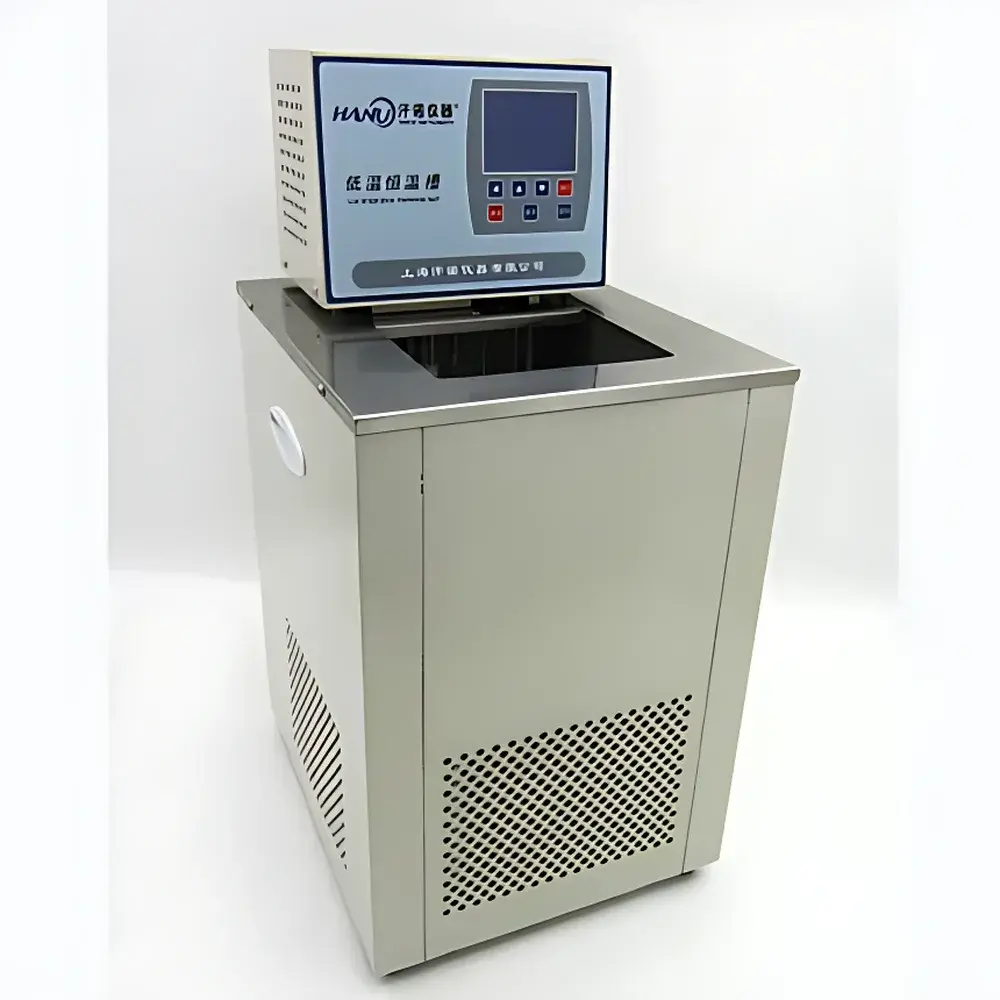
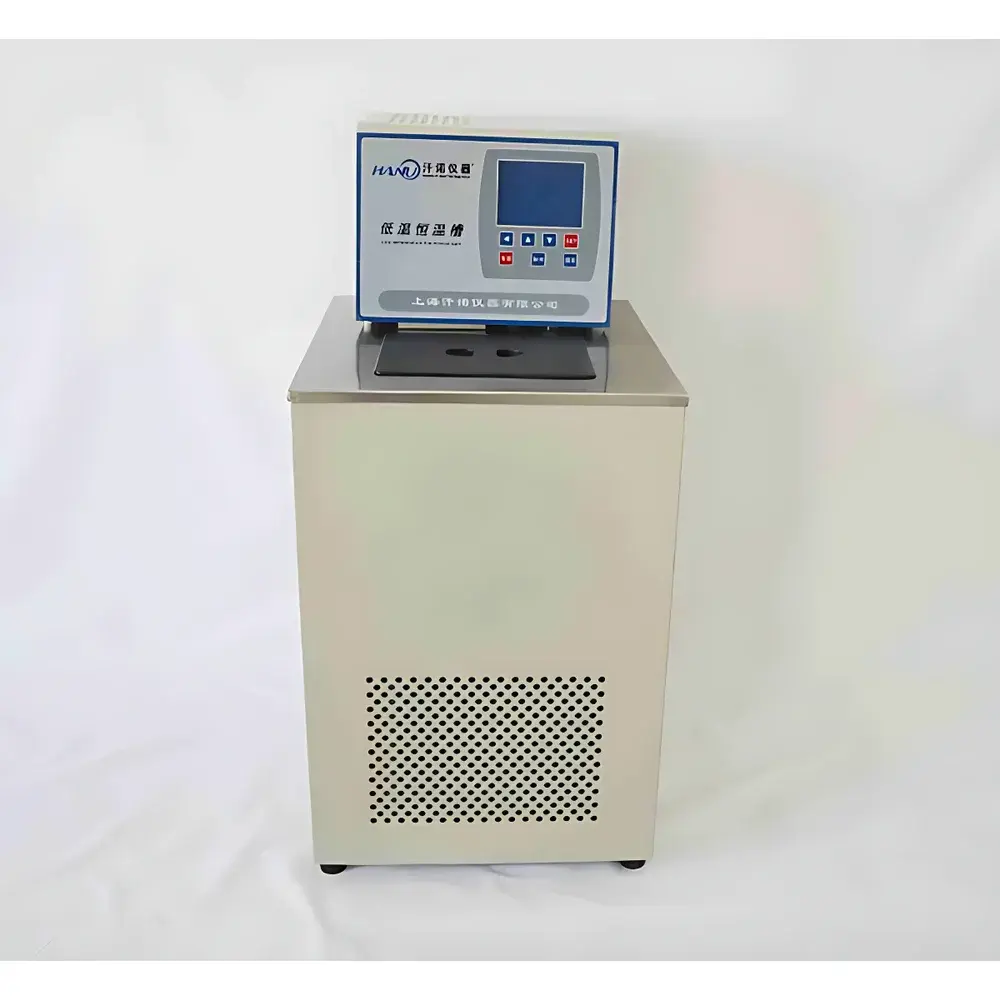
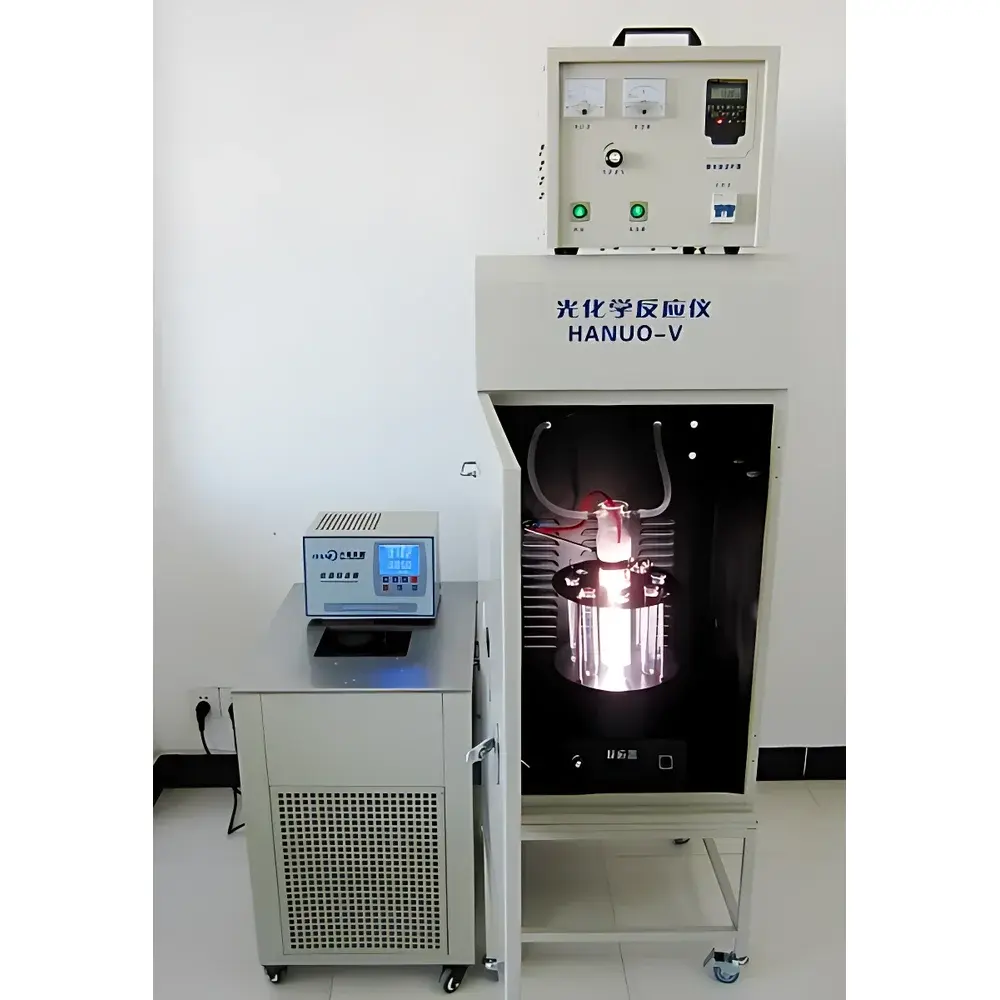
Hanuo DL-1505 Low-Temperature Circulating Chiller
| Brand | Hanuo |
|---|---|
| Origin | Shanghai, China |
| Type | Integrated Air-Cooled Circulating Chiller |
| Model | DL-1505 |
| Cooling Capacity | 600 W |
| Temperature Range | –15 °C |
| Temperature Stability | ±0.05 °C |
| Reservoir Volume | 5 L |
| Flow Rate | 15 L/min |
| Operating Mode | Continuous |
| Display Resolution | 0.1 °C |
| Control System | Microprocessor-Based Intelligent Controller with Dual LED Display (Setpoint & Actual) |
| Safety Protections | Compressor Delay, Overheat, and Overcurrent Protection |
| Software Lock Function | Yes |
| Timer Shutdown | 0–100 h Adjustable |
| Construction | Stainless Steel Bath Chamber |
| Compliance | Designed for GLP-compliant laboratory environments |
Overview
The Hanuo DL-1505 Low-Temperature Circulating Chiller is an integrated, air-cooled refrigeration system engineered to deliver precise, stable, and continuous low-temperature coolant circulation for laboratory instrumentation requiring active thermal management. Utilizing a hermetically sealed scroll compressor and R404A or R507 refrigerant circuit (depending on regional regulatory compliance), the unit operates on the vapor-compression refrigeration cycle to maintain setpoint temperatures from –15 °C to ambient. Its primary function is to supply temperature-controlled fluid—typically water/ethylene glycol mixtures—to external equipment such as rotary evaporators, spectrophotometers, NMR preamplifiers, laser diodes, calorimeters, and reaction jackets. The chiller’s microprocessor-based control architecture enables closed-loop feedback regulation of both bath temperature and outlet fluid temperature, ensuring consistent thermal load handling across variable duty cycles.
Key Features
- Stainless steel reservoir and internal wetted components ensure corrosion resistance, low particulate leaching, and compatibility with aqueous and mild organic coolant mixtures.
- Integrated open-bath design supports direct immersion cooling of lab vessels while enabling simultaneous external circulation via dual-port fluid connections (inlet/outlet).
- Dual-color LED display (red/green) shows setpoint and real-time bath temperature with 0.1 °C resolution; user-accessible calibration offset correction ensures traceable temperature accuracy.
- Intelligent compressor sequencing includes programmable start delay (to prevent voltage surge), thermal overload cutoff, and current-limiting protection—critical for extended unattended operation.
- Configurable auto-shutdown timer (0–100 hours) supports energy-efficient scheduling in overnight or weekend protocols without compromising thermal stability during active use.
- Software lock mode prevents unauthorized modification of operational parameters—including temperature setpoint, timer settings, and calibration offsets—supporting audit-ready workflows under GLP and ISO/IEC 17025 frameworks.
- Front-panel touch-sensitive soft keys provide intuitive navigation without mechanical wear; firmware supports firmware-upgradable logic for future protocol expansion.
Sample Compatibility & Compliance
The DL-1505 accommodates standard coolant formulations up to 30% ethylene glycol in deionized water, maintaining viscosity and heat transfer efficiency down to –15 °C. Its stainless steel chamber meets ASTM A240 Type 304 specifications for laboratory-grade corrosion resistance. While not certified to UL 61010-1 or IEC 61000-6-3 out-of-the-box, the unit is designed to operate within electromagnetic compatibility limits typical of shared research facility environments. All temperature control functions are traceable to NIST-traceable references via user-applied calibration offsets. Documentation packages include factory calibration reports and electrical safety test summaries suitable for internal QA review and instrument qualification (IQ/OQ).
Software & Data Management
The embedded controller does not feature Ethernet or USB data logging; however, analog voltage output (0–5 V DC) is available for integration with building management systems or third-party DAQ hardware. Temperature setpoints, actual readings, and alarm status are retained in non-volatile memory during power interruption. For regulated environments, the system supports 21 CFR Part 11–compliant operation when paired with validated external logging software—enabling electronic signatures, audit trails, and change control for temperature-critical processes in pharmaceutical QC labs or clinical research settings.
Applications
- Condenser cooling for rotary evaporation under reduced pressure, minimizing solvent bumping and improving recovery yield.
- Thermal stabilization of high-power optical components, including CCD detectors and tunable lasers, where drift-induced signal noise must be suppressed.
- Controlled exotherm management during catalytic hydrogenation or Grignard reactions conducted in jacketed reactors.
- Calibration support for differential scanning calorimeters (DSC) and thermogravimetric analyzers (TGA) requiring stable sub-ambient baselines.
- Long-duration stability testing of reference standards in metrology laboratories operating under ISO/IEC 17025 accreditation.
FAQ
What coolant mixture is recommended for operation at –15 °C?
A 25–30% (v/v) ethylene glycol–deionized water mixture is optimal, providing freeze protection to –20 °C while preserving thermal conductivity and pump compatibility.
Can the unit maintain temperature stability during high-flow demand from external equipment?
Yes—the 15 L/min flow rate and 600 W cooling capacity are rated at full load; stability of ±0.05 °C is verified under continuous 10 L/min external flow with 5 °C temperature lift.
Is remote monitoring or control possible?
Not natively; however, the analog output port allows connection to PLCs or SCADA systems for supervisory readout and alarm relay triggering.
Does the chiller meet CE or UKCA marking requirements?
The DL-1505 is manufactured to IEC 61000-4 immunity standards and conforms to RoHS 2011/65/EU; CE marking is applied per EU Declaration of Conformity for laboratory equipment under Directive 2014/35/EU (LVD).
How often should the refrigerant charge be verified?
Under normal operation, no routine verification is required; however, annual visual inspection of compressor oil level and condenser coil cleanliness is recommended per manufacturer maintenance guidelines.



