
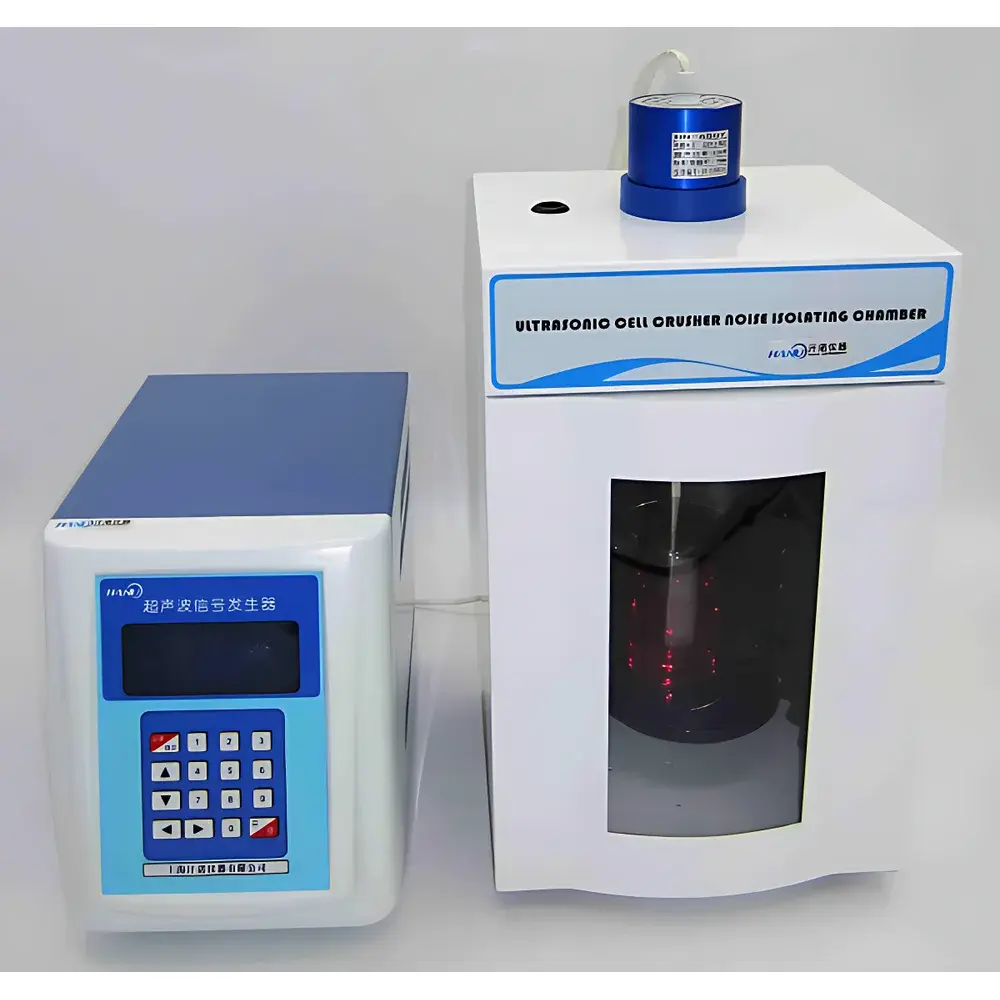
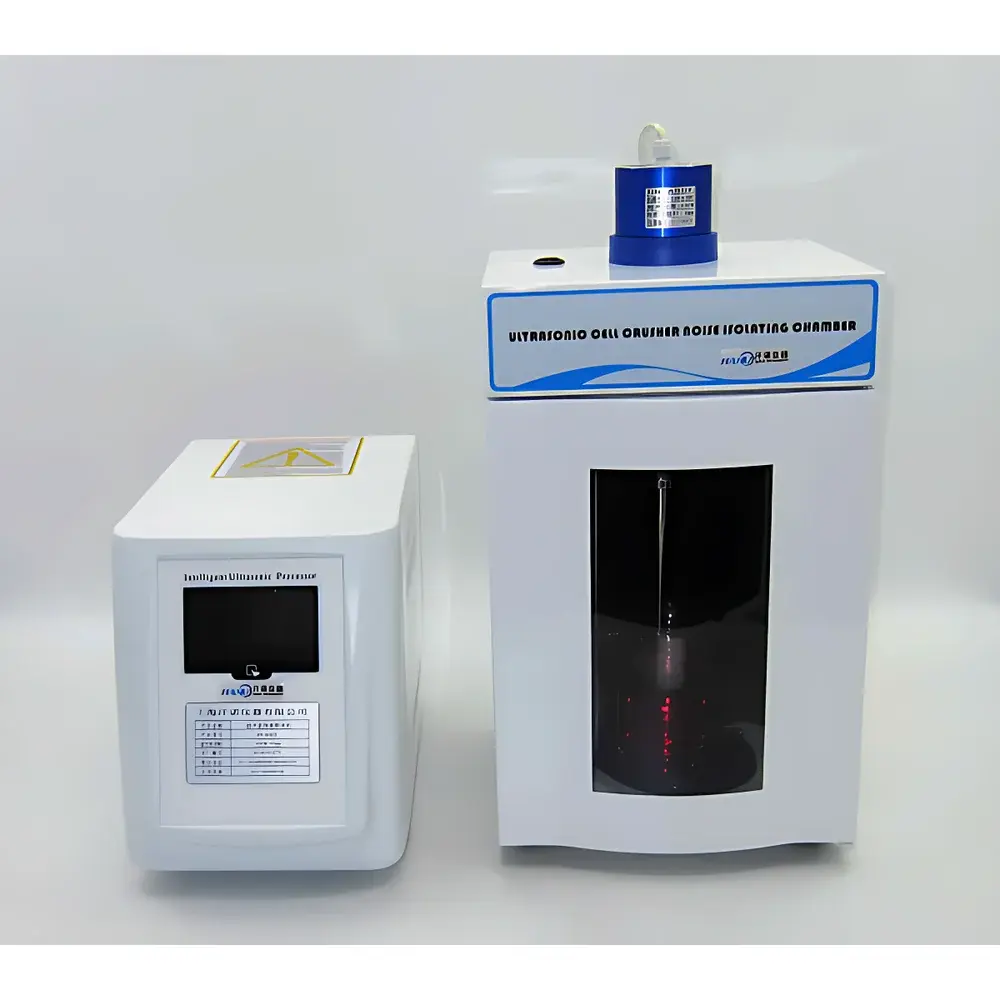
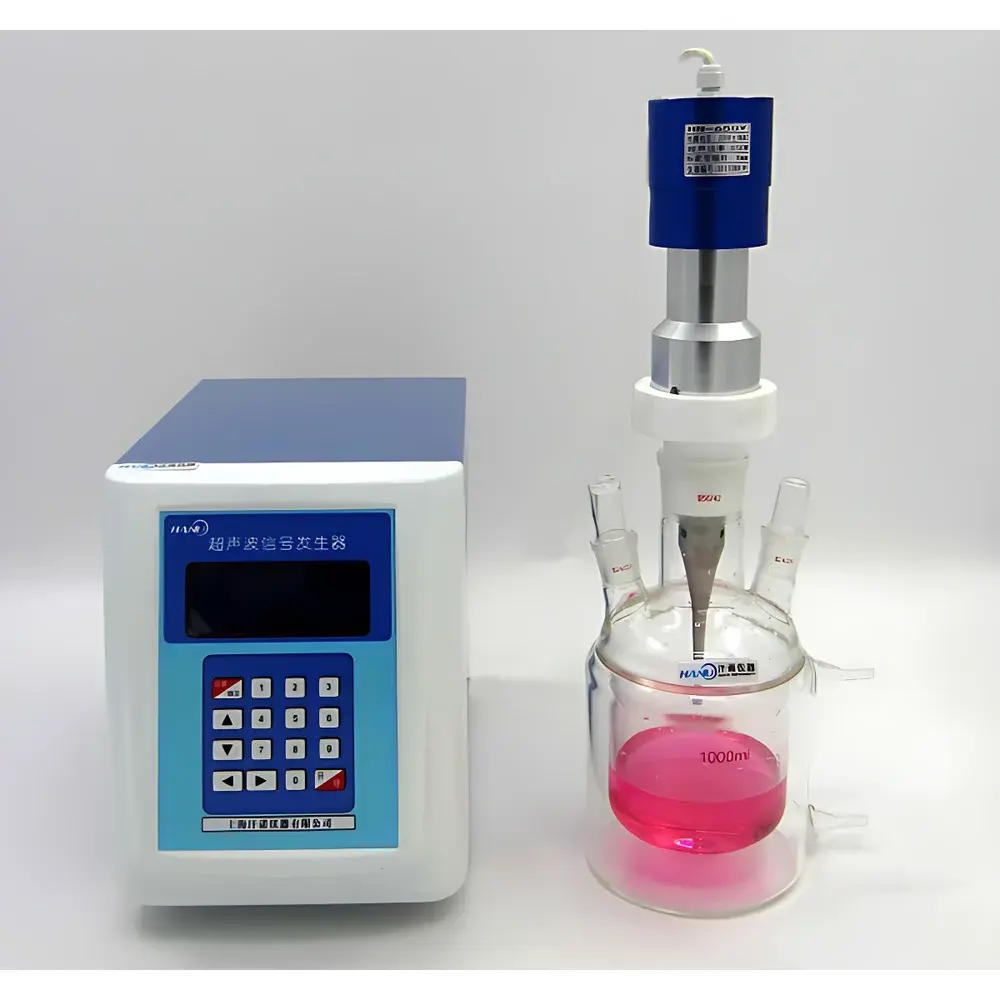
Hanuo HN-150Y Ultrasonic Cell Disruptor
| Brand | Hanuo |
|---|---|
| Origin | Shanghai, China |
| Model | HN-150Y |
| Ultrasonic Power | 150 W |
| Operating Frequency | 25 kHz |
| Temperature Range | Ambient to 90 °C |
| Sample Volume Capacity | 150 mL |
| Number of Samples per Run | 1 |
| Display | LCD |
| Programmable Protocols | 50 memory slots |
| Power Adjustment Range | 1–99% (5–150 W) |
| Standard Probe Diameter | Φ6 mm |
| Optional Probe Diameters | Φ2 mm, Φ3 mm |
| Temperature Protection Limit | Up to 99 °C |
| Automatic Power Tracking & Fault Alarm | Yes |
| Real-time Power Monitoring | Yes |
| Integrated Temperature Control | Yes |
Overview
The Hanuo HN-150Y Ultrasonic Cell Disruptor is an engineered benchtop sonicator designed for controlled, reproducible cell lysis and sample homogenization in life science laboratories. It operates on the principle of high-intensity ultrasonic cavitation—where rapid pressure fluctuations in a liquid medium generate transient microbubbles that collapse violently, producing localized shear forces, microstreaming, and thermal effects. This physical mechanism enables efficient disruption of cellular membranes, organelles, and extracellular matrices without chemical or enzymatic additives. The instrument is optimized for applications requiring precise energy delivery at low-to-moderate throughput, including microbial lysis, protein extraction from tissue homogenates, nanoparticle dispersion, and emulsification of immiscible phases. Its fixed-frequency transduction system (25 kHz ±1 kHz) ensures stable acoustic output across variable load conditions, while integrated real-time power monitoring compensates for impedance shifts caused by temperature drift or sample viscosity changes.
Key Features
- LCD touchscreen interface with intuitive navigation and real-time parameter feedback
- Microprocessor-controlled operation supporting up to 50 user-defined protocols—including time, amplitude, pulse mode (on/off cycling), and temperature setpoint
- Digitally regulated ultrasonic output (5–150 W, adjustable in 1% increments) with automatic impedance compensation to maintain consistent power delivery during prolonged operation
- Integrated Peltier-assisted temperature control system, actively limiting sample temperature rise to ≤90 °C; optional external chiller compatibility for thermosensitive samples
- Self-diagnostic firmware with audible/visual fault alerts for probe detachment, overheating, or generator instability
- Standard titanium alloy probe (Φ6 mm, 140 mm length) optimized for broad compatibility with microcentrifuge tubes, culture flasks, and beakers; optional probes (Φ2 mm, Φ3 mm) available for low-volume or high-spatial-resolution applications
- Rugged aluminum housing with IP20-rated enclosure, CE-compliant electromagnetic shielding, and UL-listed power supply
Sample Compatibility & Compliance
The HN-150Y accommodates a wide range of biological and synthetic materials—from Gram-negative bacteria (e.g., E. coli) and yeast cells to mammalian suspension cultures, plant leaf extracts, liposomal suspensions, and colloidal metal oxide dispersions. Sample volumes range from 0.2 mL (in microtubes with Φ2 mm probe) to 150 mL (in jacketed beakers with Φ6 mm probe). All operational parameters adhere to ISO 22442-1:2015 (biological safety of medical devices) and IEC 61000-6-3:2019 (EMC emission limits). For GLP/GMP environments, the device supports audit-trail-enabled protocol logging when paired with Hanuo’s optional PC-based control software (v3.2+), compliant with FDA 21 CFR Part 11 requirements for electronic records and signatures.
Software & Data Management
Optional Hanuo SoniControl™ Desktop Software (Windows 10/11, 64-bit) enables remote configuration, real-time waveform visualization, and export of timestamped CSV logs containing amplitude, duration, temperature, and cumulative energy (J/mL). Each saved protocol includes metadata fields for operator ID, sample ID, and instrument serial number—facilitating traceability in regulated workflows. The software also provides batch reporting templates aligned with ASTM E2500-18 (verification of pharmaceutical manufacturing equipment) and supports integration into LIMS via RESTful API endpoints.
Applications
- Cell lysis for intracellular protein recovery (e.g., His-tagged recombinant expression systems)
- Chromatin shearing prior to ChIP-seq library preparation
- Preparation of subcellular fractions (mitochondria, nuclei) from cultured neurons or hepatocytes
- Emulsification of oil-in-water nanoemulsions for topical drug delivery formulation
- Dispersion stabilization of graphene oxide or quantum dot suspensions in aqueous media
- Accelerated solvent extraction of alkaloids and polyphenols from botanical matrices
- Deagglomeration of ceramic nanoparticles (e.g., TiO₂, SiO₂) for rheological characterization
FAQ
What is the recommended duty cycle for continuous operation?
For optimal transducer longevity and thermal stability, operate at ≤70% amplitude for durations exceeding 5 minutes; use pulse mode (e.g., 5 s on / 3 s off) for extended runs.
Can this instrument be used for sterilization or pathogen inactivation?
No—while cavitation generates localized heat and free radicals, the HN-150Y is not validated for microbial kill kinetics per ISO 15223-1 or EN 556 standards; it is intended for sample preparation only.
Is probe calibration required before each use?
No routine calibration is needed; however, users should verify probe integrity visually (no pitting or cracking) and perform acoustic output verification annually using a calibrated hydrophone (e.g., NPL Type 8103) per ISO 18908:2017.
How does temperature control function during sonication?
A built-in thermistor monitors sample temperature near the probe tip; if the set threshold is exceeded, the system automatically reduces amplitude or pauses output until cooling occurs—ensuring process repeatability without manual intervention.
Does the device support external triggering or synchronization with other lab instruments?
Yes—via TTL-compatible BNC input/output ports, enabling synchronized start/stop with centrifuges, spectrophotometers, or automated liquid handlers in integrated workflows.



