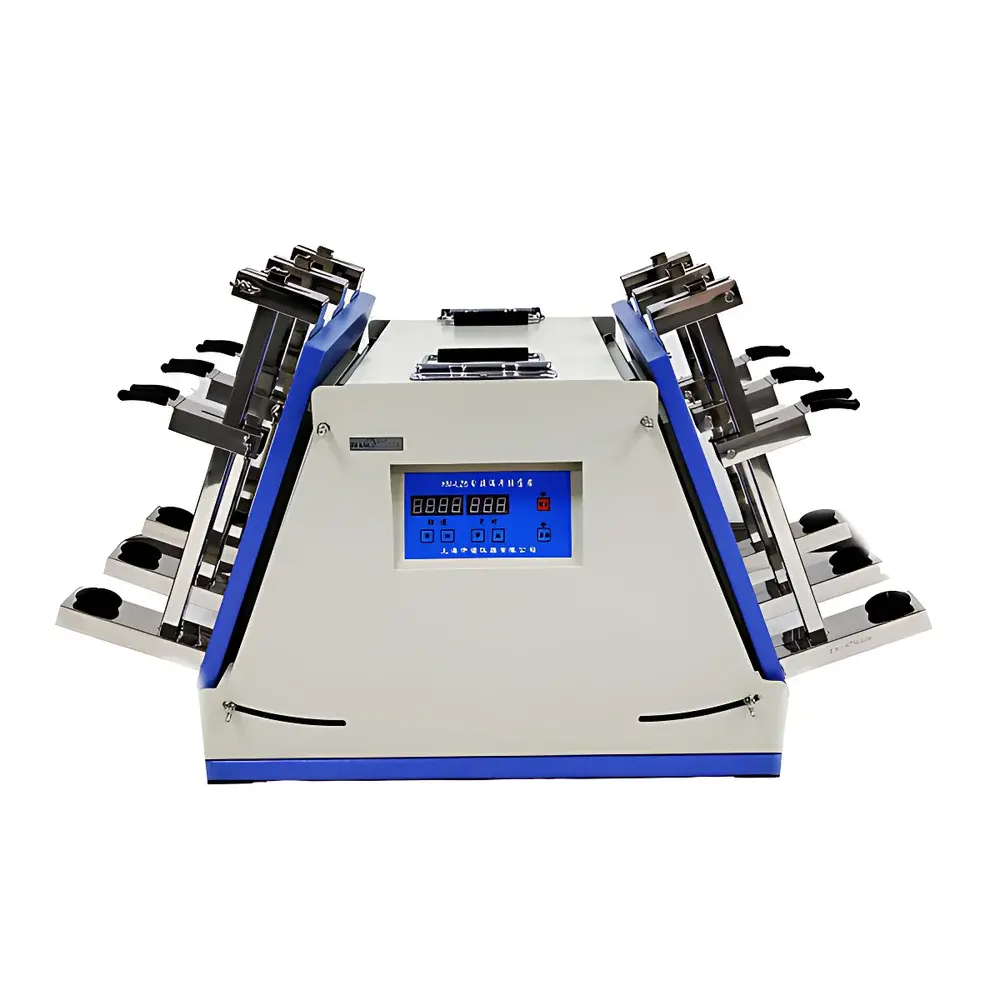
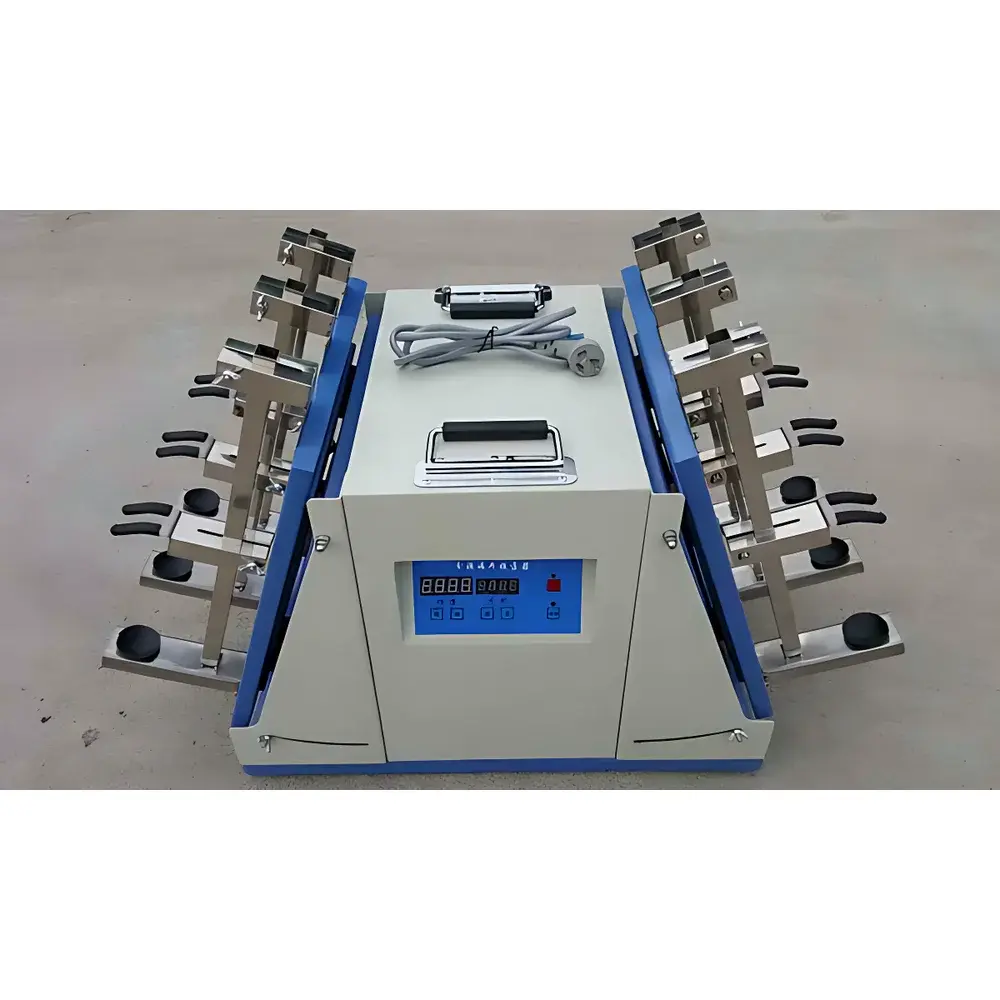
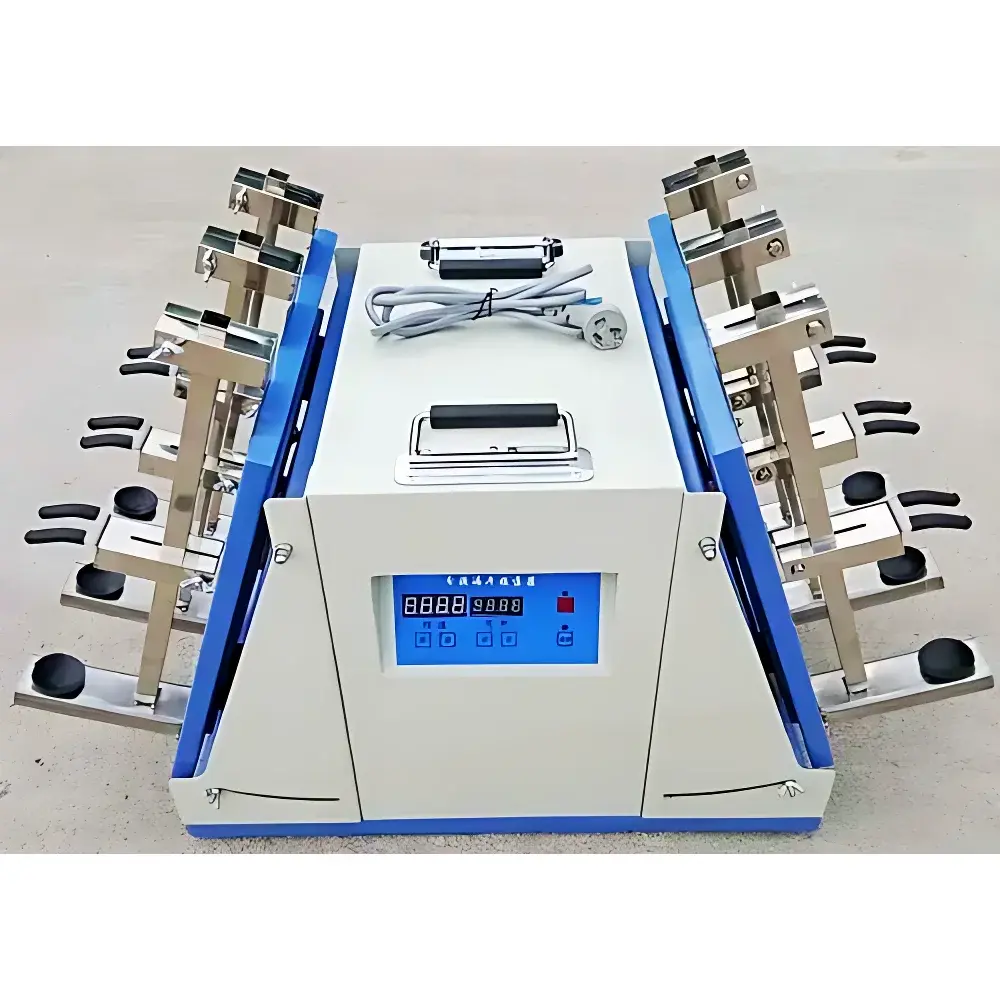
Hanuo HN-LZ8 Vertical/Tilt Dual-Mode Separatory Funnel Shaker
| Brand | Hanuo |
|---|---|
| Origin | Shanghai, China |
| Model | HN-LZ8 |
| Instrument Type | Inversion-type Shaker |
| Timer Range | 0–999 min |
| Oscillation Frequency | 0–300 rpm |
| Oscillation Angle | 0–22° |
| Oscillation Amplitude | 40 mm |
| Sample Capacity | 8 × ≤1000 mL separatory funnels |
| Platform Configuration | Single-tier dual-mode oscillating plate |
| Temperature Control | Ambient-only (non-thermostatic) |
| Drive System | SS-type asynchronous motor with precision guide rail |
| Control Interface | Microprocessor-based digital display, stepless speed adjustment |
| Standard Fixture | 8 stainless-steel separatory funnel clamps |
Overview
The Hanuo HN-LZ8 Vertical/Tilt Dual-Mode Separatory Funnel Shaker is an engineered solution for liquid–liquid extraction and sample purification in analytical chemistry, environmental testing, food safety, and pharmaceutical quality control laboratories. Designed around the fundamental principle of controlled mechanical agitation—specifically vertical reciprocation combined with programmable angular tilt—the instrument ensures reproducible phase mixing, efficient mass transfer, and consistent interfacial contact between immiscible solvents. Unlike orbital or vortex shakers, the HN-LZ8 employs a true inversion-style motion optimized for separatory funnel geometry, minimizing emulsion formation while maximizing partitioning efficiency. Its rigid frame, low-center-of-gravity architecture, and SS-type asynchronous drive system eliminate lateral drift even at maximum operational frequency (300 rpm), ensuring long-term stability during unattended operation.
Key Features
- Dual-mode oscillation: Selectable vertical reciprocation or adjustable tilt oscillation (0–22°), enabling optimization for both high-density solvent pairs and viscous matrices.
- Precision microprocessor control: Digital display interface with stepless speed regulation (0–300 rpm) and extended timer range (0–999 minutes), supporting multi-step extraction protocols.
- Stainless-steel dedicated sample holders: Eight corrosion-resistant, ergonomic clamps designed specifically for standard volumetric separatory funnels (125 mL, 250 mL, 500 mL, and 1000 mL) and stoppered bottles.
- Low-noise, high-stability drive system: Patented SS-type asynchronous motor coupled with hardened linear guide rails ensures minimal vibration transmission and zero platform displacement under continuous load.
- Compact industrial-grade chassis: Reinforced steel housing with non-slip rubber feet and integrated cable management, compliant with ISO 14644 cleanroom-compatible installation practices.
- No thermal regulation: Intended for ambient-temperature extraction workflows; compatible with external cold rooms or chilled solvent handling when required.
Sample Compatibility & Compliance
The HN-LZ8 accommodates all common glassware used in EPA Method 3510C, ASTM D3764, ISO 17250-2, and USP <201> liquid–liquid extraction procedures. It supports conical, pear-shaped, and cylindrical separatory funnels up to 1000 mL capacity, as well as wide-mouth stoppered bottles for solid–liquid leaching applications. The stainless-steel fixture design prevents cross-contamination and withstands repeated exposure to chlorinated solvents (e.g., dichloromethane, chloroform), strong acids (HNO₃, H₂SO₄), and alkaline media (NaOH). While the unit itself carries no CE or UL certification, its mechanical architecture conforms to IEC 61000-6-2 (immunity) and IEC 61000-6-4 (emission) baseline requirements for laboratory equipment. Routine maintenance intervals align with GLP-compliant instrument qualification protocols (IQ/OQ/PQ).
Software & Data Management
The HN-LZ8 operates via embedded firmware without proprietary software dependency. All operational parameters—including setpoint frequency, tilt angle, elapsed time, and remaining timer—are retained in non-volatile memory across power cycles. Digital display logs are not stored internally; however, the device features a TTL-level serial output port (RS-232 optional via adapter) for integration into LIMS or ELN systems requiring timestamped run metadata. For regulated environments, users may implement external audit-trail solutions per FDA 21 CFR Part 11 requirements using third-party data acquisition modules.
Applications
- Environmental analysis: Extraction of organochlorine pesticides from municipal drinking water (EPA 508/608), heavy metals (Cd, Cu, Fe) from soil leachates (TCLP/SPLP), and endocrine-disrupting compounds from aqueous environmental matrices.
- Food & beverage testing: Quantification of benzoic acid in fruits/vegetables (AOAC 994.12), methanol in cosmetics (ISO 11057), high-fructose corn syrup adulterants in honey (AOAC 2007.01), and HEMF aroma volatiles in wine.
- Pharmaceutical QC: Isolation of active pharmaceutical ingredients (APIs) from tablet matrices, residual solvent recovery in synthesis intermediates, and penicillin detection in fruit-based nutraceuticals.
- Public health surveillance: Cadmium extraction from fish tissue homogenates (ISO 17294-2), oil-in-water emulsion separation for petroleum hydrocarbon screening, and mycotoxin recovery from cereal grains.
FAQ
Is the HN-LZ8 suitable for use with corrosive solvents such as concentrated nitric acid?
Yes—the stainless-steel sample clamps and powder-coated chassis are rated for intermittent contact with Class II and III laboratory solvents per NIOSH guidelines.
Can the tilt angle be calibrated or locked at fixed increments?
The tilt mechanism is manually adjustable within 0–22°; no incremental detents are provided, but angle repeatability is ±0.5° under identical mechanical preload conditions.
Does the unit include validation documentation for GMP compliance?
No factory-issued IQ/OQ documentation is supplied; however, the mechanical design and control logic support user-generated qualification protocols aligned with Annex 15 and USP <1058>.
What is the maximum allowable total load mass on the oscillating plate?
The platform is rated for 12 kg distributed load; exceeding this may affect amplitude consistency and long-term bearing life.
Is there a service interval recommendation for the guide rail system?
Lubrication-free linear guides require no scheduled maintenance; visual inspection every 6 months is advised for particulate accumulation or scoring.