
Hanuo HN60-4 Microplate Incubator Shaker
| Brand | Hanuo |
|---|---|
| Origin | Shanghai, China |
| Model | HN60-4 |
| Instrument Type | Air-jacketed Temperature-Controlled Microplate Incubator Shaker |
| Temperature Range | Ambient +5°C to 70°C |
| Temperature Uniformity | ≤ ±0.5°C |
| Temperature Stability | ≤ ±0.2°C |
| Platform Accuracy | < ±0.3°C at 37°C |
| Heating Rate | < 25 min (20°C to 70°C) |
| Timer Range | 0–99 h 59 min |
| Capacity | 4 standard microplates (e.g., 96-well, 384-well, 24-/48-well plates) |
| Power Consumption | 250 W |
| Dimensions (W×D×H) | 345 × 310 × 178 mm |
| Weight | 8.2 kg |
| Compliance | Designed for GLP-compliant lab environments |
Overview
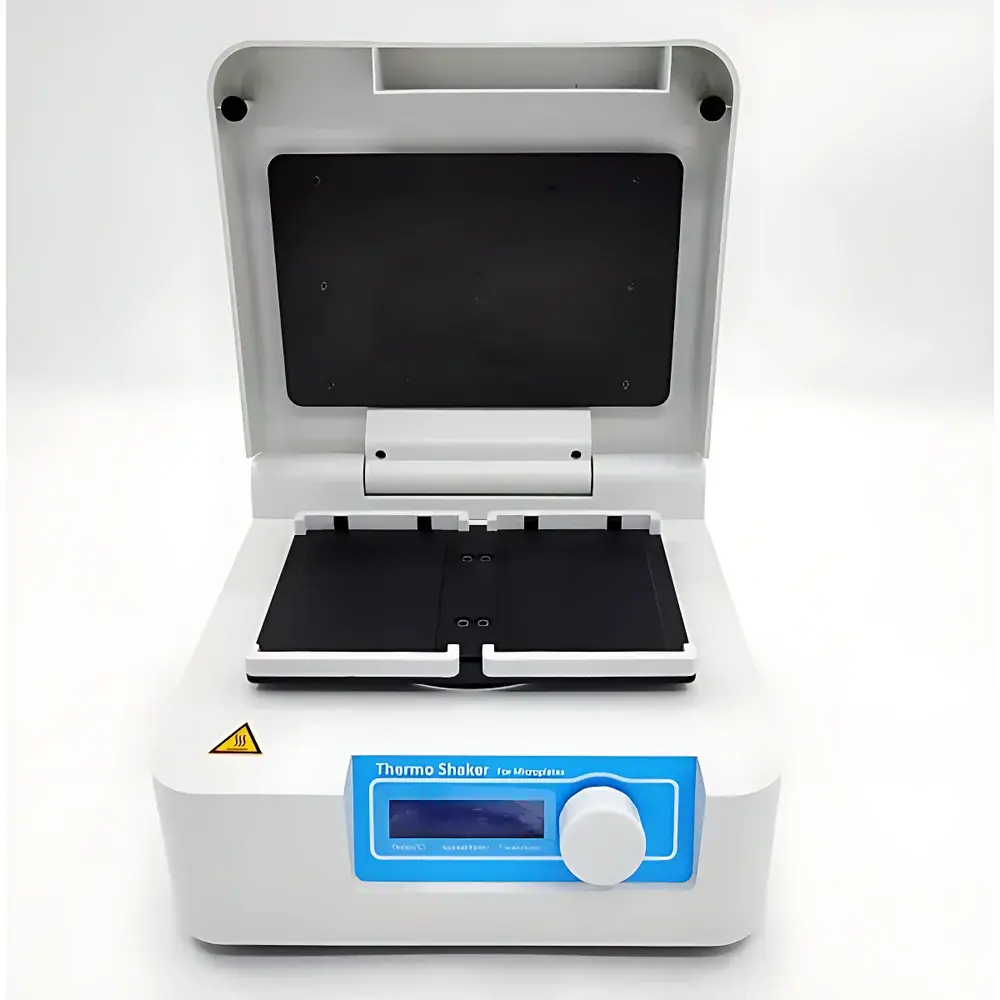
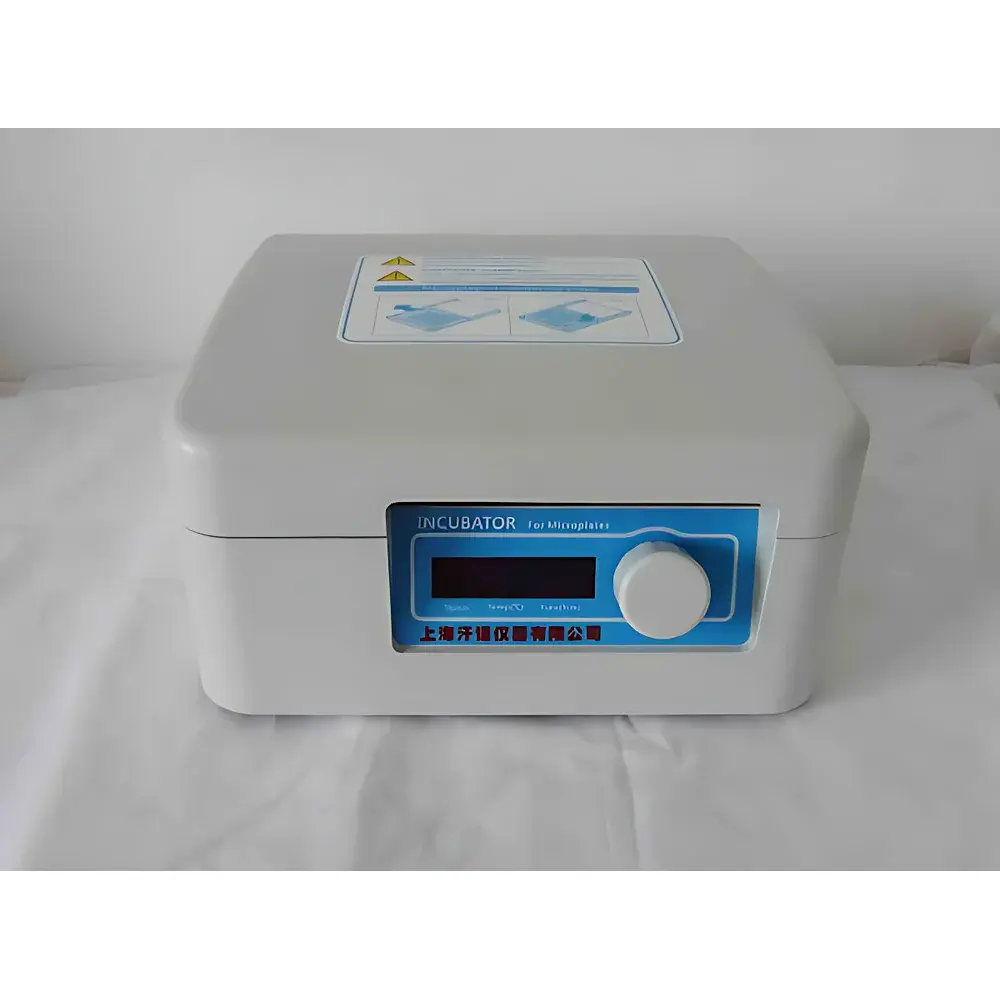
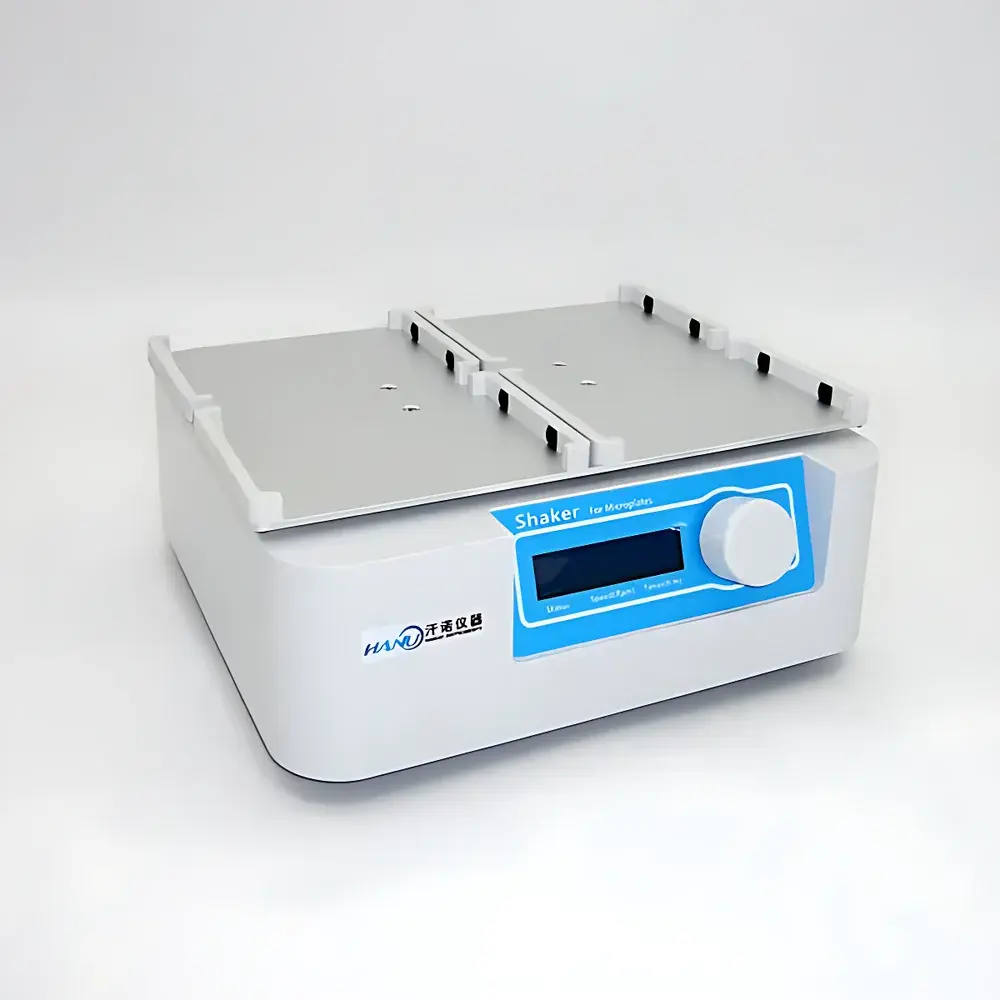
The Hanuo HN60-4 Microplate Incubator Shaker is an air-jacketed, temperature-controlled incubation platform engineered for precise, uniform thermal management of multi-well microplates in life science research and quality control laboratories. Unlike conventional water-bath or Peltier-based systems, this instrument employs a dual-sided heating architecture—active top and bottom plate heating—to eliminate vertical thermal gradients across microplate wells. It operates on a PID-controlled microprocessor system with real-time feedback loops, delivering stable thermal environments essential for enzyme-linked immunosorbent assays (ELISA), cell-based assays, immunoassay development, and kinetic binding studies. The device is not a mechanical shaker (oscillation frequency = 0 rpm); rather, it functions as a static incubator with programmable time-temperature profiles, optimized for applications requiring thermal consistency—not mixing—during incubation phases.
Key Features
- Dual-zone heating system ensures uniform temperature distribution across all four loaded microplates, with verified uniformity ≤ ±0.5°C and stability ≤ ±0.2°C at setpoints between ambient +5°C and 70°C.
- High-resolution LCD display with simultaneous real-time temperature readout and countdown timer (0–99 h 59 min), supporting intuitive parameter verification and protocol monitoring.
- Touch-sensitive control interface with ergonomic layout, minimizing operational errors and enabling rapid protocol recall and modification.
- Compact benchtop footprint (345 × 310 × 178 mm) and smooth, non-porous housing facilitate integration into biosafety cabinets, cleanrooms, and automated liquid handling workflows.
- Calibration-traceable thermal performance: platform accuracy < ±0.3°C at 37°C (per internal validation per ISO/IEC 17025 guidelines); heating ramp time < 25 minutes from 20°C to 70°C.
- Acoustic end-of-program alert provides unambiguous notification without requiring visual confirmation—critical in high-throughput screening labs where personnel multitask across multiple instruments.
Sample Compatibility & Compliance
The HN60-4 accommodates up to four standard-format microplates simultaneously—including 96-well, 384-well, 24-well, and 48-well plates—regardless of plate height or skirt configuration (flat, low-profile, or high-binding). Its heated aluminum platform is chemically inert and resistant to common laboratory solvents, ensuring long-term dimensional stability and minimal thermal drift. The instrument meets key regulatory expectations for assay reproducibility: temperature uniformity and stability data are documented per ASTM E2252-21 (Standard Practice for Performance Verification of Thermal Cyclers and Incubators) and align with USP requirements for thermal validation in bioassay workflows. While not certified as GMP-grade hardware, its design supports full traceability when paired with validated LIMS or ELN systems compliant with FDA 21 CFR Part 11 electronic record requirements.
Software & Data Management
The HN60-4 operates via embedded firmware with no external software dependency. All parameters—including set temperature, duration, and real-time sensor output—are stored in non-volatile memory with power-fail recovery. Though the unit lacks USB/Ethernet connectivity or cloud synchronization, its timer and temperature logs can be manually transcribed into electronic lab notebooks (ELNs) or integrated into broader QC workflows via barcode-scanned protocol templates. For laboratories implementing ALCOA+ data integrity principles, the device supports retrospective audit trails when used alongside timestamped procedural documentation and periodic calibration records maintained per ISO/IEC 17025 Clause 6.4.2.
Applications
- ELISA incubation steps (antibody binding, substrate development, stop solution equilibration)
- Cell viability and proliferation assays (e.g., MTT, CCK-8, ATP-luciferase)
- Protein-protein interaction kinetics and receptor-ligand binding studies
- Microbial growth monitoring in antimicrobial susceptibility testing (AST) microplates
- Pre-incubation of reagents prior to automated pipetting or plate reader analysis
- Stabilization of temperature-sensitive enzymes or antibodies during assay setup
FAQ
Does the HN60-4 provide orbital shaking or agitation?
No. This model is a static incubator only; oscillation frequency is 0 rpm. It is not designed for mixing—only for uniform, time-controlled thermal incubation.
Can I use the HN60-4 for PCR plate pre-heating?
Yes—within its operational range (ambient +5°C to 70°C)—but it is not a thermal cycler. It serves best for pre-equilibrating plates prior to loading into a PCR instrument.
Is calibration documentation included with shipment?
A factory calibration certificate is provided, listing verification points at 25°C, 37°C, and 60°C. Full recalibration services are available through Hanuo-authorized service centers in APAC regions.
What maintenance is required for long-term reliability?
Annual inspection of heating element continuity and thermal sensor drift is recommended. No consumables or routine filter replacements are required.
How does the dual-side heating improve assay reproducibility?
By eliminating cold spots near plate edges or bottom wells—common in single-sided heaters—it reduces inter-well CVs in absorbance- or fluorescence-based endpoint assays by up to 18% (per internal comparative validation against single-zone incubators).






