
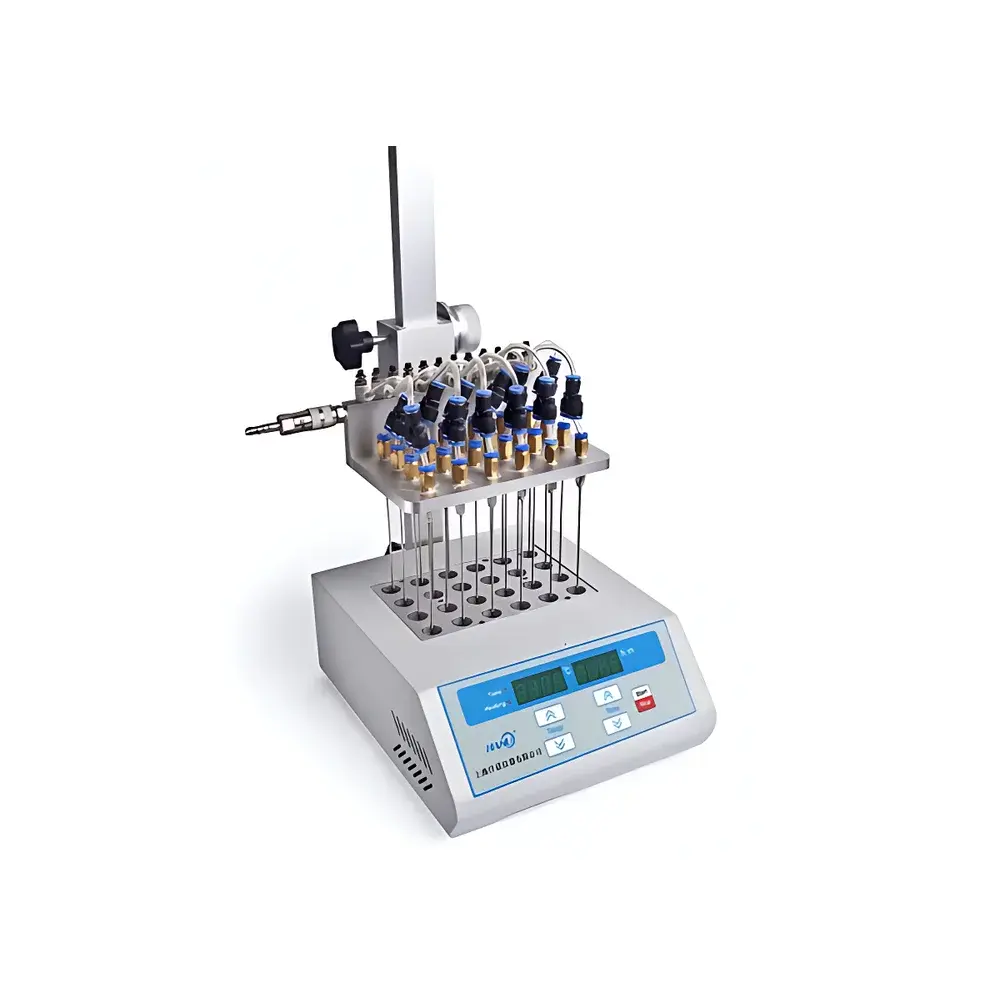
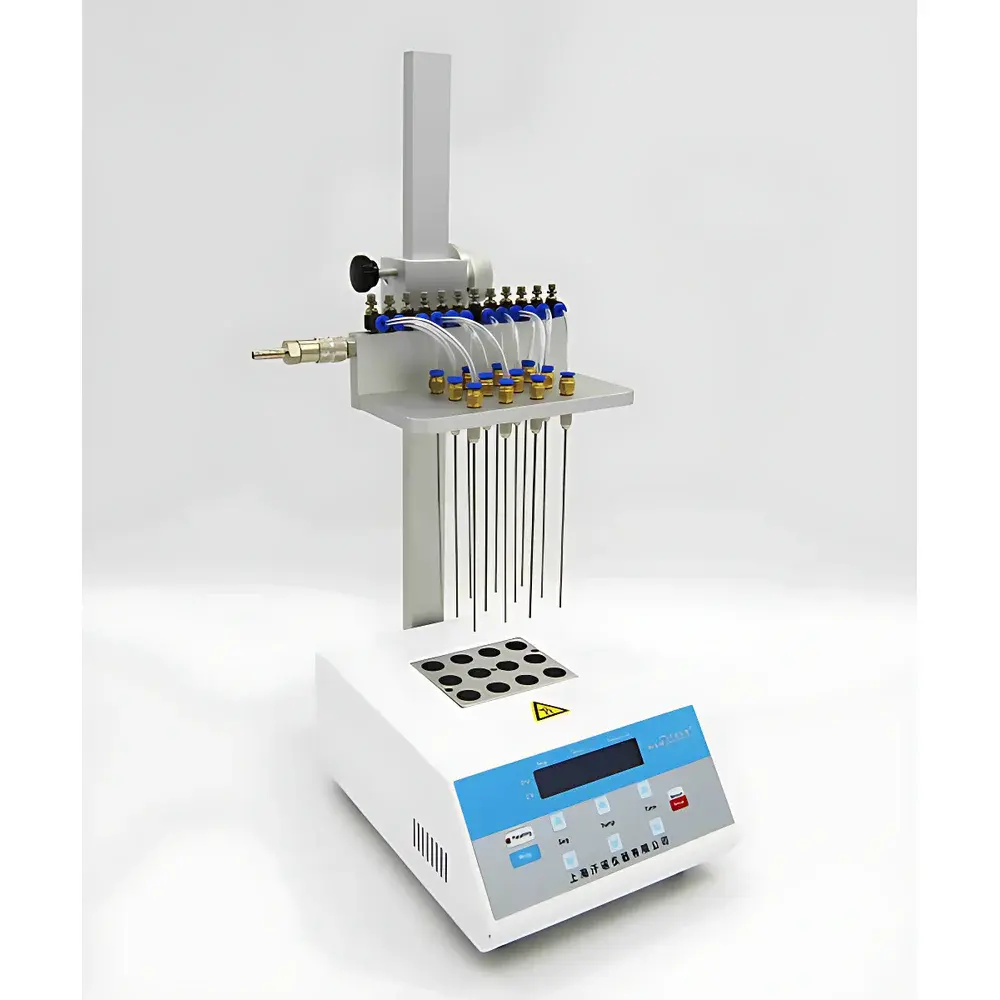
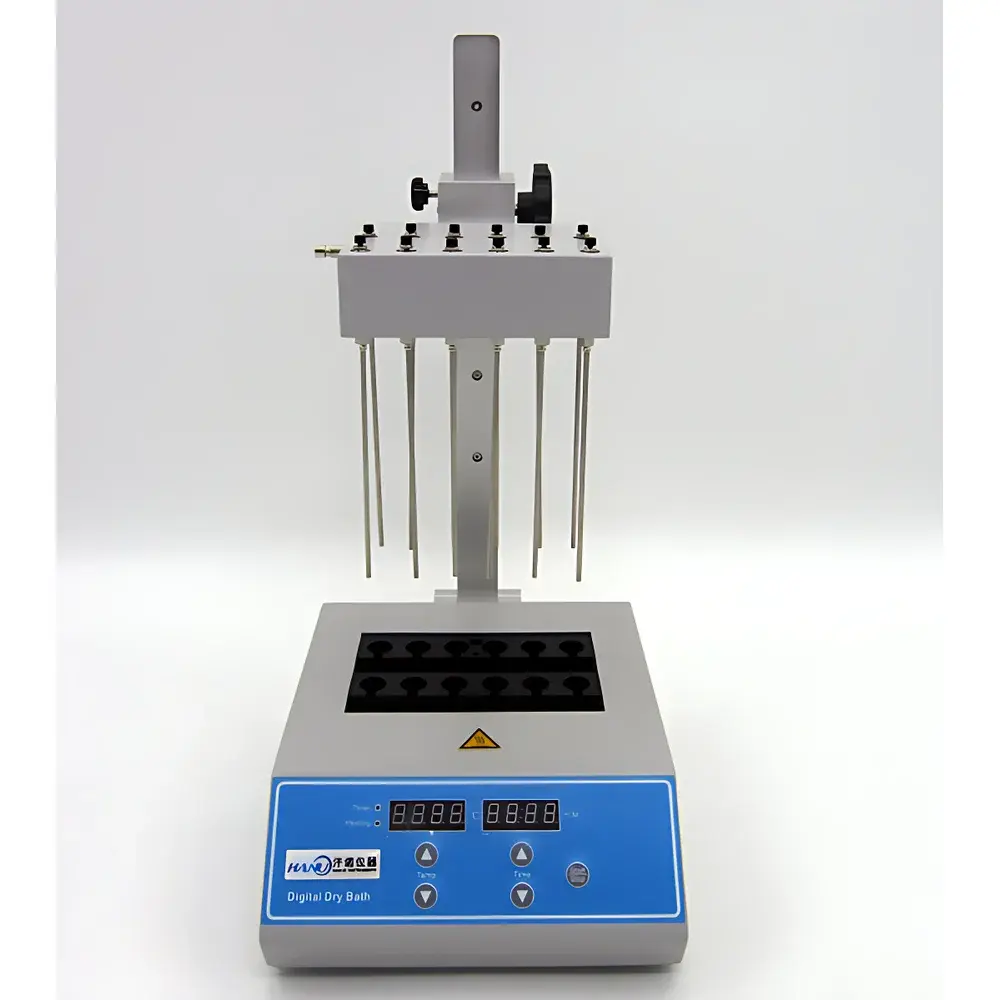
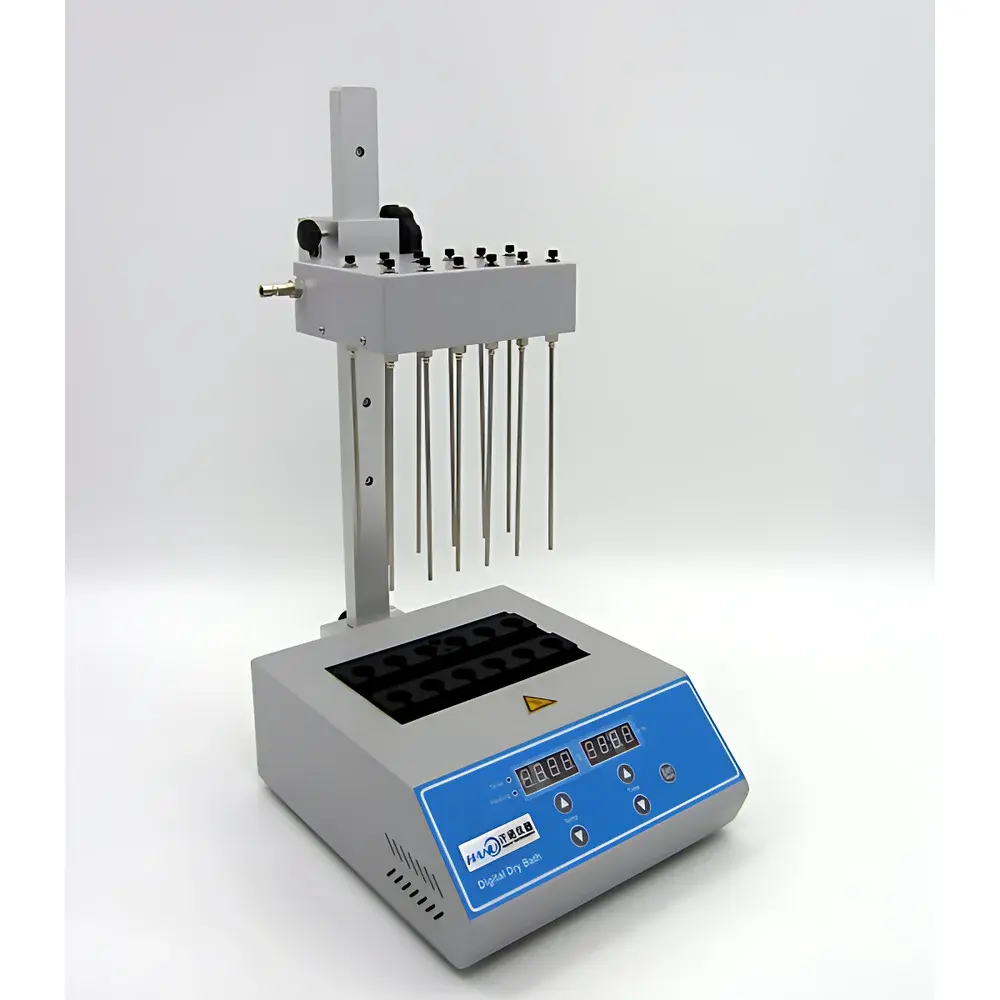
Hanuo HNDK200-2 24-Position Dry Block Nitrogen Evaporator
| Brand | Hanuo |
|---|---|
| Origin | Shanghai, China |
| Manufacturer Type | Authorized Distributor |
| Product Category | Domestic |
| Model | HNDK200-2 |
| Price | USD 1,200 (FOB Shanghai) |
| Heating Method | Dry Block Heating |
| Temperature Range | Ambient +5°C to 150°C |
| Temperature Stability | ±0.5°C at 100°C |
| Tube Diameter Compatibility | 10–19 mm |
| Nitrogen Flow Rate | 0–10 L/min |
| Sample Capacity | 24 positions |
| Heating Power | 200 W |
| Temperature Display Resolution | 0.1°C |
| Timer Range | 0–99 h 59 min |
| Max Operating Pressure | ≤0.1 MPa |
| Safety Features | Over-Temperature Protection, Real-Time Fault Detection & Audible Alarm |
| Control Interface | LED Display with Dual Parameter Monitoring (Temp + Time) |
Overview
The Hanuo HNDK200-2 is a precision-engineered 24-position dry block nitrogen evaporator designed for high-throughput sample concentration in analytical laboratories. It operates on the principle of inert gas-assisted solvent evaporation: purified nitrogen gas is delivered via adjustable stainless-steel needles directly above heated sample surfaces, accelerating solvent removal while minimizing oxidation, thermal degradation, or cross-contamination. Unlike water bath systems, the dry block architecture eliminates risks associated with water ingress, microbial growth, and temperature gradient inconsistencies—making it especially suitable for trace-level analyses requiring strict environmental control (e.g., pesticide residue testing, steroid profiling, or pharmaceutical impurity quantification per ICH Q2(R2)). The unit’s aluminum alloy heating block ensures rapid thermal response and uniform heat distribution across all 24 wells, supporting reproducible concentration kinetics critical for GLP-compliant workflows.
Key Features
- Dual independent heating modules (2 × 12-position blocks), each with individual temperature control and real-time monitoring
- Adjustable nitrogen needle height and lateral positioning to accommodate tube diameters from 10 mm to 19 mm—no adapter kits required
- Gas manifold with 12 individually controllable on/off valves, enabling selective activation per row to conserve nitrogen consumption
- Vertically adjustable gas chamber assembly; compatible with variable solvent volumes and optimized for use inside fume hoods during volatile or toxic solvent handling
- Integrated over-temperature cutoff (hardware-based) and dynamic fault detection system with audible alarm and LED indicator
- High-resolution LED display showing current temperature (0.1°C resolution), setpoint, remaining time, and operational status
- Programmable timer up to 99 hours 59 minutes with auto-shutdown function upon completion
- Stainless-steel gas needles (standard length: 150 mm) with corrosion-resistant finish; compatible with standard lab-grade nitrogen supply lines (¼” NPT inlet)
Sample Compatibility & Compliance
The HNDK200-2 accommodates common laboratory glassware including culture tubes, centrifuge tubes, and GC vials (10–19 mm OD). Its modular design supports parallel processing of heterogeneous sample sets without cross-interference. From a regulatory perspective, the instrument meets fundamental requirements for analytical instrument qualification under ISO/IEC 17025:2017 (clause 6.4.10) and aligns with USP guidelines for analytical instrument verification. While not inherently 21 CFR Part 11 compliant (as it lacks user authentication or electronic audit trail), its stable thermal performance (±0.5°C stability at 100°C), traceable calibration capability, and hardware safety interlocks support integration into validated environments when paired with documented SOPs and periodic calibration using NIST-traceable thermometers.
Software & Data Management
The HNDK200-2 operates as a standalone benchtop device with no embedded software or network connectivity. All operational parameters—including set temperature, elapsed/remaining time, and fault logs—are displayed locally via the LED interface. For laboratories requiring data capture, optional external USB temperature loggers (e.g., HOBO UX100 series) can be deployed alongside the unit to record time-stamped thermal profiles. Process documentation (e.g., batch records, instrument usage logs) must be maintained manually or via LIMS integration, consistent with GxP data integrity principles (ALCOA+). No firmware updates or cloud services are provided; maintenance is limited to mechanical inspection, gas line integrity checks, and annual calibration verification.
Applications
- Routine concentration of extracts prior to LC-MS/MS analysis in environmental monitoring (EPA Method 525.3, 8270D)
- Pre-concentration of biological fluids (urine, plasma) for endocrine disruptor screening (e.g., bisphenol A, phthalate metabolites)
- Sample cleanup in food safety labs—residue analysis of veterinary drugs per EU Commission Decision 2002/657/EC
- High-throughput library preparation in metabolomics, where parallel evaporation of derivatized samples preserves labile compounds
- QC/QA workflows in contract research organizations performing method transfer studies involving volatile solvents (e.g., hexane, ethyl acetate, dichloromethane)
FAQ
What is the maximum recommended nitrogen pressure for safe operation?
The unit is rated for inlet pressure ≤0.1 MPa (1 bar); exceeding this may compromise needle seal integrity or cause erratic flow distribution.
Can the HNDK200-2 be used with solvents boiling below 40°C?
Yes—its precise low-temperature control (down to ambient +5°C) allows gentle concentration of thermally sensitive analytes such as aldehydes or terpenes without bumping or aerosol loss.
Is calibration certificate included with shipment?
No factory calibration certificate is supplied by default; users must perform initial verification using a calibrated reference thermometer and document results per internal quality procedures.
How often should the gas needles be cleaned or replaced?
Needles should be inspected before each use for clogging or bending; ultrasonic cleaning in methanol is recommended weekly in high-throughput labs; replacement is advised every 6–12 months depending on solvent corrosivity.
Does the unit support external temperature probes for validation?
The HNDK200-2 does not feature probe input ports; temperature uniformity mapping must be conducted using portable calibrated probes placed directly in representative wells during IQ/OQ protocols.



