
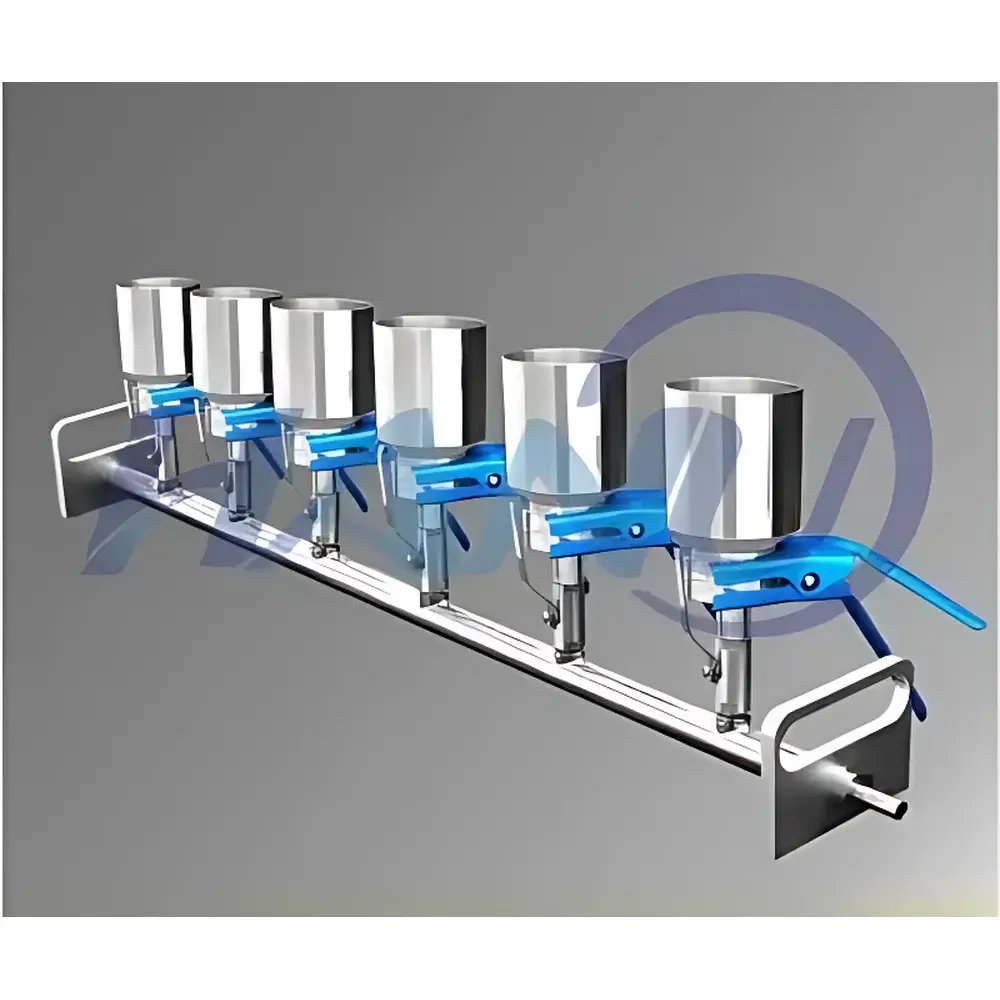
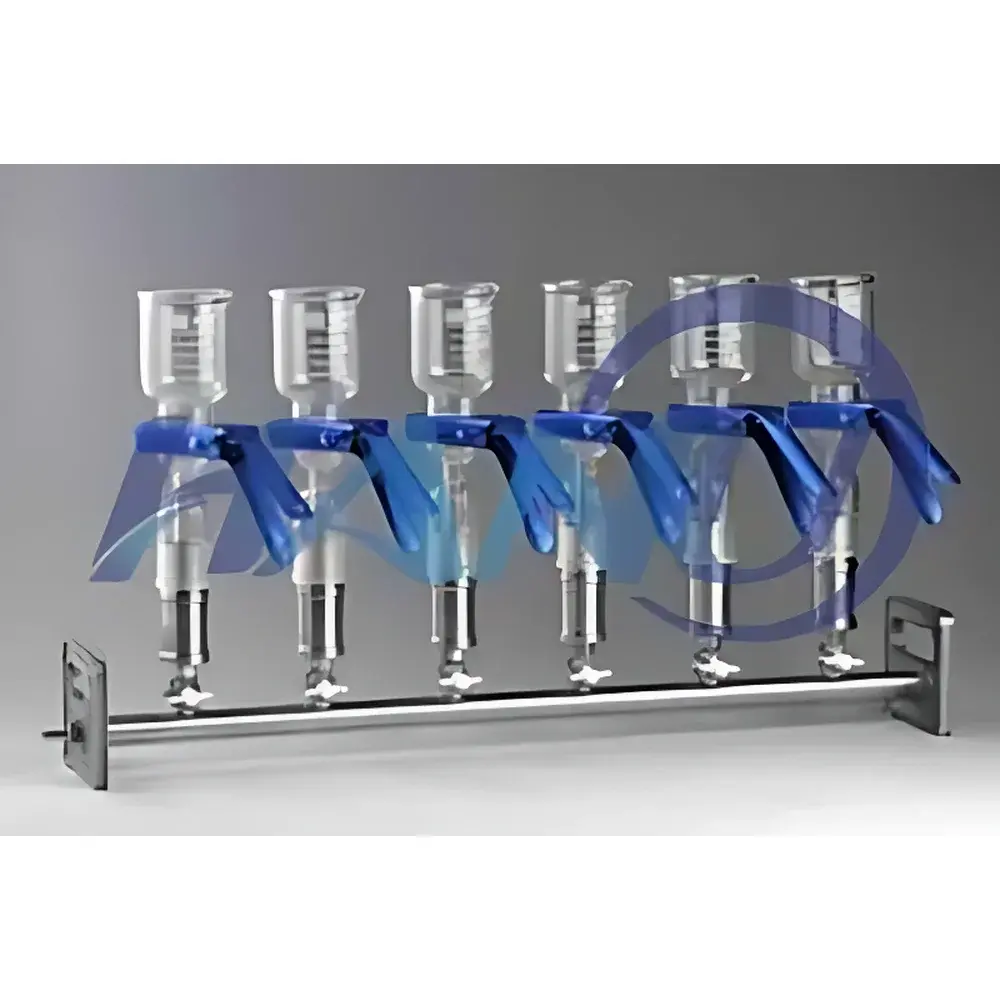
Hanuo MS-3 Stainless Steel Multi-Position Vacuum Filtration Manifold
| Brand | Hanuo |
|---|---|
| Origin | Shanghai, China |
| Model | MS-3 |
| Construction Material | Electropolished 316L Stainless Steel |
| Sample Capacity | 3 Independent Filter Positions |
| Dimensions (L×W×H) | 494 × 110 × 118 mm |
| Connection Type | Standard #9 Rubber Stopper Interface for Glass or Stainless Steel Membrane Filter Holders |
| Vacuum Compatibility | Single Central Vacuum Source Required |
| Pricing | USD 795 (FOB Shanghai) |
Overview
The Hanuo MS-3 Stainless Steel Multi-Position Vacuum Filtration Manifold is an engineered solution for parallel sample processing in life science laboratories requiring high chemical resistance, mechanical stability, and regulatory-compliant workflow integrity. Designed around Couette-style vacuum-driven membrane filtration principles, the MS-3 enables simultaneous processing of up to three discrete liquid samples under controlled negative pressure—without cross-contamination or flow interference between channels. Its core architecture leverages electropolished 316L stainless steel, a material specified in ASTM A967 and ISO 13485–aligned bioprocessing environments for its superior pitting resistance against chloride-rich buffers, organic solvents, and aggressive sterilants (e.g., hydrogen peroxide vapor, sodium hypochlorite). Unlike aluminum or coated carbon steel alternatives, 316L maintains dimensional stability across repeated autoclaving cycles (121 °C, 20 min, 15 psi), supporting GLP/GMP-aligned validation protocols where material traceability and surface passivation are auditable requirements.
Key Features
- Three independent, manually actuated isolation valves—one per filtration port—enabling selective operation without interrupting ongoing filtration in adjacent channels.
- Low-center-of-gravity structural design with reinforced base geometry ensures static stability even when all three filter holders are filled to nominal capacity (≤500 mL each), eliminating tipping risk during benchtop use.
- Electropolished 316L stainless steel manifold body and support frame, compliant with USP elemental composition limits and exhibiting ≤0.8 µm Ra surface roughness per ASME BPE-2022 Section SD-3.2.
- Dual-position anodized aluminum carrying handles mounted at opposing ends of the base provide ergonomic lift points while maintaining torsional rigidity during transport or repositioning.
- Standardized #9 rubber stopper interface accommodates both borosilicate glass filter funnels (e.g., Whatman 142, Sartorius 16550) and reusable 316L stainless steel membrane holders (e.g., Nalgene 500-4210), enabling seamless integration into existing lab filtration ecosystems.
Sample Compatibility & Compliance
The MS-3 supports aqueous, alcoholic, and mildly acidic/alkaline solutions (pH 2–12) commonly encountered in cell culture supernatant clarification, microbial load testing, pharmaceutical particulate analysis (USP ), and environmental water matrix preparation. It is compatible with membrane filters ranging from 0.1 µm to 5.0 µm pore size—including mixed cellulose ester (MCE), polyethersulfone (PES), nylon, and polytetrafluoroethylene (PTFE)—when used with appropriate holder configurations. The manifold itself carries no CE marking or FDA 510(k) clearance, as it functions exclusively as a passive vacuum distribution platform; however, its material certification documentation (including mill test reports per EN 10204 3.1) is supplied with each unit to support internal quality system audits under ISO 9001 and ISO 13485 frameworks.
Software & Data Management
As a purely mechanical vacuum manifold, the MS-3 does not incorporate embedded electronics, firmware, or digital connectivity. It requires no software installation, driver configuration, or cybersecurity validation. All operational parameters—including vacuum level, filtration duration, and sample identity—are recorded manually or integrated into laboratory information management systems (LIMS) via external logbooks or electronic notebook entries. This analog architecture inherently satisfies FDA 21 CFR Part 11 requirements for non-electronic records, eliminating the need for audit trail generation, electronic signature validation, or periodic software verification—making it suitable for regulated QC/QA labs operating under legacy paper-based SOPs.
Applications
- Parallel sterility testing per USP using membrane filtration methodology with multiple organism types or sample batches.
- High-throughput preparation of clarified biological fluids (e.g., serum, ascites, fermentation broth) prior to HPLC or LC-MS analysis.
- Environmental microbiology workflows involving simultaneous filtration of replicate water samples for heterotrophic plate count (HPC) or coliform enumeration.
- Pre-filtration of viscous protein solutions before ultrafiltration/diafiltration steps in downstream bioprocessing development.
- Quality control of excipients and active pharmaceutical ingredients (APIs) where particulate matter assessment per USP mandates multi-sample comparison under identical vacuum conditions.
FAQ
Is the MS-3 compatible with vacuum pumps rated above 0.1 mbar?
Yes—the manifold has no internal pressure regulation; it relies on externally controlled vacuum sources. Users must ensure pump output remains within the burst pressure rating of connected filter holders (typically 0.5–1.0 bar negative gauge).
Can I autoclave the entire assembled manifold?
No—only the 316L stainless steel body and base may be autoclaved. Rubber stoppers, valve seals, and aluminum handles must be removed prior to steam sterilization.
Does Hanuo supply calibration certificates or material test reports?
Yes—each MS-3 unit ships with a Certificate of Conformance referencing EN 10204 3.1 and certified 316L material composition data.
What maintenance is required between uses?
Rinse thoroughly with deionized water after each use; dry completely before storage. Inspect O-rings and valve stems quarterly for compression set or cracking.
Is the MS-3 suitable for organic solvent filtration?
It is chemically compatible with methanol, ethanol, isopropanol, and acetone; avoid prolonged exposure to chlorinated solvents (e.g., chloroform, DCM) or strong oxidizers (e.g., concentrated nitric acid).



