
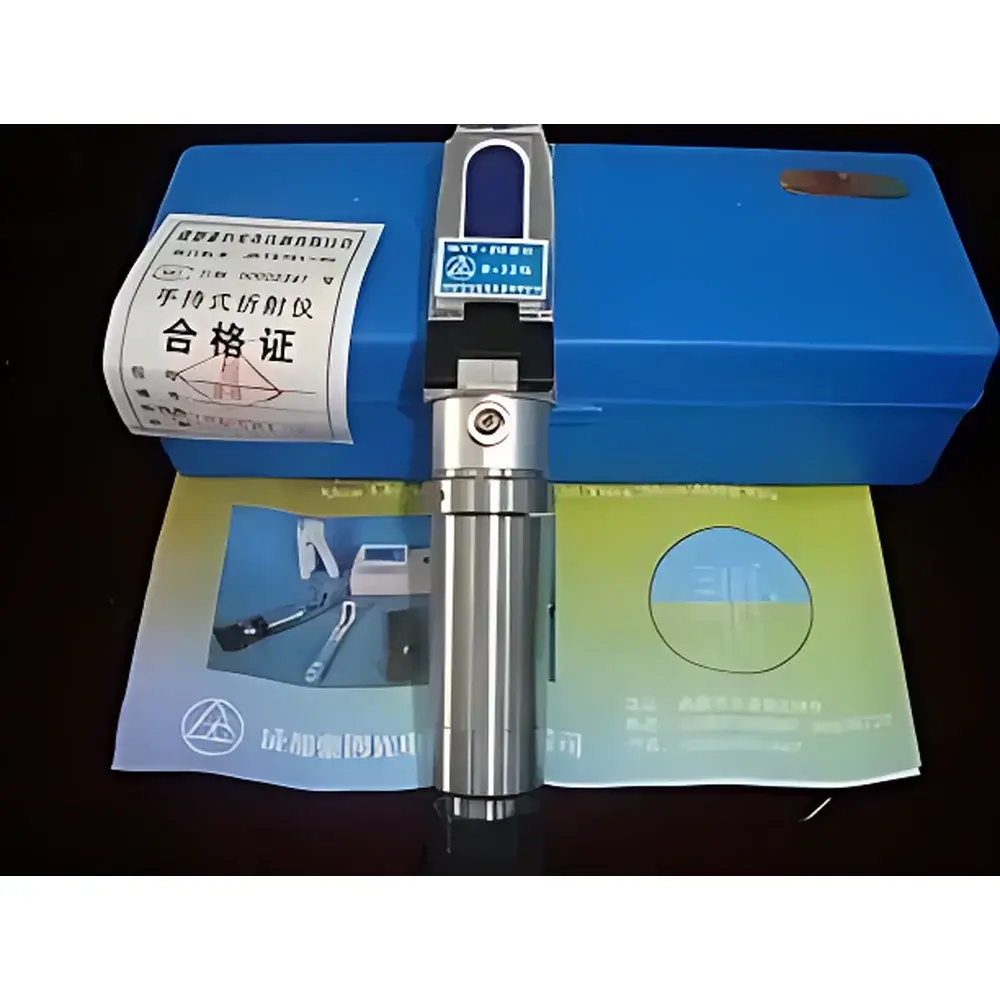
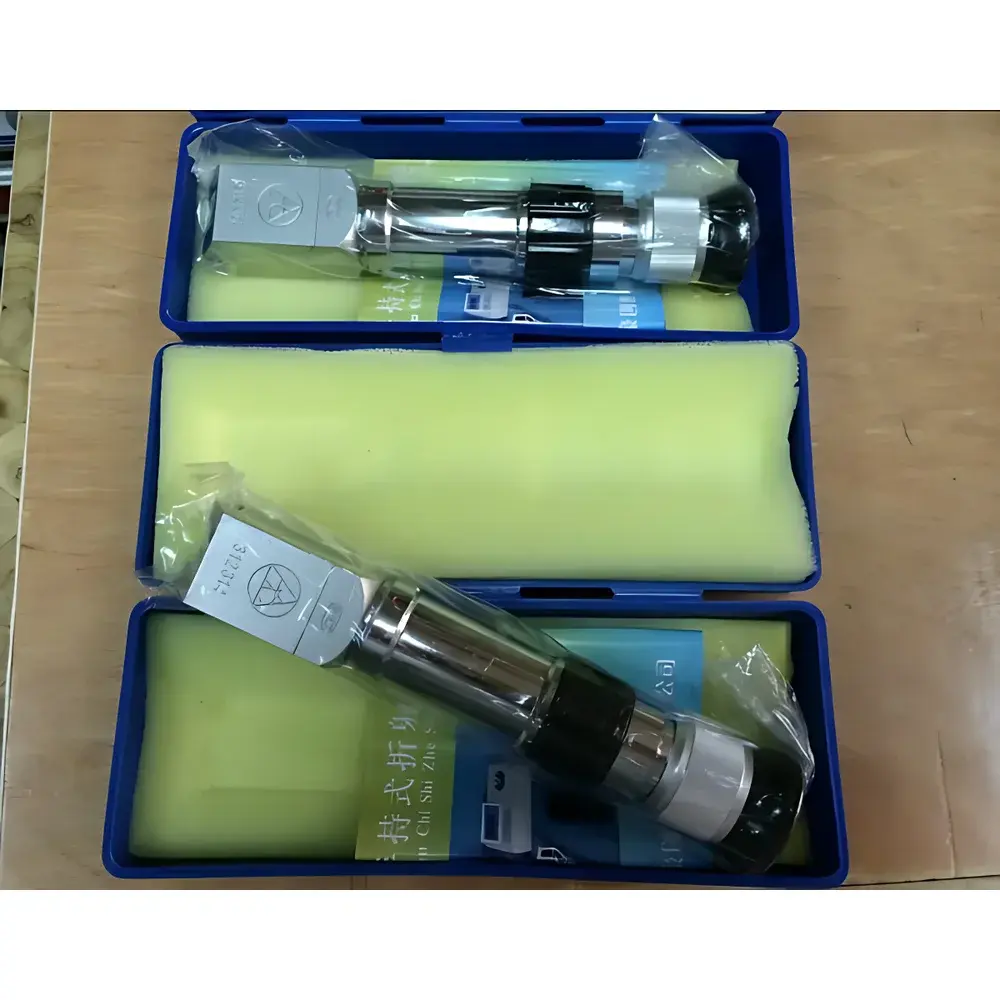
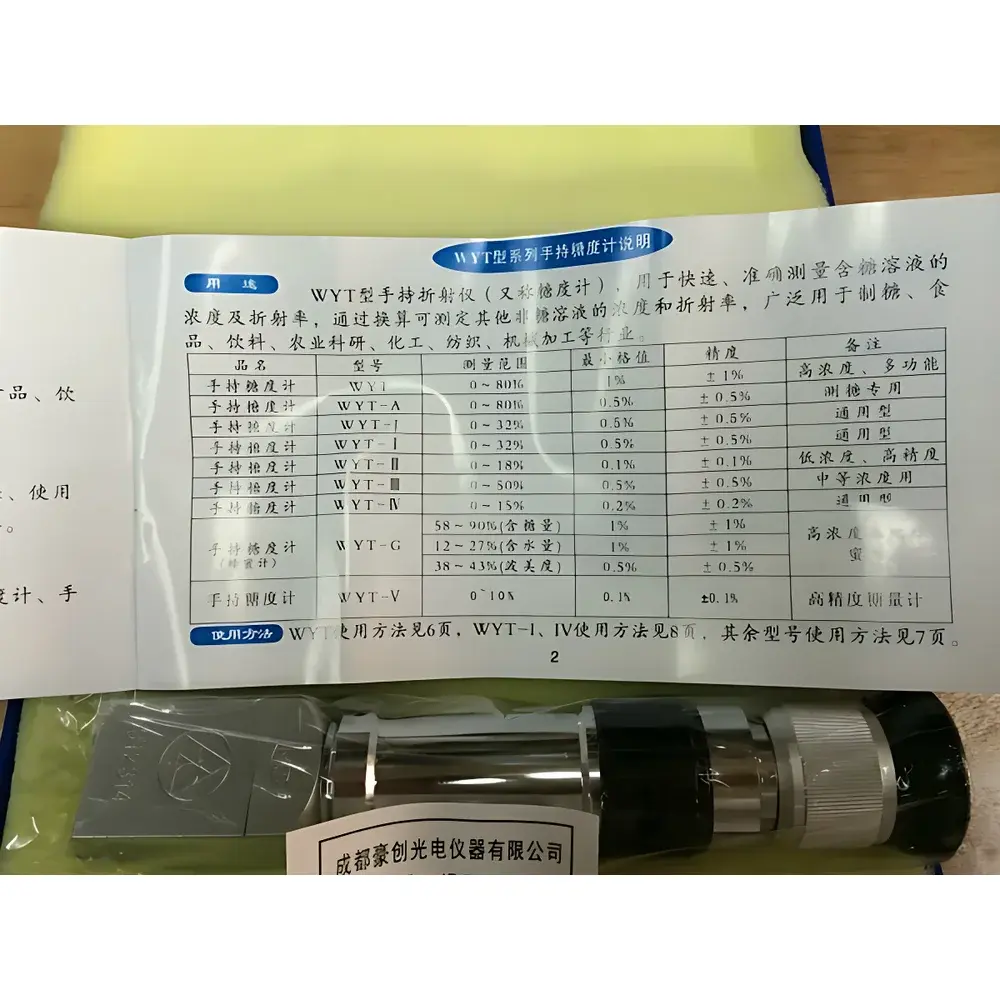
Haocreat WYT Series Handheld Refractometer for Sucrose Concentration Measurement (0–10%, 0–15%, 0–18%, 0–32%, 0–50%, 0–80%, and 58–90% Brix Ranges)
| Brand | Haocreat Optoelectronics Co., Ltd. |
|---|---|
| Origin | Sichuan, China |
| Manufacturer Type | Direct Manufacturer |
| Product Category | Domestic (China-made) |
| Model | WYT, WYT-I, WYT-II, WYT-III, WYT-IV, WYT-V, WYT-J, WYT-G, WYT-A |
| Price Range | USD 0–70 (FOB) |
| Instrument Type | Non-destructive Optical Analyzer |
| Construction Material | Heavy-metal alloy (WYT series) / Aluminum alloy (WYT-A) |
| Measurement Principle | Critical-angle refractometry |
Overview
The Haocreat WYT Series Handheld Refractometer is an optical precision instrument engineered for rapid, on-site determination of sucrose concentration—expressed in degrees Brix (°Bx)—in liquid samples via critical-angle refractometry. Based on Snell’s law and the linear correlation between refractive index and solute concentration in aqueous sugar solutions, the device measures the angle at which light undergoes total internal reflection at the prism-sample interface. This optical principle enables direct, solvent-independent quantification of dissolved solids without chemical reagents or sample dilution. Designed for field and benchtop use across quality control, agricultural assessment, and process monitoring environments, the WYT series delivers consistent, operator-independent readings under ambient lighting conditions. Each model is calibrated against NIST-traceable sucrose reference standards and conforms to ISO 21542:2020 (Refractometric determination of dry matter content in fruit and vegetable products) and AOAC Official Method 932.12 (Refractometric Brix determination).
Key Features
- Multiple calibrated ranges optimized for specific applications: WYT-II (0–18% Brix, 0.1% resolution) for high-precision fruit maturity testing; WYT-IV (0–15% Brix, 0.2% resolution) for soft drinks and juice QC; WYT-III (0–50% Brix, 0.5% resolution) for syrups and concentrates; WYT (0–80% Brix, 1% resolution) and WYT-A (0–80% Brix, 0.5% resolution, aluminum body) for industrial high-concentration screening; WYT-G (58–90% Brix) for honey purity verification per Codex Alimentarius STAN 12-1981.
- Robust mechanical construction: Heavy-metal alloy housing (WYT, WYT-J, WYT-I, WYT-III, WYT-II, WYT-V, WYT-G, WYT-IV) ensures thermal mass stability and resistance to mechanical shock during field deployment; WYT-A utilizes lightweight anodized aluminum for extended handheld operation.
- Ergonomic optical design: Precision-ground Abbe-type prisms with anti-reflective coating maximize light transmission efficiency; temperature-compensated scale (ATC range: 10–30 °C) minimizes manual correction needs in variable ambient conditions.
- Zero-adjustment capability: Integrated calibration screw allows user verification and fine-tuning using distilled water (0% Brix) prior to each measurement session—critical for GLP-compliant routine use.
- No power requirement: Fully mechanical operation eliminates battery dependency, ensuring reliability in remote or resource-constrained settings.
Sample Compatibility & Compliance
The WYT refractometers are validated for aqueous sucrose solutions and empirically applicable to other soluble solids (e.g., glucose, fructose, invert sugar, sodium chloride, glycerol) when used with appropriate conversion tables or third-party calibration curves. While primarily intended for food-grade liquids—including fruit juices, wine must, honey, soft drinks, jams, and dairy whey—the instruments comply with general-purpose requirements outlined in ISO 5725 (Accuracy of measurement methods), ASTM D1218 (Standard Test Method for Refractive Index of Hydrocarbon Liquids), and USP (Refractometry). For regulated pharmaceutical or clinical applications, users must establish method-specific validation protocols per ICH Q2(R2) guidelines. The devices are not suitable for turbid, viscous, or particulate-laden samples without prior filtration (≤5 µm pore size) or centrifugation.
Software & Data Management
As a purely analog optical instrument, the WYT series does not incorporate digital electronics, firmware, or data logging capabilities. Readings are interpreted visually through the eyepiece scale and manually recorded. This architecture eliminates cybersecurity vulnerabilities, software obsolescence, and regulatory concerns related to electronic records—making it inherently compatible with environments requiring strict adherence to FDA 21 CFR Part 11 (where electronic signatures are not involved) and GMP Annex 11 (when used as a secondary verification tool). For laboratories implementing LIMS or ELN systems, documented manual entries—including instrument ID, calibration date, operator initials, and environmental temperature—satisfy audit trail requirements under ISO/IEC 17025:2017 Clause 7.7.
Applications
- Agriculture & Horticulture: Field-based ripeness assessment of grapes, citrus, mangoes, and melons; harvest timing optimization based on Brix thresholds.
- Food & Beverage Manufacturing: In-line QC of syrup density, jam consistency, soft drink sweetness, and fermentation progress in brewing and winemaking.
- Honey Production: Verification of moisture content and adulteration screening per EU Directive 2001/110/EC and national honey standards.
- Research Laboratories: Rapid screening of plant sap osmolality, enzymatic hydrolysis kinetics, and formulation development for functional beverages.
- Education & Training: Undergraduate physics and food science labs for teaching optical principles, solution thermodynamics, and analytical method validation fundamentals.
FAQ
How often should the WYT refractometer be calibrated?
Calibration with distilled water (0% Brix) is recommended before each measurement session or whenever ambient temperature shifts by >3 °C.
Can the WYT measure non-sugar solutions like saltwater or glycerol?
Yes—but only with validated conversion factors or secondary calibration curves; factory scales are optimized for sucrose.
Is temperature compensation automatic?
Yes—the built-in bimetallic ATC mechanism adjusts the scale position dynamically within 10–30 °C; outside this range, manual correction per manufacturer’s table is required.
What maintenance is required?
After each use, clean the prism surface with lens tissue and distilled water; avoid alcohol or abrasive cleaners that may damage the anti-reflective coating.
Does the WYT series meet international export documentation requirements?
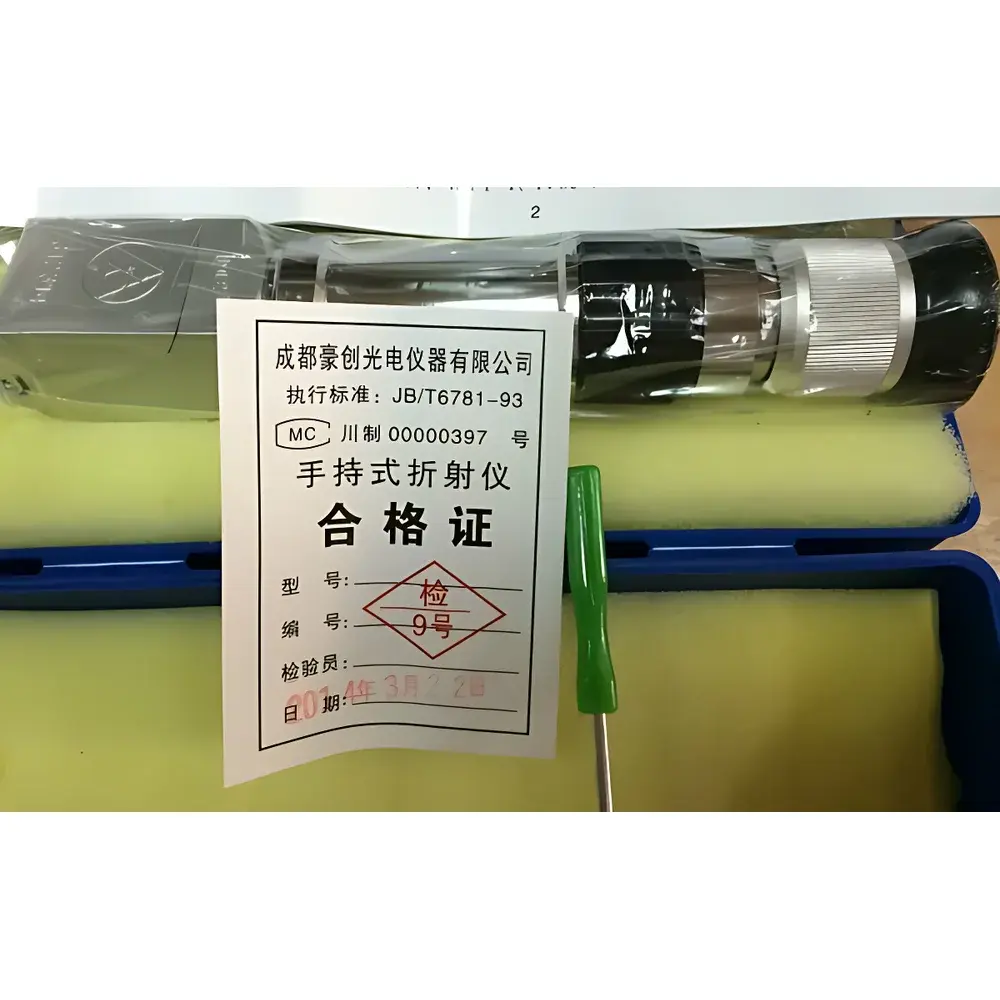
Yes—each unit ships with a Certificate of Conformance, material composition declaration (RoHS-compliant), and ISO 9001-certified manufacturing traceability documentation.



