
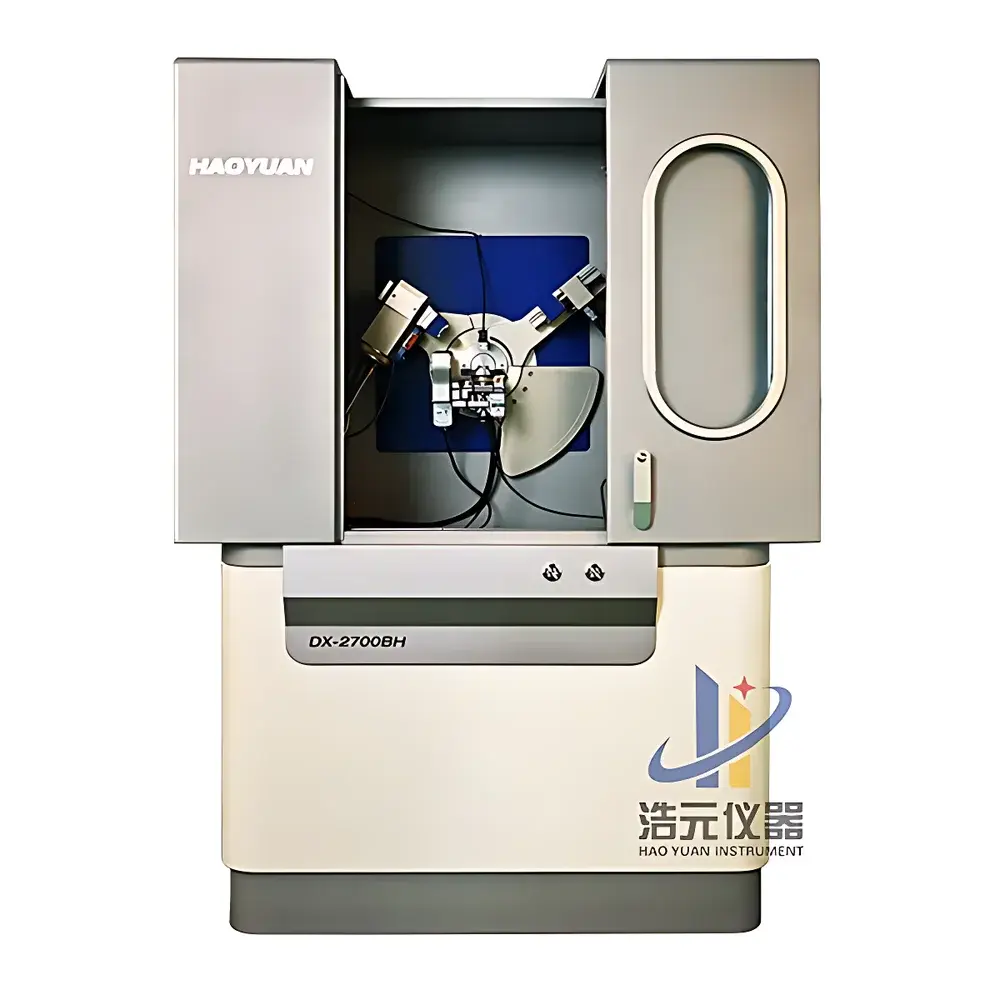
Haoyuan DX-2700BH Benchtop Powder X-ray Diffractometer
| Brand | Haoyuan |
|---|---|
| Origin | Liaoning, China |
| Manufacturer Type | Direct Manufacturer |
| Product Category | Domestic |
| Model | DX-2700BH |
| Instrument Type | Powder X-ray Diffractometer |
| Configuration | Floor-standing |
| X-ray Generator Power | 3 kW |
| Angular Accuracy | ±0.0001° |
| Resolution (FWHM) | SiO₂ ≤ 60% |
Overview
The Haoyuan DX-2700BH is a floor-standing, θ–θ geometry powder X-ray diffractometer engineered for high-precision crystallographic analysis across academic, industrial, and regulatory laboratory environments. Based on Bragg’s law (nλ = 2d sinθ), it utilizes monochromatic Cu Kα radiation (λ = 1.5418 Å) generated by a sealed-metal-ceramic X-ray tube to probe long-range periodic order in crystalline and semi-crystalline materials. Its robust mechanical architecture—featuring high-stiffness goniometer stages, thermally stabilized optics, and precision-ground angular encoders—ensures angular reproducibility better than ±0.0001° over extended operation cycles. Designed for routine phase identification and advanced structural characterization, the system supports both standard powder diffraction and specialized measurements including Rietveld refinement, quantitative phase analysis (QPA), crystallite size and microstrain determination (via Williamson–Hall or Warren–Averbach methods), and residual stress evaluation in polycrystalline metals and coatings.
Key Features
- θ–θ optical configuration enabling simplified sample alignment, reduced absorption artifacts, and seamless integration of in situ accessories (e.g., heating/cooling stages, humidity cells)
- 3 kW high-power sealed metal-ceramic X-ray tube with extended lifetime and stable output (<±0.1% intensity drift over 8 h)
- Dual detection options: high-efficiency proportional counter (maintenance-free, optimized for speed and dynamic range) and optional silicon drift detector (SDD) offering 3× faster acquisition, superior energy resolution (<130 eV at Mn Kα), and enhanced peak deconvolution capability
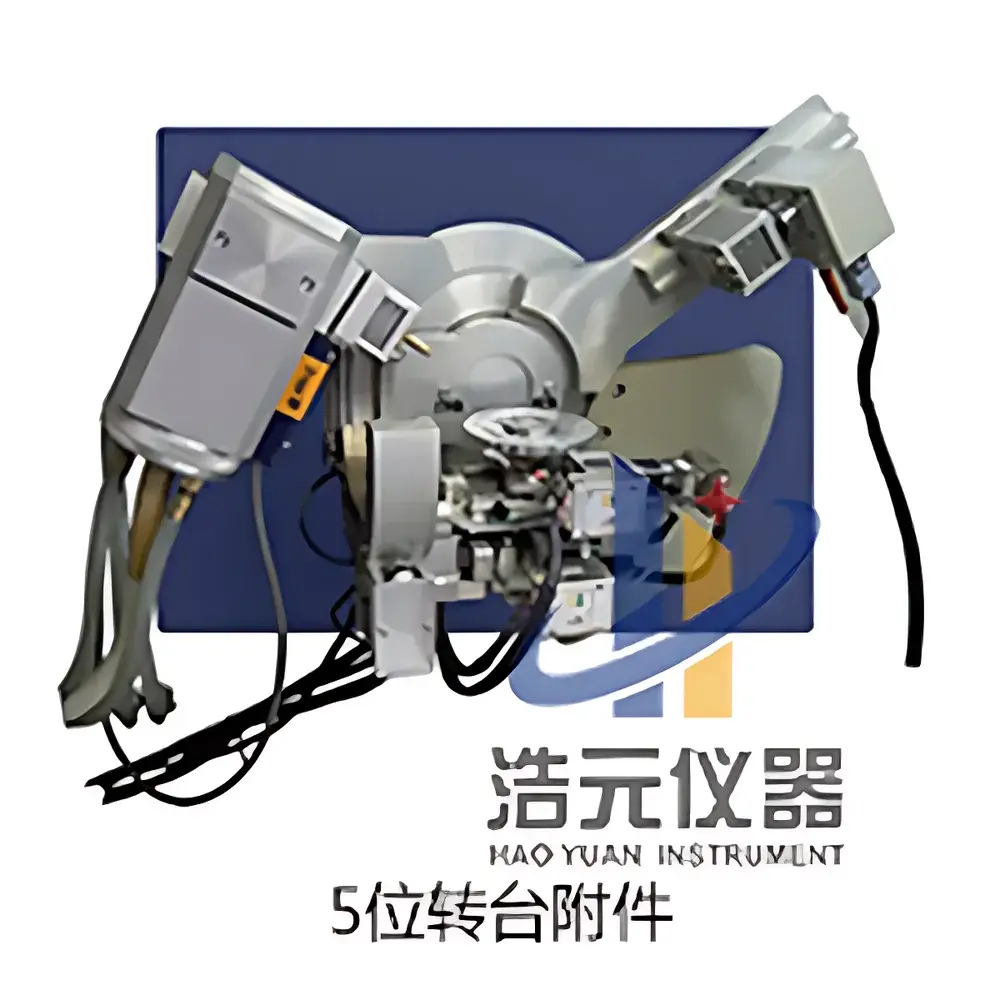
- Modular accessory interface with automatic recognition—no manual optical realignment required when installing sample changers, thin-film stages, or texture goniometers
- Integrated motorized sample stage with XYZ translation and tilt adjustment for precise micro-area positioning (down to 100 µm spot size with optional Göbel mirror optics)
- CNC-machined frame and vibration-damped base ensuring mechanical stability under varying ambient conditions (operating temperature: 15–30 °C; humidity: 30–70% RH, non-condensing)
Sample Compatibility & Compliance
The DX-2700BH accommodates diverse physical forms without modification: loose powders (including air-sensitive samples via glovebox-compatible holders), solid blocks (metals, ceramics), thin films (single-layer and multilayer stacks), and micro-region specimens (≥50 µm lateral dimension). It complies with IEC 61000-6-3 (EMC emission standards) and IEC 61000-6-2 (immunity requirements), and meets essential safety provisions of IEC 62471 (photobiological safety of lamps and lamp systems). Data integrity workflows align with GLP and GMP principles: audit trails, user access levels, electronic signatures, and raw-data immutability are supported through optional 21 CFR Part 11–compliant software modules. All quantitative analyses adhere to ASTM E1420 (Standard Test Method for Quantitative Phase Analysis of Crystalline Substances by X-ray Diffraction) and ISO 21397-1 (XRD-based phase quantification using reference intensity ratio and Rietveld methods).
Software & Data Management
Bundled with Haoyuan XRD Analysis Suite v4.2, the system delivers comprehensive data processing from acquisition to publication-ready reporting. Core capabilities include automated peak search and indexing (using DICVOL, TREOR, or ITO algorithms), background subtraction (polynomial, spline, or iterative convex hull), Kα₁/Kα₂ stripping, full-pattern Rietveld refinement (with GSAS-II and TOPAS import/export), and crystallite size/microstrain modeling. Quantitative analysis leverages both ICDD PDF-4+ (2024 release) and user-curated databases; Rietveld QPA supports internal standard calibration and matrix correction. The software supports multi-sample batch processing, 2D/3D contour mapping of intensity vs. 2θ and χ, and generation of CIF-compliant structure files. Raw scan data (.raw, .udf) and processed results (.csv, .pdf, .cif) are stored in timestamped, version-controlled project folders with SHA-256 hash verification for traceability.
Applications
- Phase identification and impurity detection in pharmaceuticals (API polymorph screening per USP <711> and ICH Q5A)
- Quantitative analysis of clinker phases (alite, belite, aluminate) in cementitious systems per ASTM C150
- Thin-film characterization: layer thickness, interfacial roughness, and strain state in semiconductor heterostructures
- Residual stress mapping in welded joints and additive-manufactured alloys (ASTM E915)
- Crystallinity assessment of polymer blends and nanocomposites
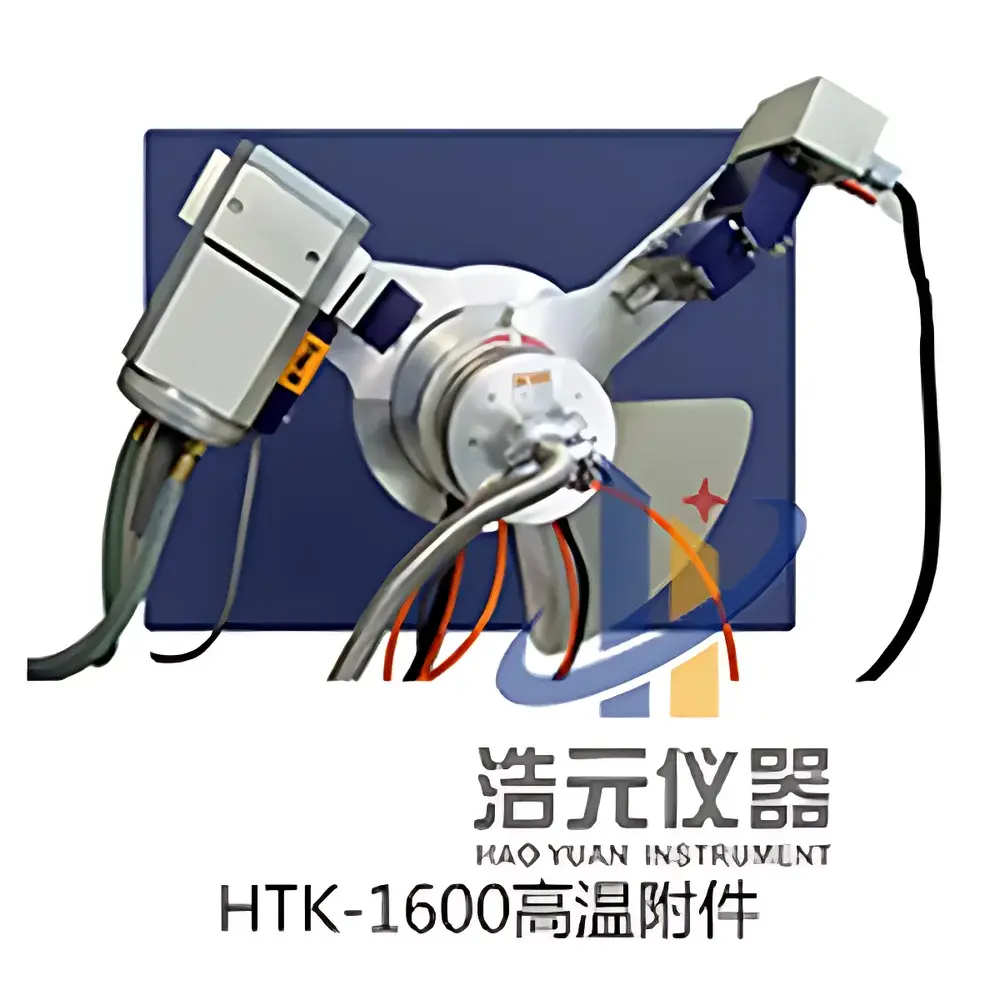
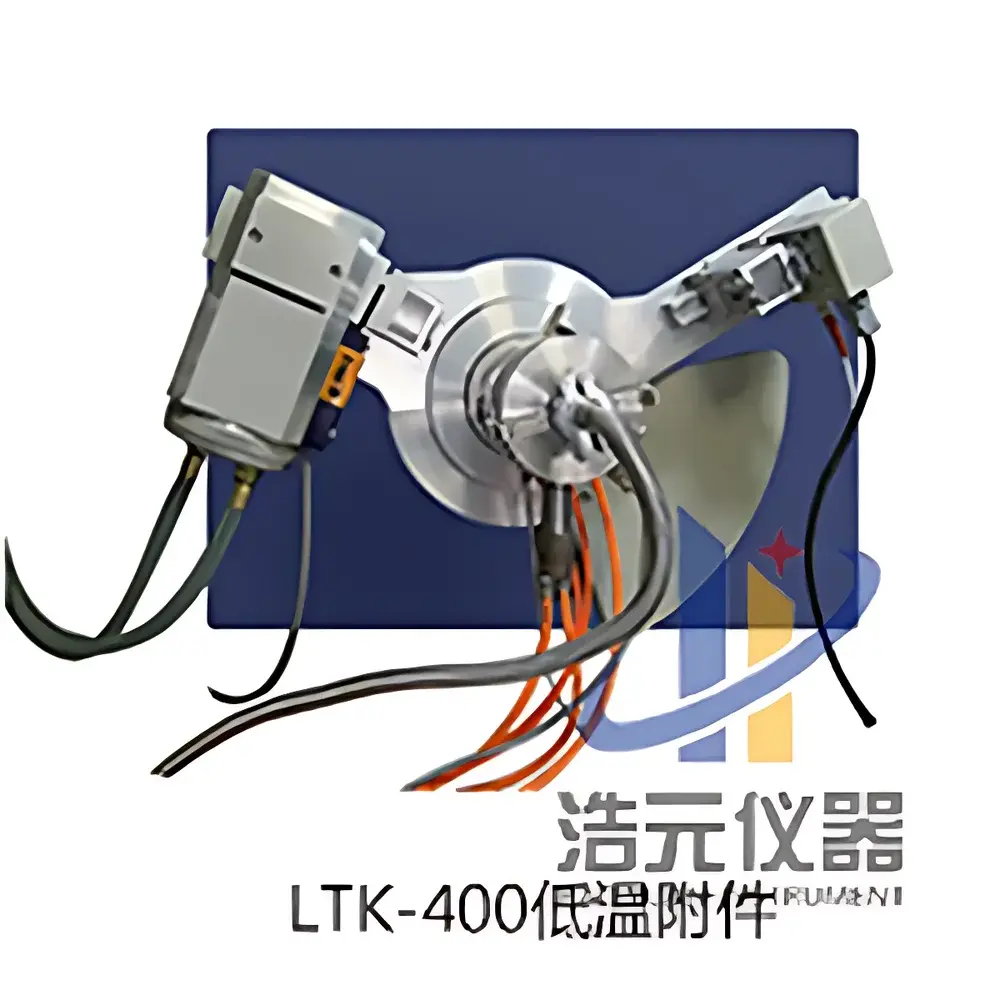
- In situ thermal analysis (–180 °C to +1600 °C) for phase transition kinetics and decomposition pathways
- Environmental mineralogy: asbestos fiber identification (chrysotile, crocidolite) and clay speciation in soil/sediment matrices
FAQ
Is the DX-2700BH compliant with FDA 21 CFR Part 11 for regulated laboratories?
Yes—when configured with the optional Validation Package, it provides role-based access control, electronic signature capture, complete audit trail logging, and raw-data archiving meeting ALCOA+ principles.
Can the system perform texture analysis on rolled metal sheets?
Yes—equipped with a motorized Eulerian cradle and pole figure scanning module, it supports full ODF reconstruction per ASTM E1122 and ISO/IEC 17025-accredited protocols.
What sample preparation tools are included?
Standard accessories include zero-background silicon sample holders, glass capillaries (0.3–1.0 mm), and a manual press kit for pelletizing powders; optional automated sample changers support up to 48 positions.
Does the software support third-party database imports (e.g., ICSD)?
Yes—import of CIF files from ICSD, COD, or custom crystallographic databases is fully supported for structure solution, refinement, and simulation.
What maintenance intervals are recommended for the X-ray tube?
The metal-ceramic tube is rated for ≥5,000 hours of operation; annual calibration of angular encoder and intensity linearity is advised per ISO 17025 internal quality procedures.
Related Products







