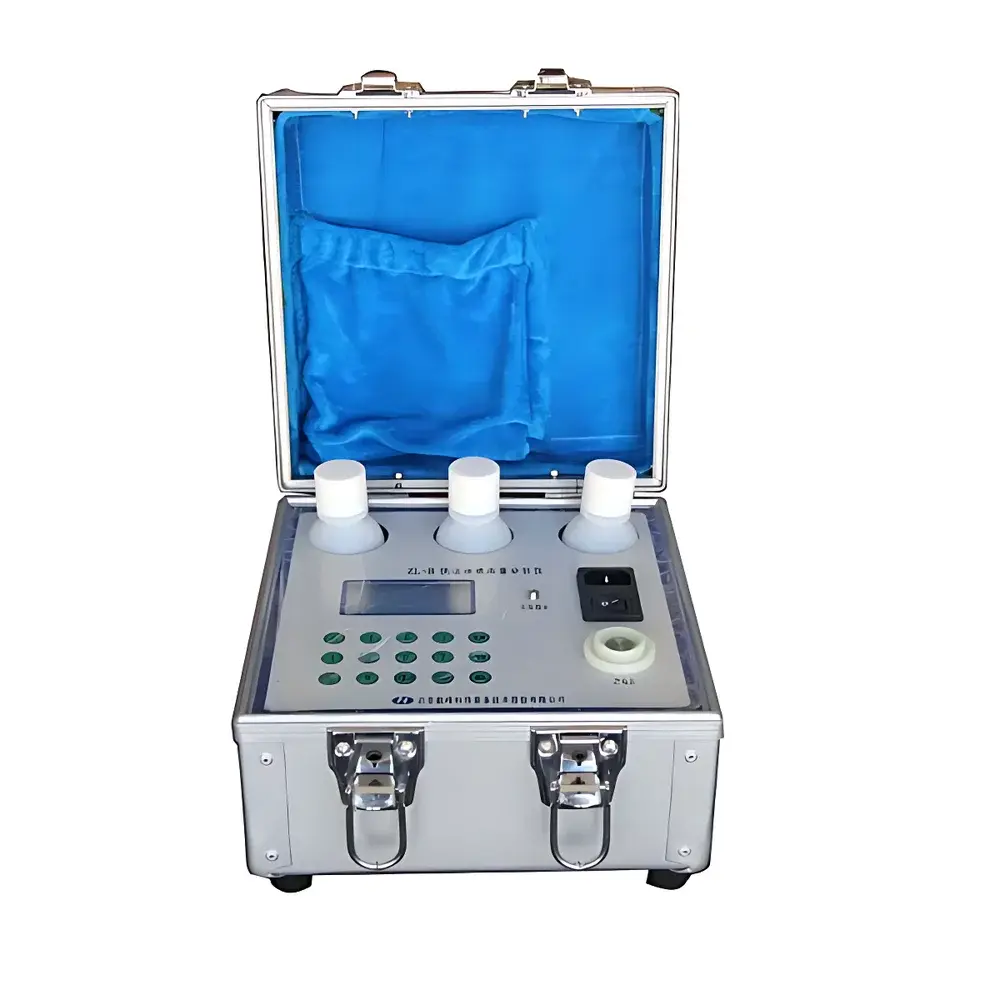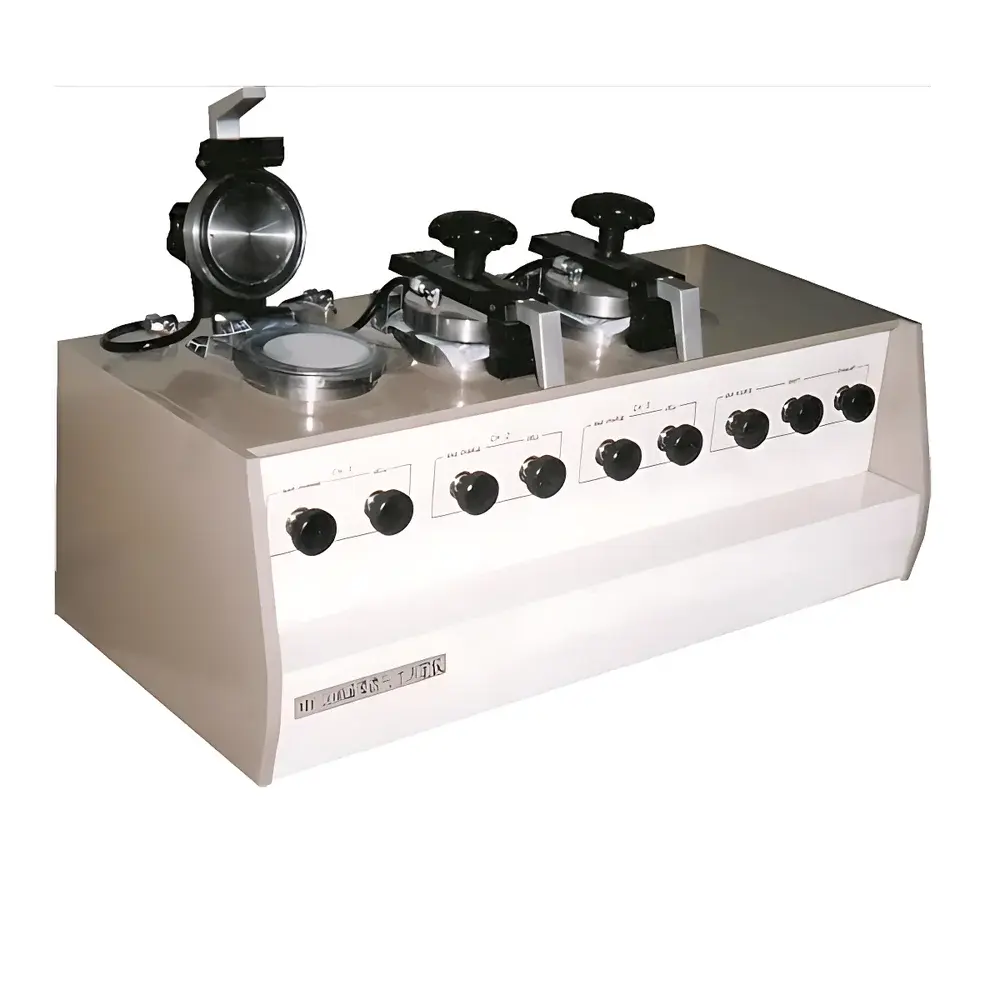
HARKE HK-G1 Differential Pressure Gas Permeability Tester
| Brand | HARKE |
|---|---|
| Origin | Beijing, China |
| Manufacturer | Yes |
| Country of Origin | China |
| Model | HK-G1 |
| Price | Upon Request |
| Measurement Principle | Vacuum-based differential pressure method (ASTM D1434 compliant) |
| Test Gases | O₂, N₂, CO₂, Air, He, H₂, CH₄, C₃H₈, C₄H₁₀, NH₃ (hazardous gases require pre-order specification) |
| Standard Test Range | 0.05–160,000 cm³/m²·24h·0.1MPa |
| Resolution | 0.001 cm³/m²·24h·0.1MPa |
| Vacuum Resolution | 0.1 Pa |
| Temperature Control Range | 5–95 °C (external chiller/heater required) |
| Temperature Accuracy | ±0.1 °C |
| Sample Thickness | ≤5 mm (customizable) |
| Sample Area | 48 cm² |
| Sample Dimensions | ≥150 mm × 94 mm or circular |
| Sample Quantity | 1 specimen per test |
| Test Pressure Range | −0.1 to +0.1 MPa |
| Supply Gas Pressure | 0.3–1.0 MPa |
| Gas Inlet Port | Ø8 mm |
| Dimensions (L×D×H) | 330 × 600 × 330 mm |
| Weight | 28 kg |
| Power | AC 220 V, 50 Hz |
| Compliance | GB/T 1038, ISO 15105-1, ISO 2556, ASTM D1434, JIS K7126-1, YBB00082003 |
Overview
The HARKE HK-G1 Differential Pressure Gas Permeability Tester is a precision-engineered instrument designed for quantitative determination of gas transmission rates through polymeric, metallic, and composite barrier materials under controlled environmental conditions. It operates on the vacuum-based differential pressure principle—commonly referred to as the “manometric method”—in strict accordance with ASTM D1434 and ISO 15105-1. This technique measures the time-dependent pressure rise in a sealed downstream chamber following establishment of a defined upstream gas pressure differential across the test specimen. The system calculates gas permeability (P), diffusion coefficient (D), solubility coefficient (S), and gas transmission rate (GTR) via Fick’s law of diffusion and Henry’s law of solubility. Its architecture supports rigorous physical characterization of packaging films, medical device barriers, battery separators, aerospace composites, and functional membranes—particularly where regulatory traceability, thermal stability, and low-permeability resolution are critical.
Key Features
- Single-specimen test station with pneumatic clamping mechanism ensuring repeatable seal integrity and rapid sample loading/unloading
- Triple-mode test termination logic: proportional threshold, fuzzy logic convergence, and fixed-duration protocols—enabling adaptive experimental control for both high- and ultra-low-permeability materials
- Independent triple-test-chamber configuration available upon customization (standard unit supports one test cavity)
- High-resolution vacuum sensing (0.1 Pa) coupled with wide-range gas flow quantification (0.05–160,000 cm³/m²·24h·0.1MPa) and sub-milligram resolution
- Thermally isolated test chamber compatible with external temperature control units (5–95 °C range; ±0.1 °C stability)
- Gas compatibility extended to reactive and flammable species—including H₂, CH₄, NH₃, and hydrocarbons—subject to factory-configured safety interlocks and material-certified wetted-path components (requires advance specification)
- Modular design permits expansion of upper measurement limit for high-GTR applications such as nonwovens or microporous elastomers
Sample Compatibility & Compliance
The HK-G1 accommodates rigid and flexible planar specimens up to 5 mm thick and minimum dimensions of 150 mm × 94 mm (or equivalent circular format), with standardized test area of 48 cm². It is validated for use with aluminum foil laminates, PVDC-coated PET, LDPE, coextruded multilayer films, metallized CPP, pharmaceutical blister foils (e.g., PVC/PVDC, cold-forming aluminum), battery ceramic separators, rubber compounds, tire innerliners, biodegradable PLA/PHA blends, and synthetic skin analogs. All operational parameters and calibration procedures adhere to Good Laboratory Practice (GLP) documentation requirements. Instrument validation packages support IQ/OQ/PQ execution, and raw data files retain full audit trail metadata—including timestamped pressure transients, temperature logs, and operator ID—for compliance with FDA 21 CFR Part 11 and ISO/IEC 17025 accreditation frameworks.
Software & Data Management
Bundled Windows-native software provides real-time visualization of pressure vs. time curves, automatic curve fitting using nonlinear regression (least-squares optimization), and simultaneous derivation of P, D, and S values per ISO 15105-1 Annex B. Data export is supported in CSV, PDF, and XML formats—with embedded metadata tags for instrument serial number, calibration certificate ID, environmental log, and user-defined test notes. The system enforces role-based access control (administrator, technician, reviewer), electronic signature capture, and immutable record retention. Audit trails record all parameter modifications, test aborts, recalibrations, and report generation events—fully traceable to individual user accounts and system timestamps.
Applications
- Quality assurance of food and pharmaceutical primary packaging—validating shelf-life predictions against O₂ and H₂O vapor ingress limits
- Development of next-generation battery separators requiring precise O₂ and electrolyte vapor permeability thresholds
- Evaluation of aerospace-grade polymer composites exposed to hypobaric and cryogenic service environments
- Regulatory submission support for USP , EP 3.2.1, and YBB technical guidelines governing barrier performance of parenteral containers
- Accelerated aging studies correlating permeability shifts with thermal oxidative degradation kinetics
- Comparative benchmarking of bio-based films versus conventional PE/PP structures under standardized climatic profiles
FAQ
What gases can be tested without modification?
Oxygen, nitrogen, carbon dioxide, air, and helium may be used directly with standard wetted-path components.
Is the instrument suitable for testing hazardous gases like hydrogen or ammonia?
Yes—but only after formal hazard assessment, custom sealing material selection (e.g., Kalrez® O-rings), explosion-proof electrical certification, and integration of gas-specific leak detection sensors. These configurations must be specified at order stage.
Does the HK-G1 meet FDA or EU MDR requirements for medical packaging validation?
It complies with ISO 15105-1 and ASTM D1434, which are referenced in ISO 11607-1 for sterile barrier systems. Full regulatory alignment requires documented IQ/OQ/PQ and integration into a validated laboratory quality management system (e.g., ISO 13485).
Can test temperature be controlled internally, or is an external unit mandatory?
The base unit does not include integrated heating/cooling; a certified external temperature controller (chiller/heater circulator) is required to achieve and maintain setpoints from 5 °C to 95 °C.
How is calibration traceability maintained?
Primary calibration uses NIST-traceable reference standards for pressure (0.1 Pa resolution) and volumetric flow. Certificate of Calibration includes uncertainty budgets per ISO/IEC 17025 and is issued with each instrument shipment.