
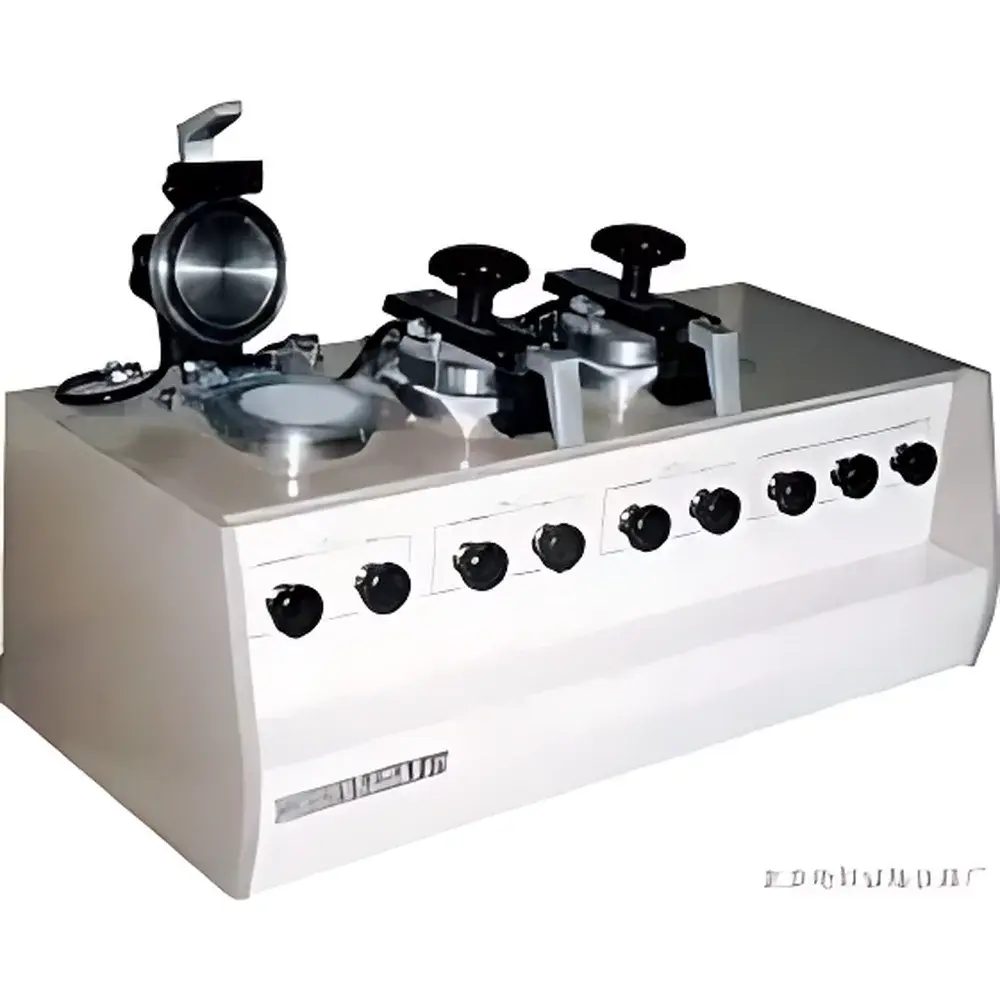
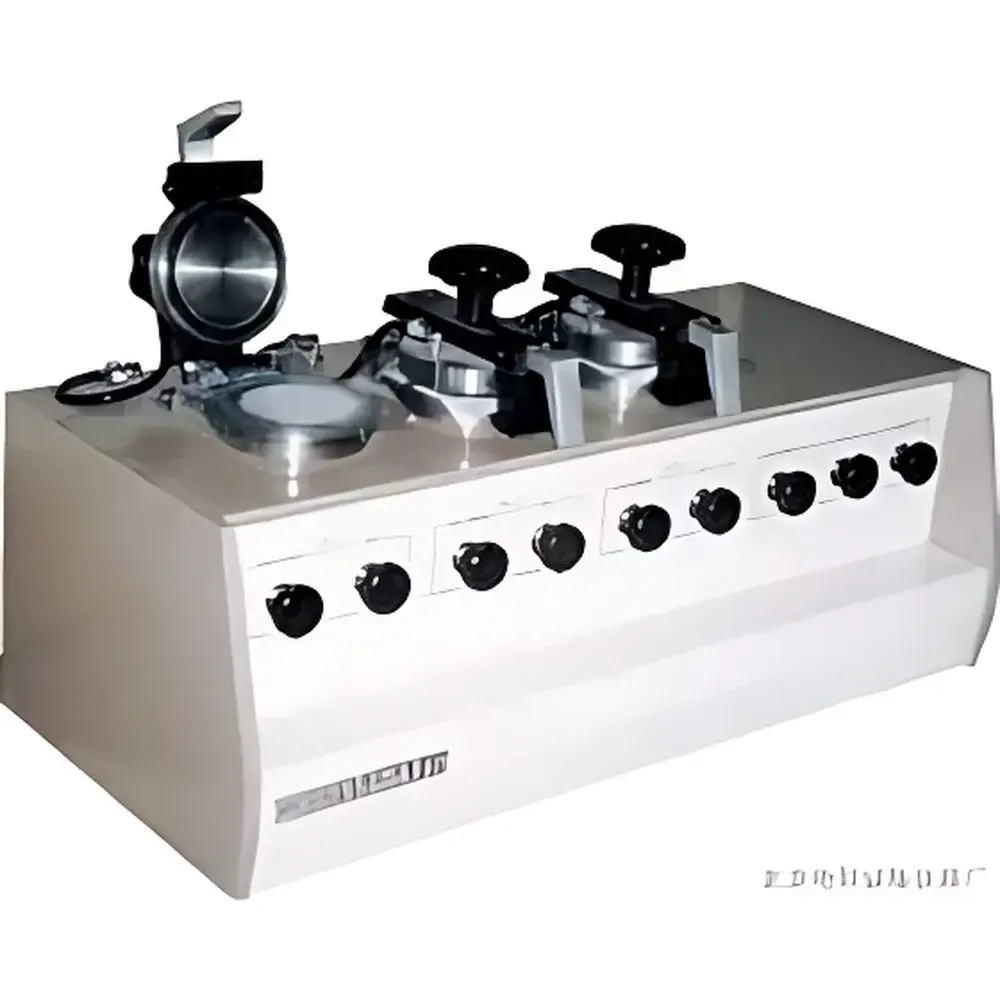
HARKE HK-W2 Differential Pressure Method Gas Permeability Tester
| Brand | HARKE |
|---|---|
| Origin | Beijing, China |
| Manufacturer | Yes |
| Country of Origin | China |
| Model | HK-W2 |
| Pricing | Upon Request |
Overview
The HARKE HK-W2 Differential Pressure Method Gas Permeability Tester is a precision-engineered instrument designed for the quantitative determination of gas transmission rates (GTR), permeability coefficients (P), diffusion coefficients (D), and solubility coefficients (S) of thin polymeric and composite barrier materials. It operates on the fundamental principle of differential pressure-driven gas transport—commonly referred to as the “manometric” or “pressure-rise” method—where a controlled pressure gradient is established across a sealed test specimen, and the time-dependent pressure increase in the low-pressure (vacuum) chamber is measured with high-resolution transducers. This method conforms rigorously to the physical framework of Fick’s first law and the solution-diffusion model of gas permeation through dense polymers. The HK-W2 is calibrated and validated for use under isothermal conditions, with integrated temperature control enabling standardized testing at 23 °C, 38 °C, or other user-defined setpoints per ISO 15105-1 and ASTM D1434 requirements.
Key Features
- Stable differential pressure control system with adjustable high-pressure cavity (0.1–0.3 MPa range) and ultra-high vacuum capability (<5 Pa) in the low-pressure chamber
- Integrated Peltier-based temperature regulation module (±0.1 °C stability) compliant with ISO 2556 conditioning protocols
- High-accuracy absolute pressure sensors (0–10 kPa range, resolution ≤0.1 Pa) for real-time monitoring of permeant accumulation
- Automated vacuum sequencing and pressure equilibration routines minimizing operator intervention and measurement variability
- Robust stainless-steel test cell architecture with fluoropolymer-sealed clamping mechanism ensuring leak-tight integrity (helium leak rate <1×10⁻⁹ mbar·L/s)
- Compliant with GLP documentation standards: full audit trail, electronic signature support, and 21 CFR Part 11-ready software configuration options
Sample Compatibility & Compliance
The HK-W2 accommodates flat, non-porous, and semi-crystalline specimens up to 100 mm in diameter and 3 mm in thickness. Validated material categories include: plastic films (LDPE, PET, BOPP), metallized and oxide-coated substrates (AlOx, SiOx), laminated structures (PET/AL/PE, PA/AL/CPP), engineering thermoplastics (PP, PVC, PVDC sheets), elastomeric sheets (EPDM, silicone rubber), fibrous reinforcements (PTFE-coated glass cloth, fluorosilicone composites), and pharmaceutical/aluminum-plastic laminate tubes. All test procedures align with ISO 15105-1 (plastics — film and sheeting — determination of gas-transmission rate — part 1: differential pressure method), ISO 2556 (plastics — determination of gas transmission rate — manometric method), ASTM D1434 (standard test method for determining gas permeability characteristics of plastic film and sheeting), JIS K7126-1, and GB/T 1038-2000. Test reports generated meet traceability requirements for ISO/IEC 17025-accredited laboratories.
Software & Data Management
The HK-W2 is operated via HARKE PermeaSoft™ v4.x—a Windows-based application developed in accordance with ICH Q9 and FDA guidance on computerized system validation. The software enables automated parameter setup (test gas selection: O₂, N₂, CO₂, air), real-time curve fitting using nonlinear regression algorithms (exponential decay models for transient phase correction), and direct calculation of D, S, and P according to standard equations. All raw sensor data are timestamped and stored in encrypted binary archives (.hkp files), with export options to CSV, PDF, and XML formats. Built-in calibration management logs sensor drift history, verification frequency, and maintenance events. Optional humidity control integration supports modified atmosphere packaging (MAP) studies per ISO 15105-2 when paired with an external RH generator.
Applications
- Quality assurance of food packaging barrier layers against oxidative spoilage (e.g., O₂ transmission rate ≤1.0 cm³/m²·day·atm for retort pouches)
- R&D evaluation of novel nanocomposite films and atomic layer deposition (ALD)-treated substrates
- Regulatory submission support for medical device packaging (ISO 11607-1 compliance verification)
- Accelerated aging correlation studies linking permeability shifts to thermal degradation kinetics
- Supplier qualification testing for automotive interior trim films requiring low VOC permeation
- Pharmaceutical blister foil validation per USP and EP 2.9.17 specifications
FAQ
What gases can be used as test media on the HK-W2?
Standard configurations support O₂, N₂, CO₂, and dry air; custom calibrations for He or CH₄ are available upon request.
Is the instrument compatible with humidified test environments?
Yes—when equipped with the optional humidity generation module, RH levels from 10% to 90% RH (±2% RH accuracy) can be maintained during testing.
Does the system require external compressed air or gas cylinders?
No—only a clean, oil-free compressed air source (0.6 MPa, 50 L/min) is needed for actuating the pneumatic clamp; test gases are supplied via regulated cylinder connections.
How is leak integrity verified prior to each test cycle?
An automated self-test sequence performs a 10-minute vacuum hold check and calculates system leakage rate using pressure decay slope analysis.
Can the HK-W2 be integrated into a laboratory LIMS or MES platform?
Yes—via OPC UA or RESTful API interfaces, supporting bidirectional data exchange with LabWare LIMS, Thermo Fisher SampleManager, or Siemens Opcenter Execution.





