
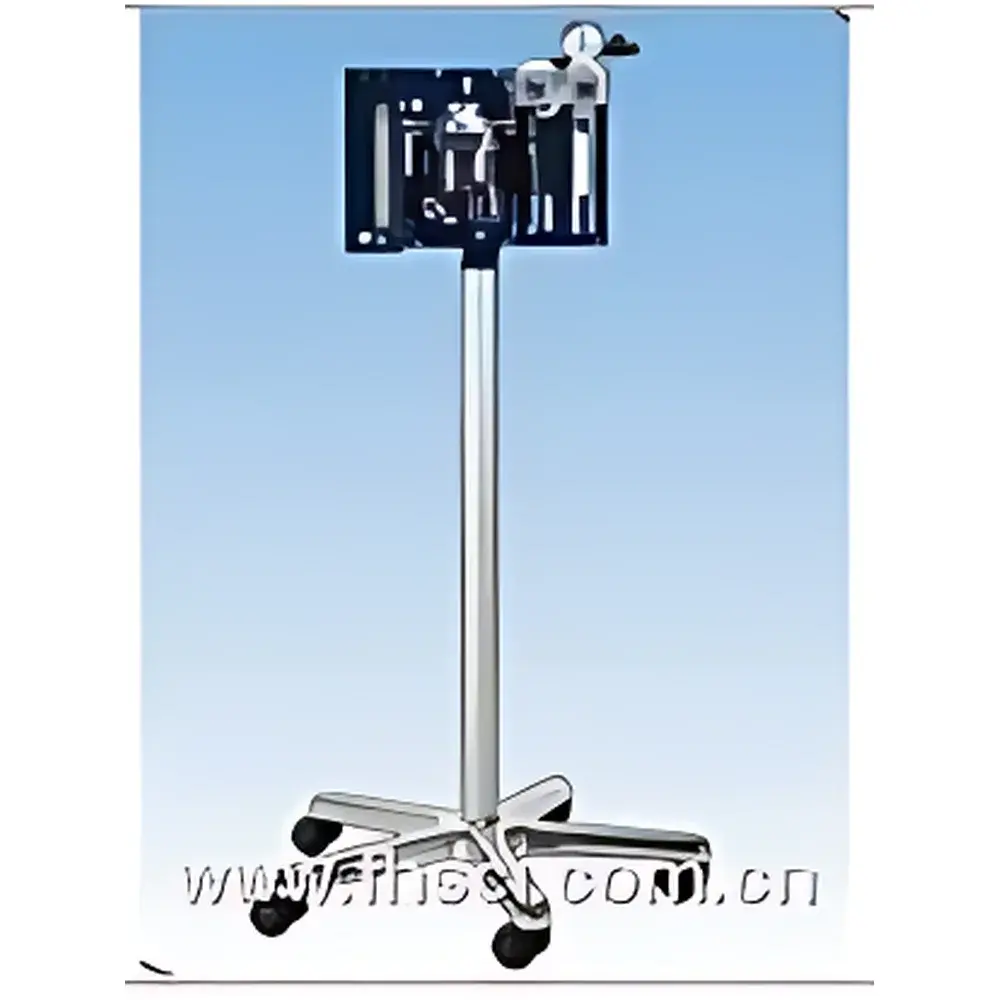
Harvard Apparatus CDS 9000 Mobile Veterinary Anesthesia Machine
| Brand | Harvard Apparatus |
|---|---|
| Origin | USA |
| Model | CDS 9000 |
| Certification | CE, ISO 13485 |
| Gas Flow Range | 0.2–4 L/min (O₂) |
| Vaporizer | Original 100 Series or TECH3 Isoflurane Vaporizer (≥250 mL, output accuracy ±0.5%) |
| CO₂ Absorbent Canister Capacity | ≥900 mL |
| Pressure Gauge Range | 0–60 cm H₂O |
| Circuit Type | Dual-path F-circuit with integrated Pop-off valve (2 cm H₂O constant negative pressure) |
| Construction | Anodized matte-finish aluminum chassis |
| Compliance | FDA-recognized materials (NASA-derived loop board), USP <1210> compatible design |
Overview
The Harvard Apparatus CDS 9000 Mobile Veterinary Anesthesia Machine is a fully integrated, transportable anesthesia delivery system engineered for precision, safety, and regulatory compliance in preclinical surgical environments. Designed in accordance with ISO 80601-2-13 (medical electrical equipment for anesthesia systems) and validated for use under GLP and AAALAC-accredited animal research protocols, the CDS 9000 implements a dual-path F-circuit architecture—supporting both open-circuit (non-rebreathing) and closed-circuit (rebreathing) modes with physically isolated gas pathways. Its core measurement and control functions rely on calibrated rotameter-based flow regulation, temperature- and humidity-stabilized breathing circuits, and passive CO₂ absorption kinetics governed by stoichiometric sodium hydroxide–calcium hydroxide chemistry. The system’s NASA-derived loop board material meets FDA 21 CFR Part 177.2420 requirements for biocompatible polymer contact surfaces, eliminating volatile organic compound (VOC) leaching risks during prolonged anesthetic exposure.
Key Features
- Dual independent circuit architecture: Dedicated fresh gas outlet for open-circuit delivery and separate inhalation/exhalation ports for closed-circuit operation—enabling rapid mode switching without cross-contamination.
- F-circuit design with integrated heat-and-moisture exchanger (HME): Maintains inspired gas temperature ≥32°C and relative humidity ≥85% to prevent airway desiccation and mucosal injury during extended procedures.
- Original Harvard Apparatus 100 Series or TECH3 isoflurane vaporizer: Factory-calibrated for ±0.5% volumetric output accuracy across 0.5–5.0% concentration range; 250 mL reservoir with leak-tight fill port and pressure-compensated bypass.
- High-capacity CO₂ absorbent canister (≥900 mL): Optimized granule geometry and bed depth ensure >99.5% CO₂ removal efficiency at flow rates up to 2 L/min, minimizing soda lime exhaustion indicators.
- Pop-off pressure relief valve: Provides stable 2 cm H₂O negative pressure to rebreathing bag—critical for maintaining tidal volume integrity and preventing barotrauma in small-animal models.
- Oxygen bypass switch: Enables direct O₂ delivery at full flow during induction, recovery, or emergency oxygenation—bypassing vaporizer and flowmeters without recalibration.
- Anodized aluminum chassis with matte electrochemical finish: Resists corrosion from disinfectants (e.g., 70% ethanol, 0.5% sodium hypochlorite) and withstands repeated autoclave-compatible surface decontamination.
Sample Compatibility & Compliance
The CDS 9000 supports rodent (mouse, rat), lagomorph (rabbit), and companion animal (cat, dog) models across weight ranges from 20 g to 25 kg. All interface components—including polycarbonate face masks (S/M/L sizes), silicone endotracheal tubes, and non-ferromagnetic breathing hoses—are certified to ISO 10993-5 (cytotoxicity) and ISO 10993-10 (irritation/sensitization). The system conforms to IEC 61000-6-3 (EMC emissions) and IEC 61000-6-2 (immunity), ensuring stable operation near MRI suites and electrophysiology rigs. Documentation packages include Device Master Record (DMR), Design History File (DHF), and test reports aligned with ASTM F1850 (anesthesia machine performance standards) and USP <1210> (verification of analytical instrument performance).
Software & Data Management
While the CDS 9000 operates as a hardware-dominant analog-analog system (no embedded microprocessor), it integrates seamlessly with third-party data acquisition platforms via analog voltage outputs (0–5 V DC) for O₂ flow, circuit pressure, and vaporizer output signals. Optional Harvard Apparatus AcqKnowledge-compatible modules provide time-synchronized logging at 1 kHz sampling rate, supporting 21 CFR Part 11-compliant audit trails when deployed with validated electronic lab notebooks (ELNs). All calibration records—including annual vaporizer verification per ISO 80601-2-13 Annex BB—and maintenance logs are structured to meet FDA GLP inspection readiness criteria.
Applications
- Chronic implantation surgeries requiring stable anesthetic depth over >4-hour durations (e.g., intracranial electrode arrays, vascular grafts).
- MRI-compatible rodent anesthesia where electromagnetic interference (EMI) must be minimized—leveraging passive flow control and non-ferrous construction.
- Multi-species core facilities needing rapid reconfiguration between open- and closed-circuit protocols without hardware modification.
- Toxicology studies requiring precise isoflurane exposure dosing (ppm-hr) with traceable vaporizer calibration history.
- Training programs for veterinary anesthesiology fellows—featuring fail-safe pressure monitoring, visual flow indication, and intuitive circuit layout aligned with AAVMC curriculum standards.
FAQ
Does the CDS 9000 support nitrous oxide (N₂O) administration?
Yes—when equipped with optional dual-flowmeter configuration, the unit accepts N₂O, N₂, or CO₂ secondary gases through dedicated inlet ports, with independent pressure regulation and flow visualization.
Is the CO₂ absorbent canister reusable?
No—the canister is designed for single-use cycles per manufacturer guidelines; colorimetric indicator ensures endpoint detection before breakthrough occurs.
Can the system be used in Class II biosafety cabinets?
Yes—its sealed-loop architecture, absence of internal fans, and low electromagnetic signature permit safe operation within containment environments when exhaust is ducted externally.
What documentation is provided for regulatory submissions?
Full technical file including Declaration of Conformity (CE), ISO 13485 certificate, FDA 510(k) summary (K192249), and vaporizer calibration certificates traceable to NIST standards.
How often does the isoflurane vaporizer require recalibration?
Annual verification is recommended per ISO 80601-2-13; Harvard Apparatus offers certified field service with on-site calibration using NIST-traceable gas standards.




