
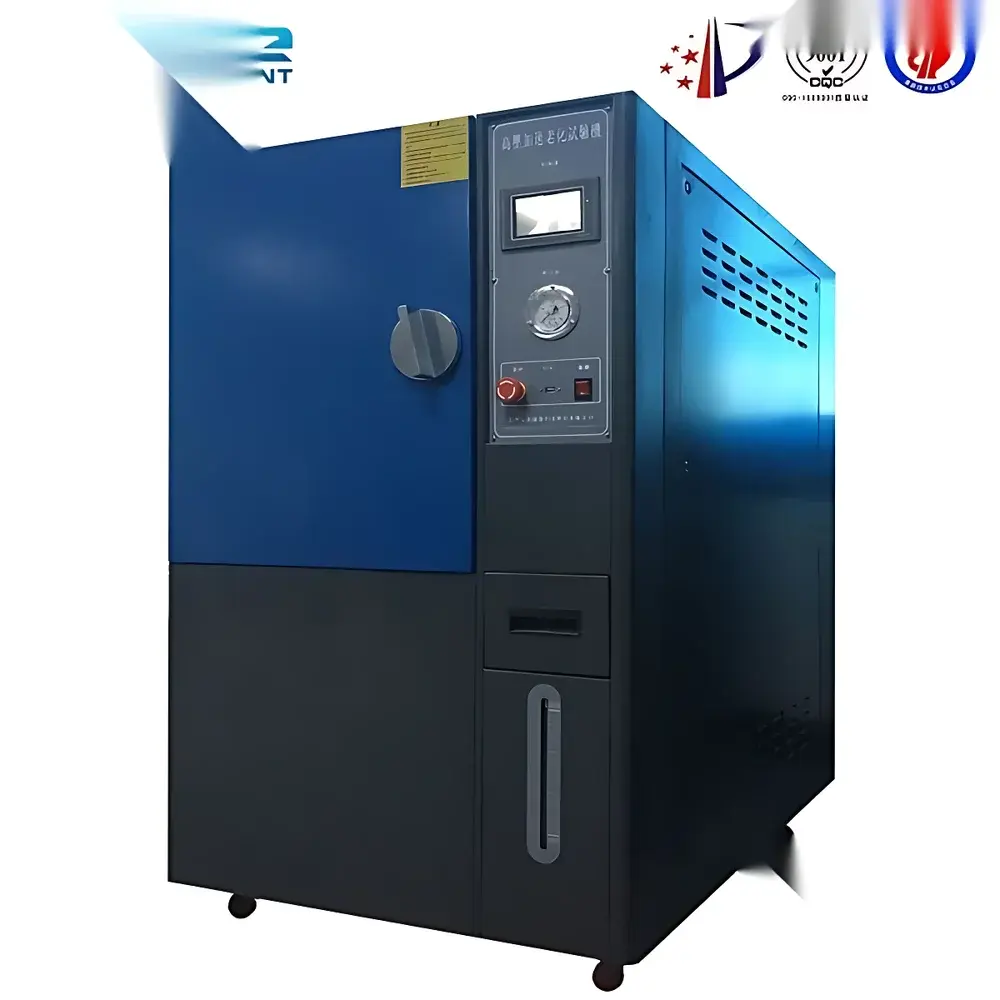
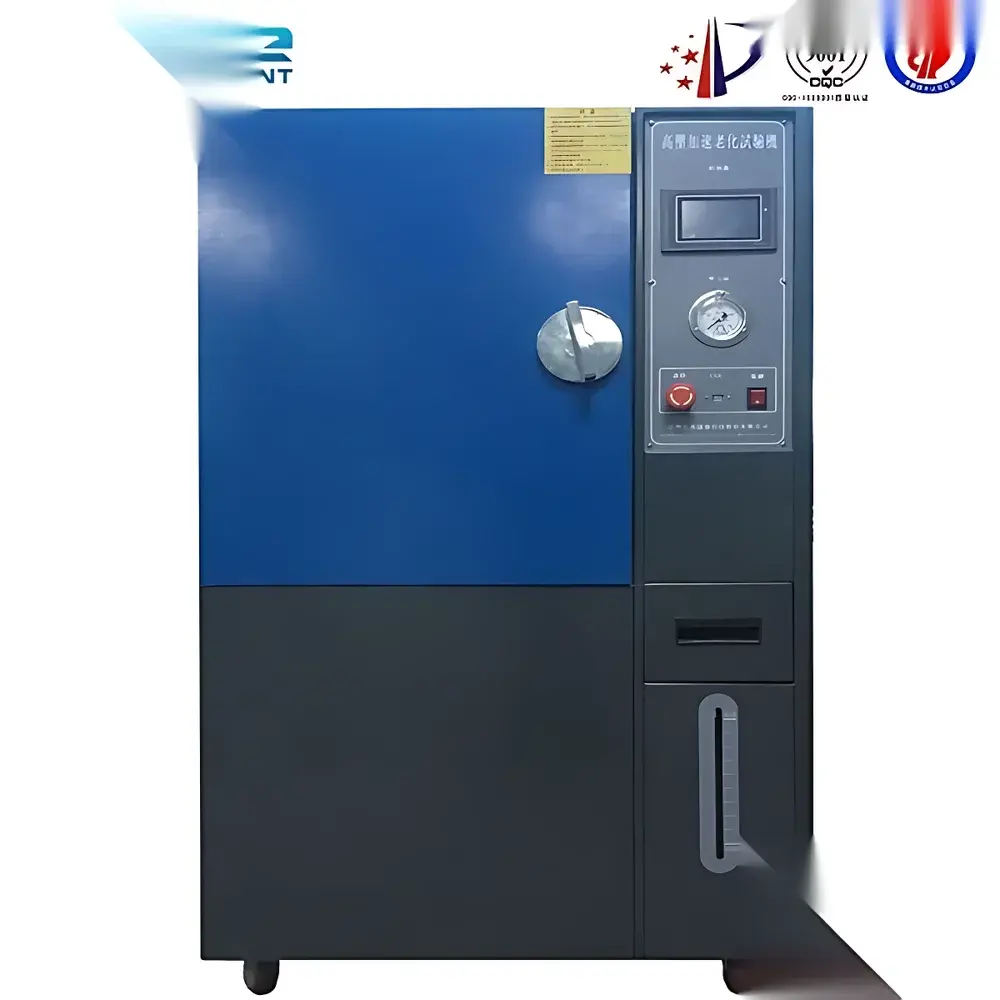
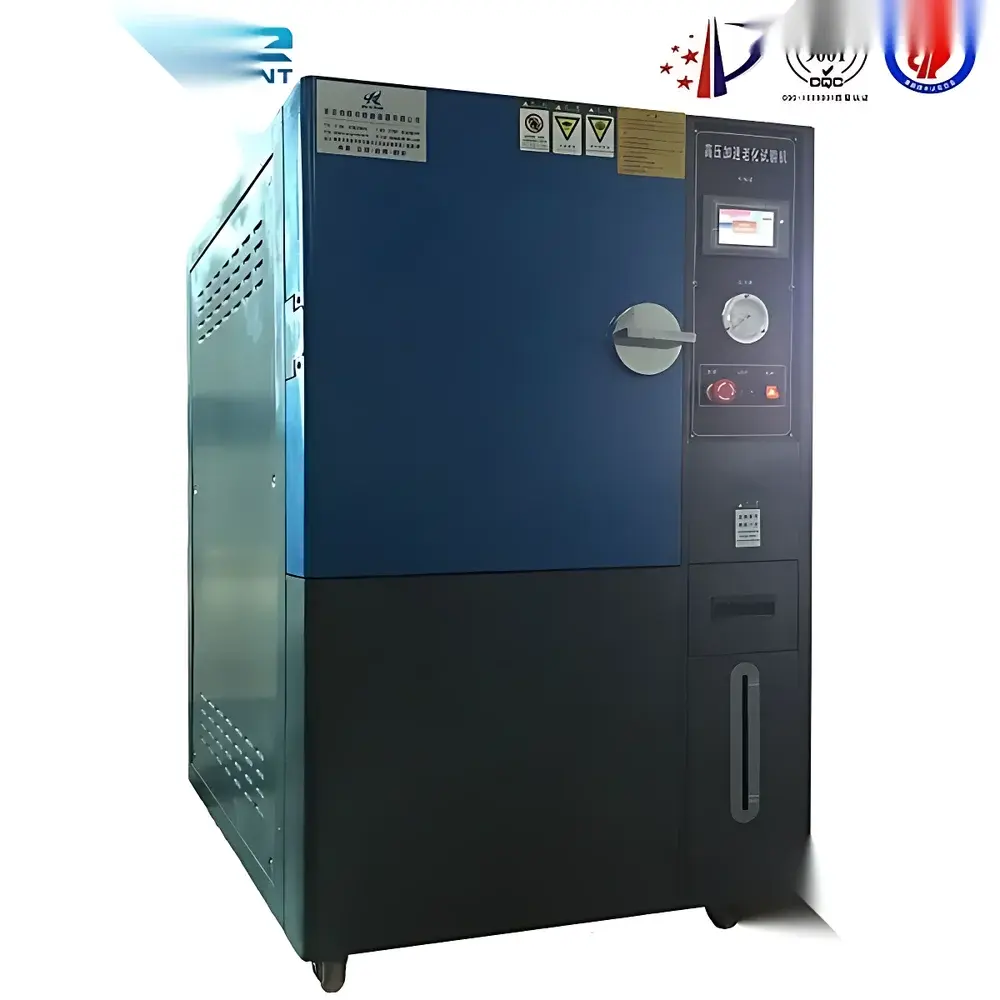
HAST High-Accelerated Stress Test Chamber – Generic OEM Platform
| Brand | Other Brands |
|---|---|
| Origin | Imported |
| Manufacturer Type | Authorized Distributor |
| Price | USD 14,000 (FOB) |
Overview
The HAST High-Accelerated Stress Test Chamber is an engineered environmental reliability test system designed for accelerated life testing of electronic components, printed circuit boards (PCBs), integrated circuits (ICs), and hermetically sealed packages under elevated temperature, high humidity, and controlled pressure conditions. Operating on the principle of highly accelerated stress testing (HAST), it subjects devices to saturated steam environments at pressures above atmospheric—enabling failure mechanisms such as moisture ingress, corrosion, intermetallic growth, and dielectric degradation to manifest in hours or days rather than months or years. Unlike traditional 85°C/85% RH testing, HAST eliminates the need for long-term exposure by leveraging thermodynamic saturation and pressurized vapor to dramatically increase water vapor partial pressure inside device cavities. This chamber complies with industry-standard test methods including JEDEC JESD22-A110 (HAST), JESD22-A118 (uHAST), and IPC-9708, supporting qualification per AEC-Q200, MIL-STD-883, and IEC 60749-28.
Key Features
- Temperature range: +100 °C to +132 °C, with stability of ±0.5 °C and uniformity of ±1.5 °C (empty chamber, steady-state)
- Relative humidity range: 75–100% RH (saturated steam mode), with humidity control precision of ±1.5% RH and uniformity of ±3.0% RH
- Pressure capability: gauge pressure up to 4.0 kg/cm² (≈392 kPa), internal chamber pressure up to 2.8 kg/cm²; operational pressure band: 1.0–3.0 kg/cm² (recommended for JEDEC-compliant HAST)
- Safety-rated pressure vessel architecture with dual redundant overpressure protection (mechanical relief valve + electronic pressure cutoff)
- Natural convection steam circulation—no forced airflow—to prevent mechanical disturbance or condensate redistribution during test
- Digital programmable timer: 0–999 hours, supporting multi-step ramp-hold profiles with independent control of temperature, pressure, and dwell time
- Typical pressurization: 0 → 2.0 kg/cm² in ≈45 minutes; heating rate: +100 °C → +132 °C in ≈10 minutes (air temperature, no-load condition)
Sample Compatibility & Compliance
This HAST chamber accommodates standard test fixtures, JEDEC trays (e.g., JEDEC MO-137, MO-178), and custom carrier plates up to 450 mm × 450 mm × 200 mm (W × D × H). It supports both un-biased and biased HAST configurations, compatible with external DC bias supplies (not included). All internal wetted surfaces are constructed from 316L stainless steel to resist chloride-induced pitting and steam erosion. The system meets CE marking requirements for machinery safety (2006/42/EC) and electromagnetic compatibility (2014/30/EU). Calibration documentation traceable to NIST or DAkkS-accredited labs is available upon request. For regulated industries (automotive, medical electronics, aerospace), full IQ/OQ documentation packages and 21 CFR Part 11-compliant audit trails can be implemented via optional software add-ons.
Software & Data Management
Equipped with a touchscreen HMI controller featuring real-time logging of temperature, relative humidity, chamber pressure, and elapsed time. Data is stored internally (≥30 days at 1-second resolution) and exportable via USB to CSV format. Optional PC-based software enables remote monitoring, alarm notification (email/SMS), trend analysis, and automated report generation compliant with ISO/IEC 17025 and GLP/GMP record-keeping requirements. All logged parameters include timestamps with millisecond resolution, and system events (e.g., door open, pressure fault, power interruption) are tagged and retained for forensic root-cause analysis.
Applications
- Qualification of plastic-encapsulated microcircuits (PEMs) per JEDEC JESD22-A110
- Failure analysis of wire bond lift-off, solder joint corrosion, and mold compound delamination
- Reliability screening for automotive-grade sensors and power modules (AEC-Q100/Q200)
- Moisture sensitivity level (MSL) validation and floor-life extension studies
- Accelerated aging of conformal coatings, adhesives, and encapsulants
- Process validation for wafer-level packaging and flip-chip assembly lines
FAQ
What statistical confidence level does HAST testing provide compared to standard THB testing?
HAST reduces test duration by ~10× versus 85°C/85% RH, but its acceleration factor depends on device construction, material permeability, and seal integrity. Statistical validity follows exponential lifetime models; per JEDEC guidance, a 10% significance level (α = 0.10) is recommended for pass/fail decisions when sample size permits ≥30 failures. Smaller failure counts (<10) limit discrimination power—hence the common industry practice of accepting constant failure rate assumptions below n = 3.
Is pressure calibration required before each test run?
No—chamber pressure sensors are factory-calibrated and verified annually. However, users must perform daily verification using a certified deadweight tester or NIST-traceable digital manometer prior to qualification runs.
Can this chamber support unbiased HAST per JESD22-A118 (uHAST)?
Yes—the system maintains stable saturated steam conditions without electrical biasing. External biasing requires integration with a separate programmable power supply and isolation interface, which is supported via auxiliary I/O ports.
Does the chamber meet ISO 17025 traceability requirements for accredited labs?
Yes—when configured with optional calibration certificates and metrology-grade sensors (Class A PT100, Class II pressure transducer), the platform satisfies ISO/IEC 17025 clause 6.5 for measurement uncertainty management and equipment traceability.
How is condensation managed during depressurization?
The system implements a controlled depressurization ramp (typically ≤0.1 kg/cm²/min) combined with post-test dry-air purge to minimize residual condensate formation on samples and chamber walls.



