
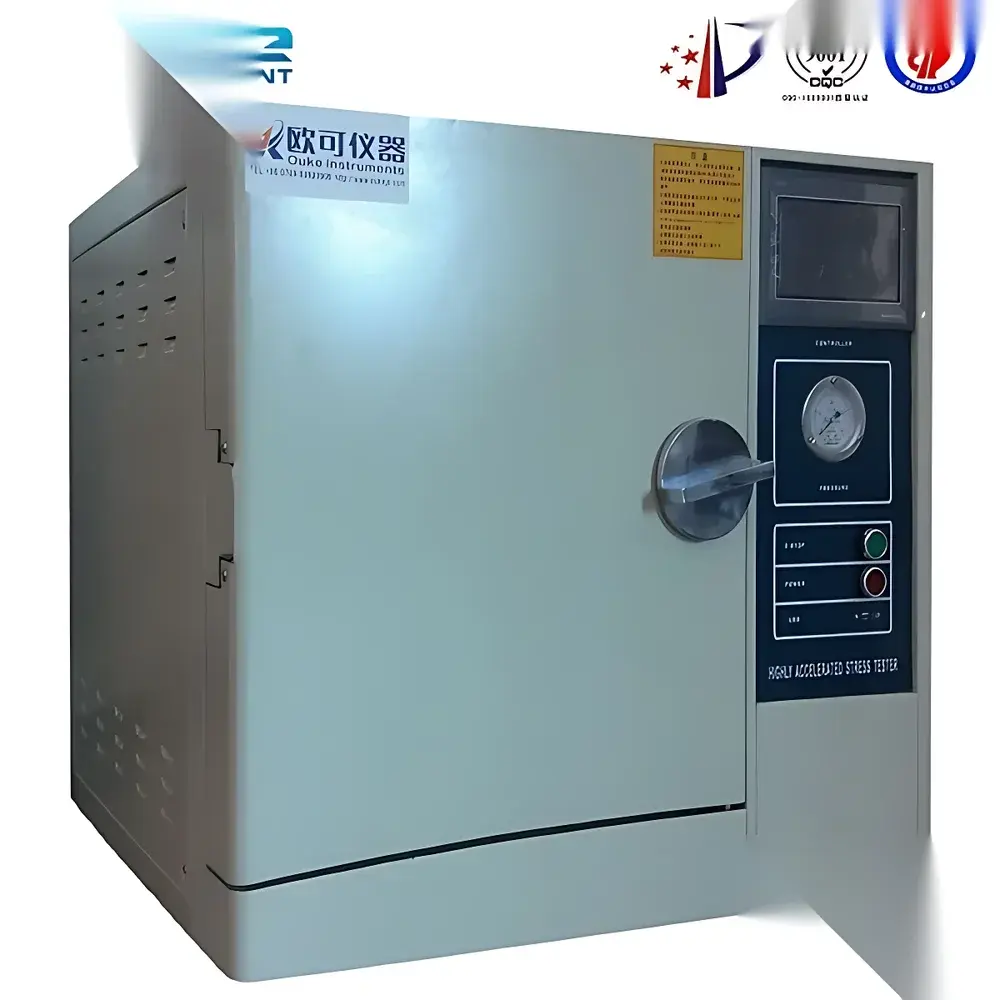
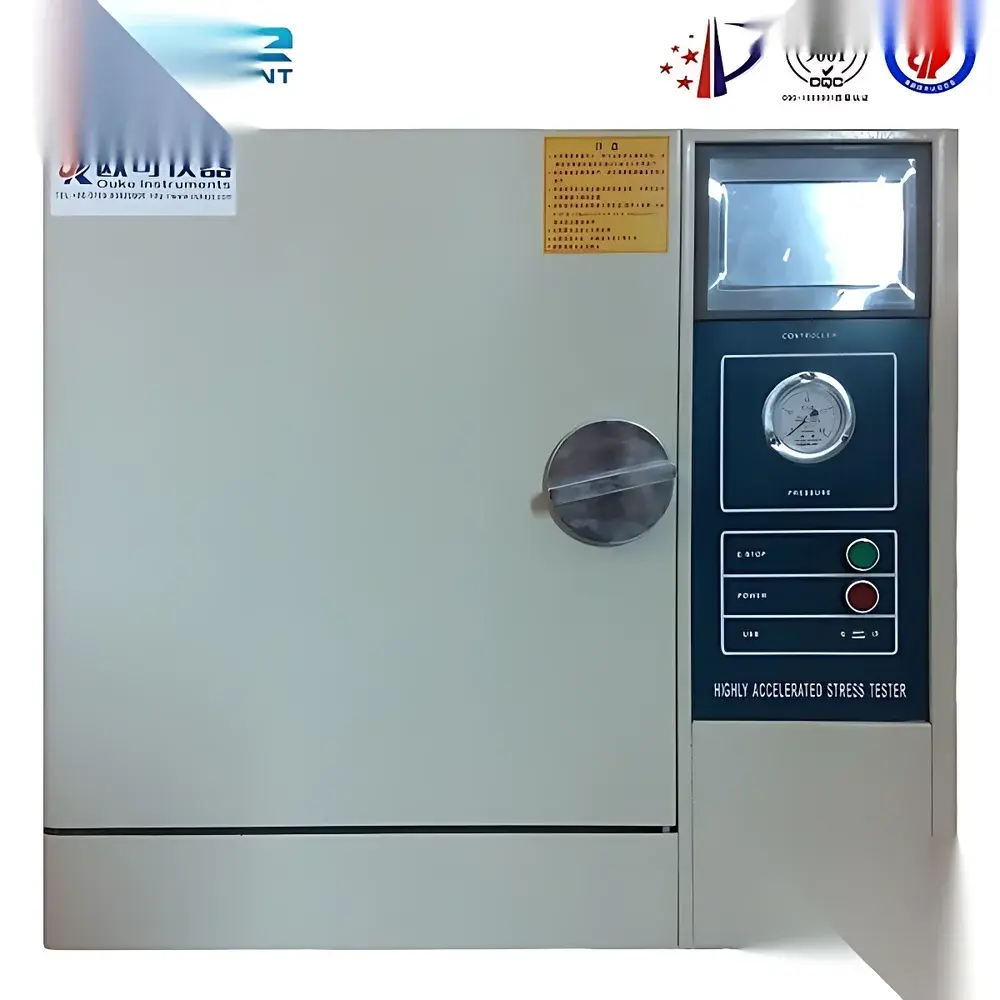
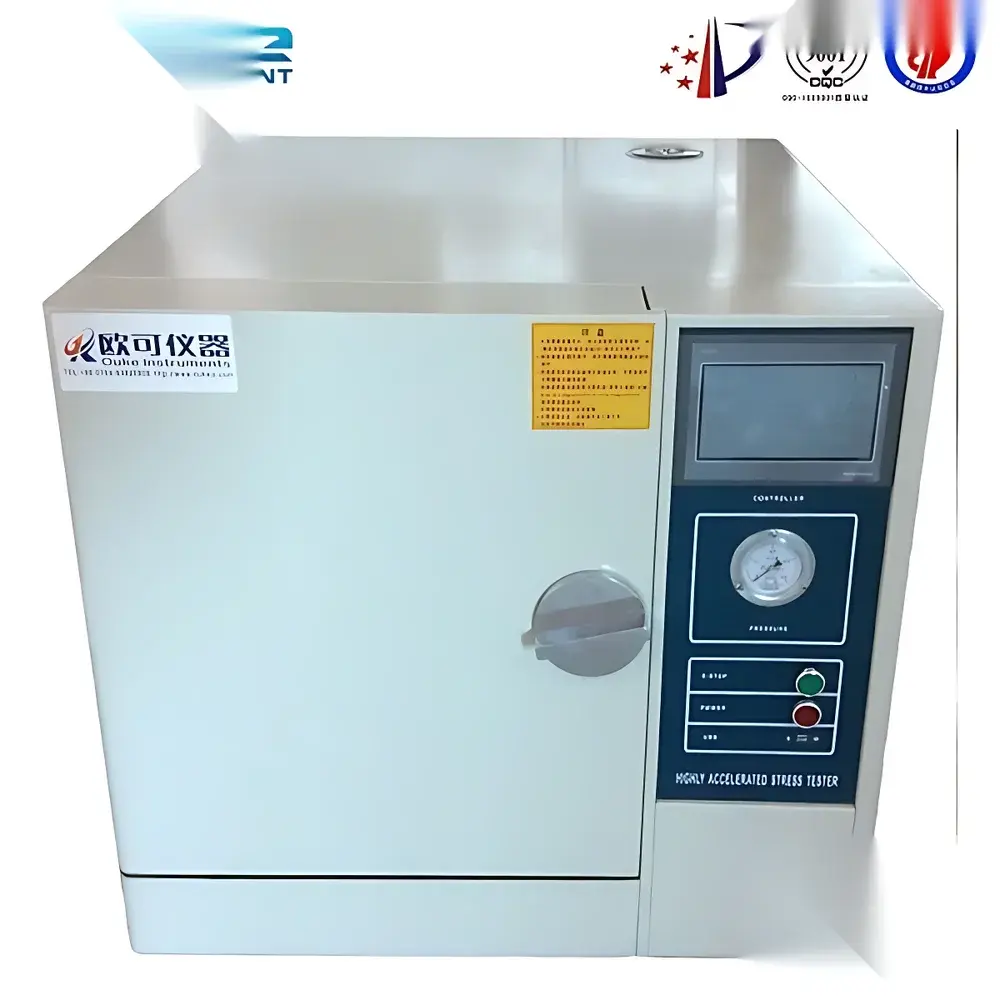
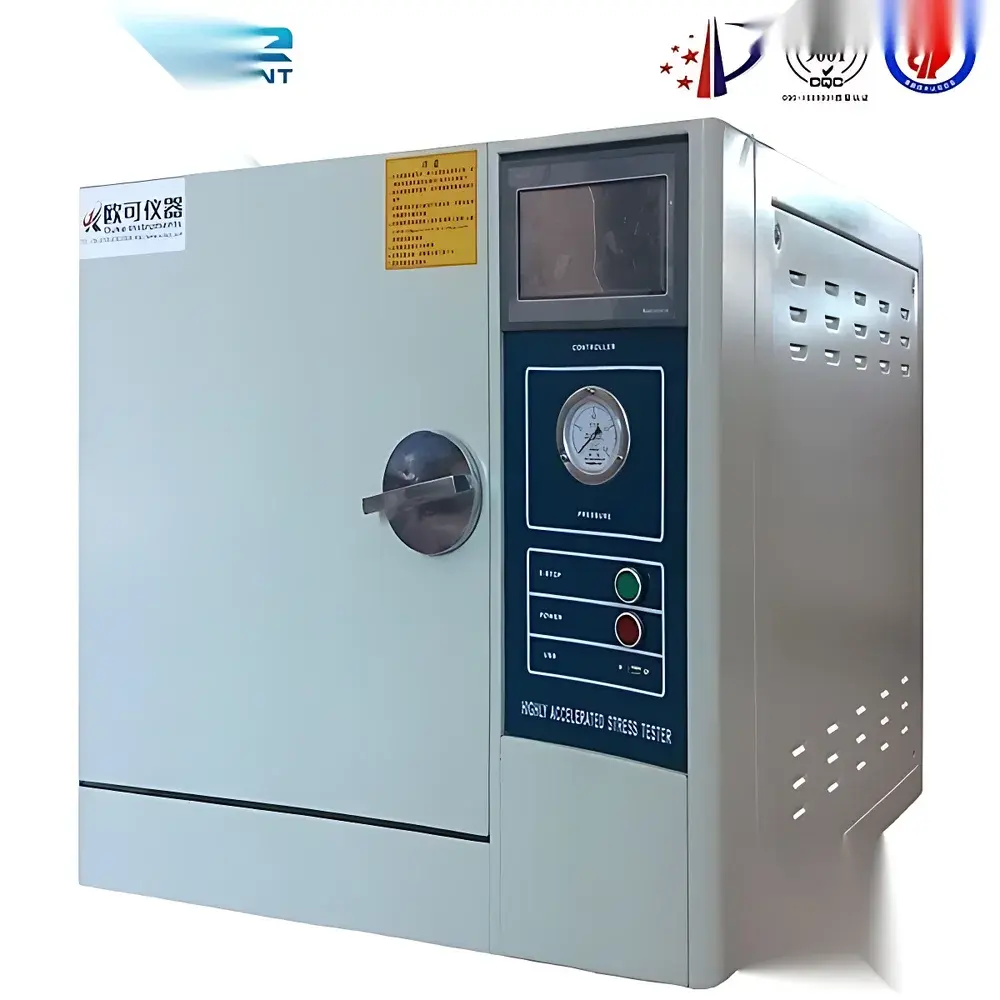
HAST High-Pressure Reliability Test Chamber
| Brand | Other Brands |
|---|---|
| Origin | Imported |
| Manufacturer Type | Authorized Distributor |
| Temperature Range | +100°C to +132°C |
| Temp. Uniformity | ±1.5°C |
| Temp. Stability | ±0.5°C |
| Humidity Range | 75–100% RH (Saturated Steam) |
| Humidity Uniformity | ±3.0% RH |
| Humidity Stability | ±1.5% RH |
| Pressure Range | 0–4 kg/cm² (gauge), with operating range 1.0–3.0 kg/cm² |
| Max. Safety Pressure Capacity | 4 kg/cm² (≈490 kPa gauge, equivalent to ~5 atm absolute) |
| Test Duration | 0–999 hours |
| Pressurization Time | ~45 min (0 → 2.00 kg/cm²) |
| Heating Time | ~10 min (+100°C → +132°C, no-load, air temperature average) |
| Circulation Method | Natural convection of saturated steam |
| Control System | Microprocessor-based PID controller with PT-100 RTD sensing, LED time display, analog pressure gauge, and manual water inlet valve with auto-refill capability |
Overview
The HAST High-Pressure Reliability Test Chamber is an accelerated environmental stress test system engineered for evaluating the long-term reliability and failure mechanisms of electronic components, printed circuit boards (PCBs), semiconductor packages, and hermetic seals under highly accelerated stress conditions. It operates on the principle of Highly Accelerated Stress Testing (HAST), which combines elevated temperature, high relative humidity, and controlled overpressure in a saturated steam environment—significantly accelerating moisture diffusion and electrochemical degradation processes without requiring liquid water immersion. Unlike standard damp heat testing (e.g., IEC 60068-2-78), HAST achieves acceleration factors of 10× to 100× by increasing partial pressure of water vapor above ambient saturation levels, thereby driving rapid moisture ingress into microstructures and interfaces. This chamber complies with industry-standard HAST protocols including JEDEC JESD22-A110 (Unbiased HAST) and JESD22-A118 (Biased HAST), as well as IPC-9708 for printed board qualification.
Key Features
- Stable saturated steam environment maintained between +100°C and +132°C, with temperature uniformity of ±1.5°C and stability of ±0.5°C across the working volume
- Controlled humidity range of 75–100% RH at saturation, verified via calibrated humidity sensors and validated against steam thermodynamic equilibrium
- Programmable pressure control from 0 to 4 kg/cm² (gauge), with nominal operational range set between 1.0 and 3.0 kg/cm² to ensure reproducible test conditions per JEDEC specifications
- Robust pressure containment architecture rated to 4 kg/cm² (490 kPa gauge), incorporating dual safety interlocks, burst disc protection, and real-time pressure monitoring
- Microprocessor-based PID temperature controller using PT-100 platinum resistance thermometers for traceable, NIST-traceable thermal regulation
- LED digital timer supporting test durations up to 999 hours, with power-fail recovery and elapsed-time logging
- Auto-refill water supply system with manual isolation valve—enables uninterrupted multi-day testing without operator intervention
- Natural convection steam circulation design minimizes mechanical disturbance to test samples while ensuring homogeneous exposure
Sample Compatibility & Compliance
This chamber accommodates standard JEDEC trays, component carriers, and PCB racks (custom fixtures available upon request). It supports both unbiased and biased HAST configurations when integrated with external DC bias supplies meeting IEC 61000-4-xx immunity requirements. The system meets mechanical and electrical safety requirements per IEC 61010-1 and is designed for use in ISO/IEC 17025-accredited laboratories conducting reliability qualification per AEC-Q200, MIL-STD-750, and automotive OEM-specific standards (e.g., GMW16275, Ford ES-XW7T-1A278-AC). All pressure and temperature sensors are calibrated annually per ISO/IEC 17025 procedures; calibration certificates are provided with each unit shipment.
Software & Data Management
While this model features a dedicated microcontroller interface (no PC connectivity standard), optional RS-485 or Ethernet-enabled data logging modules are available for integration into centralized test management systems. Logged parameters include chamber temperature, internal pressure, elapsed time, and humidity-derived dew point. Data output conforms to CSV format for compatibility with statistical process control (SPC) platforms and failure analysis databases. For regulated environments, optional 21 CFR Part 11-compliant audit trail firmware and user access controls can be deployed—supporting GLP/GMP-aligned validation documentation including IQ/OQ/PQ protocols.
Applications
- Qualification of plastic-encapsulated microcircuits (PEMs) for automotive, aerospace, and industrial applications
- Evaluation of solder joint integrity and intermetallic growth under combined thermal-hygric stress
- Assessment of conformal coating performance and delamination resistance on flex-rigid assemblies
- Failure mode analysis of wire-bonded die attach interfaces and mold compound adhesion
- Screening of moisture sensitivity level (MSL) compliance per J-STD-020 prior to surface mount reflow
- Reliability modeling input generation for physics-of-failure (PoF) simulations
FAQ
What is the difference between HAST and traditional 85/85 testing?
HAST replaces ambient-pressure 85°C/85% RH with elevated temperature and super-saturated steam under pressure—increasing water vapor partial pressure and reducing test duration from 1000+ hours to typically 96–264 hours while maintaining equivalent or higher acceleration fidelity.
Can this chamber perform unbiased and biased HAST tests?
Yes—unbiased operation is standard; biased testing requires integration with an externally sourced, isolated DC power supply compliant with JEDEC JESD22-A118 leakage current limits and voltage derating rules.
Is calibration documentation included?
Each unit ships with factory calibration reports for temperature (PT-100), pressure (Bourdon tube gauge), and timekeeping (quartz oscillator), traceable to national metrology institutes.
What maintenance is required for long-term reliability?
Quarterly descaling of the steam generator, annual verification of pressure relief components, and biannual sensor recalibration are recommended per ISO 13374 condition monitoring guidelines.
Does the chamber support automated test sequencing?
Not natively—but optional programmable logic controller (PLC) integration enables multi-step ramp-soak cycles, including pressure ramping synchronized with temperature profiles.



