
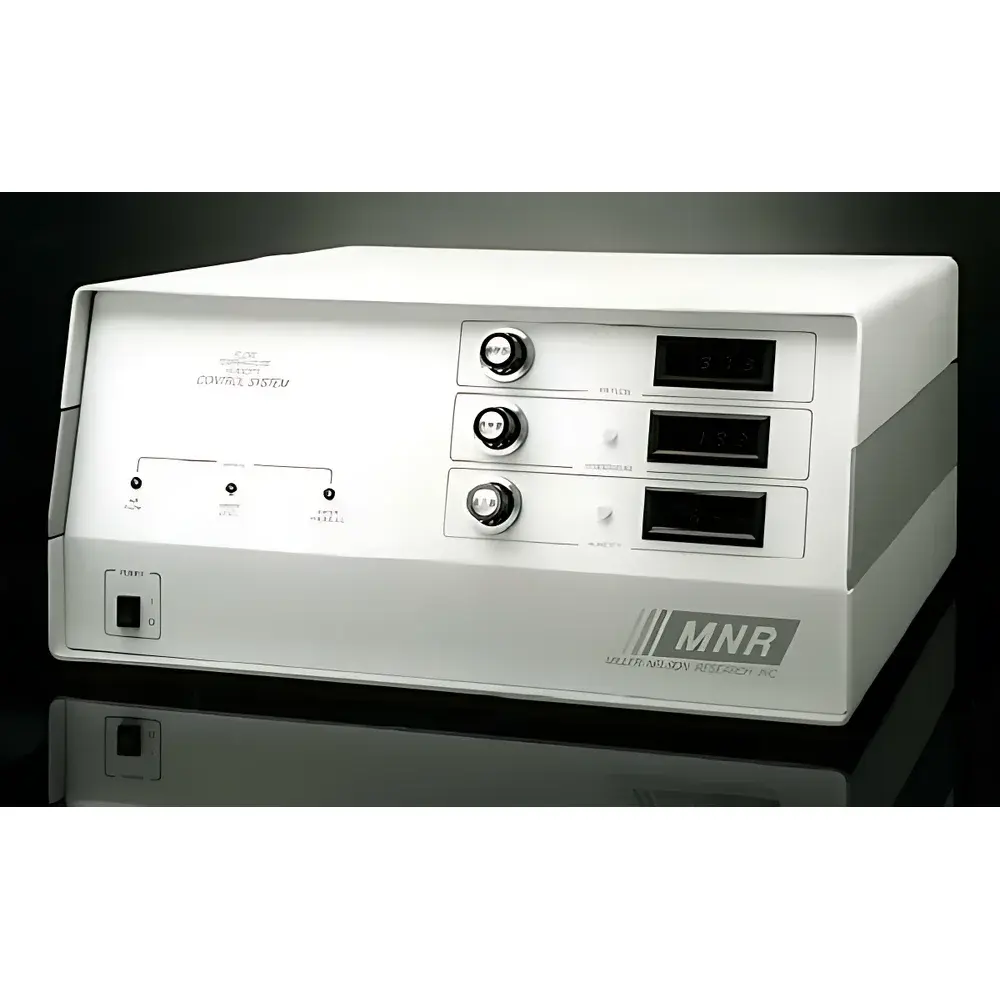
HCS-501 Precision Air Conditioning and Environmental Control System
| Origin | USA |
|---|---|
| Manufacturer Type | Authorized Distributor |
| Origin Category | Imported Instrument |
| Model | HCS-501 |
| Pricing | Available Upon Request |
Overview
The HCS-501 Precision Air Conditioning and Environmental Control System is an engineered platform for generating and maintaining highly stable, programmable airstreams with independent, real-time control of volumetric flow rate, temperature, and relative humidity. Designed around a closed-loop feedback architecture, the system employs digital mass flow control, high-stability Pt100 temperature sensors, and capacitive RH transducers—each calibrated traceably to NIST standards. Its core operational principle relies on coordinated modulation of heated/cooled air streams, saturated vapor injection, and precision throttling to achieve thermodynamic equilibrium within the output airstream. Unlike ambient-conditioned chambers or open-loop humidifiers, the HCS-501 delivers metrologically defined air conditions—critical for reproducible testing of respiratory protective equipment (RPE), filtration media, chemical permeation barriers, and environmental simulation protocols. It is not a general-purpose climate chamber; rather, it functions as a primary reference-grade air conditioning source for controlled exposure studies where airflow dynamics, thermal inertia, and moisture equilibration kinetics must be rigorously decoupled and quantified.
Key Features
- Dual-mode thermal management: Integrated Peltier-based cooling module enables sub-ambient temperature generation (down to 5 °C) when paired with optional condensation unit; resistive heating elements provide precise up to 60 °C control.
- Independent analog control architecture: Three front-panel logarithmic potentiometers allow intuitive, non-software-dependent adjustment of flow (0.1–30 L/min), temperature (5–60 °C), and RH (10–95% RH at 25 °C), each with dedicated digital LED readouts.
- Closed-loop humidity regulation: Uses saturation-based steam injection with real-time dew point compensation; automatic heater activation prevents condensation in delivery lines during high-RH/low-T operation.
- Traceable sensor suite: Factory-calibrated mass flow controller (±1% FS accuracy), Class A Pt100 RTD (±0.15 °C), and ISO/IEC 17025-accredited RH sensor (±2% RH, 20–80% RH range).
- Modular integration readiness: Standard ¼″ Swagelok® fittings, 0–5 V analog outputs, and RS-232 interface support synchronization with data loggers, PLCs, or custom test automation frameworks.
Sample Compatibility & Compliance
The HCS-501 is validated for use in applications requiring adherence to ASTM F1941 (respirator filter efficiency), ISO 16900-3 (air sampling pump calibration), and EN 13274-3 (filter penetration testing under variable climatic stress). Its airflow stability (<±0.3% over 8 h) and humidity step-response time (<60 s to ±3% RH) meet GLP-compliant environmental preconditioning requirements per OECD Test Guideline 428 (skin absorption) and USP (container closure integrity). The system supports direct coupling to glove boxes, inhalation exposure chambers, and dynamic sorption analyzers without flow disruption. All wetted materials comply with USP Class VI biocompatibility and FDA 21 CFR Part 11 data integrity requirements when used with compliant software interfaces.
Software & Data Management
While fully functional in standalone analog mode, the HCS-501 supports optional PC-based monitoring via ASCII protocol over RS-232. Logged parameters include timestamped flow (SLPM), dry-bulb temperature (°C), RH (%), calculated dew point (°C), and internal sensor diagnostics. Data export is compatible with CSV and MATLAB .mat formats. When integrated into regulated environments, audit trails, user access controls, and electronic signatures may be implemented using third-party LIMS or SCADA platforms compliant with 21 CFR Part 11 Annex 11. No proprietary software is required for basic operation; all setpoints and measurements remain accessible via front-panel interface without firmware dependency.
Applications
- Respiratory protection validation: Controlled challenge of gas/vapor filters and elastomeric respirators under ISO 16900-1 specified temperature/humidity profiles.
- Filtration media characterization: Quantifying aerosol penetration through HEPA/ULPA membranes under varying RH-induced electrostatic charge decay conditions.
- PPE permeation kinetics: Generating humidified carrier gas for ASTM F739 skin simulant testing with synchronized thermal ramping.
- Environmental stress screening: Accelerated stability assessment of pharmaceutical packaging, electronics enclosures, and hygroscopic polymers under cyclic humidity-temperature loads.
- Aerosol generation support: Providing conditioned dilution air for nebulizers, Collison generators, and vibrating orifice aerosol generators to ensure consistent particle hygroscopic growth.
- Biosphere simulation: Maintaining precise microclimates for small-mammal metabolic chambers and hydroponic growth arrays where CO₂ interaction with RH must be isolated.
FAQ
Does the HCS-501 require external water supply or compressed air?
No—it uses internal deionized water reservoir with integrated ultrasonic humidification and does not rely on pressurized air sources.
Can it operate continuously for 72+ hours without intervention?
Yes—designed for unattended operation with auto-refill-capable reservoir (optional), thermal overload protection, and sensor drift compensation algorithms.
Is NIST-traceable calibration documentation included?
Yes—each unit ships with a certificate of calibration valid for 12 months, including uncertainty budgets per ISO/IEC 17025.
What is the maximum allowable particulate loading in the inlet air?
Inlet air must be filtered to ISO Class 5 (≤3,520 particles ≥0.5 µm/m³); upstream HEPA filtration is strongly recommended to prevent sensor fouling.
How is condensation managed during low-temperature, high-humidity operation?
The system activates inline heater bands and adjusts vapor injection duty cycle in real time to maintain dew point margin >2 °C above duct surface temperature.







