
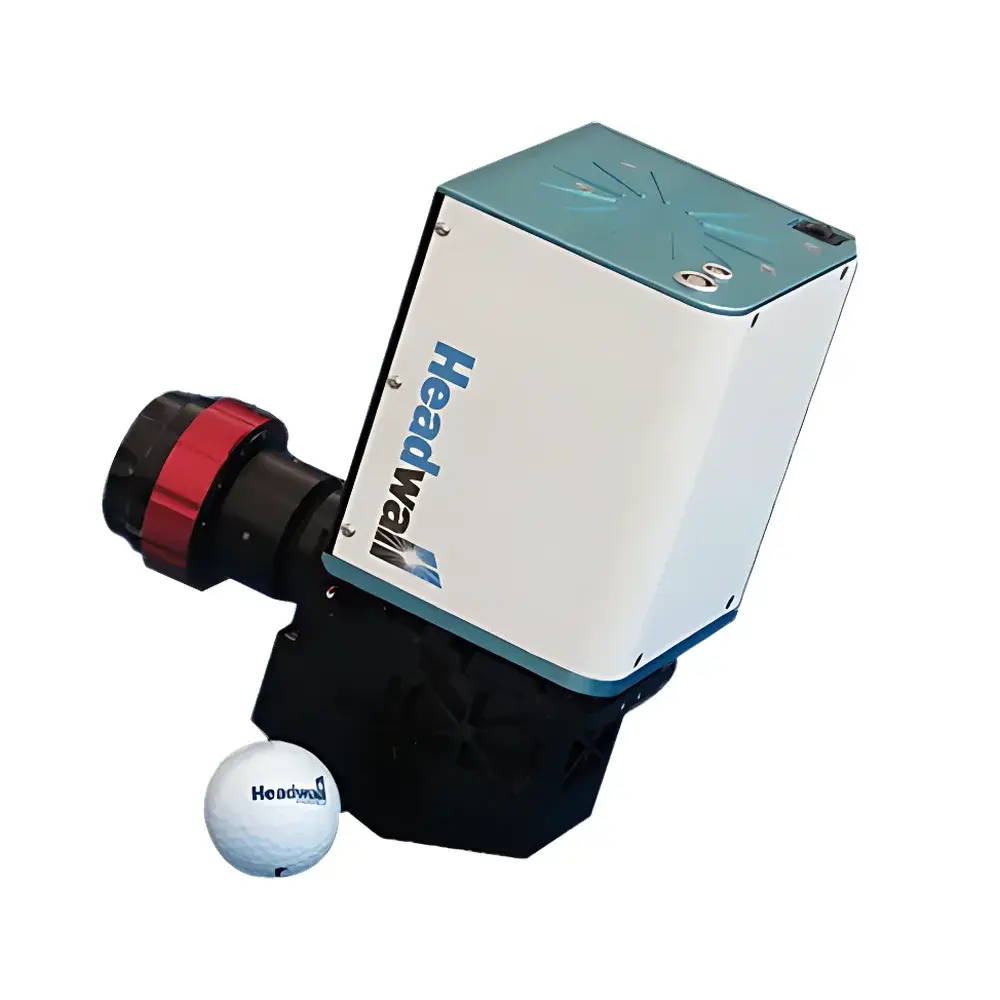
HeadWall Micro-Hyperspec VNIR-SWIR Miniature UAV-Mounted Hyperspectral Imaging Spectrometer
| Brand | HeadWall |
|---|---|
| Origin | USA |
| Manufacturer Type | Authorized Distributor |
| Origin Category | Imported |
| Model | VNIR-NIR-Ext / VNIR-SWIR |
| Operating Principle | Push-broom |
| Imaging Method | Dispersive |
| Deployment Mode | Ground-based & UAV-mounted |
| Spectral Range | 400–2500 nm |
| Spectral Resolution (FWHM) | 5.5 nm |
| Spatial Resolution (IFOV) | 0.872 mrad |
| Field of View (TFOV) | 32° |
| Image Resolution | 1600 × 1200 pixels |
| Frame Rate | 200 Hz |
| Optional Spectral Configurations | 900–1700 nm (134 bands), 600–1700 nm (267 bands), 900–2500 nm (166 bands) |
| Weight | 0.9–2.0 kg |
Overview
The HeadWall Micro-Hyperspec VNIR-SWIR is a compact, high-performance hyperspectral imaging spectrometer engineered for rigorous scientific deployment across airborne, ground-based, and laboratory environments. Built upon a robust push-broom scanning architecture, the instrument captures spatially registered spectral data cubes by synchronizing linear array detection with platform motion—ensuring each pixel contains a full, calibrated reflectance spectrum from 400 nm to 2500 nm. Its dispersive optical design employs a precision holographic grating and concentric fore-optics, delivering high-fidelity radiometric response and minimal smile/keystone distortion. Unlike snapshot or tunable-filter systems, the Micro-Hyperspec’s true push-broom acquisition enables high signal-to-noise ratio (SNR) at native spatial-spectral sampling, making it particularly suited for quantitative remote sensing where spectral fidelity and geometric stability are non-negotiable.
Key Features
- Modular spectral configuration options: selectable spectral ranges including 900–1700 nm (134 bands), 600–1700 nm (267 bands), and 900–2500 nm (166 bands), all with nominal FWHM resolution of ≤5.5 nm in the SWIR region;
- High spatial fidelity with 1600 × 1200 pixel native detector format and sub-milliradian instantaneous field of view (IFOV = 0.872 mrad);
- Wide total field of view (TFOV = 32°) optimized for UAV integration without sacrificing ground sampling distance (GSD) scalability;
- Real-time frame capture at up to 200 Hz, supporting high-speed platforms and enabling synchronized triggering with GNSS-INS navigation systems;
- Lightweight, ruggedized housing (0.9–2.0 kg depending on configuration) with MIL-STD-810G environmental compliance for vibration, thermal cycling, and shock resilience;
- Integrated thermal stabilization and onboard dark current compensation to maintain radiometric consistency across variable ambient conditions.
Sample Compatibility & Compliance
The Micro-Hyperspec operates as a passive reflectance sensor, requiring no sample preparation for in situ surface measurements. It is compatible with heterogeneous natural and anthropogenic targets—including vegetation canopies, mineral outcrops, soil substrates, water bodies, cultural heritage artifacts, and food-grade surfaces—without contact or illumination control. The system adheres to ASTM E131–22 (Standard Terminology Relating to Molecular Spectroscopy) and ISO 18567:2021 (Remote sensing — Hyperspectral imaging systems — Performance testing methodology). When integrated into validated UAV platforms, it supports data acquisition workflows compliant with USGS NEP-2022 geospatial metadata standards and meets foundational requirements for Level 2A (radiometrically corrected) and Level 3 (geometrically orthorectified) product generation under NASA’s ARSET protocols.
Software & Data Management
Acquisition and preprocessing are managed via HeadWall’s SpectralView™ software suite, which provides real-time preview, spectral library matching (including USGS, ECOSTRESS, and JPL spectral libraries), and on-the-fly radiometric calibration using onboard reference panels. Raw data are output in ENVI-compatible BIL/BIP formats with embedded GDAL-compliant geotags. For regulatory environments, optional SpectralView™ Pro includes audit-trail logging, user access controls, and electronic signature capability aligned with FDA 21 CFR Part 11 and GLP/GMP documentation requirements. Export pipelines support direct ingestion into Python-based analytical frameworks (e.g., scikit-learn, HyTools) and MATLAB hyperspectral toolboxes, facilitating supervised classification, spectral unmixing, and index derivation (e.g., NDVI, NDWI, CIred-edge).
Applications
- Vegetation Remote Sensing: Species discrimination, chlorophyll and water content estimation, stress detection (drought, nutrient deficiency, disease onset) via narrowband indices and continuum-removed absorption features;
- Geological & Mineral Exploration: Identification of hydroxyl-, carbonate-, and sulfate-bearing minerals (e.g., kaolinite, gypsum, jarosite) through diagnostic SWIR absorption features near 1400, 1900, and 2200 nm;
- Environmental Monitoring: Quantification of suspended sediment, chlorophyll-a, CDOM, and cyanobacterial blooms in inland and coastal waters using multi-band inversion models;
- Cultural Heritage Analysis: Non-invasive pigment identification, underdrawing visualization, and binding medium differentiation in paintings and manuscripts;
- Food & Agriculture Quality Control: Detection of bruising, mold, foreign material, and compositional variation (e.g., sugar content, moisture, fat distribution) in fruits, grains, and processed products.
FAQ
Is the Micro-Hyperspec compatible with common commercial UAV platforms such as DJI Matrice 300 or senseFly eBee X?
Yes—HeadWall provides mechanical mounting kits and synchronization interfaces (TTL trigger, PPS, UART) certified for integration with leading OEM UAVs. Payload compatibility is verified per platform-specific mass/inertia limits and power delivery specifications (12–28 V DC, <15 W typical).
Does the system require external calibration before each flight?
No—onboard non-uniformity correction (NUC) and dark reference acquisition occur automatically at startup and periodically during operation. However, radiometric calibration using a NIST-traceable reflectance panel is recommended prior to mission-critical data collection.
Can spectral data be processed in real time onboard the UAV?
While raw data streaming is supported, full spectral analysis requires post-processing on ground stations due to computational intensity. Edge inference (e.g., binary anomaly detection) is achievable via optional FPGA-accelerated modules.
What level of technical support and warranty does HeadWall provide for international users?
HeadWall offers a standard 24-month limited hardware warranty, remote engineering support via secure portal, and annual calibration services traceable to NIST standards. Regional authorized distributors provide localized installation assistance and application-specific training.
Related Products





