Hefei Kejing A-Z Series Advanced Ceramic & Metallic Powders
| Brand | Hefei Kejing |
|---|---|
| Origin | Anhui, China |
| Manufacturer Type | Authorized Distributor |
| Product Origin | Domestic (China) |
| Model Designation | A-Z Series Powder Catalog |
| Pricing | Available Upon Request |
Overview
The Hefei Kejing A-Z Series Advanced Ceramic & Metallic Powders represent a comprehensive, systematically organized portfolio of high-purity and nanostructured inorganic powders engineered for research, development, and industrial-scale material synthesis. Designed to support advanced functional materials fabrication—including thin-film deposition, sintering, catalyst formulation, additive manufacturing feedstock preparation, and nanocomposite matrix reinforcement—this series encompasses over 120 distinct elemental, oxide, carbide, nitride, boride, and rare-earth compound variants. Each powder is characterized by tightly controlled stoichiometry, certified purity levels ranging from 99% (2N) to 99.999% (5N), and well-documented particle size distributions (typically available in sub-100 nm, 100–500 nm, and 1–10 µm grades). All materials are synthesized via solid-state reaction, co-precipitation, or high-temperature calcination under inert or controlled-atmosphere conditions, followed by rigorous quality screening including XRD phase verification, BET surface area analysis, and trace metal impurity profiling (ICP-MS/ICP-OES).
Key Features
- Comprehensive elemental coverage: A–Z series classification enables rapid identification across transition metals (e.g., Ni, Co, Fe), rare earths (e.g., Yb₂O₃, Gd₂O₃, Er₂O₃), refractory compounds (e.g., Ta₂O₅, HfO₂, ZrC), and functional ceramics (e.g., BaTiO₃, SrTiO₃, YAG).
- Multi-tier purity grading: Certified purity levels include 2N (99%), 3N (99.9%), 4N (99.99%), and 5N (99.999%) with full traceability to batch-specific Certificates of Analysis (CoA).
- Nano- and micro-scale options: Primary particle sizes available in nanometer (e.g., Al₂O₃ <50 nm, SiO₂ <30 nm) and micrometer ranges (e.g., MgO 1–5 µm, CaCO₃ 3–8 µm), with optional surface modification (e.g., silane or oleic acid coating) for dispersion stability.
- Crystalline phase control: Select materials supplied in specific polymorphs (e.g., α-Al₂O₃, anatase/rutile TiO₂, monoclinic/tetragonal ZrO₂) with XRD-confirmed phase purity ≥99.5%.
- Consistent lot-to-lot reproducibility: Manufactured under ISO 9001-certified quality management protocols; each batch undergoes sieve analysis, laser diffraction particle sizing (Malvern Mastersizer), and oxygen/nitrogen/hydrogen content verification (LECO analysis).
Sample Compatibility & Compliance
These powders are compatible with standard laboratory handling procedures, including glove-box transfer (for air-sensitive variants such as Sm₂O₃, Eu₂O₃, and metallic Ni/Co powders), ball milling, slurry preparation, and aerosol deposition. All products comply with RoHS Directive 2011/65/EU and REACH Annex XVII restrictions on hazardous substances. Batch-specific safety data sheets (SDS) conform to GHS classification standards and include UN transport classifications where applicable (e.g., UN1385 for metal powders). For regulated applications—including medical device component synthesis or pharmaceutical excipient development—custom documentation packages supporting FDA 21 CFR Part 11, ISO 13485, or ICH Q5D/Q7 compliance can be provided upon request.
Software & Data Management
While the A-Z Series powders themselves are physical reference materials, Hefei Kejing provides digital product metadata via its secure client portal, including searchable spectral libraries (FTIR, Raman), thermal decomposition profiles (TGA-DSC), and sintering kinetics datasets (dilatometry curves). All CoAs and analytical reports are timestamped, digitally signed, and archived for ≥10 years to support GLP/GMP audit readiness. Traceability extends to raw material sourcing records and furnace log files where applicable. Integration with LIMS platforms (e.g., LabWare, Thermo Fisher SampleManager) is supported through standardized CSV/XML export formats.
Applications
- Functional ceramic processing: Sintering aids (e.g., Y₂O₃ for Si₃N₄), dielectric formulations (BaTiO₃, SrTiO₃), and phosphor hosts (YAG, YVO₄).
- Nanocomposite reinforcement: Dispersed-phase fillers in polymer, metal, and ceramic matrices (e.g., BN nanosheets in epoxy, Cu nanoparticles in Cu-Mg alloys).
- Catalyst and electrocatalyst synthesis: High-surface-area supports (CeO₂, TiO₂) and active components (Pt/CeO₂, Ni/Al₂O₃, IrO₂).
- Thin-film precursor development: Target materials for sputtering (ITO, ZnO, Ta₂O₅), pulsed laser deposition (PLD), and sol-gel spin-coating (LaMnO₃, BiFeO₃).
- Standards and calibration: Reference materials for SEM-EDS quantification, XRF calibration, and LIBS validation across academic, national metrology, and industrial labs.
FAQ
How are nanopowders dispersed for uniform suspension?
Standard dispersion protocols include ultrasonication (15–30 min in ethanol/isopropanol with 0.5–2 wt% dispersant), high-shear mixing (Silverson L4RT), or bead milling (zirconia media, 0.1–0.3 mm). Recommended dispersants include polyacrylic acid (PAA), ammonium citrate, or oleic acid—selection depends on solvent polarity and final application matrix.
Are custom particle size distributions available?
Yes. Hefei Kejing offers jet-milling, air-classification, and wet sieving services for tailored D₁₀/D₅₀/D₉₀ specifications, subject to minimum order quantities and lead-time confirmation.
Do you provide isotopically enriched variants?
Limited isotopic enrichment (e.g., ¹⁵N-doped BN, ¹⁷O-enriched TiO₂) is available through collaborative synthesis partnerships; inquiries require technical specification submission and feasibility review.
What packaging options ensure long-term stability?
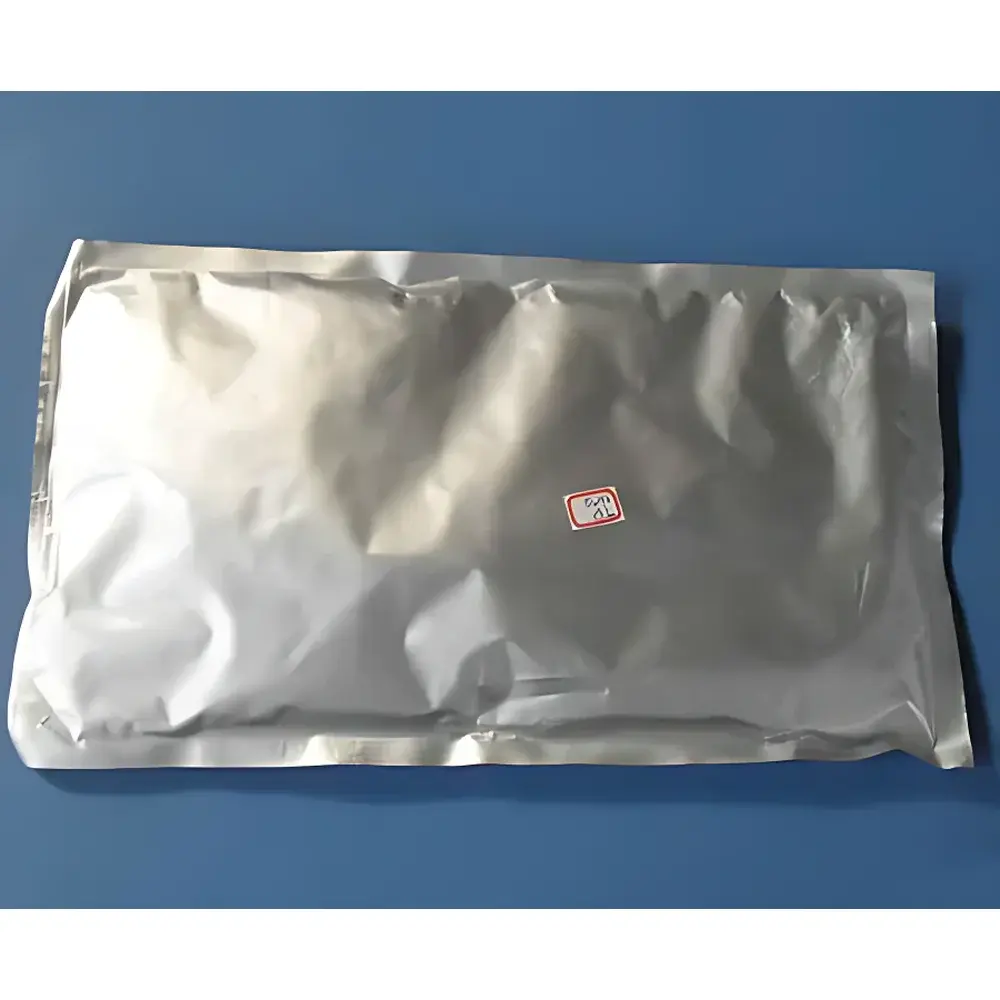
Powders are sealed under argon in double-layer aluminum-laminated pouches with desiccant, or in glass vials with PTFE-lined caps. Oxygen/moisture barrier integrity is verified via headspace gas analysis (RGA) prior to shipment.
Can batch-specific analytical data be shared before purchase?
Yes. Pre-shipment CoAs—including XRD phase report, BET surface area, particle size distribution histogram, and ICP-MS impurity profile—are issued upon formal quotation acceptance.