
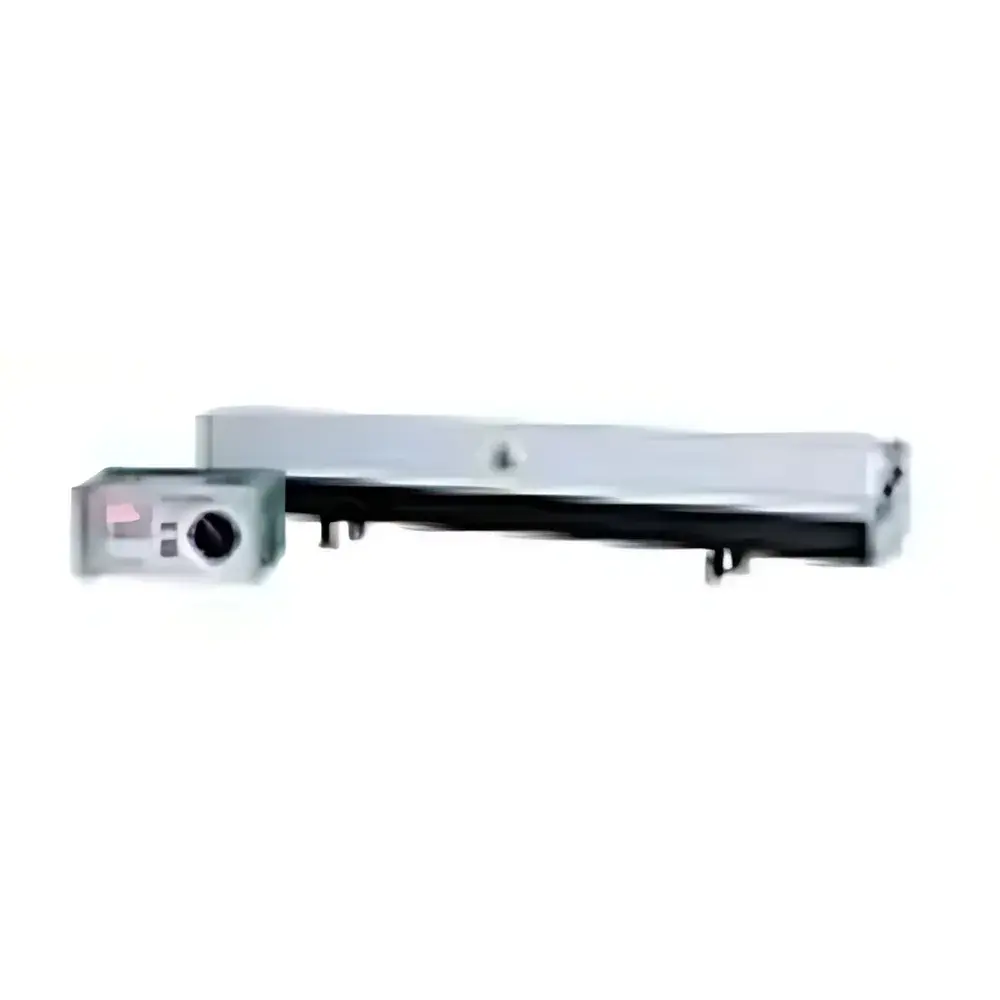
Helium-Neon Laser GY-22
| Key | Output Power ≥ 40 mW |
|---|---|
| Mode | Multimode |
| Operating Voltage | 3.5–4 kV |
| Operating Current | 15 mA |
| Wavelength | 632.8 nm |
| Origin | Tianjin, China |
| Manufacturer Type | Distributor |
| Domestic Product | Yes |
| Pricing | Upon Request |
Overview
The Helium-Neon Laser GY-22 is a continuous-wave (CW), gas-discharge laser engineered for stable visible-light emission at the fundamental helium-neon transition wavelength of 632.8 nm. Based on the principle of stimulated emission in a low-pressure He–Ne gas mixture under electrical excitation, this laser delivers high spectral purity and long-term amplitude stability—critical for alignment, interferometry, holography, and educational optics laboratories. Its sealed-bore plasma tube design ensures consistent beam quality over extended operational lifetimes, while the integrated high-voltage power supply enables reliable ignition and regulation within the specified 3.5–4 kV range at 15 mA discharge current. Designed and assembled in Tianjin, China, the GY-22 complies with IEC 60825-1:2014 safety standards for Class 3B laser products, requiring appropriate engineering controls and user training for safe operation.
Key Features
- Stable CW output at 632.8 nm with ≥40 mW nominal power—optimized for visibility and detector sensitivity in visible-spectrum applications
- Multimode transverse electromagnetic (TEM) output supporting moderate spatial coherence suitable for alignment, scanning, and basic interferometric setups
- Integrated high-voltage DC power supply with regulated current control (15 mA) and built-in arc suppression to extend tube longevity
- Hermetically sealed glass plasma tube with internal mirror coatings (R > 99.9% HR, R ≈ 98% OC), eliminating gas replenishment requirements
- Robust mechanical housing with standardized 30 mm diameter mounting barrel and M4 threaded base for compatibility with OEM optical benches and kinematic mounts
- Compliance with laser safety classifications per IEC 60825-1:2014 and ANSI Z136.1–2022; includes key-switch interlock interface and emission indicator LED
Sample Compatibility & Compliance
The GY-22 is not a sample-dependent instrument but functions as a calibrated light source whose performance is independent of external material inputs. It is routinely employed in calibration workflows for photodetectors, spectrometers, and position-sensitive devices (PSDs). As a domestically manufactured optical component, it meets GB/T 15475–2018 (Chinese national standard for gas lasers) and conforms to RoHS Directive 2011/65/EU for hazardous substance restrictions. While not certified to ISO/IEC 17025 for metrological traceability, its output wavelength is traceable to NIST-referenced iodine-stabilized He–Ne standards via factory spectral verification. No regulatory submission (e.g., FDA 510(k)) is required, as it falls outside medical device or industrial processing laser classifications.
Software & Data Management
The GY-22 operates as a standalone analog laser source without embedded firmware, digital interfaces, or software dependencies. Output stability is monitored externally using calibrated photodiodes (e.g., Thorlabs S120VC) or power meters (e.g., Coherent FieldMaxII-TO). For integration into automated systems, users may implement external TTL-compatible shutter control or analog modulation via the optional modulation input port (0–5 V, 1 kHz bandwidth). All operational parameters—including voltage, current, and warm-up time—are documented in the manufacturer’s technical datasheet and align with GLP documentation practices for instrument qualification (IQ/OQ). Audit trails for usage history must be maintained manually or via laboratory information management systems (LIMS) when deployed in regulated environments.
Applications
- Laser alignment in precision machining, semiconductor wafer handling, and optical cavity setup
- Teaching laboratories: demonstration of diffraction, interference, polarization, and Doppler shift fundamentals
- Reference source for calibrating CCD/CMOS sensor pixel response and linearity in imaging systems
- Input beam for Michelson, Mach–Zehnder, and Fabry–Pérot interferometers requiring visible-wavelength coherence
- Trigger source for time-of-flight measurements and pulsed-laser synchronization in hybrid optical systems
- Baseline illumination in particle image velocimetry (PIV) validation experiments using micron-scale seeding
FAQ
What is the typical warm-up time to achieve power stability?
The GY-22 requires approximately 15–20 minutes after cold start to reach thermal equilibrium and maintain output power variation within ±3% over 1 hour.
Is the beam polarized, and what is the extinction ratio?
Yes—the output is linearly polarized with an extinction ratio of ≥100:1, oriented parallel to the tube’s mechanical reference plane as marked on the housing.
Can this laser be operated in pulsed mode?
No—it is designed exclusively for continuous-wave operation; no internal or external pulsing circuitry is supported.
What cooling method is used, and is forced air required?
Passive convection cooling is sufficient; the unit operates reliably at ambient temperatures up to 35°C without heatsink or fan augmentation.
Does the GY-22 include beam-expanding or collimation optics?
No—beam delivery is provided as a raw Gaussian-like multimode output (M² ≈ 3–5); external collimators or expanders must be selected based on application-specific divergence and spot-size requirements.




