
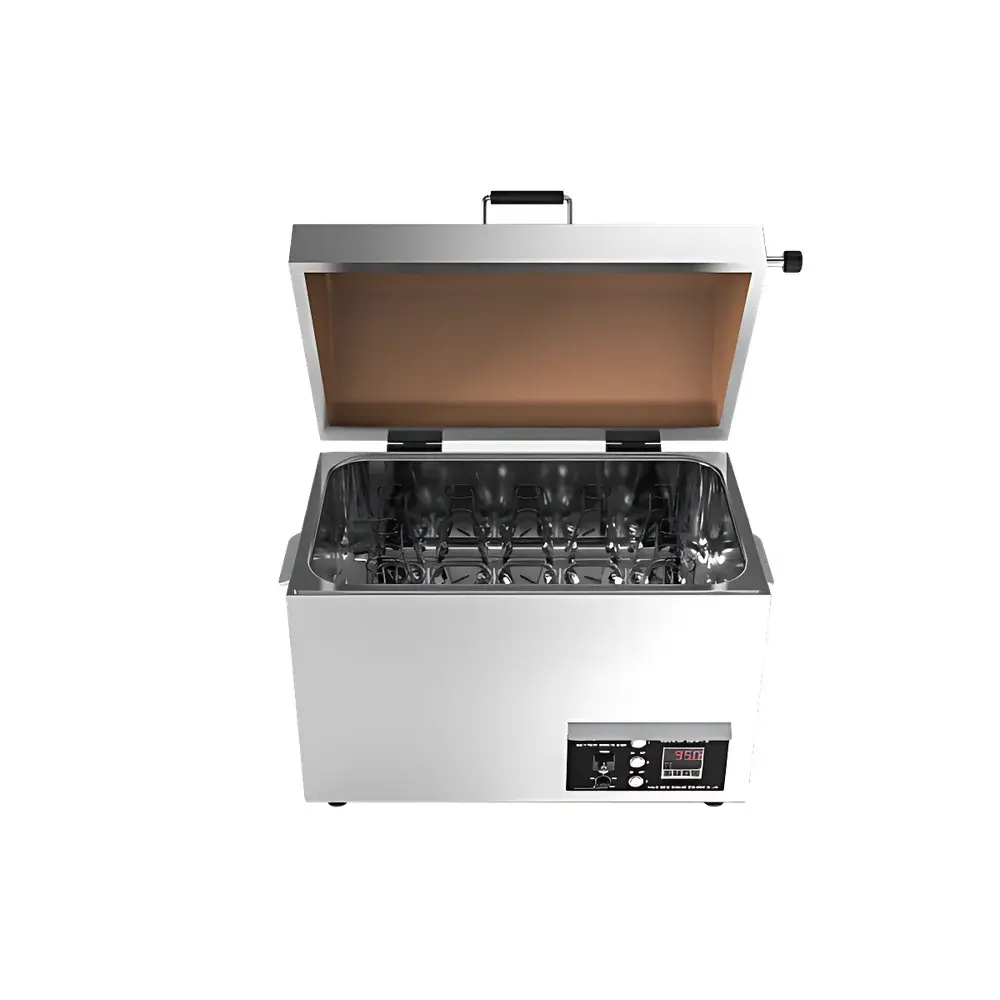
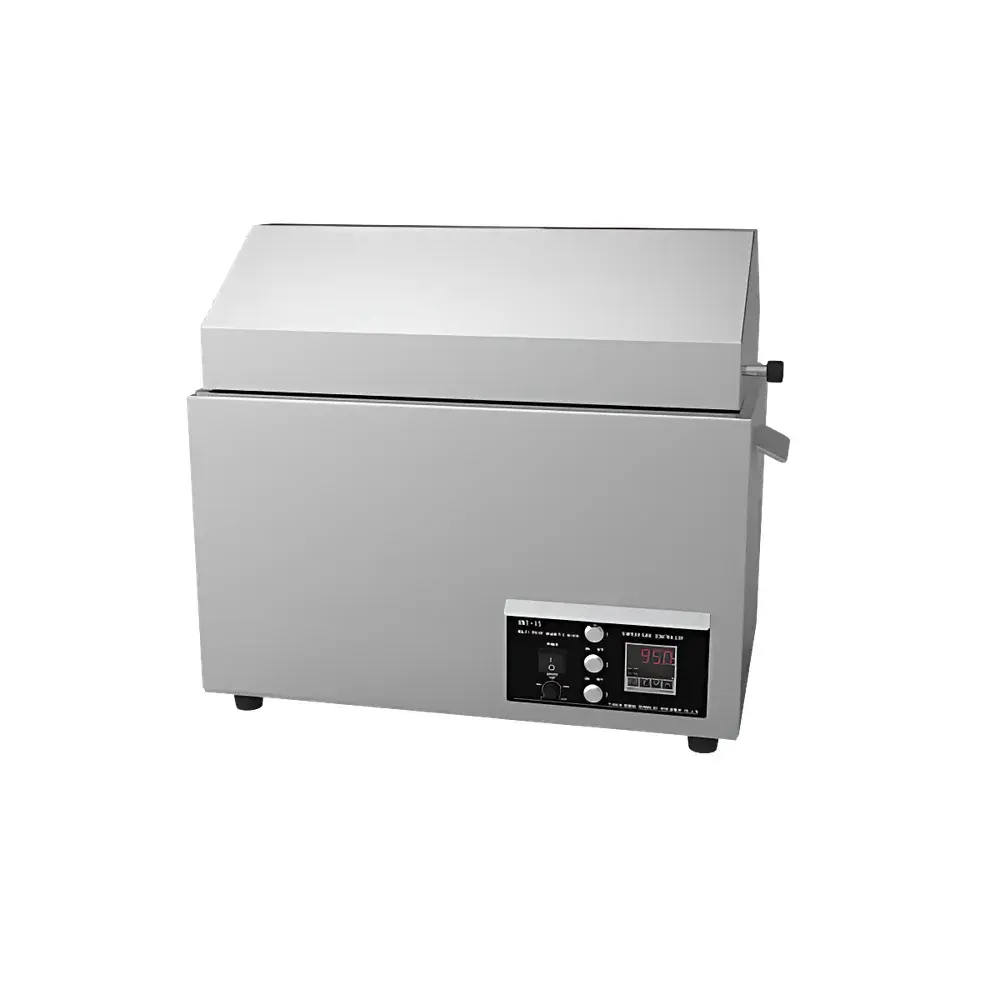
HengAo HMT-15 Multi-Position Magnetic Stirrer with Integrated Water Bath and Hexavalent Chromium Method Protocol
| Key | Brand: Tianjin HengAo |
|---|---|
| Origin | Tianjin, China |
| Manufacturer Type | Direct Manufacturer |
| Model | HMT-15 |
| Stirring Capacity (max) | 250 mL per position |
| Speed Range | 0–18,800 rpm |
| Temperature Control Range | Ambient to 100 °C |
| Heating Element | PTC |
| Temperature Control Algorithm | PID with User Calibration |
| Display | 5-inch Touchscreen |
| Number of Stations | 15 |
| Pre-stirring Time Setting | 0–99 min |
| Constant-Temperature Holding Time | 0–999 min |
| Material | Stainless Steel (Corrosion-Resistant Grade) |
| Method Storage | 5 user-defined protocols including dedicated Cr(VI) digestion protocol |
| Optional Feature | Automated Fill/Drain Module for Thermal Equilibrium Maintenance |
Overview
The HengAo HMT-15 is a purpose-engineered multi-position magnetic stirrer integrated with precision water bath temperature control, specifically designed to support standardized wet-chemical digestion protocols required in regulated environmental and industrial hygiene laboratories—most notably for hexavalent chromium (Cr(VI)) analysis per EPA Method 7196A, ISO 11885, and ASTM D3919. Unlike conventional benchtop stirrers, the HMT-15 implements simultaneous, independent thermal and mechanical agitation across 15 sample positions using sealed PTC heating elements and high-torque magnetic drive systems. Its operational architecture follows the Couette flow principle for consistent shear delivery, ensuring reproducible dissolution kinetics during alkaline or acidic leaching steps. The instrument operates within a rigorously defined thermal envelope (ambient to 100 °C), with ±0.3 °C stability over 30 minutes at 95 °C—critical for maintaining reaction stoichiometry in Cr(VI) speciation workflows where over-digestion or incomplete extraction directly impacts analytical accuracy.
Key Features
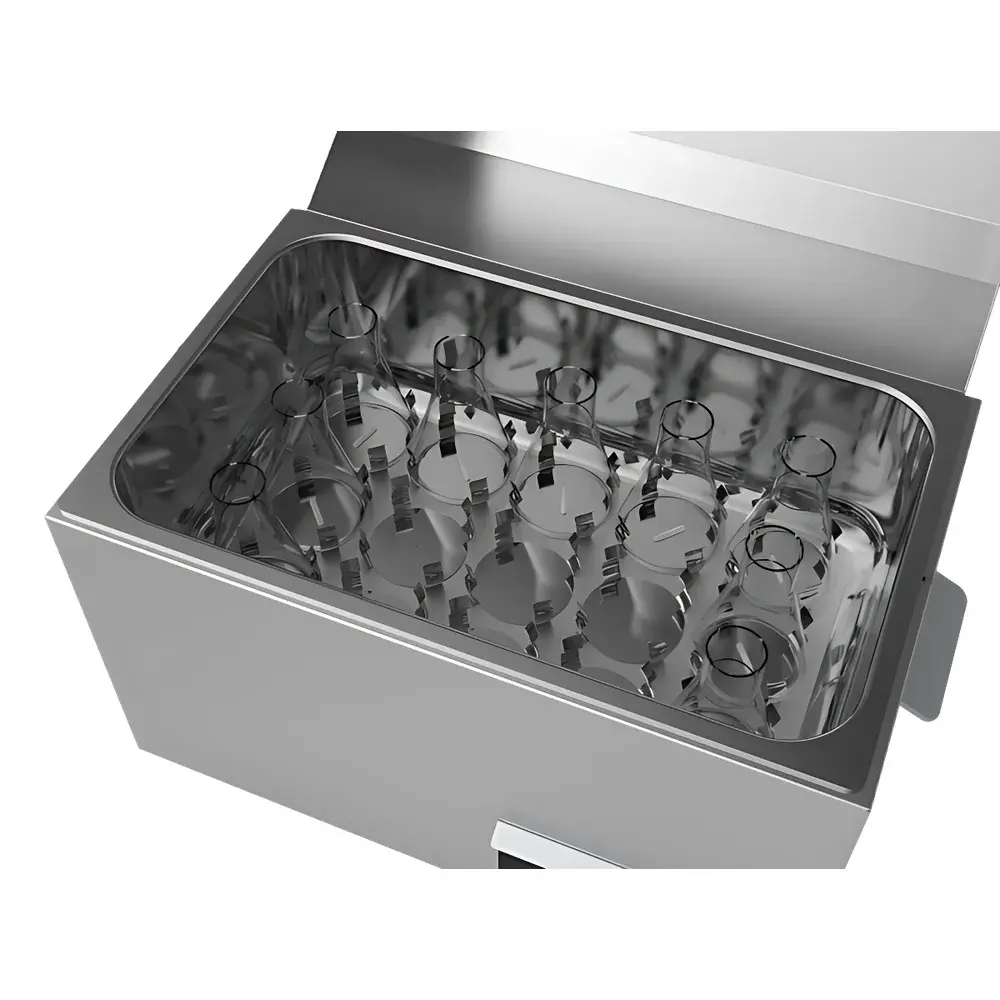
- 15-position parallel processing platform with individual magnetic stir bars and uniform thermal distribution across all wells
- 5-inch capacitive touchscreen interface supporting real-time visualization of speed (rpm), setpoint and actual bath temperature, pre-stir duration, and hold time
- PID-based temperature regulation with user-accessible calibration offset adjustment—enabling traceable alignment against NIST-traceable reference thermometers
- Stainless steel 316L housing and well inserts providing resistance to caustic reagents (e.g., NaOH, Na₂CO₃) and oxidizing agents (e.g., KMnO₄) commonly used in Cr(VI) sample preparation
- Dedicated “Cr(VI) Mode” that auto-loads optimized parameters: 95 °C ± 1 °C, 800–1200 rpm, 30-min pre-stir, followed by 120-min constant-temperature hold—fully compliant with EPA 7196A Section 7.3
- On-device storage for up to five method configurations, each preserving speed ramp profiles, temperature setpoints, timing sequences, and alarm thresholds
- Optional automated fill/drain module compatible with deionized water supply and waste lines—reducing manual intervention and improving inter-batch consistency in high-throughput labs
Sample Compatibility & Compliance
The HMT-15 accommodates standard 50 mL polypropylene or borosilicate glass digestion tubes (external diameter ≤32 mm) and supports volumetric ranges from 10 mL to 250 mL per station. It is validated for use with EPA SW-846 Methods 3060A (alkaline digestion) and 7196A (diphenylcarbazide colorimetry), as well as ISO 11885:2018 Annex B for total Cr and Cr(VI) separation. All firmware logic adheres to ALCOA+ data integrity principles: audit trails record parameter changes, user logins, and method execution timestamps. Device firmware supports optional 21 CFR Part 11-compliant electronic signatures when paired with validated LIMS integration middleware.
Software & Data Management
No proprietary PC software is required for basic operation; however, optional USB-C data export enables CSV-formatted logs (timestamp, setpoint, actual temp, rpm, elapsed time) for GLP/GMP documentation. Each method file includes embedded metadata: operator ID, calibration date, and last validation check. Firmware updates are delivered via signed .bin files with SHA-256 hash verification. Remote monitoring is supported through RS-485 Modbus RTU protocol (addressable node ID configurable), allowing integration into centralized lab automation networks.
Applications
- Regulatory Cr(VI) quantification in workplace air filters, soil, sludge, and wastewater per OSHA ID-215 and NIOSH 7600
- Alkaline fusion pretreatment of refractory matrices prior to ICP-MS or UV-Vis analysis
- Controlled leaching studies under TCLP or SPLP protocols requiring precise thermal-mechanical coupling
- Standardization of QA/QC spikes and matrix spike duplicates in environmental testing labs accredited to ISO/IEC 17025:2017
- Method development for redox-sensitive analytes where oxygen ingress must be minimized via inert-gas purged vessels mounted on HMT-15 platforms
FAQ
Does the HMT-15 meet ISO/IEC 17025 requirements for equipment qualification?
Yes—its documented temperature uniformity (±0.5 °C across all 15 wells at 95 °C), speed repeatability (±15 rpm at 1200 rpm), and built-in calibration traceability support IQ/OQ/PQ protocols.
Can the Cr(VI) method be modified for other metal digestions?
Absolutely—the five stored methods include editable ramp rates, dwell times, and thermal plateaus; users routinely adapt them for As, Se, and Mo speciation workflows.
Is third-party validation support available?
HengAo provides IQ/OQ templates and participates in joint qualification exercises with certified metrology partners in EU and North America.
What maintenance intervals are recommended?
PTC element performance verification every 12 months; stir bar magnetism check every 6 months; touchscreen calibration annually or after 10,000 touch events.
How is thermal cross-talk between adjacent wells mitigated?
Each well features independent thermal mass buffering and segmented PTC zones—validated to limit inter-well deviation to <0.2 °C at steady state.



