
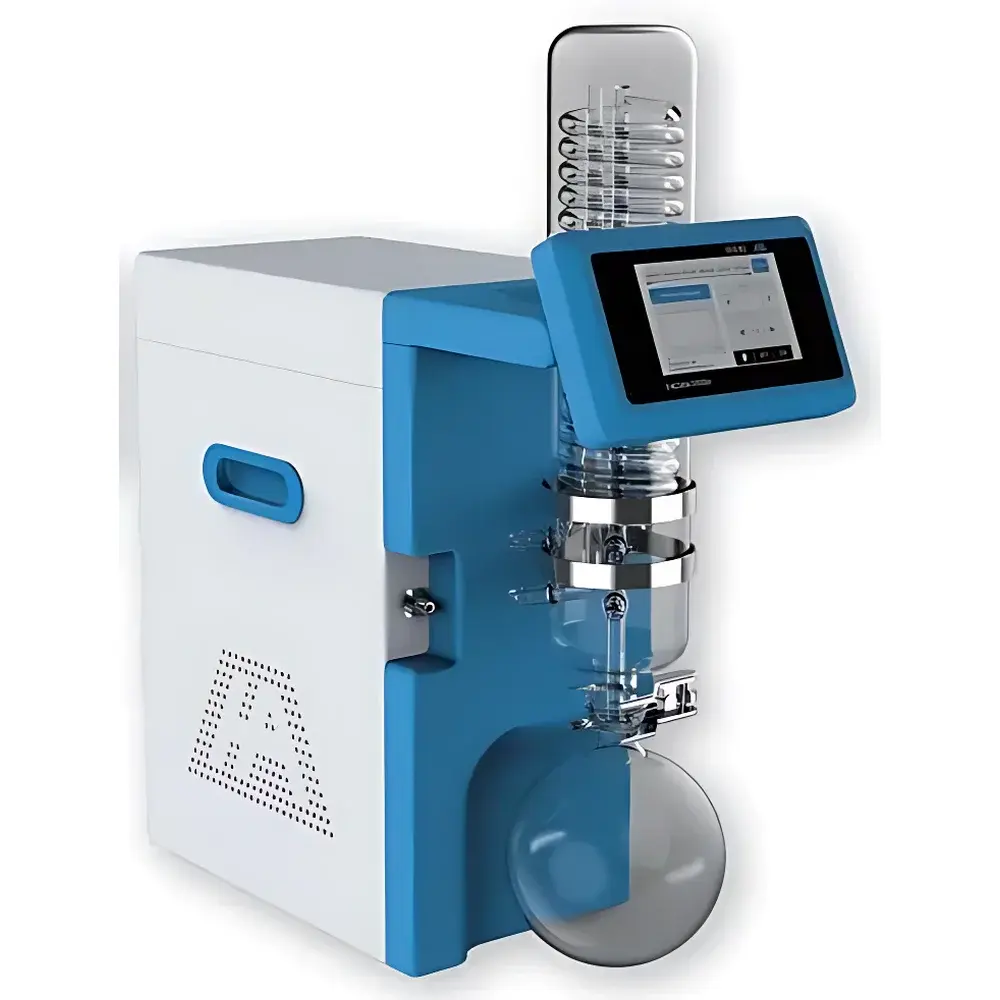
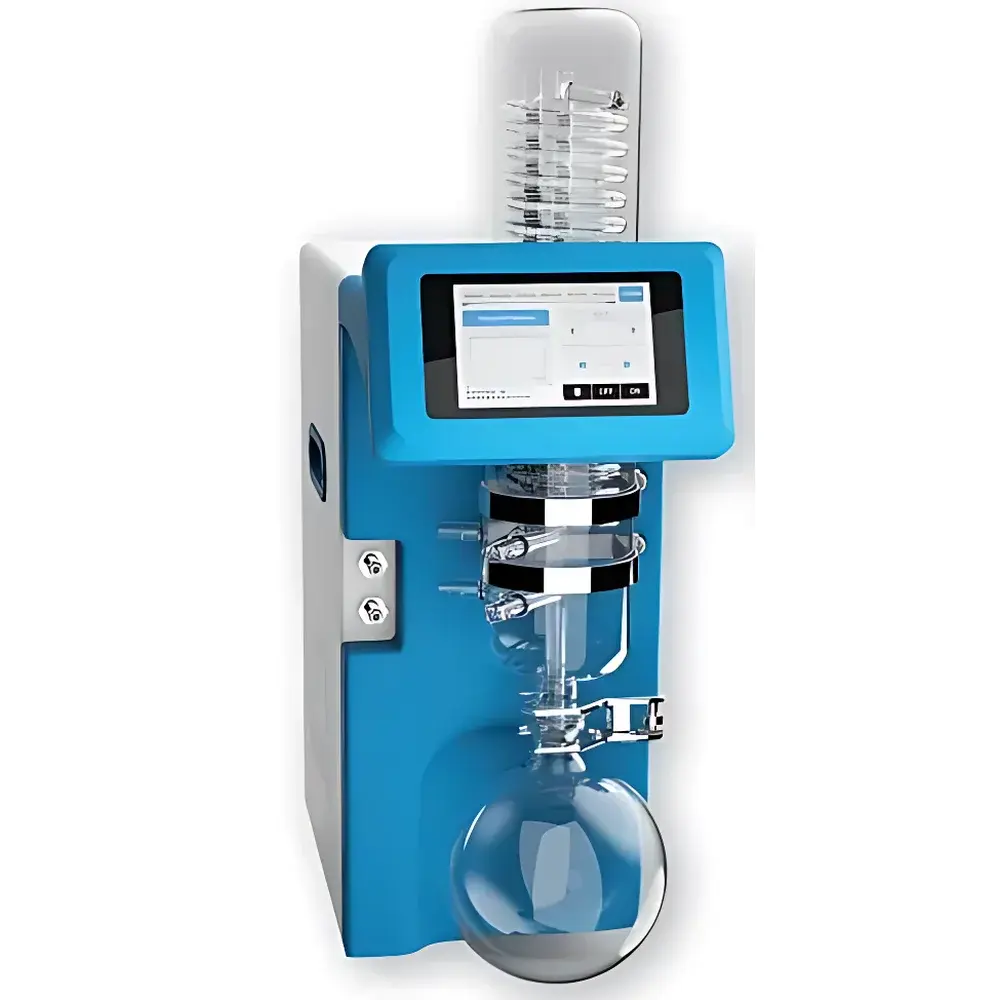
HengAo HVS-03 Vacuum Control System
| Brand | Tianjin HengAo |
|---|---|
| Origin | Tianjin, China |
| Manufacturer Type | Direct Manufacturer |
| Product Type | Oil-Free Diaphragm Vacuum Pump |
| Model | HVS-03 |
| Pumping Speed | 50 L/min |
| Ultimate Vacuum | 20 mbar |
| Motor Power | 100 W |
| Dimensions (L×W×H) | 550 × 205 × 600 mm |
| Weight | 11.5 kg |
| Inlet/Outlet Port Diameter | 8 mm |
| Diaphragm & Valve Material | PTFE |
| Collection Flask Capacity | 1000 mL / 2000 mL |
| Compliance | CE-marked for laboratory use under IEC 61010-1 |
Overview
The HengAo HVS-03 Vacuum Control System is an oil-free, diaphragm-based vacuum generator engineered for precise, chemically resistant, and maintenance-free operation in analytical and preparative laboratory workflows. It operates on positive displacement principle via a PTFE-coated elastomeric diaphragm driven by a brushless DC motor, delivering stable vacuum pressure across variable load conditions without lubricant contamination or hydrocarbon outgassing. Designed specifically for integration with evaporation platforms—including parallel evaporators, rotary evaporators, vacuum concentrators, and vacuum drying ovens—the HVS-03 enables dynamic vacuum regulation between atmospheric pressure and its ultimate vacuum of 20 mbar. Its continuous-duty 100 W motor supports sustained operation during multi-hour concentration cycles, while the sealed, corrosion-resistant architecture ensures compatibility with aggressive vapors generated during acid digestion, solvent removal, or lyophilization pre-treatment.
Key Features
- Oil-free diaphragm pump design eliminates risk of oil backstreaming, ensuring sample integrity and simplifying regulatory compliance in GLP/GMP environments.
- PTFE-coated diaphragm, valves, and pump head provide broad chemical resistance—validated for intermittent exposure to HCl, HNO₃, acetic acid, acetone, dichloromethane, and other common organic and inorganic vapors.
- Integrated analog vacuum control allows real-time adjustment of suction pressure via front-panel knob, supporting method-specific optimization for crystallization kinetics, gentle solvent removal, or heat-sensitive compound isolation.
- Dual-flask configuration (1000 mL and 2000 mL options) facilitates extended unattended operation; borosilicate glass flasks include anti-splash baffles and PTFE-sealed ground-glass joints.
- Compact footprint (550 × 205 × 600 mm) and lightweight chassis (11.5 kg) enable benchtop deployment in space-constrained fume hoods or modular lab setups without structural reinforcement.
- No scheduled maintenance required: no oil changes, no filter replacements, and no valve reseating—diaphragm service life exceeds 10,000 operating hours under typical laboratory duty cycles.
Sample Compatibility & Compliance
The HVS-03 is validated for use with aqueous, polar aprotic, and moderately volatile organic solvents (e.g., methanol, ethanol, ethyl acetate, THF), as well as acidic and basic aqueous digestates. It is not rated for halogenated hydrocarbons above 40 °C vapor temperature or for permanent gases (e.g., O₂, N₂, CO₂) at high flow rates. All wetted materials comply with USP Class VI and FDA 21 CFR 177.1550 for PTFE. The system meets IEC 61010-1:2010 safety requirements for electrical equipment used in laboratory settings and carries CE marking for EMC and low-voltage directives. While not intrinsically safe, it may be deployed in non-classified laboratory zones per NFPA 45 and ISO 15195 guidelines when paired with appropriate condensate traps and secondary containment.
Software & Data Management
The HVS-03 operates as a standalone analog-controlled unit without embedded digital interfaces or firmware. For laboratories requiring audit-trail capability, it can be integrated into third-party process monitoring systems via 0–10 V analog output (vacuum level signal) and dry-contact relay outputs for run-status and fault indication. When used with HengAo’s optional vacuum controller module (HVC-100, sold separately), users gain RS-485 Modbus RTU connectivity, programmable ramp profiles, and event-logged vacuum history exportable as CSV files—supporting 21 CFR Part 11-compliant data integrity frameworks when hosted on validated network infrastructure.
Applications
- Parallel solvent evaporation under controlled vacuum for high-throughput sample preparation in pharmaceutical QC labs.
- Rotary evaporation of thermolabile natural product extracts where oil-free vacuum prevents cross-contamination between batches.
- Vacuum-assisted drying of chromatography fractions prior to NMR analysis or mass spectrometry.
- Inert atmosphere purging and degassing of reaction vessels prior to Schlenk-line transfers.
- Supporting freeze-dryer shelf pre-cooling cycles by evacuating chamber air before refrigerant activation.
- Gas-phase extraction in solid-phase microextraction (SPME) workstations where consistent sub-atmospheric pressure improves analyte transfer efficiency.
FAQ
Is the HVS-03 suitable for continuous operation over 8 hours?
Yes—its thermally optimized motor and passive convection cooling allow uninterrupted duty cycles up to 24 hours, provided ambient temperature remains below 35 °C and inlet gas load does not exceed 80% of rated pumping speed.
Can it be used with corrosive gases such as chlorine or hydrogen sulfide?
No—while PTFE offers excellent resistance to strong acids and bases, it is not chemically inert toward oxidizing halogens or reducing sulfur species. Use only with documented compatibility per ASTM D471 testing protocols.
Does the system include a vacuum gauge?
No—the base HVS-03 model lacks an integrated pressure sensor. A calibrated analog vacuum gauge (0–1000 mbar range) or digital transducer must be installed externally in the vacuum line for accurate process monitoring.
What is the recommended replacement interval for the PTFE diaphragm?
Under normal usage (≤6 hrs/day, ambient <30 °C, non-condensing vapors), diaphragm replacement is advised every 36 months or after 8,000 operational hours—whichever occurs first—as part of preventive maintenance per ISO/IEC 17025 Clause 6.4.3.
Is the collection flask autoclavable?
Yes—the borosilicate glass flasks are autoclavable at 121 °C for 20 minutes; however, PTFE stoppers and O-rings must be removed prior to sterilization to prevent thermal degradation.



