HengaoDe H17910 Graphite Urinary Iodine Digestion System with Remote Control
| Brand | HengaoDe |
|---|---|
| Origin | Beijing, China |
| Manufacturer Type | Authorized Distributor |
| Country of Origin | China |
| Model | H17910 |
| Temperature Range | Ambient to 250 °C (max 460 °C) |
| Heating Medium | High-Purity Graphite + PFA Coating |
| Temperature Control Accuracy | ±0.5 °C |
| Power Rating | 1.6 kW |
| Dimensions (L×W×H) | 500 × 350 × 180 mm |
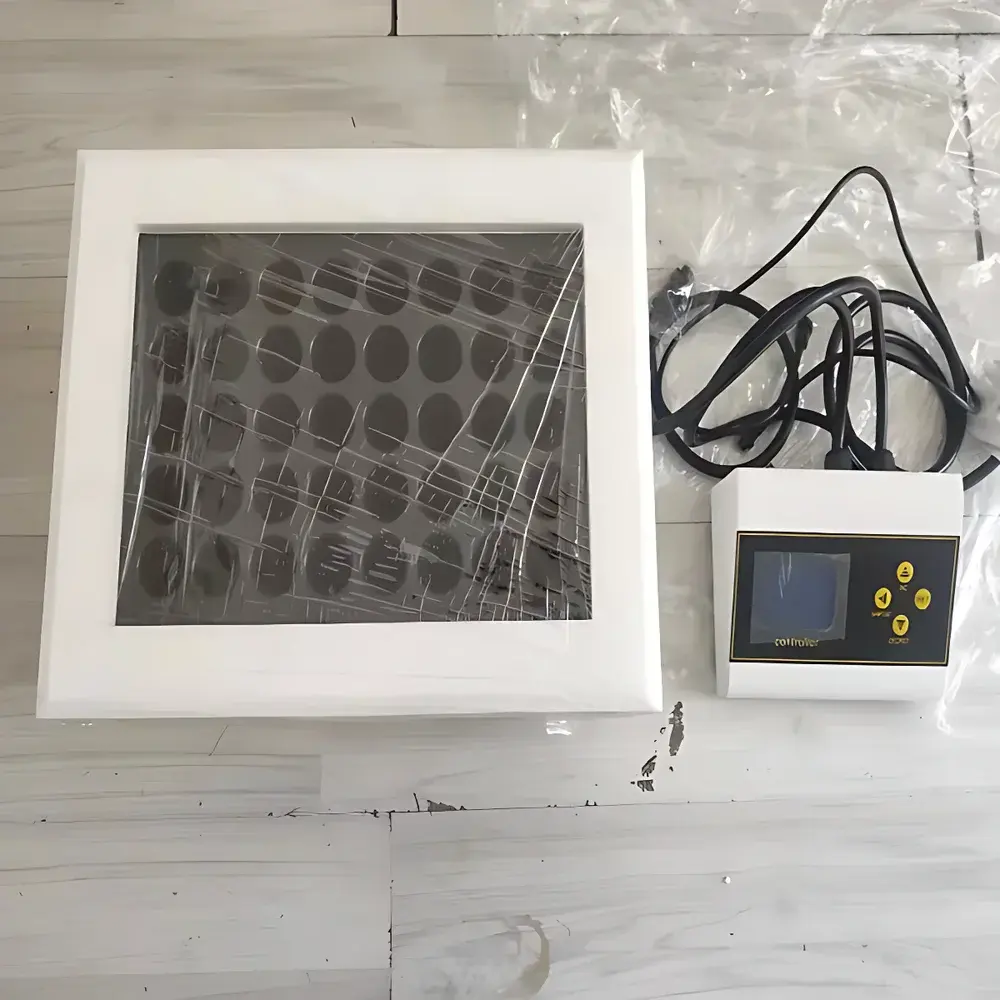
| Sample Capacity | 40 × Ø27 mm holes, depth 170 mm |
Overview
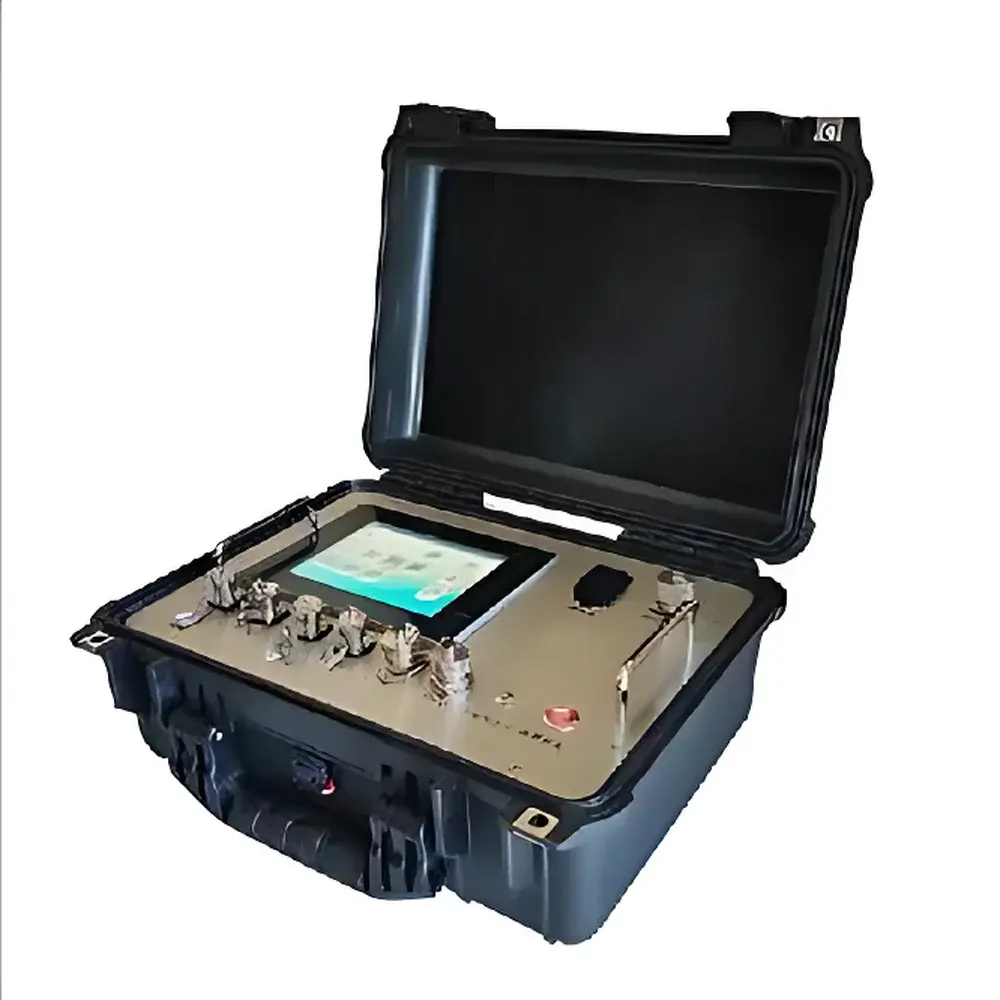
The HengaoDe H17910 Graphite Urinary Iodine Digestion System is a precision-controlled, high-stability block digester engineered for reproducible sample preparation in trace-element analysis workflows. It operates on the principle of conductive heating via a monolithic high-purity graphite block, uniformly coated with inert perfluoroalkoxy (PFA) polymer to resist acid corrosion and prevent cross-contamination. Designed specifically for urinary iodine quantification—commonly performed by inductively coupled plasma atomic emission spectroscopy (ICP-AES), graphite furnace atomic absorption spectrometry (GFAAS), or hydride generation atomic fluorescence spectrometry (HG-AFS)—the system enables complete matrix decomposition and subsequent acid evaporation (“gassing off” or “赶酸”) under programmable thermal profiles. Its remote control capability supports unattended operation in regulated laboratory environments, reducing analyst exposure to fumes and improving workflow integration with LIMS or automated sample-handling platforms.
Key Features
- Graphite heating block with full PFA encapsulation ensures exceptional chemical resistance against HNO₃, HCl, HF, and aqua regia at temperatures up to 460 °C.
- Dual-zone temperature calibration: independent sensor validation across low- (25–150 °C) and high-range (150–460 °C) operating conditions for improved method robustness.
- Integrated digital PID controller delivers ±0.5 °C thermal stability over extended runtimes, critical for EPA Method 3050B and GB/T 22105.2-2008 compliance.
- 40-position standardized digestion tube configuration (Ø27 mm × 170 mm depth) accommodates common borosilicate or quartz vials used in iodine speciation protocols.
- Front-panel LED interface with password-protected parameter locking meets GLP documentation requirements for audit trails and operator accountability.
- Low thermal mass design enables rapid ramp rates (up to 15 °C/min) without overshoot, optimizing throughput for high-volume clinical or environmental labs.
Sample Compatibility & Compliance
The H17910 is validated for use in regulatory-compliant digestion protocols across multiple international standards. It fulfills thermal performance criteria required by U.S. EPA Methods 3010A (acid digestion for metals), 3050B (acid digestion of sediments and soils), and 365.1 (mercury in biological tissues); Chinese national standards GB/T 5009.11-2003 (arsenic in food), GB/T 5009.17-1996 (mercury in food), and GB/T 22105.1–22105.3-2008 (iodine in soil and plant materials). Its uniform heating profile supports consistent recovery of volatile analytes—including iodine, selenium, and bromine—without loss due to localized hot spots. The PFA-coated surface complies with ISO 17025 clause 5.5.2 regarding equipment suitability for trace metal analysis, and its non-metallic construction eliminates leaching risks associated with stainless-steel or ceramic alternatives.
Software & Data Management
While the base unit operates via standalone digital controls, optional RS-485/Modbus RTU interface enables integration with third-party laboratory automation software (e.g., LabWare LIMS, Thermo Fisher SampleManager). Remote command execution—including start/stop, setpoint adjustment, and real-time temperature logging—is supported through ASCII-based protocol commands. All operational parameters are timestamped and stored locally in non-volatile memory for minimum 30-day retention, satisfying FDA 21 CFR Part 11 requirements for electronic records when paired with user-defined audit log procedures. Firmware updates are delivered via USB port using signed binary packages verified by SHA-256 checksums.
Applications
This system serves as a core front-end tool in clinical nutrition laboratories performing urinary iodine monitoring per WHO/ICCIDD guidelines; environmental testing facilities executing heavy metal screening in wastewater sludge per ISO 11466; and pharmaceutical QC labs validating elemental impurities in excipients per ICH Q3D. Its thermal repeatability makes it suitable for method transfer between research and routine testing sites. Common applications include: digestion of urine samples prior to cerium arsenite spectrophotometric iodine assay; pretreatment of seaweed and dairy powders for iodine content certification; and parallel digestion of sediment cores for multi-element profiling by ICP-MS.
FAQ
Is the H17910 compatible with microwave digestion vessels?
Yes—its Ø27 mm孔径 accommodates standard 50 mL PTFE or quartz microwave tubes, enabling direct post-microwave acid removal and concentration.
Does the instrument support gradient temperature programming?
No—the H17910 features fixed-setpoint operation only. For multi-step ramp-and-hold protocols, external programmable timers or PLC-based controllers are recommended.
What maintenance is required for long-term accuracy?
Annual recalibration of the PT100 sensor against NIST-traceable reference thermometers is advised. Visual inspection of PFA coating integrity should occur after every 500 digestion cycles.
Can the unit be operated inside a fume hood?
Yes—its IP21-rated enclosure and low electromagnetic emissions allow safe installation in ventilated enclosures without interference to adjacent instrumentation.
Is validation documentation available for GMP environments?
Factory-issued IQ/OQ protocols compliant with ASTM E2500-13 are provided upon request, including test scripts for temperature uniformity mapping and alarm response verification.