
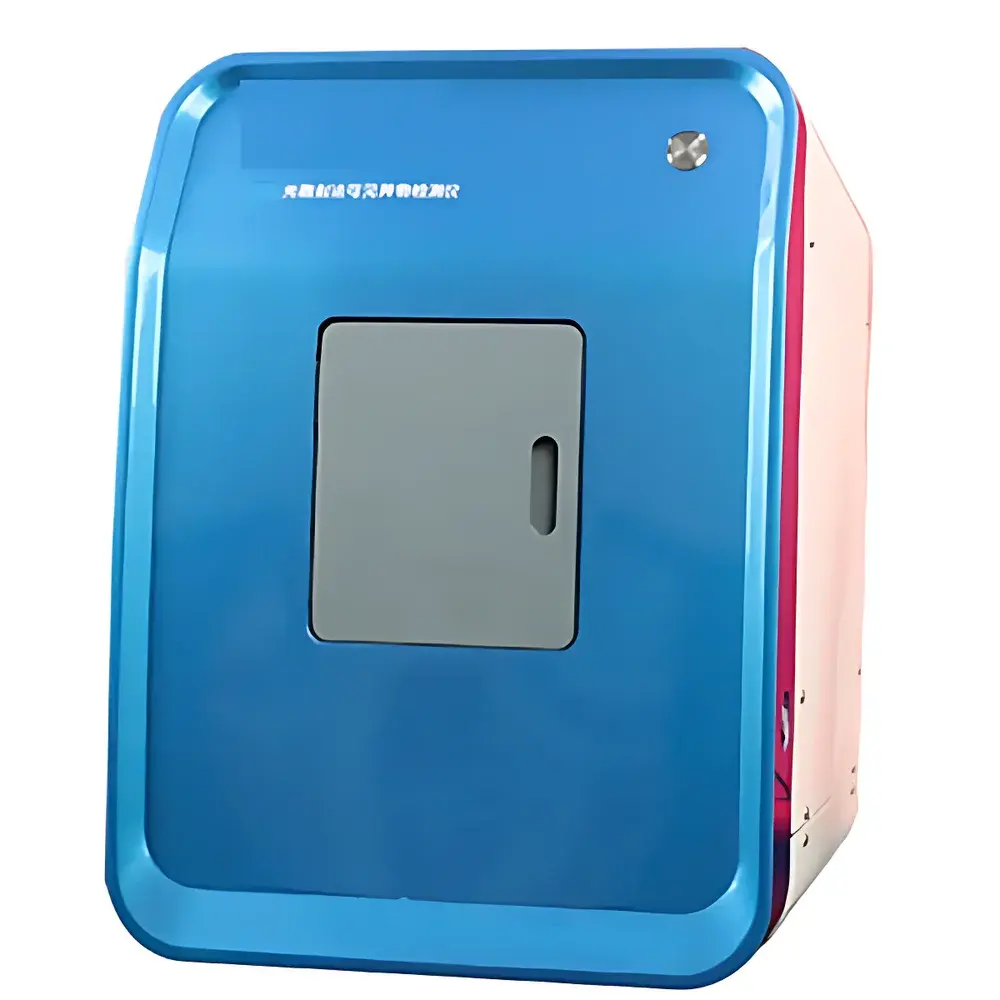
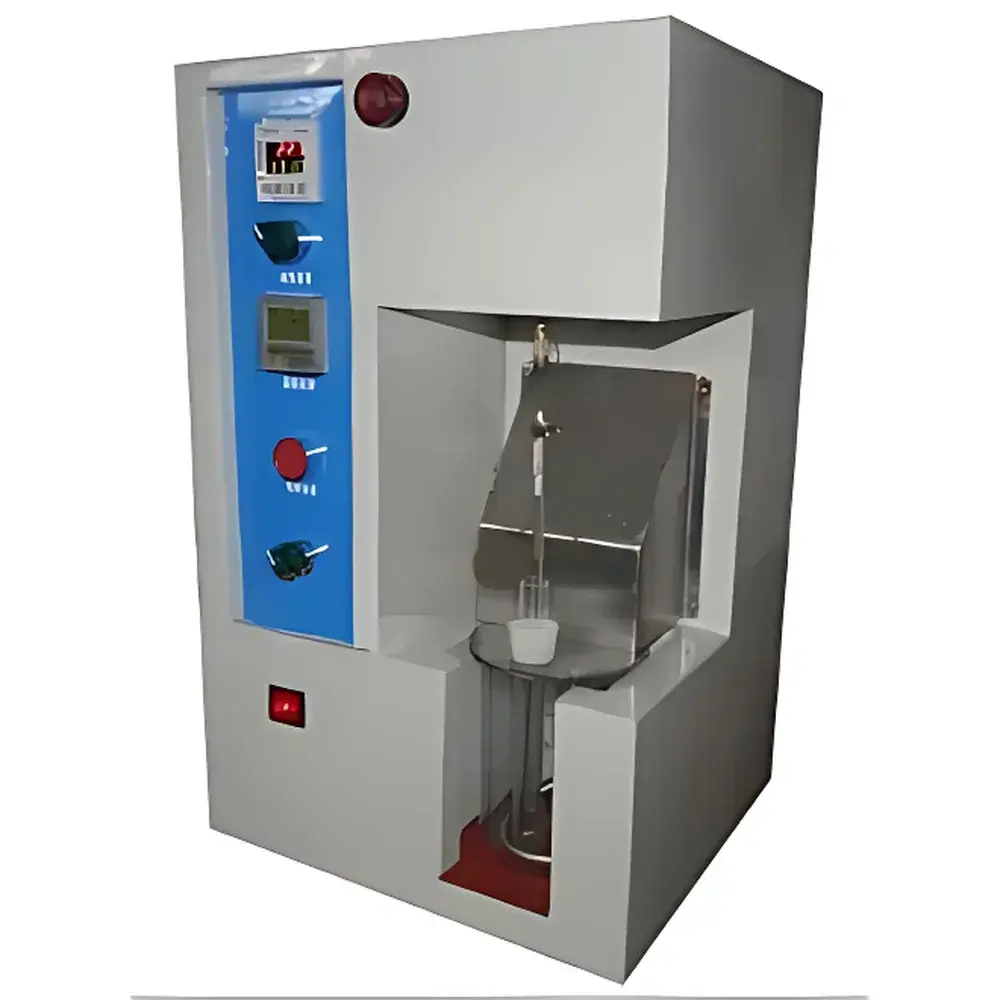
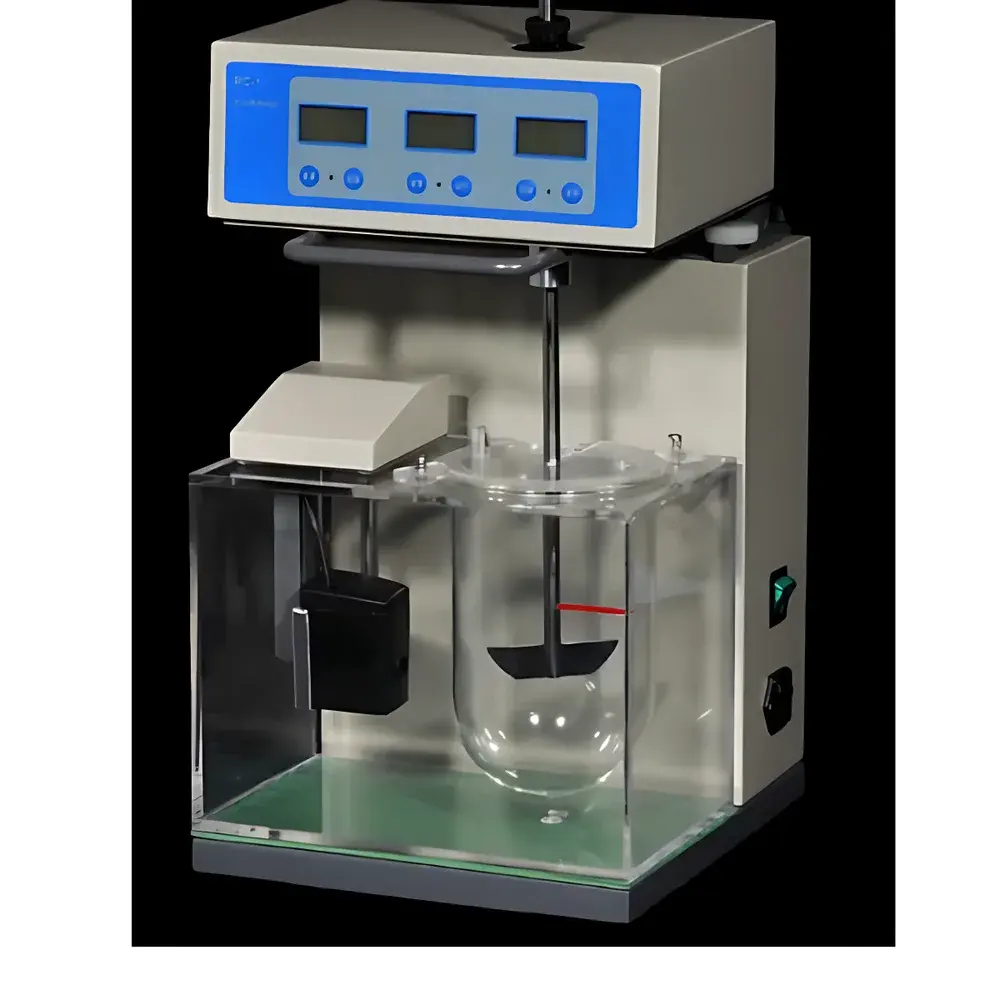
HengaoDe HAD-YW10A Visible Particulate Analyzer for Parenterals (Light Scattering Method) – Compliant with Chinese Pharmacopoeia 2020 Edition
| Key | Brand: HengaoDe |
|---|---|
| Model | HAD-YW10A |
| Detection Principle | Light Scattering |
| Sample Format | Manual Single-Vial Loading |
| Imaging Speed | 125 fps |
| Camera Resolution | 1920 × 1280 |
| Minimum Detectable Particle Size | ≥10 µm |
| Vial Compatibility | 1–20 mL ampoules, 1–30 mL vials |
| Temperature Range | Ambient to 50.0 °C |
| Relative Humidity | ≤65% RH |
| Calibration Standard | 40 µm & 60 µm latex particles (10 mL vial) |
| Power Supply | 220 V ±10% AC, 50 Hz, 80 W |
| Data Integrity | Audit Trail, Role-Based User Permissions (3-Level), PDF Log Export |
| Software | Full Chinese GUI, Real-Time Video Capture & Storage, Report Generation & Backup |
Overview
The HengaoDe HAD-YW10A Visible Particulate Analyzer is a dedicated optical instrumentation system engineered for automated detection and quantification of visible particulates in parenteral preparations—including sterile injectables, lyophilized powders in vials, and ampoule-packed solutions—according to the light scattering methodology specified in General Chapter 0903 of the Chinese Pharmacopoeia (ChP) 2020 Edition. It operates on the principle of dynamic light scattering contrast enhancement: as the sample vial rotates at controlled speed, suspended particles scatter incident light from dual coaxial LED sources; high-speed imaging captures transient scattering events against background transmission, enabling pixel-level morphological segmentation and size-based classification (≥10 µm). Unlike static visual inspection or membrane filtration methods, this approach eliminates operator subjectivity while preserving sample integrity—no filtration, dilution, or centrifugation is required. The system is designed for use in QC laboratories conducting routine batch release testing, stability studies, and process validation under GMP-compliant environments.
Key Features
- Full compliance with ChP 2020 General Chapter 0903 “Visible Particulate Matter Test” for light scattering method validation.
- Dual-wavelength LED illumination system optimized for differential contrast enhancement of glass shards, metal fragments, fibers, hair, and proteinaceous aggregates.
- Telecentric optical path with 1920 × 1280 resolution CMOS sensor and real-time image acquisition at 125 frames per second—enabling robust motion artifact suppression during vial rotation.
- Manual single-vial loading station with precision mechanical fixture ensuring consistent orientation and axial stability across ampoules (1–20 mL) and vials (1–30 mL).
- Traceable calibration using NIST-traceable polystyrene latex standard particles (40 µm and 60 µm) in 10 mL vials—validating detection sensitivity and sizing accuracy per ICH Q5A and USP .
- Integrated software platform with electronic signatures, role-based access control (three-tier: Administrator, Supervisor, Operator), and full audit trail per FDA 21 CFR Part 11 requirements.
- Complete digital record retention: raw video sequences, annotated particle maps, quantitative reports (count, size distribution, morphology tags), and user action logs—all exportable in PDF, CSV, or encrypted database backup formats.
Sample Compatibility & Compliance
The HAD-YW10A accommodates standard pharmaceutical primary packaging formats without modification: Type I borosilicate glass ampoules (1–20 mL), crimp-sealed serum vials (1–30 mL), and select polymer-based containers meeting optical clarity specifications per ISO 8536-1 and USP . It supports aqueous, oily, and viscous formulations—including monoclonal antibody solutions, small-molecule suspensions, and herbal extracts—as long as turbidity remains below OD600 0.3. Validation documentation includes IQ/OQ protocols aligned with ISO/IEC 17025 and EU Annex 11 principles. All firmware and software revisions are version-controlled and archived; change management follows ALCOA+ data integrity standards. The instrument meets electromagnetic compatibility (EMC) requirements per IEC 61326-1 and safety standards per IEC 61010-1.
Software & Data Management
The embedded Windows-based application provides a fully localized Chinese interface with intuitive workflow navigation—no command-line entry or scripting required. Each test session generates a unique digital dossier containing timestamped metadata (operator ID, vial ID, ambient conditions), synchronized video (.avi), particle heatmaps (.png), and structured XML report files compliant with ASTM E2500-13. Data encryption uses AES-256; local storage resides on an industrial-grade SSD with write-protection enabled. Remote access is restricted to authenticated network endpoints via TLS 1.2. Audit trails log all critical actions—including parameter changes, report approvals, and user logins—with immutable timestamps and digital fingerprints. Reports include automatic ChP-compliant pass/fail determinations based on maximum allowable particle counts per container volume.
Applications
This analyzer serves as a primary tool for regulatory-driven quality control in pharmaceutical manufacturing, biologics development, and contract testing laboratories. Typical applications include: final container inspection of pre-filled syringes and ampoules prior to sterility testing; monitoring particulate generation during lyophilization cycle optimization; assessing filter compatibility and extractables/leachables impact on formulation clarity; evaluating container-closure integrity failure modes (e.g., glass delamination); and supporting root cause analysis for out-of-specification (OOS) batches under CAPA frameworks. It also supports R&D activities such as excipient compatibility screening and accelerated stability protocol execution per ICH Q1A(R2).
FAQ
Does the HAD-YW10A meet international pharmacopoeial requirements beyond the Chinese Pharmacopoeia?
Yes—it satisfies the technical performance criteria outlined in USP , EP 2.9.20, and JP 6.07 for light scattering-based visible particulate detection, though formal regulatory submission requires site-specific method validation per ICH Q2(R2).
Can the system detect transparent or low-refractive-index particles such as silicone oil droplets?
Detection sensitivity for low-contrast particles depends on refractive index delta relative to the vehicle; silicone oil (n ≈ 1.40) in water (n = 1.33) yields measurable scattering above 15 µm under optimized illumination angles.
Is remote software update supported?
Firmware and application updates are delivered via secure USB media only; network-based updates are disabled by default to maintain data integrity and cybersecurity compliance.
What maintenance intervals are recommended?
Optical path cleaning every 3 months; annual calibration verification using certified reference particles; biannual inspection of mechanical alignment and vial rotation torque.
How is data integrity enforced during power interruption?
All active acquisitions write to non-volatile memory buffers before committing to SSD; unsaved sessions auto-recover upon reboot with checksum-verified continuity.





