
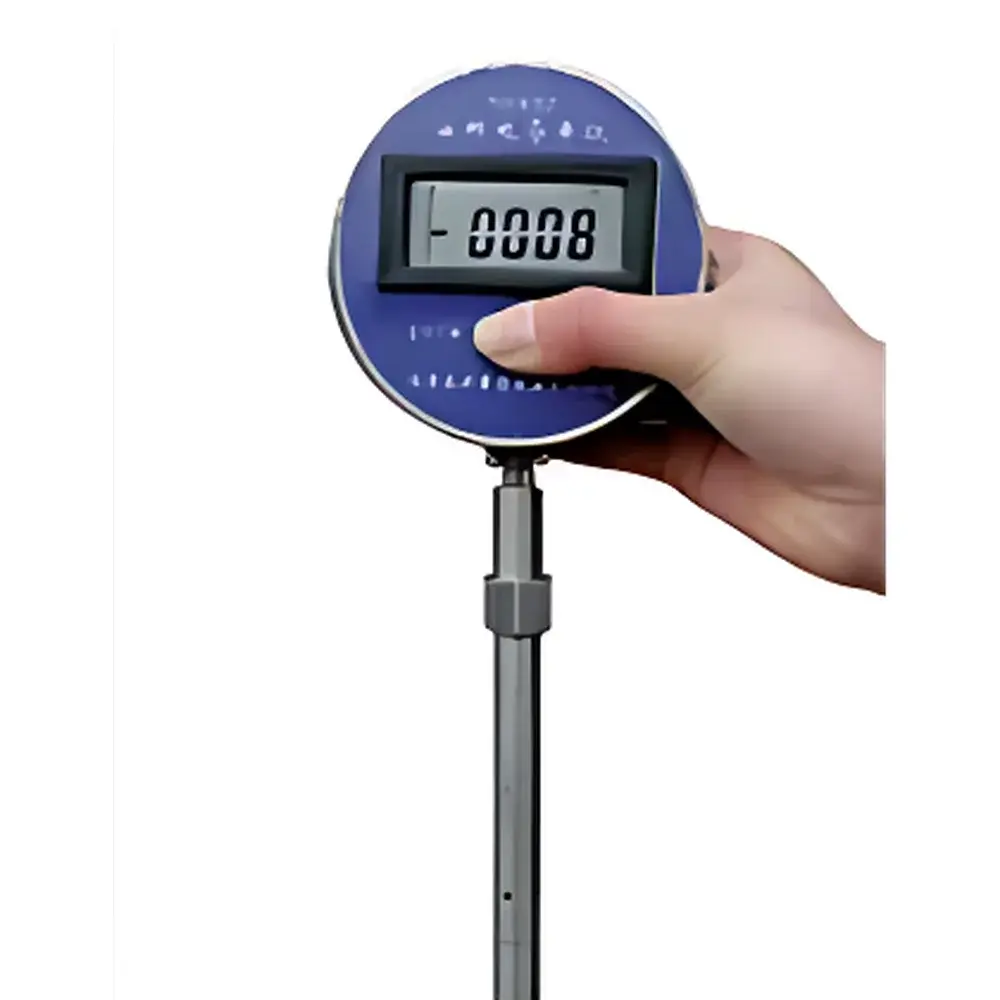
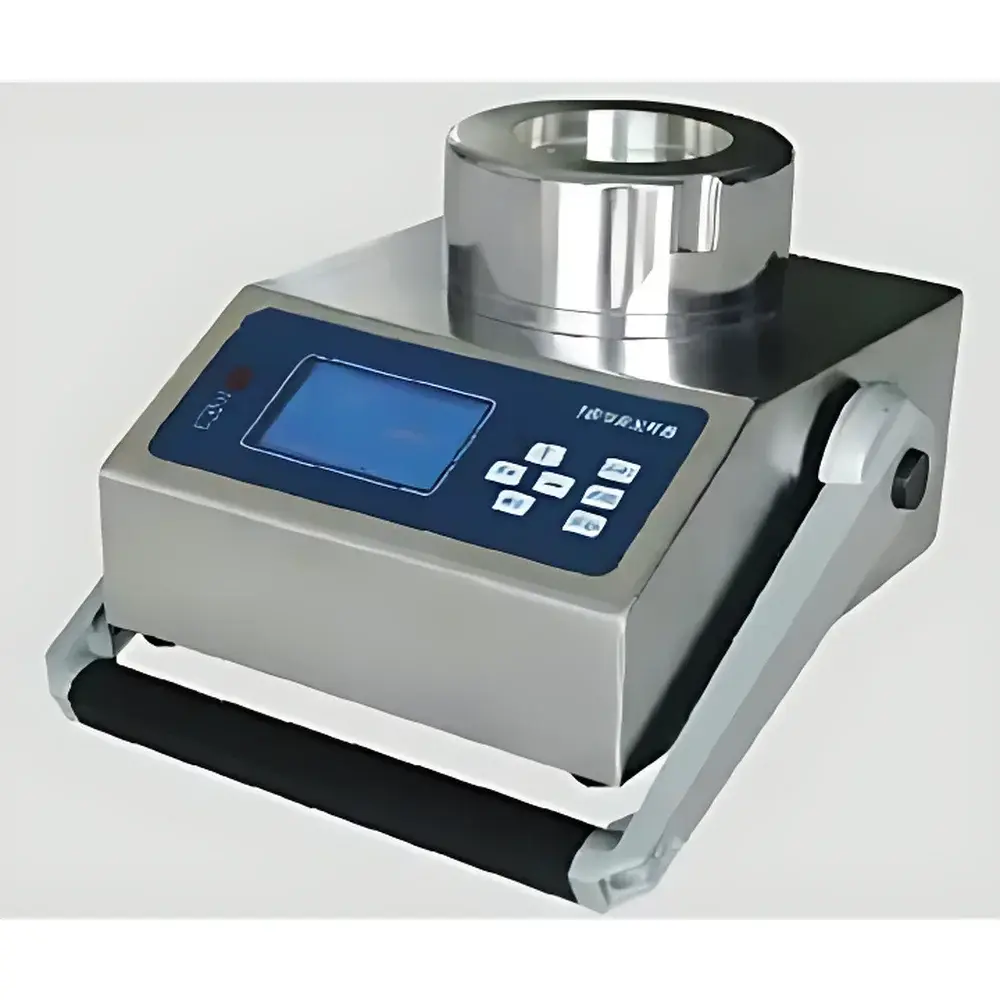
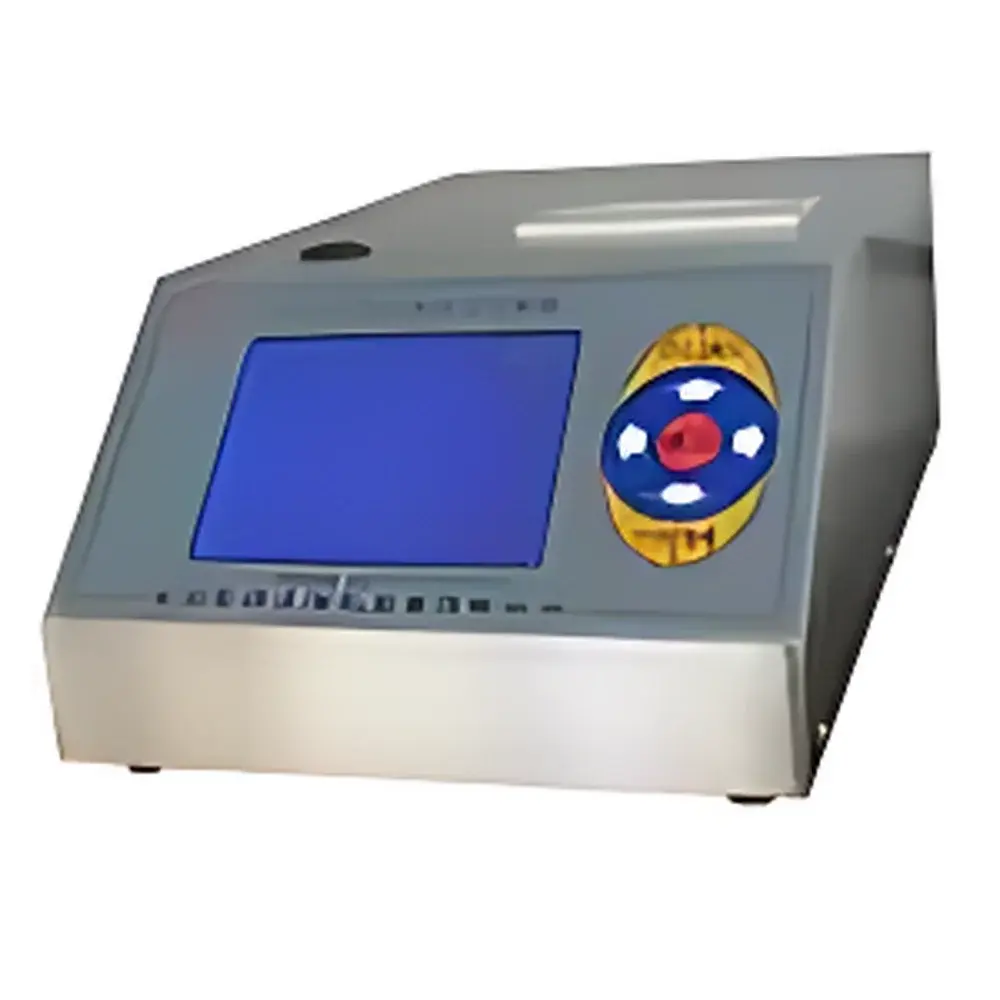
HengaoDe HAD-YX1152 Oil Conductivity Meter — ASTM D4308 & ISO 6297 Compliant Digital Fuel Conductivity Analyzer (EMCEE 1152 Equivalent)
| Brand | HengaoDe |
|---|---|
| Origin | Beijing, China |
| Manufacturer Type | Authorized Distributor |
| Country of Origin | China |
| Model | HAD-YX1152 |
| Price | USD 98 (FOB Beijing) |
| Measurement Range | 0–1999 pS/m (CM-08), 0–19999 pS/m (CM-08B) |
| Resolution | 1 pS/m |
| Accuracy | ±(2% + 1 pS) |
| Cell Constant | 1.00 ±2% |
| Display | LCD digital |
| Compliance | ASTM D4308-89, ISO 6297, GB/T 6539-1997, GB 6950-2001, GB 13348-1992 |
Overview
The HengaoDe HAD-YX1152 Oil Conductivity Meter is a precision-engineered, field-deployable instrument designed for the quantitative measurement of electrical conductivity in hydrocarbon-based liquids—including aviation turbine fuel (Jet A/A-1), gasoline, diesel, kerosene, transformer oil, and organic solvents. It operates on the principle of two-electrode conductometric analysis with temperature-compensated current injection and voltage sensing, calibrated to a nominal cell constant of 1.00 cm⁻¹. The instrument meets the metrological and procedural requirements of ASTM D4308–89 (“Standard Test Method for Electrical Conductivity of Aviation Fuels”), ISO 6297 (“Petroleum Products — Determination of Electrical Conductivity”), and multiple Chinese national standards (GB/T 6539–1997, GB 6950–2001, GB 13348–1992) governing static charge safety in petroleum handling systems. Its primary engineering objective is to support electrostatic hazard mitigation—particularly in refueling operations, bulk storage terminals, and laboratory QA/QC workflows—by verifying the presence and concentration of antistatic additives (e.g., Stadis 450) or detecting contamination-induced conductivity shifts.
Key Features
- Robust, hermetically sealed housing engineered for high-humidity, hydrocarbon-saturated environments—tested per IP54 equivalent ingress protection criteria.
- Auto-hold function for initial conductivity reading, eliminating operator-dependent timing errors during transient sample equilibration.
- High immunity to electromagnetic interference (EMI) from grounding systems, vehicle ignition, and portable radios—validated per IEC 61000-4-3 radiated immunity (10 V/m, 80 MHz–1 GHz).
- Dual-range capability: CM-08 (0–1999 pS/m) for aviation fuel monitoring; CM-08B (0–19999 pS/m) for low-conductivity dielectric oils and solvent blends.
- Integrated temperature compensation algorithm aligned with ASTM D4308 Annex A1, using an NTC thermistor embedded in the conductivity cell.
- Field-serviceable electrode assembly constructed from platinum-plated stainless steel, resistant to sulfidation and chloride pitting in aggressive fuel matrices.
Sample Compatibility & Compliance
The HAD-YX1152 is validated for direct immersion measurement in non-aqueous, low-dielectric liquids with viscosity ≤ 10 cSt and water content < 30 ppm (v/v). It is routinely deployed at airport refueling hydrants (per IATA AHM 530), terminal blending racks, refinery off-gas condensate streams, and transformer oil maintenance labs. Regulatory alignment includes full traceability to NIST-traceable conductivity standards (SRM 3122a), and its calibration protocol supports audit readiness for ISO/IEC 17025-accredited laboratories. The instrument satisfies static electricity safety verification requirements under API RP 2003 (“Protection Against Ignitions Arising Out of Static, Lightning, and Stray Currents”) and EU ATEX Directive 2014/34/EU for use in Zone 2 hazardous locations when operated with certified intrinsically safe accessories.
Software & Data Management
While the HAD-YX1152 is a standalone analog-digital hybrid meter with no onboard memory or USB interface, it supports GLP-compliant documentation via external logging. Each unit ships with a factory calibration certificate listing as-found/as-left values against reference solutions (e.g., 100 pS/m KCl standard, NIST SRM 3122a). Users may record measurements manually into LIMS-compatible spreadsheets or integrate readings into SCADA systems using optional 4–20 mA analog output modules (sold separately). Calibration interval is defined per ASTM D4308 Section 8.2: annual verification recommended, with interim checks using certified check standards prior to critical batch release.
Applications
- Airport fuel farms: Monitoring conductivity of Jet A-1 post-additive injection to ensure ≥50 pS/m minimum per DEF STAN 91-91 and NATO F-34 specifications.
- Gasoline additive QC: Verifying concentration of detergent packages (e.g., PIBA, PEA) that influence bulk conductivity in reformulated fuels.
- Transformer oil diagnostics: Detecting degradation by-products (e.g., organic acids, sludge precursors) correlated with rising conductivity trends over time.
- Chemical manufacturing: Screening solvent purity (e.g., toluene, xylene) for ionic contaminants affecting polymerization catalyst performance.
- Marine bunkering: On-vessel verification of residual fuel oil (IFO 380) conductivity to assess compatibility with tank coating systems.
FAQ
Does the HAD-YX1152 comply with FDA 21 CFR Part 11 for electronic records?
No—the instrument lacks audit trail, electronic signature, and secure data storage capabilities required under Part 11. It is intended for manual data capture in non-GxP environments or as a supporting tool in GMP facilities where paper-based SOPs govern recording.
Can the conductivity cell be cleaned with acetone or isopropyl alcohol?
Yes—platinum-plated electrodes tolerate brief immersion (<2 min) in analytical-grade IPA or acetone. Avoid chlorinated solvents (e.g., chloroform) which may attack cell seals.
Is temperature correction applied automatically during measurement?
Yes—real-time temperature compensation is active whenever the integrated thermistor detects sample temperatures between –10 °C and +50 °C, using the ASTM D4308 linear correction factor (0.022/°C deviation from 20 °C reference).
What is the recommended recalibration frequency for continuous operational use?
Per ISO/IEC 17025 Clause 6.4.4, recalibration is required every 12 months—or after any mechanical shock, exposure to conductive aerosols, or failure of control chart trending (e.g., >2σ drift in daily check standard readings).
Does the instrument meet MIL-STD-810G for shock and vibration resistance?
It has not undergone formal MIL-STD-810G testing; however, its reinforced aluminum chassis and silicone-damped internal mounting satisfy equivalent field durability requirements observed in ASTM D4308 field trials across 12 global fuel terminals.





