
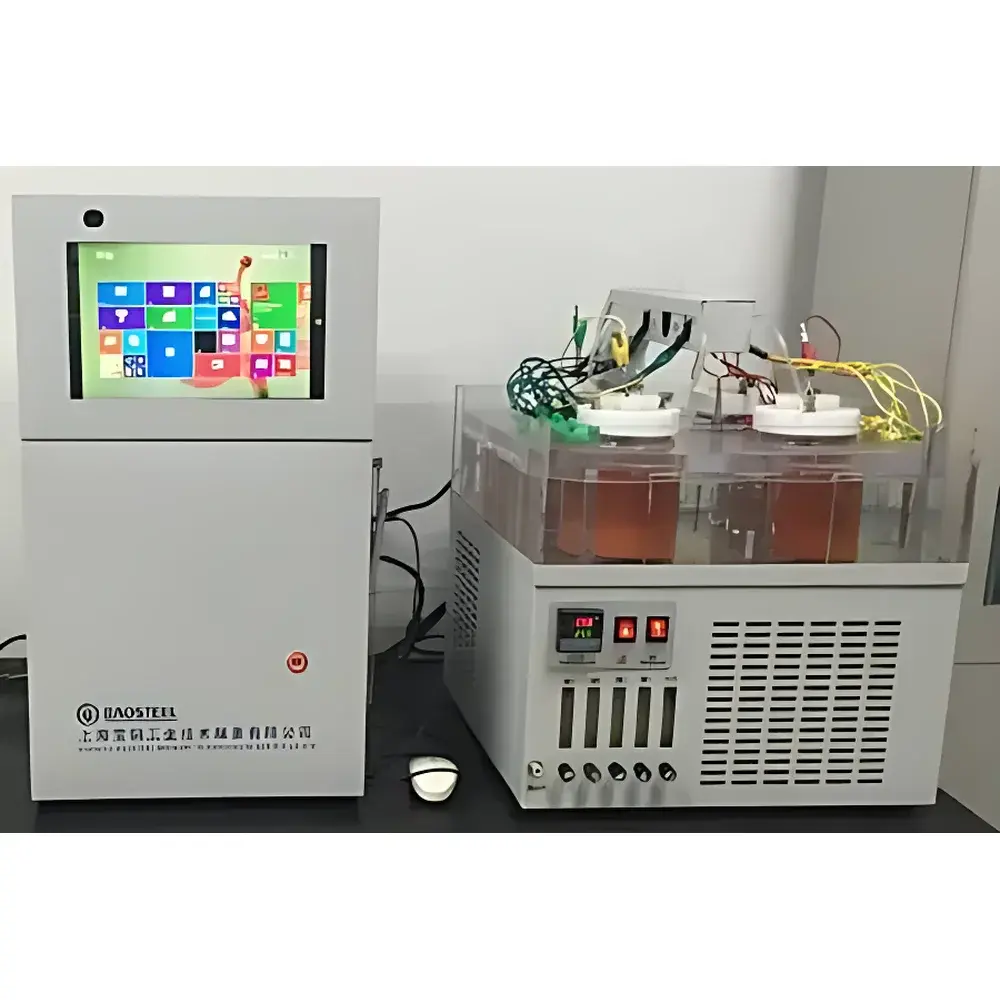
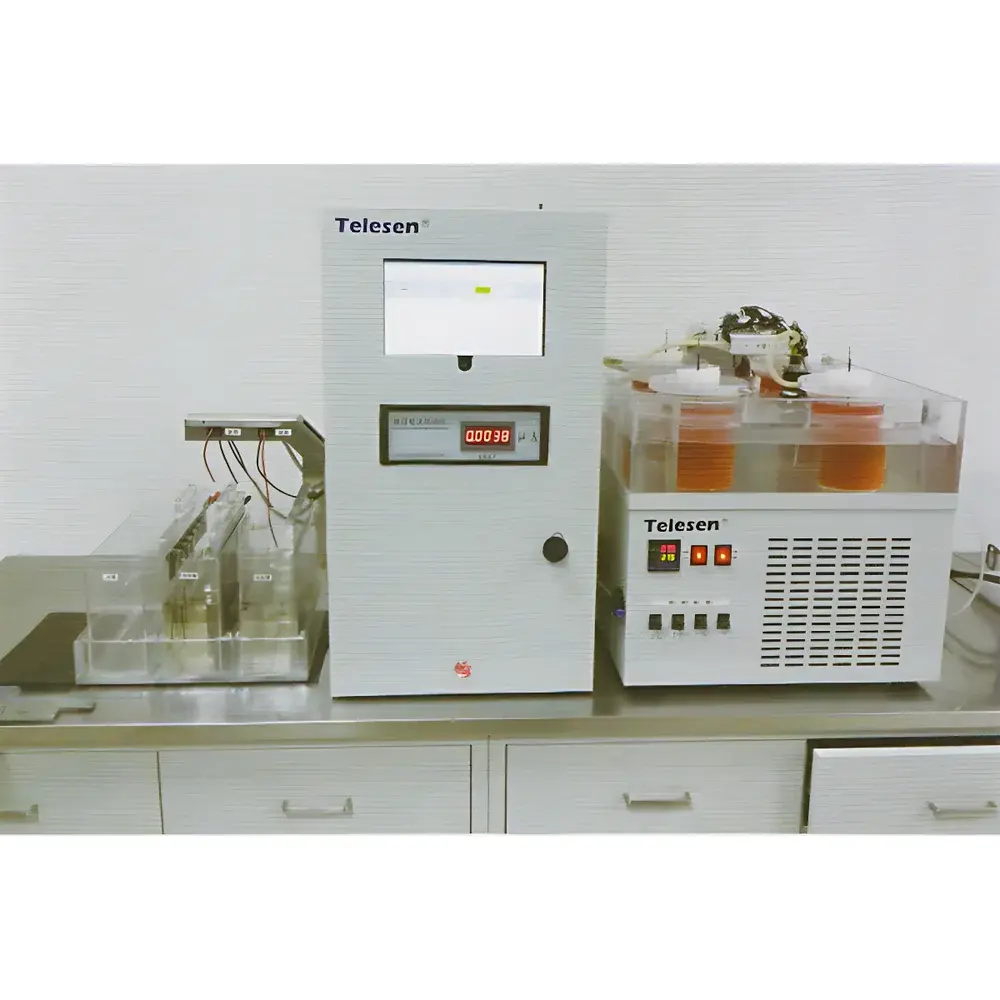
Hengping ATC Electrochemical Corrosion Tester for Tinplate – Constant-Temperature Oil/Water Bath System
| Brand | Hengping |
|---|---|
| Origin | Shanghai, China |
| Model | ATC Electrochemical Corrosion Tester for Tinplate |
| Instrument Type | Constant-Temperature Bath System |
| Circulation Mode | Internal Circulation |
| Temperature Control | Heating-Only |
| Bath Volume | 30 L |
| Temperature Range | 0–400 °C |
| Temperature Stability | ±0.1 °C |
| Compliance | GB/T 22316–2008 |
| Measurement Range | Corrosion Current Density (μA/cm²) |
| Resolution | ±0.02 μA/cm² |
| Full-Scale Accuracy | <±10% FS |
| Test Duration | 20 h per sample |
| System Maintenance Interval | <1 day/month |
Overview
The Hengping ATC Electrochemical Corrosion Tester for Tinplate is a purpose-built laboratory instrument engineered to quantify the electrochemical corrosion resistance of electrolytic tinplate (ETP) and tin-coated steel substrates under controlled thermal and electrolytic conditions. It operates on the principle of galvanic couple measurement: a pure tin reference electrode and a tin–iron alloy electrode (representing the coated substrate) are immersed in a deaerated, standardized electrolyte—typically a dilute sodium chloride solution buffered to simulate industrial or packaging-relevant corrosive environments. Under precise temperature regulation (e.g., 27 °C ±0.5 °C), the spontaneous current generated between the two dissimilar electrodes is measured as a direct indicator of galvanic corrosion kinetics. This method aligns with the fundamental thermodynamic and kinetic framework of mixed-potential theory and is standardized in GB/T 22316–2008, which specifies test procedures, electrolyte composition, electrode geometry, and reporting conventions for tinplate corrosion assessment.
Key Features
- Integrated constant-temperature bath system with dual-mode capability: compatible with both water (0–99 °C) and heat-transfer oil (up to 400 °C), enabling flexibility across low- and high-temperature corrosion protocols.
- High-stability thermal control architecture delivering ±0.1 °C temperature stability over extended durations (≥20 h), critical for reproducible electrochemical polarization behavior.
- Internal recirculation design ensures uniform thermal distribution throughout the 30 L bath volume, minimizing axial and radial thermal gradients that could induce localized current density artifacts.
- Heating-only configuration optimized for applications requiring stable, non-cycling thermal setpoints—eliminating overshoot-induced thermal shock to sensitive electrode interfaces.
- Dedicated electrochemical interface supporting low-current measurement down to ±0.02 μA/cm² with full-scale accuracy better than ±10%, calibrated traceably to NIST-traceable microammeters.
- Modular electrode holder assembly compliant with GB/T 22316–2008 dimensional and alignment specifications, ensuring repeatable inter-electrode spacing and surface exposure area (1 cm² nominal).
Sample Compatibility & Compliance
The ATC tester accommodates standard 75 mm × 100 mm tinplate specimens prepared per ASTM A623/A623M and GB/T 2520, with optional fixtures for strip, coil-end, or cut-edge samples. Electrode configurations support both flat-sheet and bent-specimen geometries to assess edge corrosion susceptibility. All operational parameters—including electrolyte volume (500 mL), deaeration time (≥30 min via N₂ sparging), and immersion depth—are preconfigured to meet GB/T 22316–2008 Clause 5 requirements. While primarily aligned with Chinese national standards, the underlying measurement methodology is consistent with ISO 15727 (corrosion of metals — electrochemical noise methods) and ASTM G59 (standard practice for conducting potentiodynamic polarization resistance measurements), facilitating cross-laboratory data correlation. The system supports GLP-compliant documentation when paired with validated software modules.
Software & Data Management
The embedded control software provides automated test sequencing, real-time current logging (1 Hz sampling), and post-acquisition calculation of average corrosion current density (icorr). Data files are exported in CSV and XML formats, preserving metadata such as bath temperature history, elapsed test time, operator ID, and calibration certificate IDs. Audit trails record all parameter modifications, user logins, and report generation events—meeting foundational requirements for FDA 21 CFR Part 11 compliance when deployed in regulated quality control environments. Optional integration with LIMS platforms (via OPC UA or REST API) enables automatic ingestion of corrosion metrics into enterprise-wide QA databases. Historical datasets support statistical process control (SPC) charting, trend analysis across production lots, and root-cause correlation with upstream tin-coating thickness or annealing parameters.
Applications
- Quality assurance of electrolytic tinplate used in food and beverage can manufacturing, where corrosion resistance directly impacts shelf-life and metal ion migration.
- R&D evaluation of alternative tin alloys (e.g., Sn–Ni, Sn–Cr), organic coatings, or passivation treatments applied to tinplate surfaces.
- Validation of cleaning and pickling processes prior to tin plating, assessing residual iron oxide or mill oil effects on galvanic coupling behavior.
- Correlation studies between ATC-derived icorr values and field performance metrics (e.g., rust spot count after 1000-h salt spray per ISO 9227).
- Educational use in metallurgy and corrosion engineering laboratories to demonstrate galvanic series principles and quantitative electrochemical kinetics.
FAQ
What electrolyte is required for ATC testing?
A deaerated 3% (w/w) NaCl solution, saturated with nitrogen gas for ≥30 minutes prior to immersion, as specified in GB/T 22316–2008 Section 6.2.
Can the system perform potentiostatic polarization scans?
No—the ATC is designed exclusively for open-circuit galvanic current measurement; it does not include potentiostat functionality or three-electrode cell support.
Is external cooling required to maintain 27 °C ambient stability?
Not inherently—the bath’s ±0.1 °C stability at 27 °C is achieved via PID-controlled resistive heating and high-mass thermal reservoir design; however, ambient lab temperatures >30 °C may necessitate auxiliary air conditioning for long-duration tests.
How often must the microammeter be recalibrated?
Annual recalibration against a certified reference standard is recommended; a built-in zero-check function allows daily verification of baseline drift before test initiation.
Does the system support multi-sample sequential testing?
Yes—up to four independent electrode pairs can be monitored simultaneously using optional multiplexed current input modules, with individual temperature logging per channel.



