
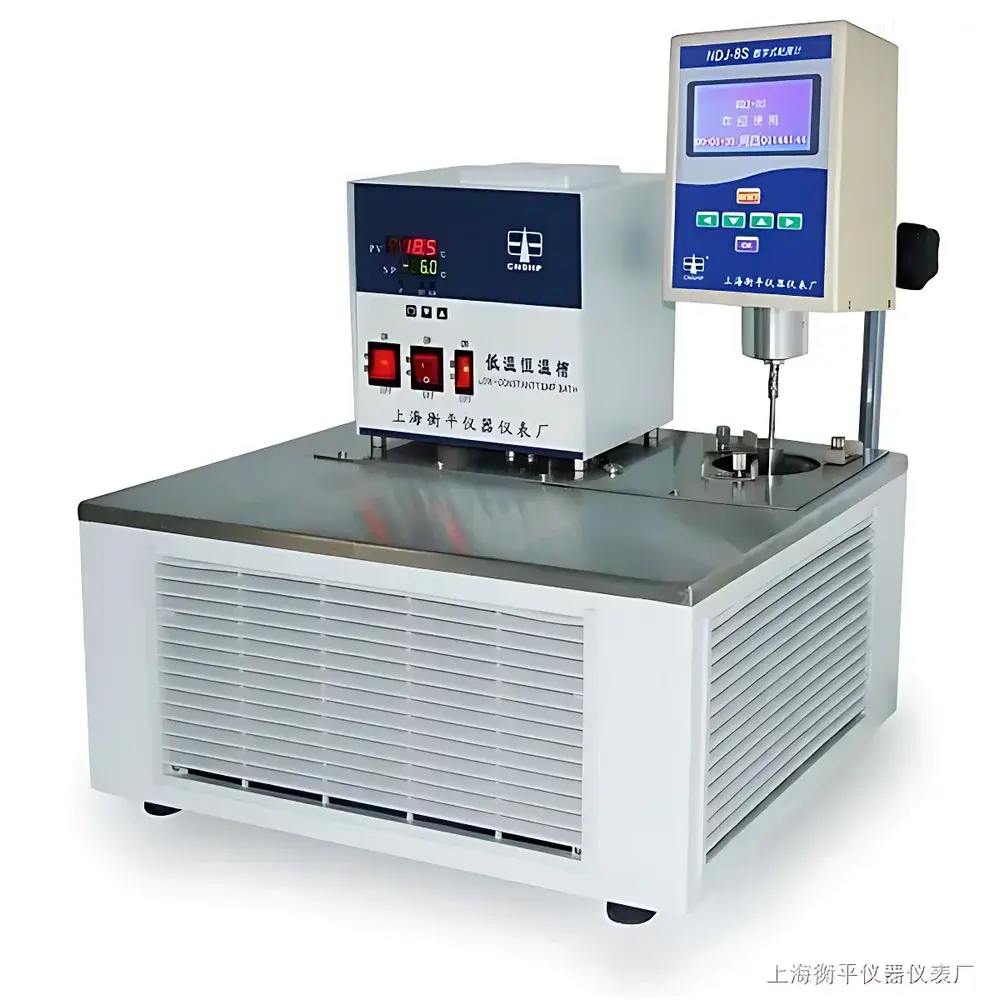
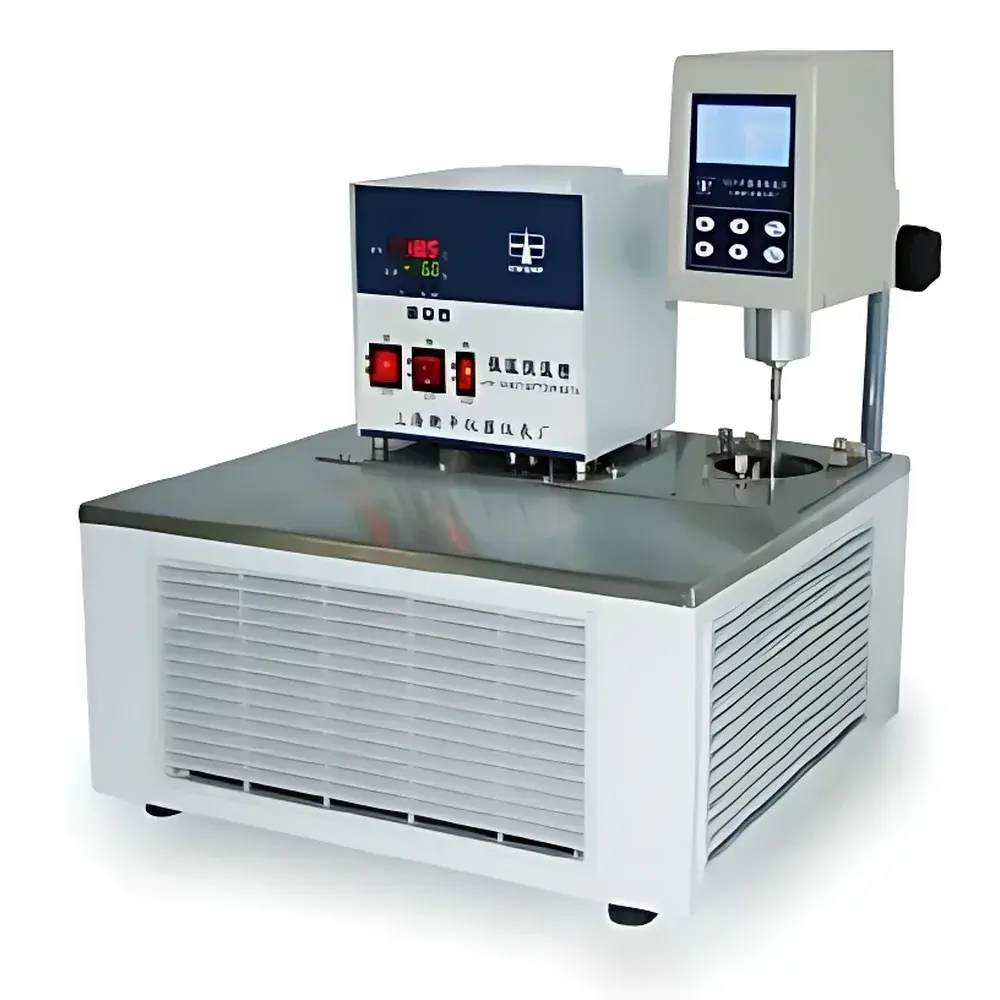
Hengping DC-0506W Low-Temperature Constant-Temperature Bath for Rotational Viscometry
| Brand | Hengping |
|---|---|
| Origin | Shanghai, China |
| Model | DC-0506W |
| Bath Volume | 6 L |
| Temperature Range | −5 °C to 100 °C |
| Temperature Stability | ±0.05 °C (at 25 °C, water or pure ethanol) |
| Opening Diameter | φ70 mm |
| Internal Cavity Dimensions | 150 × 145 × 150 mm (L × W × D) |
| Circulation Mode | Internal & External |
| Pump Flow Rate | 8 L/min |
| Cooling Method | Compressor-based |
| External Dimensions | 410 × 410 × 410 mm |
| Instrument Type | Constant-Temperature Bath with Refrigeration & Heating Capability |
Overview
The Hengping DC-0506W Low-Temperature Constant-Temperature Bath is an engineered thermal management system designed specifically to support precision rotational viscometry and other temperature-sensitive laboratory measurements. It operates on a dual-mode thermoregulation principle—integrating compressor-based refrigeration with electric heating—to maintain stable, uniform thermal environments across a broad operational range of −5 °C to 100 °C. Unlike passive water baths, the DC-0506W features active fluid circulation (8 L/min), enabling rapid thermal equilibration and minimizing axial and radial temperature gradients within the bath chamber. Its open-top design—with a standard 70 mm aperture and optional rectangular cavity (150 × 145 × 150 mm)—is optimized for direct integration with benchtop rotational viscometers: standard 200 mL sample beakers are securely accommodated using the included mounting bracket, ensuring mechanical stability during rotor immersion and torque measurement. The bath’s stainless-steel inner tank resists corrosion from aqueous and low-concentration organic media (e.g., ethanol, glycol–water mixtures), supporting long-term reliability in QC, R&D, and academic laboratories.
Key Features
- Wide temperature coverage: −5 °C to 100 °C, enabled by high-efficiency hermetic compressor and PID-controlled heating elements
- High thermal stability: ±0.05 °C deviation at setpoint (verified with calibrated platinum resistance thermometer in water or pure ethanol at 25 °C)
- Dual-circulation architecture: Selectable internal recirculation (for closed-loop bath homogeneity) or external pumping (to connect auxiliary equipment such as jacketed viscometer sleeves or reaction vessels)
- Robust mechanical interface: Precision-machined top plate with centered φ70 mm opening and integrated beaker holder ensures repeatable positioning of sample containers relative to viscometer spindles
- Corrosion-resistant construction: 304 stainless-steel inner tank, insulated outer housing, and sealed electronics compartment compliant with IP20 environmental rating
- Intuitive digital control: LED display with keypad interface for setpoint entry, real-time temperature readout, and status indicators (cooling/heating/standby)
Sample Compatibility & Compliance
The DC-0506W is validated for use with ISO 2555, ASTM D2196, and GB/T 2794 standard-compliant rotational viscometry protocols. Its thermal performance meets the temperature uniformity requirements specified in ISO/IEC 17025 for accredited testing laboratories performing viscosity calibration or material characterization. The bath supports common viscometer geometries—including coaxial cylinder (Couette), cone-and-plate, and spindle-type sensors—when paired with compatible holders. For non-aqueous media (e.g., silicone oils, ethylene glycol solutions), users must verify fluid compatibility with stainless-steel wetted parts and ensure pump flow remains laminar to avoid cavitation. The unit complies with CE electromagnetic compatibility (EMC) directives and IEC 61010-1 safety standards for laboratory electrical equipment. While not inherently 21 CFR Part 11–compliant, its analog control architecture allows integration into GLP/GMP workflows when used alongside validated data acquisition systems with audit-trail functionality.
Software & Data Management
The DC-0506W operates via embedded microcontroller firmware without proprietary software dependencies. Temperature setpoints and real-time readings are accessible through the front-panel interface only; no USB, RS-232, or Ethernet connectivity is provided. For automated data logging, users may integrate the bath into external monitoring systems via its analog 0–5 V or 4–20 mA output (optional accessory). When deployed in regulated environments, laboratories typically pair the DC-0506W with third-party validated DAQ platforms (e.g., National Instruments CompactDAQ or Keysight DAQ970A) configured to record timestamps, setpoints, and measured temperatures with full traceability. Calibration records—including as-found/as-left data per ISO/IEC 17025 Annex A.2—must be maintained manually or within the lab’s LIMS.
Applications
- Temperature-dependent viscosity profiling of polymers, adhesives, coatings, and pharmaceutical suspensions per USP and
- Thermal validation of rheological behavior in food emulsions (e.g., mayonnaise, dairy creams) under controlled shear conditions
- Stability testing of nanofluids and colloidal dispersions across sub-zero to boiling-point ranges
- Calibration of viscometer transducers using NIST-traceable reference oils at multiple temperatures
- Preconditioning of samples prior to tensile, DSC, or DMA analysis where thermal history affects structural response
FAQ
Can the DC-0506W be used with non-water-based heat transfer fluids?
Yes—ethanol, methanol, and 50/50 ethylene glycol–water mixtures are commonly used. Verify fluid compatibility with stainless steel and pump seals; avoid chlorinated solvents or strong acids.
Is external temperature probe input supported for cascade control?
No—the unit lacks an external sensor input port. Temperature regulation relies solely on its built-in Pt100 sensor positioned near the bath center.
What is the maximum allowable ambient temperature for continuous operation at −5 °C?
For stable sub-ambient performance, ambient temperature should not exceed 25 °C with ≥1 m/s air circulation around the unit’s rear ventilation grilles.
Does the bath include overtemperature or dry-run protection?
Yes—it features dual independent thermal cutoffs: one at 110 °C (mechanical fuse) and another at 105 °C (electronic limit), plus low-level fluid detection to disable heating and cooling if liquid volume falls below 3 L.
How often should the compressor oil and refrigerant be serviced?
Under normal laboratory use (≤8 hrs/day), no scheduled refrigerant servicing is required. Compressor maintenance is manufacturer-recommended only after 5 years or 10,000 operating hours—whichever occurs first.



