
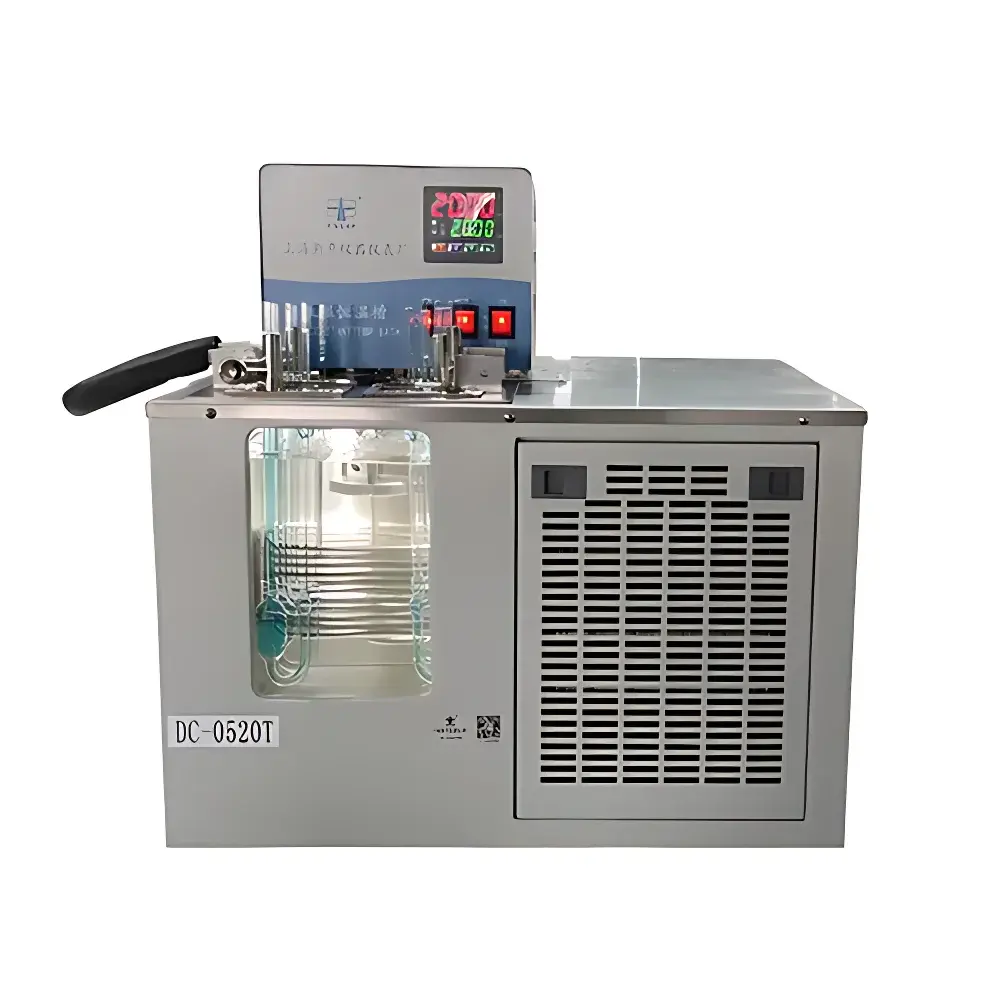
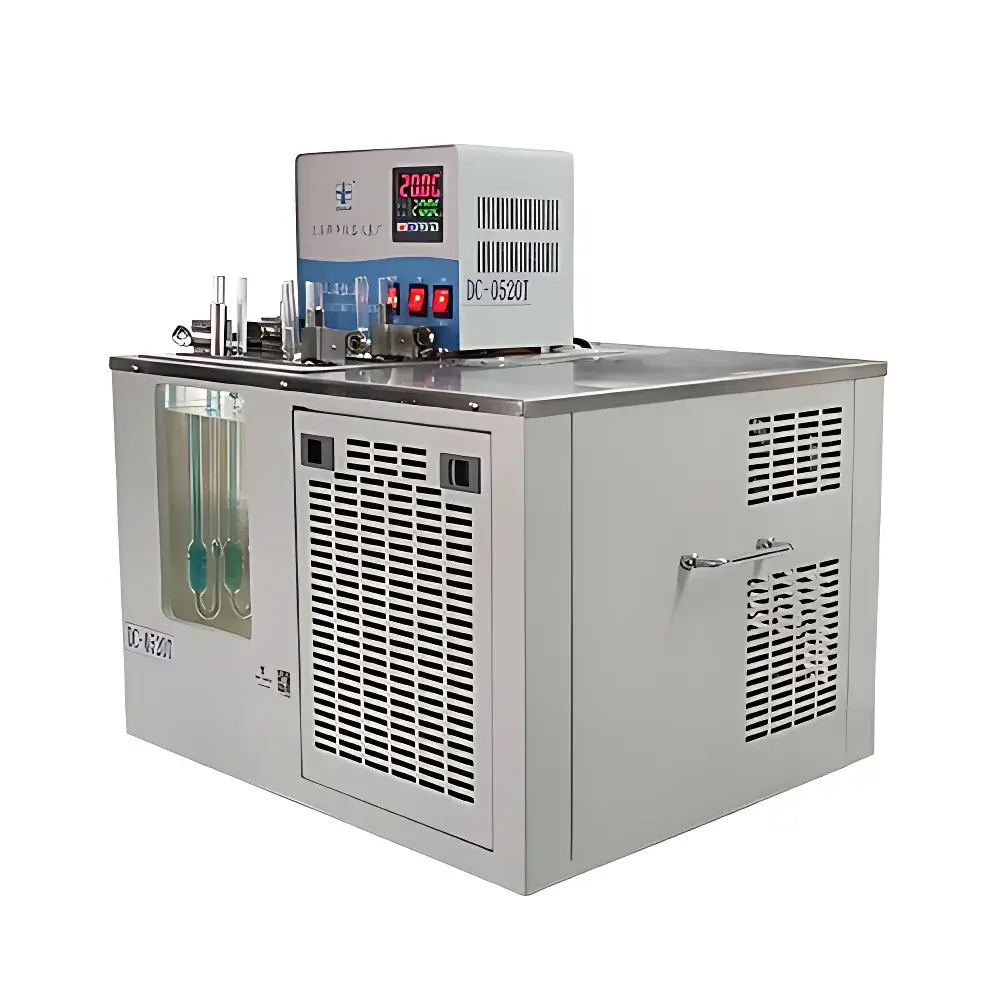
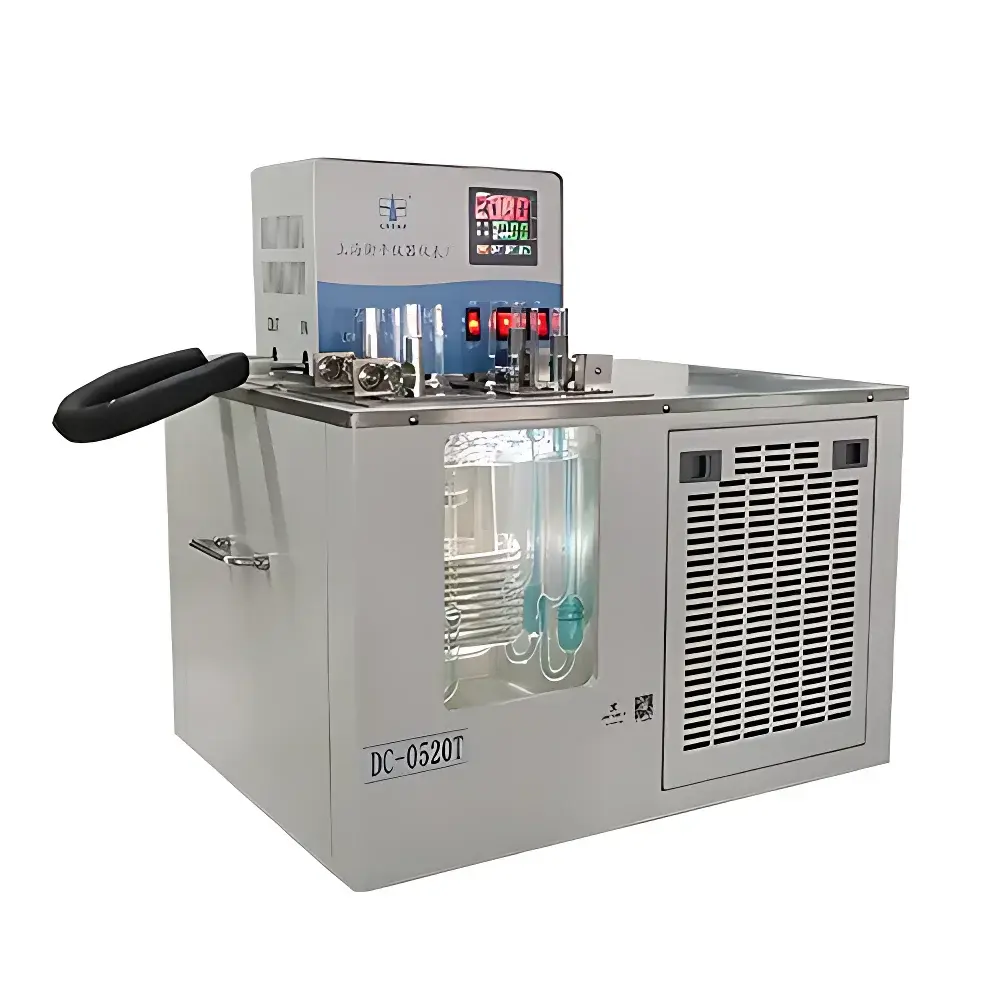
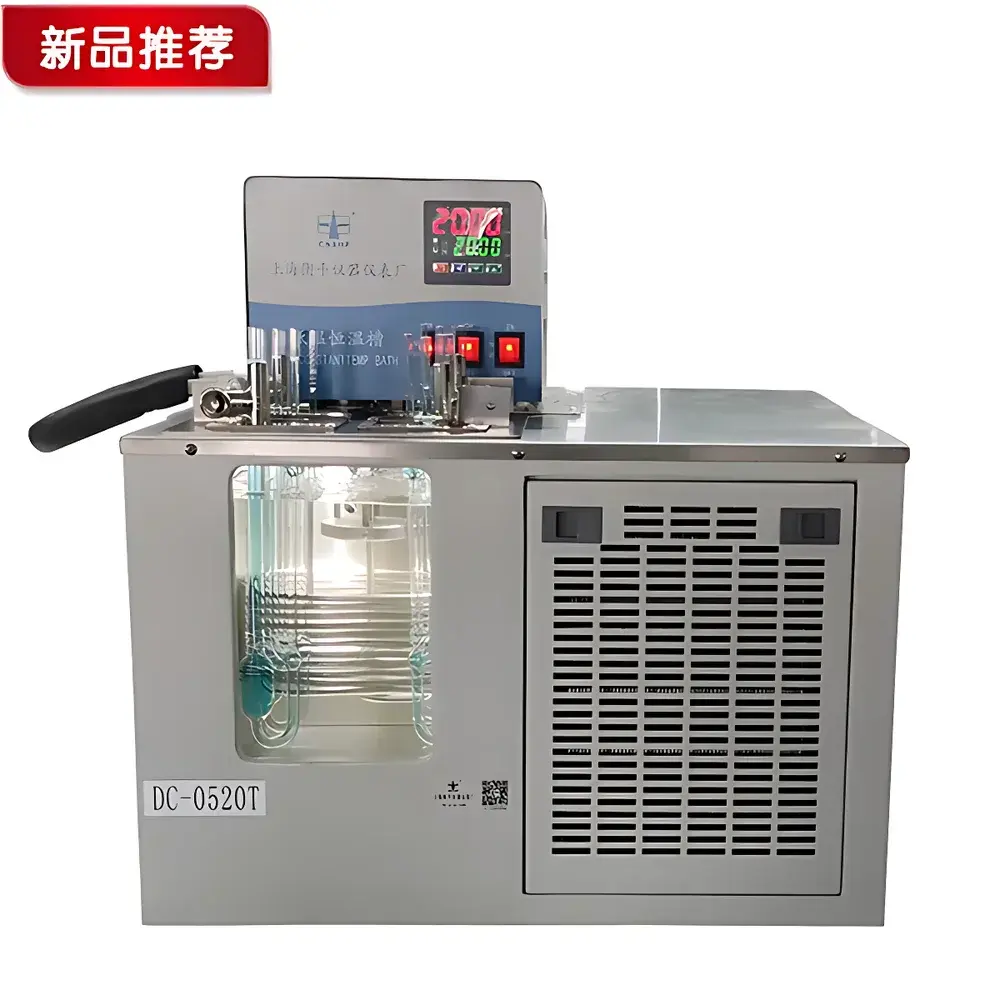
Hengping DC-0520T Ubbelohde Viscometer-Compatible Low-Temperature Transparent Bath Circulator
| Brand | Hengping |
|---|---|
| Origin | Shanghai, China |
| Model | DC-0520T |
| Temperature Range | −5 to 99.99 °C |
| Temperature Stability | ±0.05 °C (at 25 °C, water or ethanol) |
| Display Resolution | 0.01 °C |
| Bath Volume | 20 L |
| Inner Tank Dimensions (L×W×H) | 153 × 210 × 300 mm |
| Viewing Window | 220 × 140 mm |
| Circulation Mode | Internal & External |
| Pump Flow Rate | 10 L/min |
| Refrigeration Method | Compressor-based (HCFC-134a) |
| Heating Power | 2000 W |
| Cooling Power | 700 W (at 20 °C ambient) |
| Temperature Sensor | Pt100 Platinum Resistance Thermometer |
| Control Algorithm | Self-tuning PID |
| Construction Material | SUS304 Welded Stainless Steel |
| Power Supply | 220 VAC ±10%, 50 Hz |
| Net Weight | 35 kg |
| External Dimensions (W×D×H) | 475 × 585 × 385 mm |
Overview
The Hengping DC-0520T is a precision-engineered low-temperature transparent bath circulator specifically designed to support capillary viscometry—particularly Ubbelohde-type viscometers—in regulated thermal environments. It operates on the principle of active dual-mode temperature control (refrigeration + heating), enabling stable, uniform thermal fields across its 20 L stainless steel bath. The system integrates a compressor-based cooling circuit with HCFC-134a refrigerant, combined with high-power resistive heating and real-time Pt100 feedback, delivering ±0.05 °C stability at 25 °C in aqueous or alcoholic media—meeting the thermal uniformity requirements for ASTM D445, ISO 3104, and USP viscosity testing protocols. Its front-mounted optical window (220 × 140 mm), illuminated by high-intensity LED lighting, permits unobstructed visual monitoring of capillary flow dynamics during kinetic viscosity measurements—critical for detecting bubble formation, meniscus positioning, and efflux timing errors.
Key Features
- Self-tuning PID temperature control algorithm with 0.01 °C display resolution and independent setpoint/actual temperature readouts
- Compressor refrigeration system with built-in overheat and overload protection; compliant with international non-ozone-depleting refrigerant standards (HCFC-134a)
- Dual-mode circulation: internal recirculation for bath homogeneity and external output (10 L/min, max. head 1.5 m) to supply secondary temperature-controlled apparatus (e.g., rheometers, refractometers, or reaction jackets)
- SUS304 welded stainless steel bath tank with corrosion-resistant finish, compatible with water, ethanol, ethylene glycol–water mixtures, and other common viscometry solvents
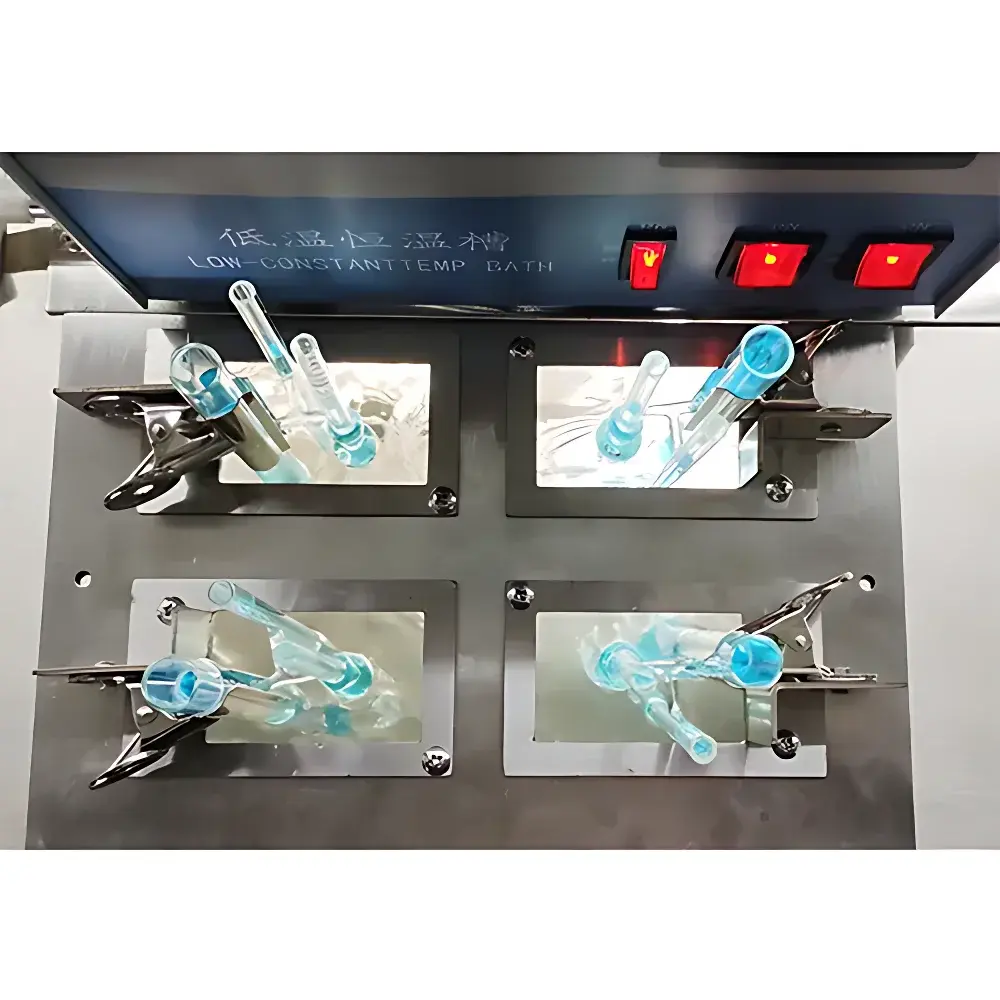
- Four-position stainless steel platform optimized for simultaneous Ubbelohde viscometer mounting—designed to minimize mechanical vibration transmission and thermal bridging
- User-configurable upper/lower temperature alarms with audible alert; touch-sensitive soft-key interface for intuitive parameter entry and operational logging
- Low-noise air-cooled condenser design with accessible dust-filter access panel—facilitating routine maintenance per GLP-aligned laboratory SOPs
Sample Compatibility & Compliance
The DC-0520T accommodates standard Ubbelohde capillary viscometers (e.g., Cannon-Fenske, Schott-Geräte types) as well as alternative capillary geometries used in polymer solution analysis, pharmaceutical excipient characterization, and biofluid rheology. Its bath geometry supports immersion depths up to 300 mm, ensuring full submersion of extended capillaries. The unit complies with IEC 61010-1 safety standards for laboratory equipment and meets electromagnetic compatibility (EMC) Class B requirements for shared lab environments. While not certified to FDA 21 CFR Part 11 out-of-the-box, its deterministic PID control loop, non-volatile parameter storage, and alarm event logging support audit-ready documentation when integrated into validated workflows under ISO/IEC 17025 or GMP Annex 11 frameworks.
Software & Data Management
The DC-0520T operates via embedded microcontroller firmware without proprietary PC software dependency. All operational parameters—including setpoint history, alarm timestamps, and sensor calibration offsets—are retained in non-volatile memory across power cycles. For laboratories requiring electronic record integration, the unit provides analog 0–5 V or 4–20 mA output (optional configuration) compatible with SCADA systems, LIMS interfaces, or data acquisition hardware (e.g., National Instruments DAQ modules). Temperature logs can be manually transcribed or captured via RS232 serial port (TTL-level, ASCII protocol) using third-party terminal emulators—enabling traceable data export for QC reporting and regulatory submissions.
Applications
This circulator serves as a foundational thermal management platform across multiple analytical domains:
- Viscometry: Kinematic viscosity determination of lubricants (ASTM D445), polymer melts (ISO 1628), and parenteral solutions (USP )
- Biochemical instrumentation: Thermal stabilization of rotovaps, Abbe refractometers, polarimeters, and atomic absorption spectrometers
- Materials testing: Controlled aging of composites, thermal conditioning of XRD sample stages, and cryo-stage pre-cooling for SEM/TEM specimen holders
- Pharmaceutical QA/QC: Dissolution testing baths, gelatin bloom assays, and controlled-rate cooling for lyophilization cycle development
- Chemical synthesis: Exothermic reaction quenching, catalyst activation profiling, and multi-step temperature-programmed reactions
FAQ
What viscosity standards can be validated using the DC-0520T?
The unit supports calibration against NIST-traceable viscosity standards (e.g., Cannon Standard Oils, Lovis 2000 series) within its operational range, provided capillary viscometers are individually calibrated per ISO 3105.
Is external pump tubing included for closed-loop circulation?
No—standard silicone or fluoropolymer tubing (ID 6–8 mm) must be procured separately based on application-specific chemical compatibility and pressure rating requirements.
Can the bath operate continuously at −5 °C in a 30 °C ambient environment?
Sustained sub-ambient operation at full capacity requires ambient temperatures ≤25 °C and adequate ventilation around the rear condenser panel; performance degrades above 28 °C ambient due to reduced heat rejection efficiency.
Does the unit support remote start/stop or setpoint adjustment via digital interface?
Yes—via optional RS232 command set (AT-style ASCII protocol), enabling integration into automated test sequences without manual intervention.
How often should the condenser filter be cleaned under continuous use?
Every 2–3 months in standard lab environments; monthly in dusty or high-particulate settings—per manufacturer-recommended preventive maintenance intervals.



