
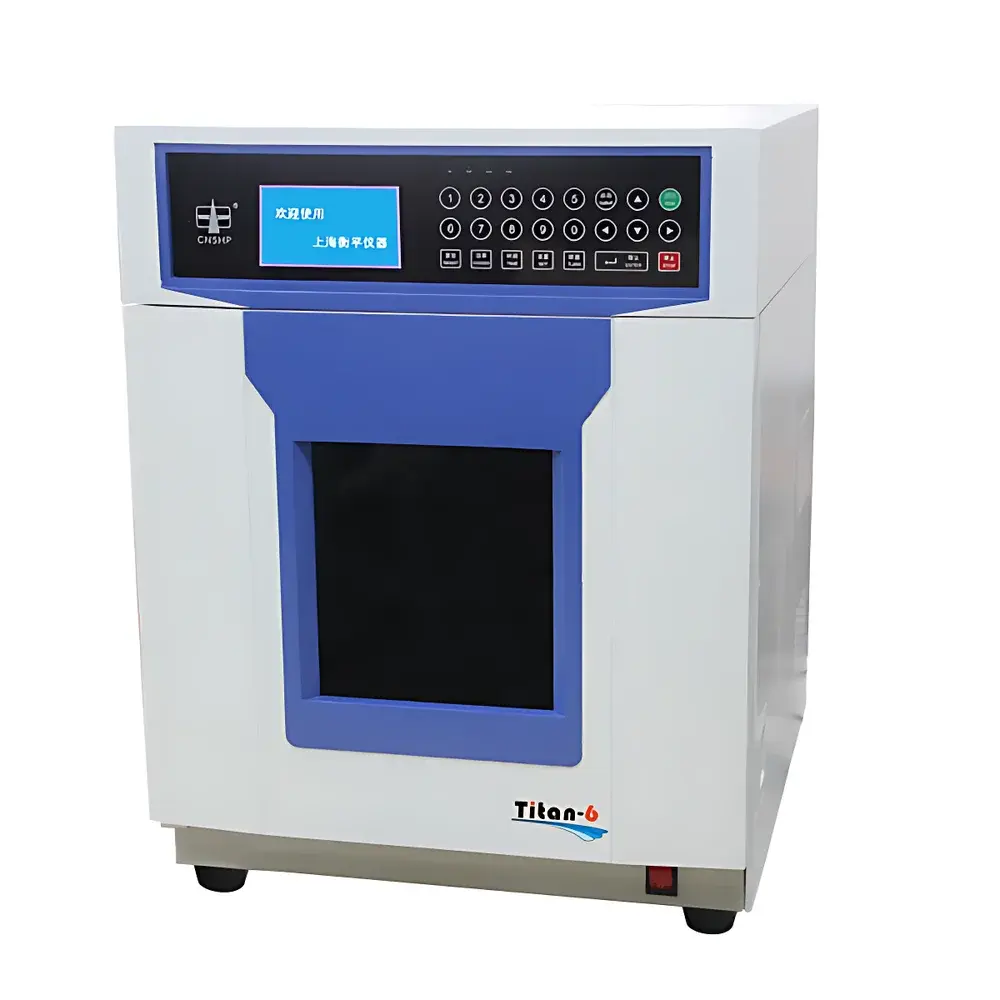
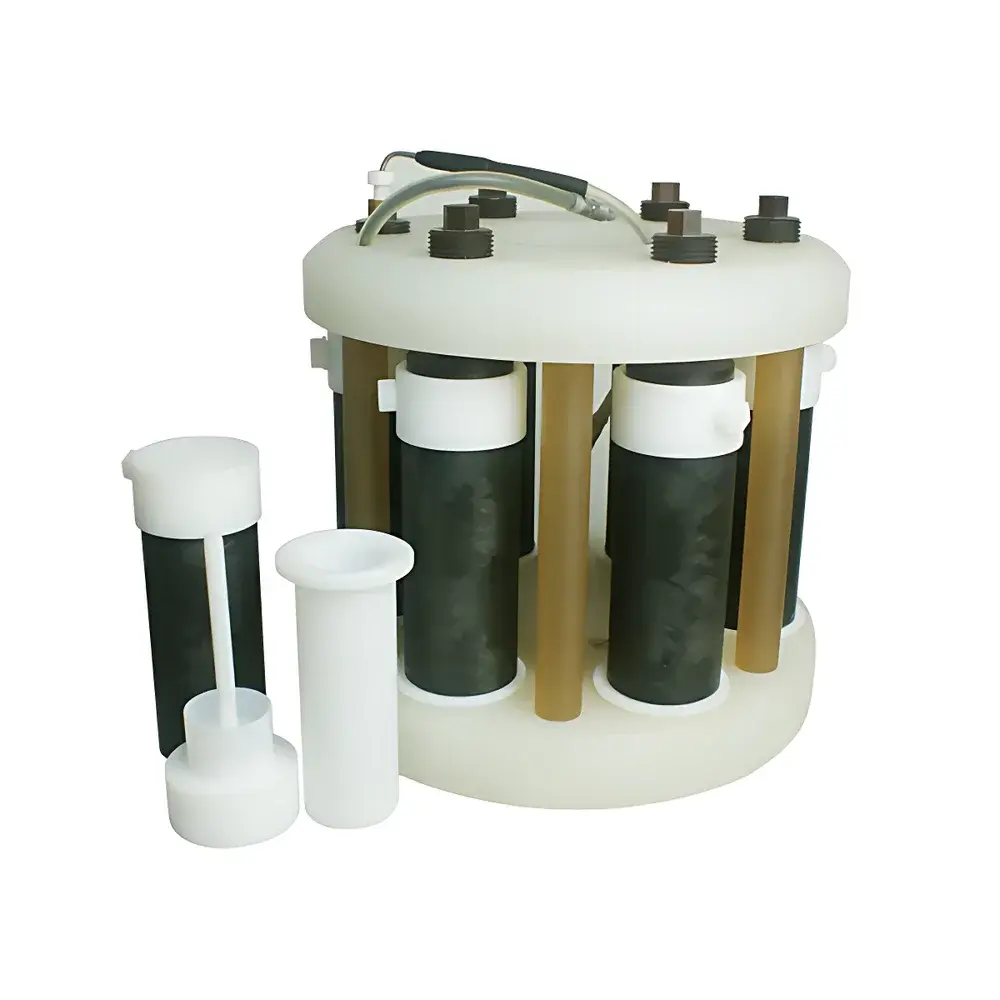
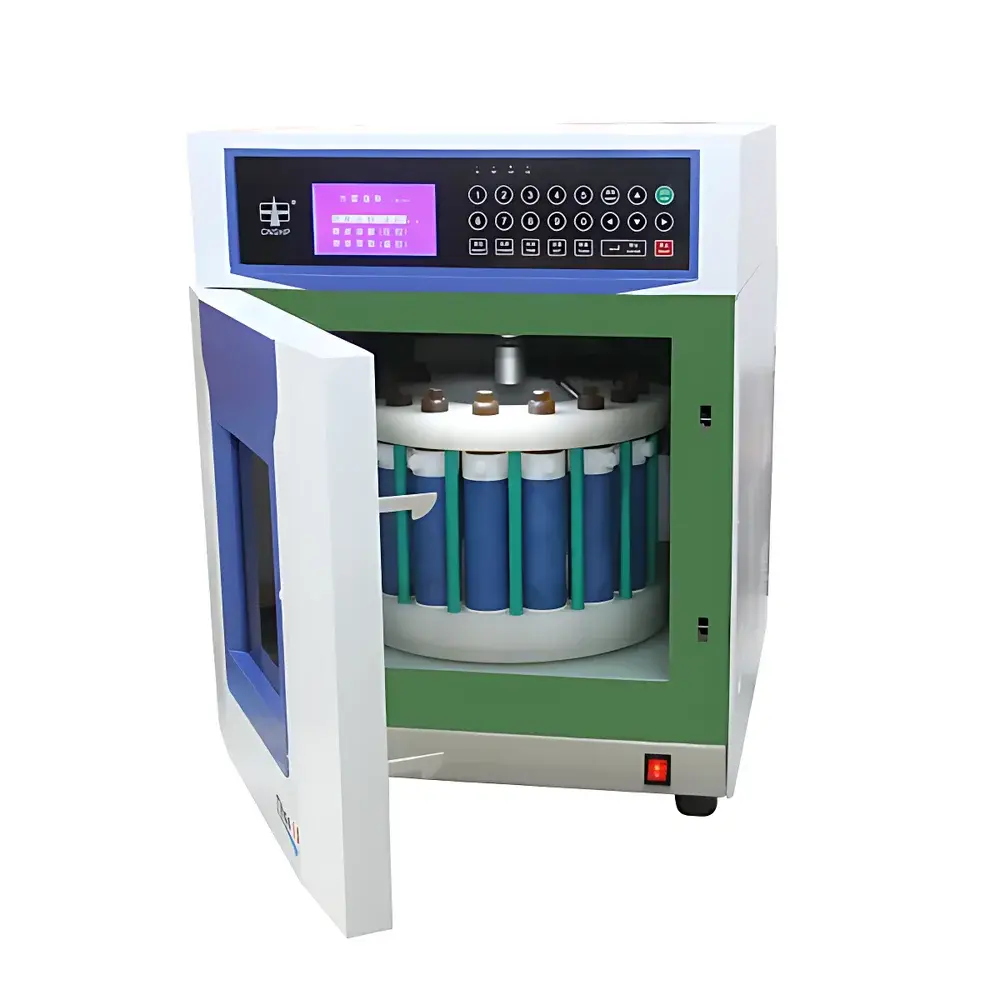
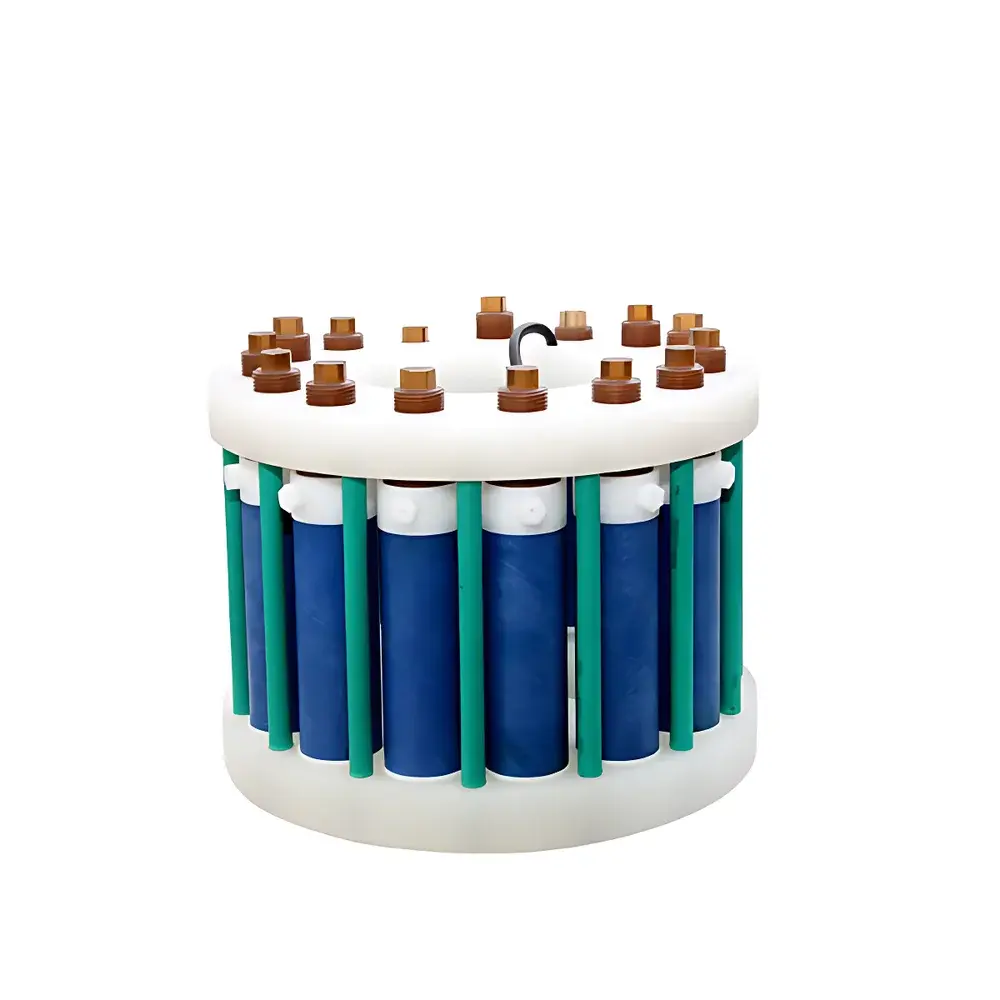
Hengping Titan-6 Sealed Microwave Digestion System
| Brand | Hengping |
|---|---|
| Model | Titan-6 |
| Origin | Shanghai, China |
| Instrument Type | Sealed Microwave Digestion System for Sample Preparation |
| Sample Capacity | 6 vessels |
| Microwave Source | Dual Magnetron |
| Max Temperature | 300 °C |
| Max Pressure | 15 MPa |
| Cavity Construction | Industrial-grade 316L stainless steel with 8-layer PFA coating |
| Safety Architecture | Triple-redundant pressure monitoring (piezoelectric sensor + bow-spring elastic module + burst disc), auto-venting door mechanism, 3D directional explosion containment, aerospace-grade composite fiber outer vessels rated to 80 MPa (12,500 psi) |
| Control System | PID-based closed-loop power regulation with real-time temperature/pressure feedback |
| Operating Frequency | 2450 MHz |
| Power Supply | 220 VAC ±10%, 50 Hz |
| Dimensions (L×W×H) | 480 × 550 × 630 mm |
| Net Weight | 57 kg |
| Ambient Operating Range | RT–50 °C, 15–80% RH |
Overview
The Hengping Titan-6 Sealed Microwave Digestion System is an industrial-grade, high-reliability platform engineered for trace-element sample preparation in environmental, geological, pharmaceutical, and food safety laboratories. It operates on the principle of controlled microwave energy absorption—where electromagnetic radiation at 2450 MHz induces rapid molecular rotation and frictional heating within sealed reaction vessels—enabling complete acid digestion of refractory matrices under inert, pressurized conditions. Unlike open-vessel or hotplate-based methods, the Titan-6 achieves reproducible, contamination-minimized decomposition of organic and inorganic samples while preserving volatile analytes (e.g., As, Hg, Se) and minimizing reagent blanks. Its design adheres to core metrological requirements for certified reference material (CRM) processing and supports compliance with ISO/IEC 17025 method validation protocols.
Key Features
- Industrial-class cavity constructed from electropolished 316L stainless steel, coated with eight layers of PFA (perfluoroalkoxy alkane) for long-term resistance to HF, HNO₃, HCl, and aqua regia vapors.
- Dual magnetron configuration delivering up to 1800 W total output with automatic frequency tuning to maintain stable field distribution across the cavity volume.
- Real-time, non-invasive pressure measurement via piezoelectric crystal sensors—fully isolated from the sample matrix—ensuring zero cross-contamination and ±0.01 MPa control accuracy over 0–20 MPa range.
- Multi-layered passive and active safety architecture: bow-spring pressure relief module + rupture disc + auto-venting “spring-shift” door system that mechanically displaces under overpressure to vent gases directionally.
- Aerospace-grade composite fiber outer vessels—multi-axis filament-wound with proprietary resin matrix—rated to 80 MPa burst pressure, eliminating fiber delamination and acid permeation common in conventional fiberglass designs.
- Unidirectional continuous rotor rotation (not oscillatory), reducing mechanical stress on drive components and ensuring uniform microwave coupling across all six TFM-lined inner vessels (100 mL capacity).
- Intelligent capacitive-touch control panel with status-indicating LEDs for door lock integrity, magnetron activation, rotor motion, and keypress confirmation—designed for glove-compatible operation in fume hood environments.
Sample Compatibility & Compliance
The Titan-6 accommodates standard 100 mL TFM (tetrafluoroethylene-perfluoroalkyl vinyl ether) inner vessels housed in reinforced composite outer sleeves, compatible with EPA Methods 3051A, 3052, and ASTM D5511 for solid waste digestion. Its pressure and temperature control fidelity meets GLP/GMP documentation requirements when paired with optional audit-trail-enabled software (see Software section). The system supports digestion of soils, sediments, biological tissues, polymers, and catalysts using HNO₃/HF/H₂O₂ mixtures without vessel deformation or seal failure. All wetted materials comply with USP Class VI biocompatibility standards; cavity coatings conform to FDA 21 CFR §177.1550 for fluoropolymer food-contact surfaces.
Software & Data Management
The Titan-6 integrates a built-in microprocessor running a deterministic real-time OS, supporting fully traceable method storage (up to 100 user-defined programs), event logging (timestamped pressure/temperature/power profiles), and USB export of CSV-formatted raw data. Optional Hengping LabLink™ software enables remote monitoring, electronic signature workflows, and 21 CFR Part 11–compliant audit trails—including operator ID, parameter changes, and alarm history—with encrypted local database storage. All thermal and pressure data are sampled at ≥10 Hz and recorded with metadata (vessel ID, batch number, digestion sequence) to satisfy ISO 17025 clause 7.7 on result traceability.
Applications
- Preparation of certified reference materials (CRMs) for ICP-MS and ICP-OES analysis requiring sub-ppt detection limits.
- Digestion of high-silica matrices (e.g., ceramics, fly ash, geological samples) where HF-assisted dissolution is mandatory.
- Regulatory testing per EU Directive 2009/48/EC (Toy Safety) and RoHS 2011/65/EU for restricted heavy metals in consumer products.
- Pharmaceutical excipient purity verification per USP and EP 2.4.8, including residual catalyst quantification in API synthesis intermediates.
- Food and feed testing under AOAC Official Method 999.10 for multi-element profiling in fortified cereals and infant formula.
FAQ
What safety certifications does the Titan-6 hold?
The system complies with IEC 61000-6-3 (EMC emission limits) and IEC 61000-6-2 (immunity), and its pressure containment design follows ASME BPVC Section VIII Div. 1 guidelines for Class I pressure vessels.
Can the Titan-6 be integrated into a LIMS environment?
Yes—via optional LabLink™ software with OPC UA server support, enabling bidirectional data exchange with major LIMS platforms (e.g., Thermo Fisher SampleManager, LabVantage) using standardized XML schema.
Is HF digestion supported without compromising vessel integrity?
Yes—the TFM inner vessels and composite outer sleeves are chemically resistant to concentrated hydrofluoric acid up to 200 °C and 10 MPa, validated per ASTM D543-22 exposure testing.
Does the system meet requirements for ISO/IEC 17025 accredited labs?
Yes—when operated with documented SOPs, calibrated sensors (NIST-traceable annual verification), and audit-trail software, it satisfies ISO/IEC 17025:2017 clauses 6.4.3 (equipment suitability) and 7.7 (result reporting).
What maintenance intervals are recommended for magnetrons and pressure sensors?
Magnetrons require replacement after 5,000 operational hours or upon power drop >15%; piezoelectric pressure sensors should be recalibrated annually using dead-weight tester traceable to NIST SRM 2088.
Related Products



