
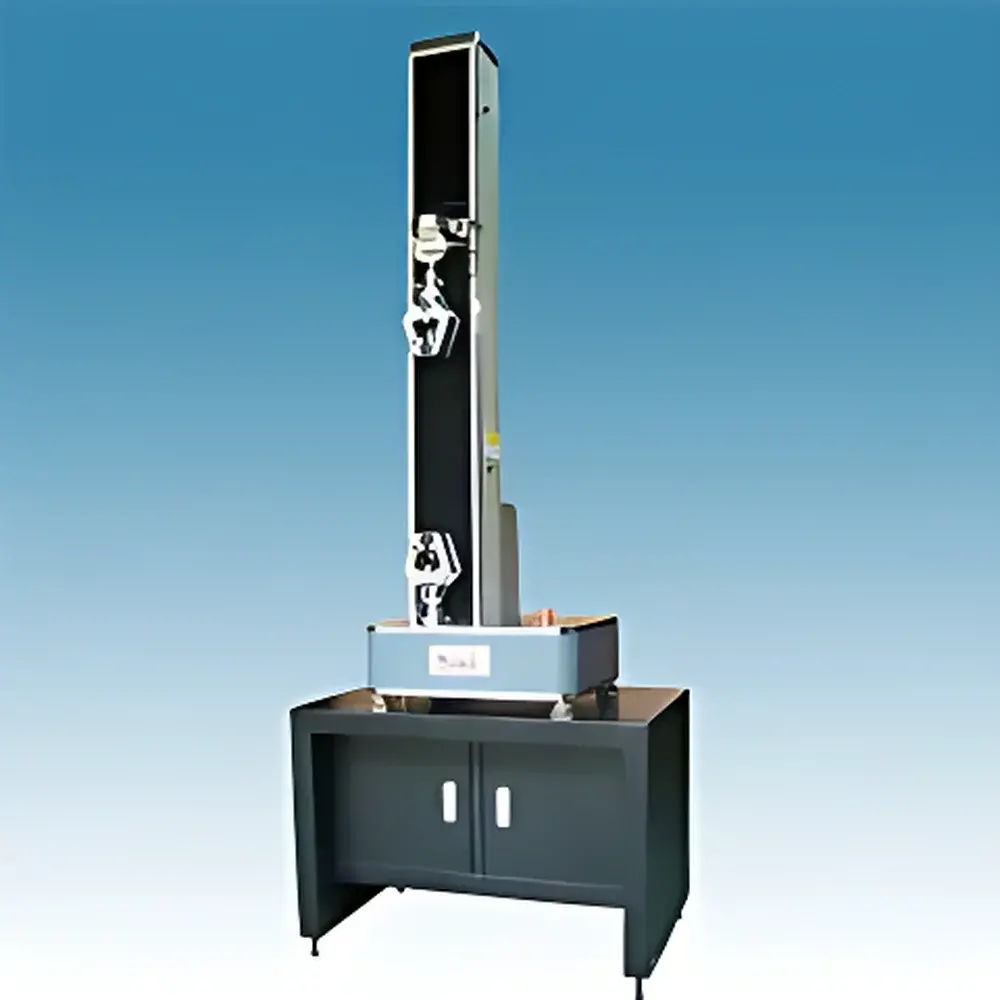
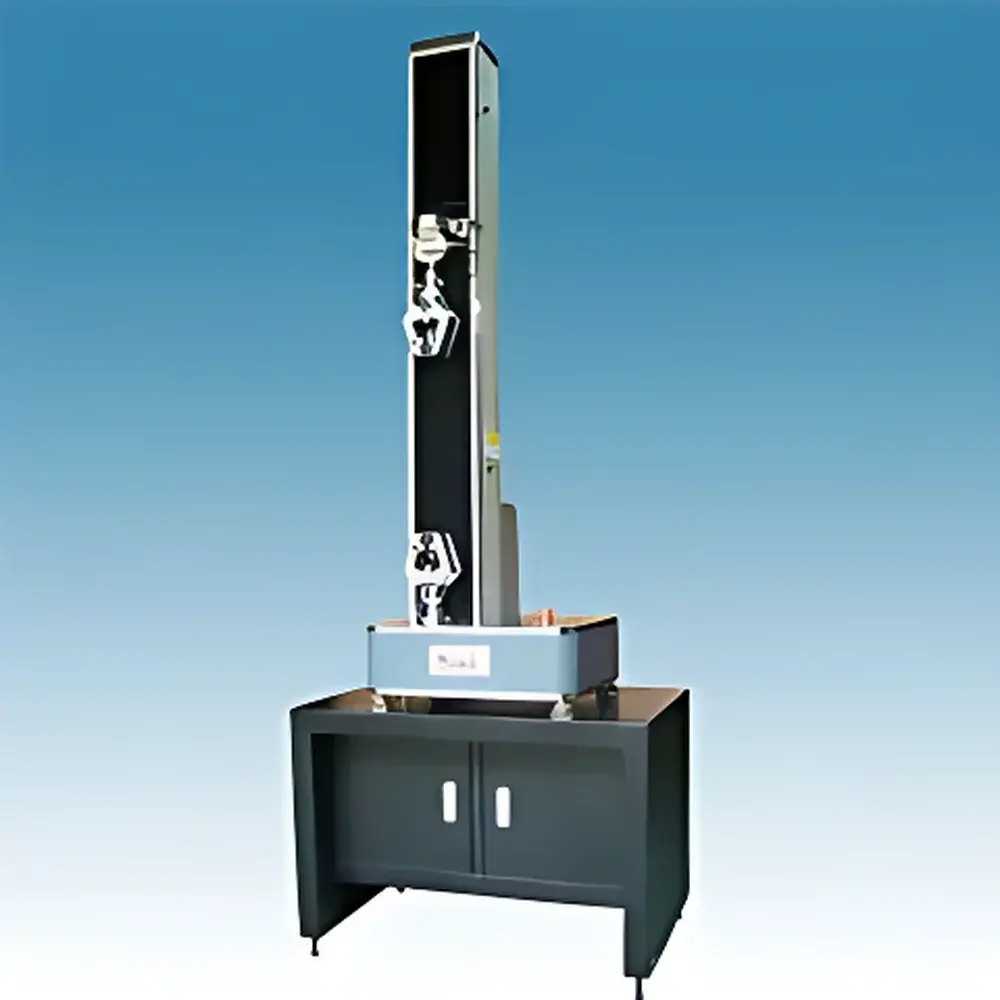
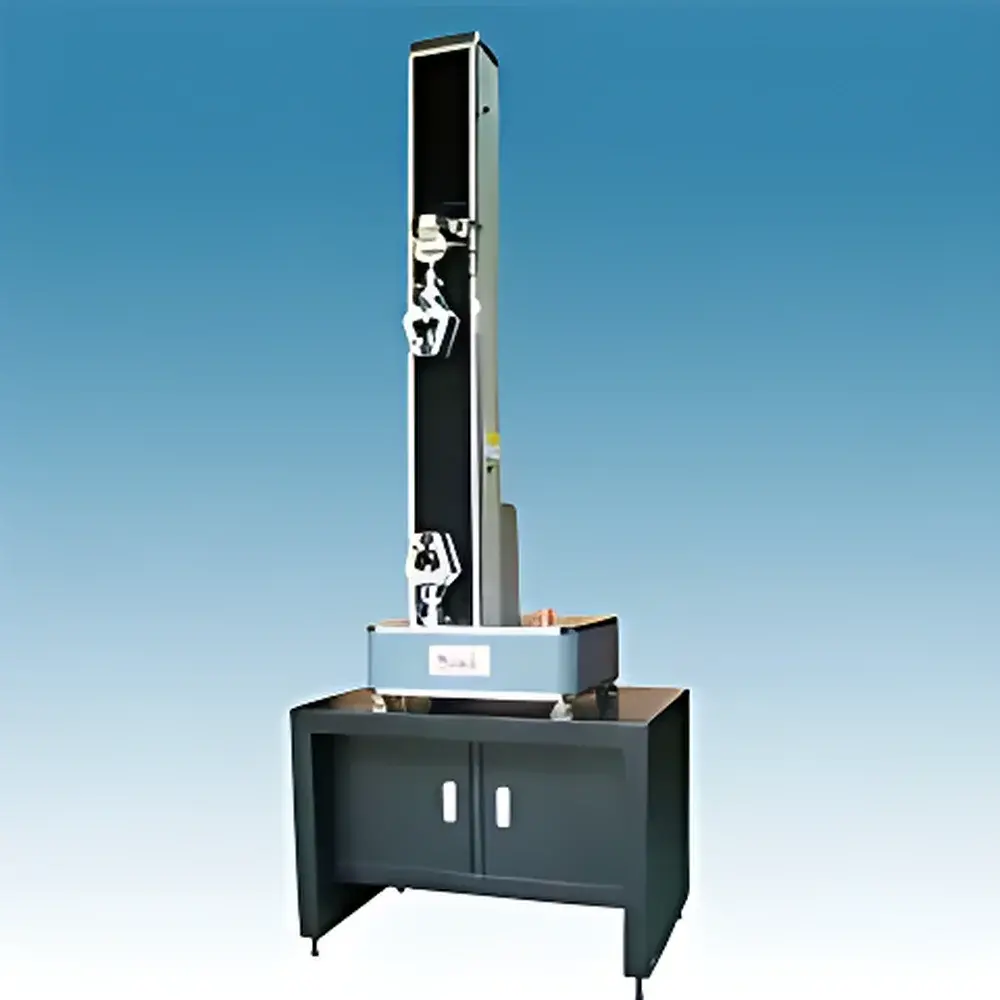
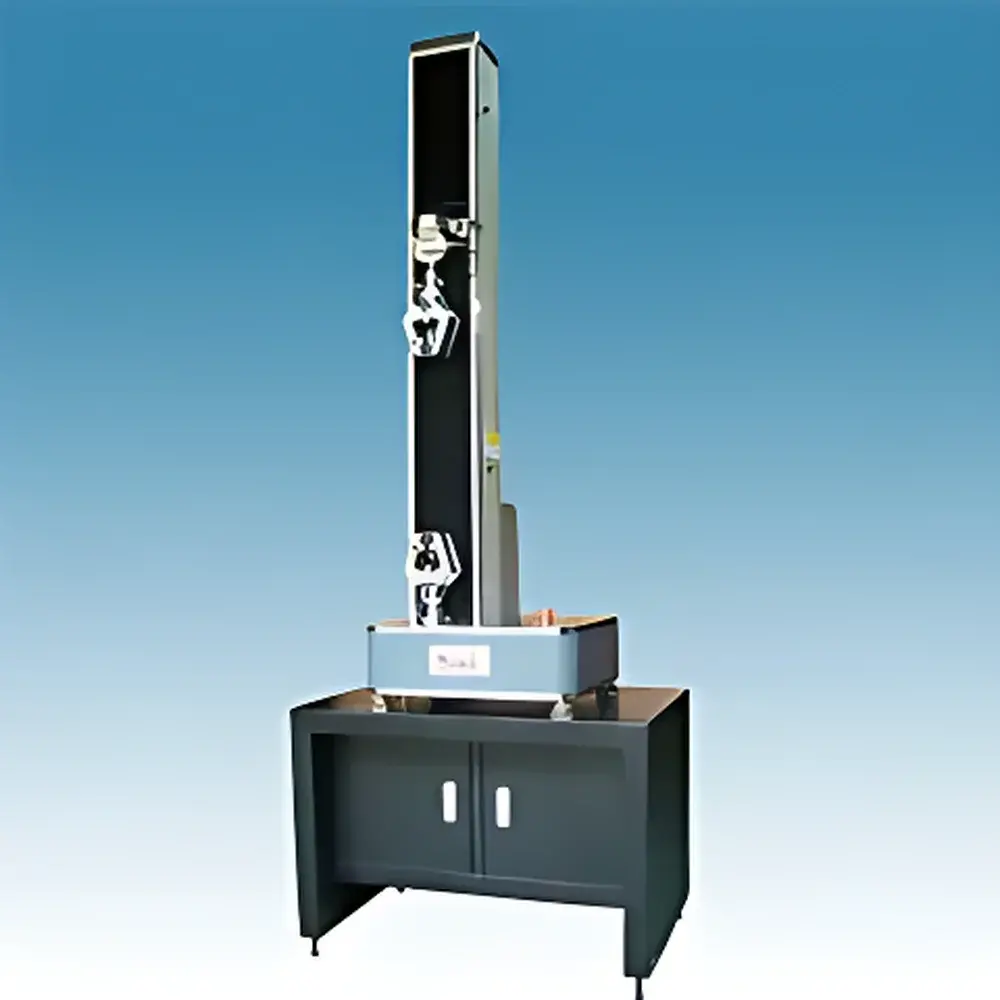
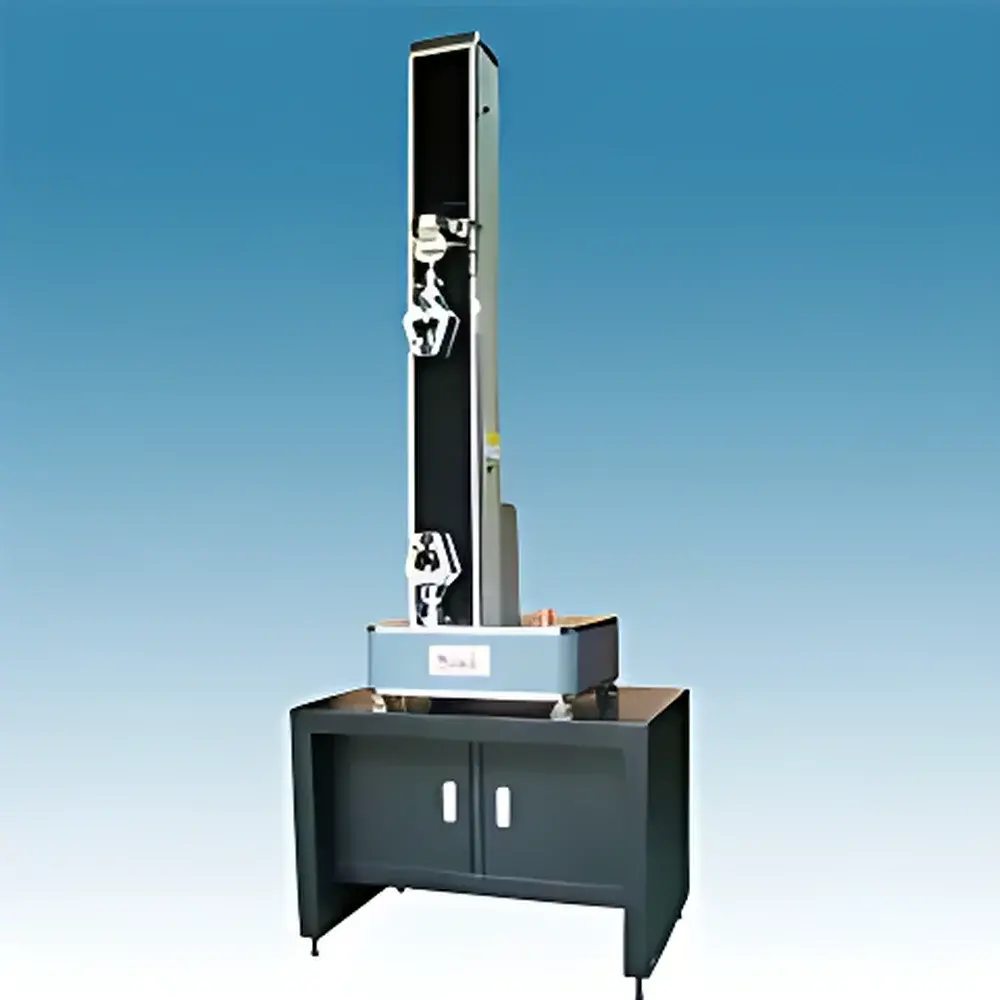
Hengyi HY-0580C Photovoltaic Solder Ribbon Tensile Testing Machine
| Brand | Hengyi |
|---|---|
| Origin | Shanghai, China |
| Manufacturer Type | Direct Manufacturer |
| Model | HY-0580C |
| Max Test Load | 5 kN |
| Force Range | 5–5000 N |
| Force Accuracy | ±0.5% FS |
| Stroke | 800 mm |
| Displacement Resolution | 0.001 mm |
| Control System | PC-based DSP platform with USB 2.0 interface |
| Speed Range | 0.001–500 mm/min |
| Speed Accuracy | ±0.5% |
| Displacement Accuracy | ±0.5% |
| Safety Protection | Electronic limit switches, emergency stop, overload protection |
| Power Supply | 220 V AC |
| Dimensions (W×D×H) | 590 × 355 × 1640 mm |
| Weight | ~85 kg |
| Compliant Standards | GB/T, ISO 527, ASTM D638, ASTM D882, DIN 53455, JIS K7113 |
Overview
The Hengyi HY-0580C Photovoltaic Solder Ribbon Tensile Testing Machine is a high-precision, single-column electromechanical testing system engineered for the mechanical characterization of thin, high-strength metallic interconnects used in photovoltaic module assembly—particularly tin-coated copper solder ribbons. It operates on a closed-loop servo-controlled principle: a high-torque DC motor drives a precision-ground ball screw via a planetary gear reducer, translating rotational motion into linear displacement of the crosshead. This architecture ensures stable force application, minimal inertial lag, and repeatable load–displacement profiles across low-force (sub-10 N) and mid-range (up to 5 kN) regimes typical of ribbon peel, tensile, and bend testing. Designed for integration into QC labs, R&D facilities, and third-party certification centers, the system meets the structural and metrological requirements of photovoltaic component qualification per IEC 61215-2 (MQT 15), IEC 62788-5-1 (solder bond strength), and UL 1703 Annex D.
Key Features
- High-fidelity DSP-based control platform enabling real-time data acquisition at ≥1 kHz sampling rate, with synchronized measurement of load, displacement, and optional extensometer-derived strain.
- USB 2.0 full-speed interface (12 Mbps) supporting hot-plug operation and deterministic communication latency—critical for multi-instrument synchronization in automated test cells.
- Four-layer PCB design with optimized grounding, differential signaling, and EMI shielding to maintain signal integrity in electrically noisy production or laboratory environments.
- Modular software architecture permitting user-defined test methods, pass/fail criteria (e.g., minimum peel force ≥1.5 N/mm), and automated report generation compliant with ISO/IEC 17025 documentation requirements.
- Comprehensive hardware safety layer: dual-channel electronic limit switches, hardware-triggered emergency stop circuitry, and programmable overload cutoff (adjustable threshold from 10% to 110% of full scale).
- Multi-language GUI (English, German, French, Spanish, Chinese, Japanese, Korean, Portuguese, Russian) with SI/non-SI unit support (N, kN, lbf, kgf, tonf) and automatic unit conversion in real time during test execution.
Sample Compatibility & Compliance
The HY-0580C accommodates standard PV solder ribbon geometries (0.2–0.6 mm thickness, 1.0–5.0 mm width) using pneumatic or manual wedge-action grips with serrated faces to prevent slippage. Optional accessories include peel fixtures (90°/180°), mandrel bend jigs (per IEC 62788-5-2), and micro-grip kits for sub-1 mm wide ribbons. All mechanical and software functions conform to the traceability and audit-readiness expectations of GLP and GMP-regulated environments. Data logs include timestamped metadata (operator ID, calibration certificate ID, environmental conditions), supporting FDA 21 CFR Part 11 compliance when deployed with validated HYtestV7.0 software configuration and electronic signature modules.
Software & Data Management
HYtestV7.0 is a Windows-native (Windows 7 through Windows 11 compatible), SQL Server-backed test management suite. It provides real-time plotting of stress–strain, load–displacement, and creep curves with auto-scaling axes and dynamic curve annotation. Raw data export supports CSV, XML, and PDF formats; structured databases enable batch querying by lot number, material grade, or thermal cycle history. Audit trails record all parameter modifications, test start/stop events, and calibration interventions—retained for ≥36 months per internal QA policy. Custom test templates can be version-controlled and deployed across networked instruments, ensuring method uniformity across global manufacturing sites.
Applications
- Tensile strength and elongation-at-break measurement of CuSn solder ribbons per ASTM D882 and IEC 62788-5-1.
- Peel adhesion testing of ribbon-to-cell interfaces under controlled temperature/humidity (when integrated with environmental chamber).
- Bend fatigue evaluation using cyclic loading protocols (e.g., 10⁴ cycles at ±15° deflection).
- Creep and stress-relaxation analysis for long-term interconnect reliability modeling.
- Validation of solder paste reflow profiles by correlating post-reflow mechanical performance with thermal profile parameters.
- Supplier qualification testing against Tier-1 OEM specifications (e.g., JinkoSolar TS-PR-001, LONGi LR-TS-2023).
FAQ
What is the recommended calibration frequency for this instrument?
Per ISO/IEC 17025, initial calibration must be performed before first use, followed by annual recalibration traceable to NIM (China) or NIST (USA) standards. In high-throughput QC environments (>50 tests/day), interim verification using certified reference load cells is advised every 72 operational hours.
Can the system perform creep tests lasting over 100 hours?
Yes—the HY-0580C supports unattended operation for up to 720 hours (30 days) with continuous data logging, power-fail recovery, and thermal drift compensation enabled in HYtestV7.0.
Is third-party software integration possible (e.g., LabVIEW, Python)?
The system exposes a documented COM API and TCP/IP socket interface, enabling bidirectional communication with external scripting environments for custom automation, MES integration, or AI-driven anomaly detection pipelines.
Does the machine meet CE or UKCA marking requirements?
The base configuration complies with EN 61000-6-2 (immunity) and EN 61000-6-4 (emissions); CE marking requires site-specific risk assessment and incorporation of user-supplied guarding per EN ISO 13857. UKCA compliance follows identical technical basis with GB-specific documentation.
What maintenance intervals are specified for the ball screw and drive train?
Lubrication of the preloaded ball screw and gearbox is required every 2,000 operating hours or annually—whichever occurs first—using ISO VG 68 mineral oil. Linear guide rails require cleaning and relubrication every 500 hours in dusty environments.



