
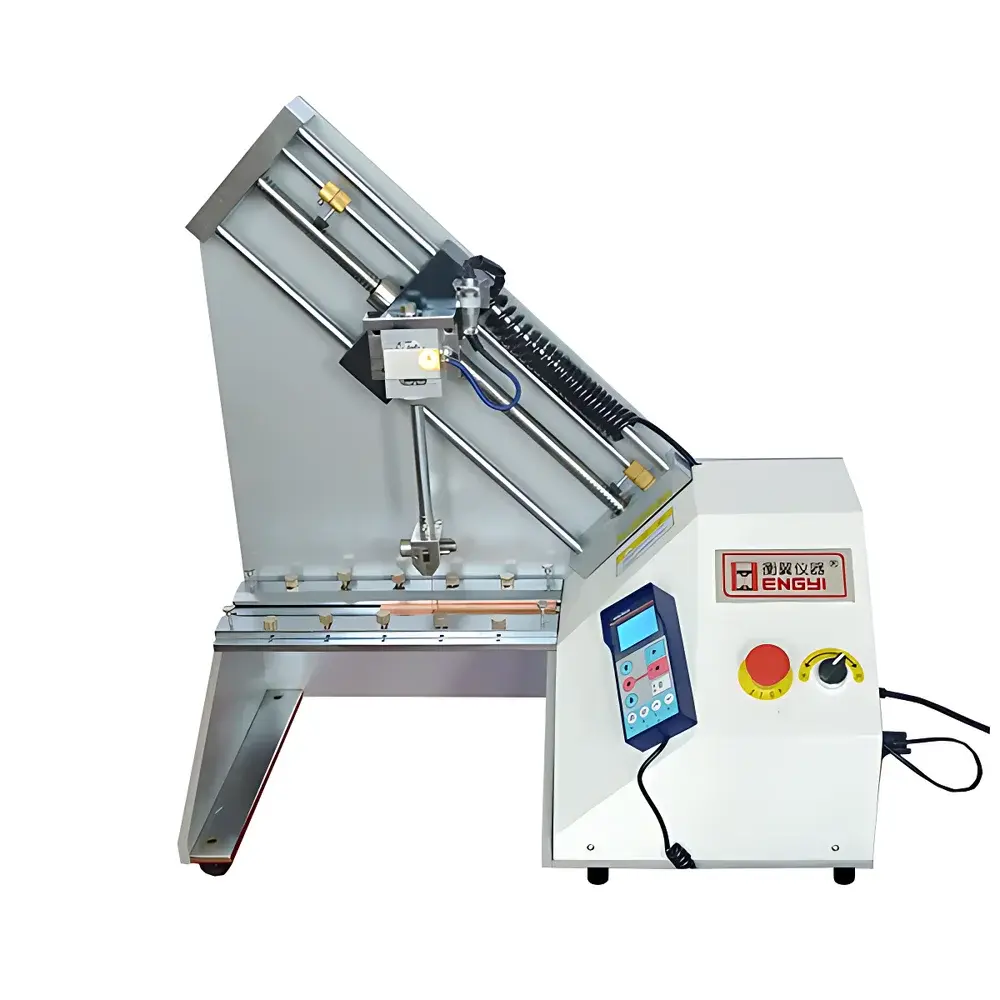
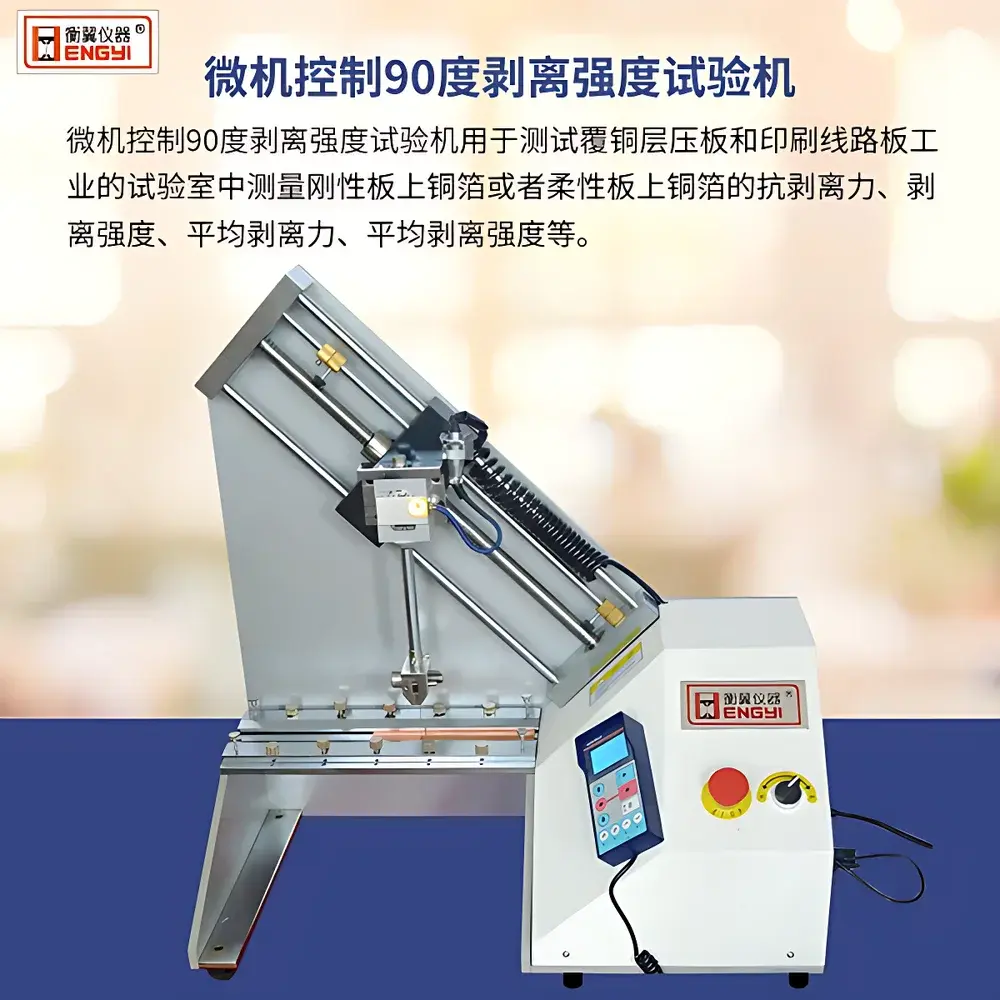
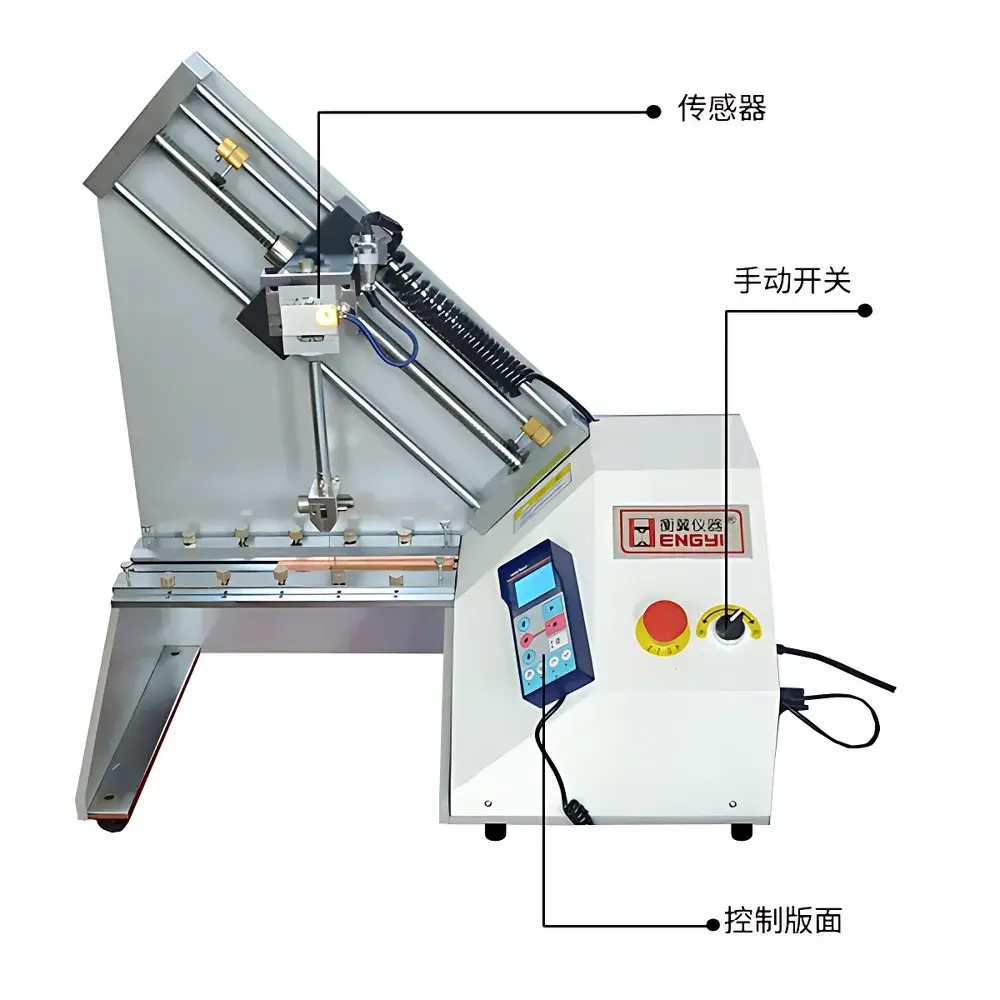
Hengyi HY(BL)-90 90-Degree Peel Strength Tester for Copper-Clad Laminates and Flexible PCBs
| Brand | Hengyi / Hengyitest |
|---|---|
| Origin | Shanghai, China |
| Manufacturer Type | OEM Manufacturer |
| Region of Origin | Domestic (China) |
| Model | HY(BL)-90 |
| Price | Upon Request |
| Load Capacity | 200 N |
| Force Accuracy | Class 0.5 |
| Effective Test Width | 50 mm |
| Effective Stroke | 250 mm |
| Speed Range | 0.001–300 mm/min |
| Speed Accuracy | ±0.5% of reading |
| Displacement Accuracy | ±0.5% of reading |
| Force Resolution | 500,000 counts (full-scale, no range switching) |
| Overload Protection | +10% of full scale |
| Motor Power | 200 W |
| Net Weight | 40 kg |
Overview
The Hengyi HY(BL)-90 is a precision-engineered 90-degree peel strength tester specifically designed for evaluating interfacial adhesion integrity in copper-clad laminates (CCL), flexible printed circuit boards (FPCBs), direct copper-bonded (DCB), active metal brazed (AMB), and direct plating copper (DPC) ceramic substrates. It operates on the standardized 90° peel test principle per ASTM D903, ISO 8510-2, and IPC-TM-650 2.4.9, where a fixed-angle peeling geometry ensures consistent tensile separation of the copper foil from its dielectric substrate—minimizing shear contribution and isolating pure interfacial delamination behavior. Unlike generic tensile testers, the HY(BL)-90 integrates rigid mechanical alignment, real-time load-displacement synchronization, and programmable peel speed control to deliver high reproducibility in peel force, average peel force, and peel strength (N/mm) calculations—critical for qualification of high-reliability power electronics substrates such as Si₃N₄-based AMB modules used in EV inverters and IGBT packaging.
Key Features
- Computer-controlled servo-driven actuation with closed-loop feedback for precise speed regulation (0.001–300 mm/min) and repeatable positioning accuracy.
- Dual-speed manual jog function for rapid sample setup and fine-tuning of initial peel engagement position.
- Integrated electronic limit switches and automatic return-to-start functionality post-test—ensuring operator safety and workflow efficiency.
- High-resolution load cell (500,000 internal counts, Class 0.5 accuracy) with zero-range-switching architecture—maintaining consistent resolution across the entire 0.1%–100% FS measurement span.
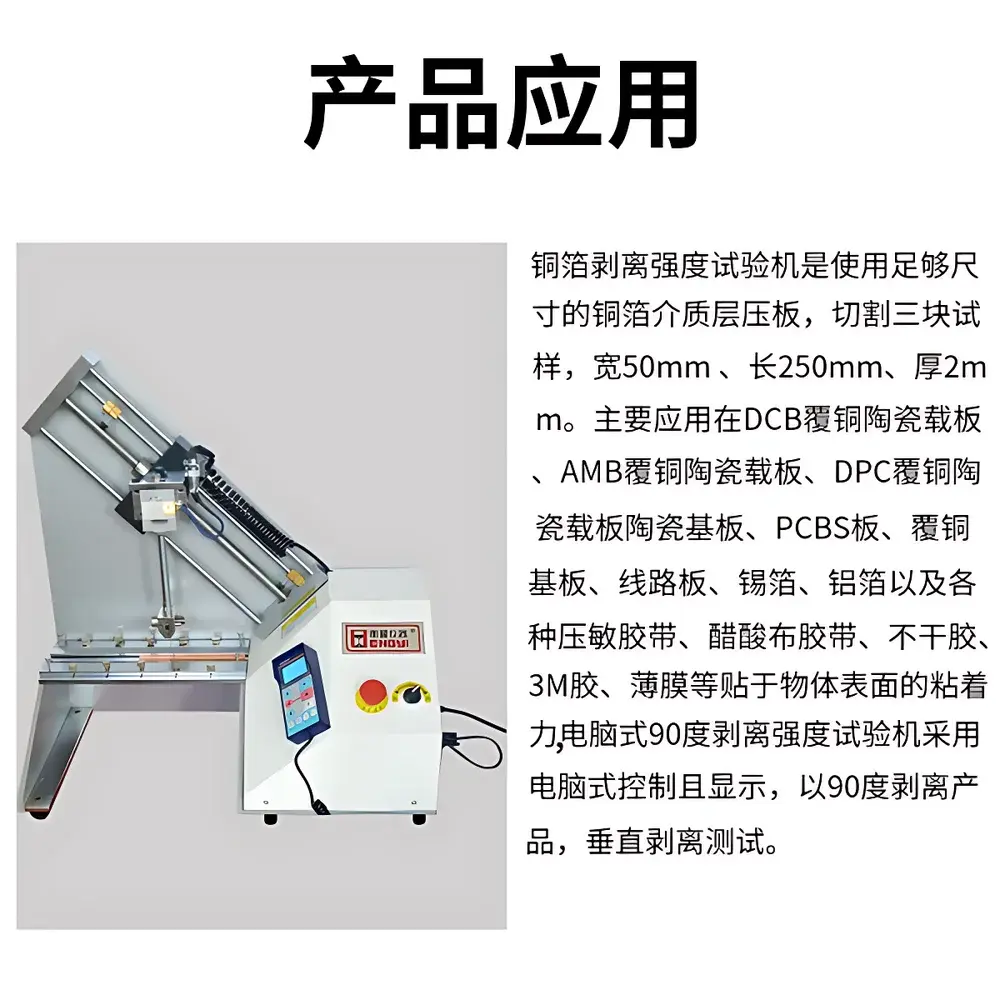
- Optimized test chamber geometry supporting standard specimen dimensions (50 mm width × 250 mm length × 2 mm thickness) per IPC and JEDEC specifications.
- Robust aluminum alloy frame with vibration-damped base—designed to minimize environmental interference during low-force peel measurements (<1 N baseline stability).
Sample Compatibility & Compliance
The HY(BL)-90 accommodates a broad spectrum of substrate configurations including rigid FR-4, polyimide-based flexible laminates, alumina (Al₂O₃), aluminum nitride (AlN), and silicon nitride (Si₃N₄) ceramic substrates with sputtered, electroplated, or active-metal-brazed copper layers. It supports testing of metal-clad composites such as Al/Ti, Al/SS, Al/Ag laminates, as well as pressure-sensitive adhesives (PSAs), acrylic tapes, PET films, and insulating tapes (e.g.,醋酸布—acetate cloth tape). All test protocols align with internationally recognized standards: ASTM D903 (peel resistance of adhesive bonds), ISO 8510-2 (adhesion of flexible materials), IPC-TM-650 2.4.9 (copper peel strength of CCL), and JIS C 6471 (flexible printed wiring boards). Data acquisition meets GLP/GMP documentation requirements when paired with compliant software logging (see Software section).
Software & Data Management
The system ships with proprietary Windows-based control software featuring real-time graphing of force vs. displacement curves, automatic calculation of peak peel force, mean peel force over defined intervals, and normalized peel strength (N/mm). Raw data exports to CSV or Excel formats support traceable post-processing in MATLAB, Python, or statistical analysis platforms. Audit trail functionality records user ID, timestamp, calibration status, and test parameters—enabling compliance with FDA 21 CFR Part 11 requirements when configured with electronic signatures and role-based access controls. Optional integration with LIMS via TCP/IP or OPC UA allows centralized test result archiving and cross-platform QA reporting.
Applications
- Qualification of copper-ceramic bonding integrity in AMB/DCB substrates for high-power semiconductor packaging.
- Routine QC screening of copper foil adhesion in flexible polyimide circuits prior to etching and solder mask application.
- Comparative evaluation of surface pretreatment efficacy (e.g., plasma activation, silane coupling) on ceramic metallization adhesion.
- Accelerated aging studies correlating thermal cycling-induced interfacial degradation with peel strength loss.
- Adhesive performance validation for die-attach films and thermal interface materials under controlled peel loading conditions.
- Research-grade characterization of anisotropic conductive film (ACF) bond strength on fine-pitch FPC connectors.
FAQ
What standards does the HY(BL)-90 comply with for copper peel testing?
It supports ASTM D903, ISO 8510-2, IPC-TM-650 2.4.9, and JIS C 6471 for standardized peel methodology and reporting.
Can the system test specimens thicker than 2 mm?
While optimized for 2 mm laminates per IPC guidelines, the 250 mm effective stroke and adjustable clamping allow adaptation to thicker composites up to 6 mm—subject to load cell capacity and fixture redesign.
Is temperature-controlled testing possible?
The base unit does not include environmental chamber integration; however, it is mechanically compatible with third-party thermal chambers (−40°C to +150°C) via custom mounting brackets and external signal synchronization.
How is calibration traceability ensured?
Force calibration uses NIST-traceable deadweight standards; displacement verification employs certified laser interferometry—certificates issued per ISO/IEC 17025 by accredited metrology labs.
Does the software support multi-user permission levels?
Yes—administrator, technician, and viewer roles can be assigned with configurable access to test methods, calibration logs, and report generation functions.



