
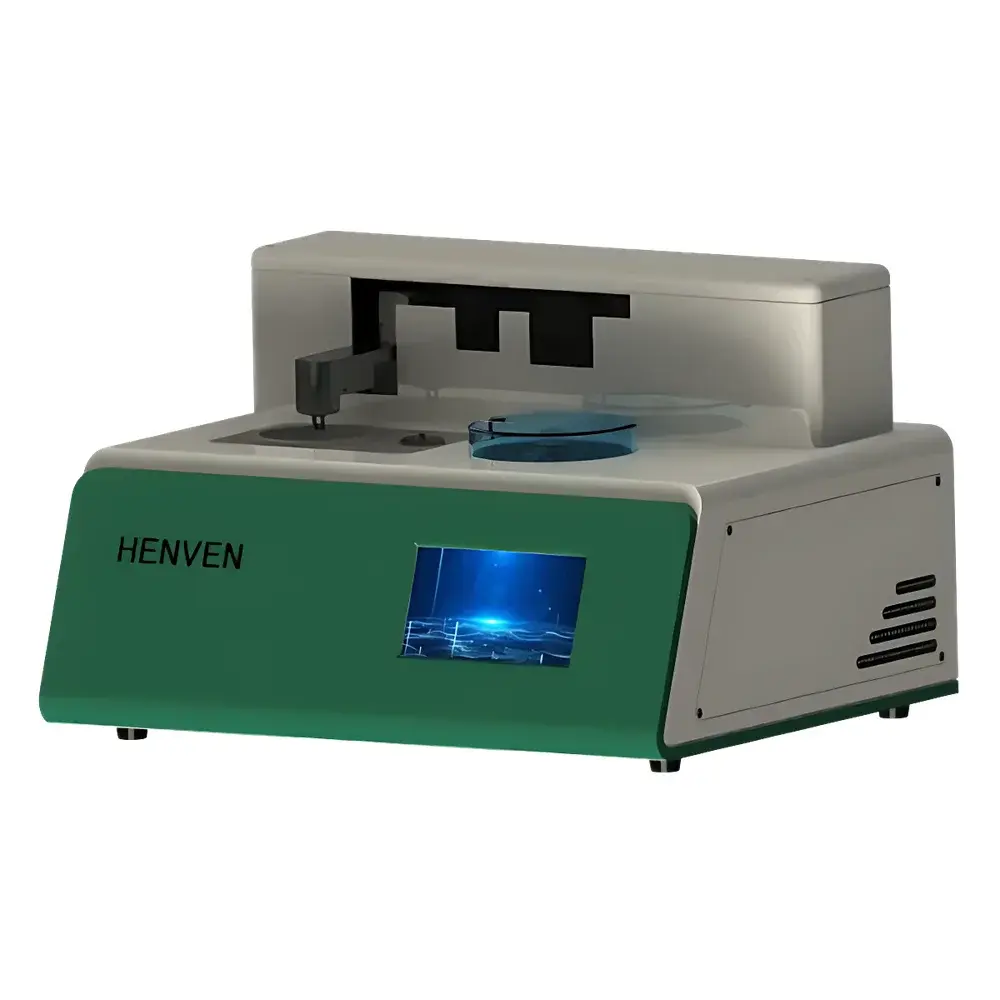
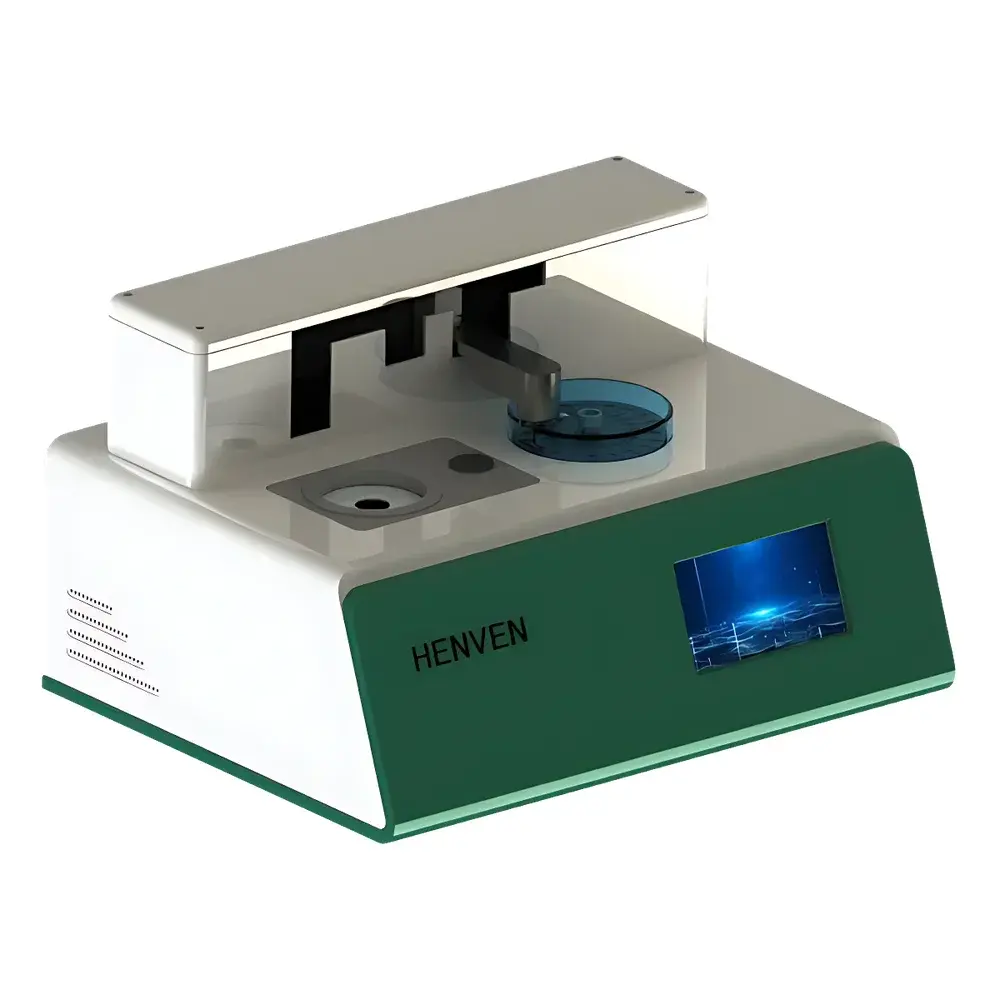
Henven HQSC Series Automated Sample-Loading Heat-Flow Differential Scanning Calorimeter
| Brand | Henven |
|---|---|
| Origin | Beijing, China |
| Manufacturer Type | Direct Manufacturer |
| Origin Category | Domestic (China) |
| Model | HQSC |
| Instrument Type | Heat-Flow DSC |
| Sample Capacity | Single-position with 40-position Auto-sampler |
| Temperature Control Modes | Ramp, Isothermal, Cooling |
| Temperature Accuracy | ±0.1 °C |
| Heating/Cooling Rate | 0.1–100 K/min |
| Temperature Precision | ±0.1 °C |
| DSC Signal Range | ±500 mW |
| Temperature Stability | ±0.1 °C |
| DSC Resolution | ±0.1 µW |
| Power Noise | ±0.1 µW |
| Temperature Resolution | ±0.1 °C |
| Baseline Correction | Adaptive, User-Selectable |
| Calibration Standards Included | In, Sn, Pb, Zn, Al |
| Gas Control | Dual-channel MFC, 0–200 mL/min (customizable) |
| Crucible Options | Al₂O₃, High-Purity Al (standard) |
| Optional Accessories | Cryogenic Cooling (LN₂ auto-fill for −150 °C), GC/MS Interface, Isothermal Band (RT–200 °C), RFID/Barcode Sample Tray Recognition |
Overview
The Henven HQSC Series is a high-precision, heat-flow-type Differential Scanning Calorimeter engineered for rigorous thermal characterization in research laboratories, quality control environments, and regulatory-compliant production facilities. Based on the fundamental principle of heat-flow DSC—measuring the differential heat flow between a sample and an inert reference under controlled, programmed temperature conditions—the HQSC delivers quantitative thermodynamic data including enthalpy changes (ΔH), glass transition temperatures (Tg), melting points (Tm), crystallization onset and peak temperatures (Tc), oxidative induction time (OIT), and polymorphic transitions. Its modular architecture supports three operational temperature configurations: HQSC-1 (RT to 680 °C), HQSC-2 (−30 °C to 680 °C with mechanical cryocooler), and HQSC-3 (−150 °C to 680 °C with automated liquid nitrogen delivery), enabling broad applicability across polymer science, pharmaceutical development, battery materials, food science, and inorganic phase analysis.
Key Features
- 40-position fully automated sample handling system enabling unattended 24-hour operation with positional repeatability ≤ ±0.05 mm—critical for sensor alignment and measurement reproducibility;
- Dynamic queue management: real-time insertion, reordering, or prioritization of samples during active runs without interrupting ongoing analyses;
- Dual independent thermocouple monitoring: simultaneous display of sample-stage and furnace temperatures on a high-contrast LCD interface;
- Integrated safety architecture featuring over-current protection, thermal runaway detection, automatic emergency shutdown, and physical sample containment;
- Modular crucible support with standardized 0.06 mL volume; compatible with Al₂O₃, high-purity Al (open/sealed), ZrO₂, quartz, graphite, and Pt/Rh crucibles per ASTM E794 and ISO 11357 standards;
- Programmable gas atmosphere control via dual-channel mass flow controllers (MFCs), supporting inert (N₂, Ar), oxidative (air, O₂), or reducing atmospheres with precise 0–200 mL/min regulation;
- Optional cryogenic integration (HQSC-3) with auto-refill LN₂ system, meeting low-temperature requirements for elastomer Tg, cryo-crystallization, and low-T phase transitions;
- GC/MS and isothermal band interfaces available for hyphenated thermal analysis workflows compliant with USP and ICH Q5C guidelines.
Sample Compatibility & Compliance
The HQSC accommodates solid powders, granules, thin films, gels, and small-volume liquids in standard and sealed crucibles. Its design adheres to key international thermal analysis standards, including ISO 11357 (plastics), ASTM E794 (melting point), ASTM E1356 (Tg determination), and ASTM D3418 (polymer transitions). The instrument’s traceable calibration protocol—using certified reference materials (In, Sn, Pb, Zn, Al)—supports GLP/GMP documentation requirements. Optional RFID/barcode tray recognition enables full sample chain-of-custody tracking, aligning with FDA 21 CFR Part 11 electronic record integrity expectations when paired with audit-trail-enabled software.
Software & Data Management
Embedded intelligent software provides real-time data acquisition, baseline correction (linear, polynomial, or user-defined), peak deconvolution, and multi-step kinetic modeling (e.g., Ozawa-Flynn-Wall, Kissinger). All thermal events—including Tg, Tm, Tc, OIT, and ΔH—are automatically calculated and exportable in CSV, TXT, or XML formats. Raw DSC thermograms and metadata are stored with timestamped instrument logs, environmental parameters (gas flow, purge status), and operator annotations. Software supports batch processing of up to 40 samples, statistical reporting (mean, SD, RSD), and customizable report templates suitable for internal SOPs or regulatory submissions.
Applications
- Pharmaceutical: Polymorph screening, amorphous content quantification, excipient compatibility, and stability-indicating assay development;
- Polymers: Crystallinity assessment, crosslink density estimation, degradation kinetics, and heat history evaluation;
- Battery Materials: Solid-electrolyte interphase (SEI) formation, cathode/anode thermal runaway onset, and electrolyte decomposition profiling;
- Food Science: Fat solid fat content (SFC), starch gelatinization, protein denaturation, and shelf-life prediction via oxidation induction;
- Inorganics & Ceramics: Phase transformation mapping (e.g., α↔β quartz), sintering behavior, and hydration/dehydration thermodynamics.
FAQ
What temperature ranges are supported across HQSC models?
HQSC-1 operates from ambient to 680 °C; HQSC-2 extends down to −30 °C using a closed-cycle cryocooler; HQSC-3 achieves −150 °C via automated liquid nitrogen delivery.
Is the instrument compliant with regulatory data integrity requirements?
Yes—when configured with audit-trail logging, electronic signatures, and secure user access levels, it meets FDA 21 CFR Part 11 and EU Annex 11 expectations for analytical instrumentation in regulated environments.
Can the auto-sampler handle volatile or air-sensitive samples?
Yes—sealed aluminum crucibles with crimped lids and programmable inert-gas purging before and during analysis ensure sample integrity for moisture- or oxygen-sensitive materials.
How is thermal calibration performed?
Calibration uses NIST-traceable reference standards (In, Sn, Pb, Zn, Al) for both temperature and enthalpy verification; procedures follow ISO 11357-1 and are fully documented within the software.
What data export and integration options are available?
Data exports to CSV, TXT, and XML; RS232 and USB interfaces enable remote control and integration into LIMS or MES platforms via standard SCPI commands.



