
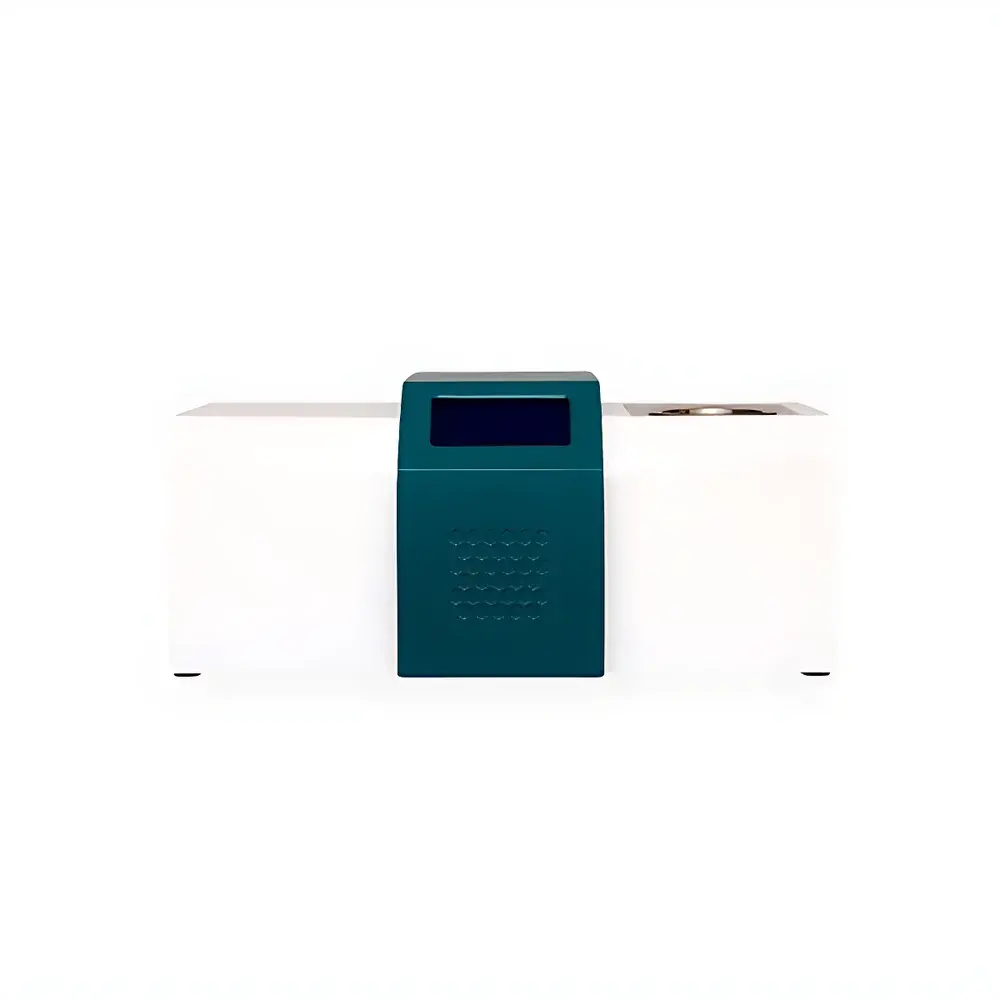
Henven HSC-2 / HSC-3 Low-Temperature Differential Scanning Calorimeter
| Brand | Henven |
|---|---|
| Origin | Beijing, China |
| Manufacturer Type | Direct Manufacturer |
| Model | HSC-2 / HSC-3 |
| Sample Capacity | Single |
| Instrument Type | Heat-Flow DSC |
| Temperature Range | −30 °C to 680 °C (HSC-2, mechanical cooling) / −100 °C to 680 °C (HSC-3, liquid nitrogen cooling) |
| Programmable Heating/Cooling Rate | 0.1–100 K/min |
| Temperature Accuracy | ±0.1 °C |
| Temperature Precision | ±0.1 °C |
| Temperature Stability (Drift) | ±0.1 °C |
| DSC Signal Range | ±500 mW |
| DSC Sensitivity (Minimum Detectable Heat Flow) | ±0.1 μW |
| Baseline Noise | ±0.1 μW |
| Power Accuracy | ±0.1 μW |
| Standard Crucibles | Alumina (Φ5 mm × 4 mm) or Aluminum (Φ5 mm × 4 mm) |
| Optional Crucibles | Hermetic aluminum crucibles (with crimping tool for solids/liquids) |
| Atmosphere Control | Dual-channel mass flow controllers (corrosion-resistant variants available on request) |
| Heated Zone Temperature Range | 0–400 °C |
Overview
The Henven HSC-2 and HSC-3 are precision heat-flow differential scanning calorimeters engineered for high-fidelity thermal characterization across demanding low-temperature and high-temperature regimes. Based on the fundamental principle of measuring differential heat flow between a sample and an inert reference under controlled, linear temperature programs, these instruments deliver quantitative data on endothermic and exothermic transitions—including glass transitions (Tg), melting points (Tm), crystallization onset (Tc), solid-solid phase changes, oxidative induction time (OIT), and specific heat capacity (Cp) via dual-step calibration. The HSC-2 employs integrated mechanical refrigeration to achieve stable operation down to −30 °C, while the HSC-3 extends low-temperature capability to −100 °C using a cryogenic liquid nitrogen cooling system with automated fill control and vapor-phase temperature regulation—ensuring reproducible sub-ambient baselines and minimal thermal lag.
Key Features
- High-resolution heat-flow detection with ±0.1 μW sensitivity and baseline noise ≤±0.1 μW, enabling reliable quantification of weak thermal events in polymers, pharmaceuticals, and nanocomposites.
- Programmable temperature control with ramp rates from 0.1 to 100 K/min, supporting both rapid screening and ultra-slow scans (e.g., for Cp determination per ASTM E1269).
- Dual-mass-flow atmosphere management system with independent control of purge and reactant gases; optional corrosion-resistant MFCs compatible with HCl, HF, SO2, and O3-rich environments per ISO 11357-1.
- Modular heated interface options—including isothermal controller (0–400 °C), heated GC transfer line, and MS-compatible capillary adapter—facilitating hyphenated thermal analysis workflows compliant with ASTM E2550 and USP <1163>.
- Thermally symmetric furnace design with active temperature homogenization, delivering ±0.1 °C accuracy and <0.05 °C intra-run drift over 24-hour isotherms—critical for long-duration stability studies and GMP-compliant release testing.
- Standard ceramic and aluminum crucibles (Φ5 mm × 4 mm); hermetically sealable aluminum crucibles available with manual crimping tools for volatile, moisture-sensitive, or oxidation-prone samples per ISO 11357-4.
Sample Compatibility & Compliance
The HSC-2/HSC-3 accommodates solid powders, films, granules, gels, and small-volume liquids (≤20 mg typical). Its broad temperature range supports characterization of thermoplastics (e.g., PE, PET), thermosets (epoxies, phenolics), battery electrode materials (NMC, LFP), active pharmaceutical ingredients (APIs), excipients, and food lipids. Instrument design adheres to core requirements of ISO 11357 (all parts), ASTM E794 (melting point), ASTM E1356 (Tg), and ICH Q5C (stability protocol guidance). Data acquisition and storage meet ALCOA+ principles; optional audit trail and electronic signature modules support 21 CFR Part 11 compliance for regulated laboratories operating under GLP or GMP frameworks.
Software & Data Management
Control and analysis are performed via Henven’s ThermAnalyze™ v4.x software—a Windows-based platform featuring real-time signal visualization, multi-step temperature program scripting, automatic peak integration (onset, peak, offset), baseline subtraction algorithms (tangent, step, polynomial), and Cp calculation using sapphire calibration. Raw data are stored in vendor-neutral ASCII (.txt) and universal .tdms formats. Export functions include CSV, Excel, and PDF reports with embedded metadata (operator ID, instrument serial, calibration date, atmospheric conditions). Software supports IQ/OQ documentation templates aligned with ISO/IEC 17025 and ASTM E2550 Annex A1 for laboratory accreditation readiness.
Applications
- Pharmaceutical development: Polymorph screening, hydrate/anhydrate transition mapping, excipient compatibility assessment, and lyophilized product residual moisture quantification.
- Polymers & composites: Crystallinity index calculation (ASTM D3418), crosslink density estimation, degradation onset evaluation (Td), and cure kinetics modeling (isoconversional methods).
- Energy materials: Solid electrolyte phase stability, cathode/anode thermal runaway profiling (UN 38.3 thermal abuse simulation), and interfacial reaction enthalpy measurement in Li-ion cells.
- Food science: Fat solid content (FSC) profiling, starch gelatinization enthalpy, and cocoa butter polymorphic transformation kinetics.
- Metallurgy & ceramics: Eutectic temperature identification, martensitic transformation hysteresis, and sintering behavior analysis under controlled atmospheres.
FAQ
What distinguishes the HSC-2 from the HSC-3?
The primary distinction lies in low-temperature capability: the HSC-2 uses a closed-cycle mechanical cooler for operation down to −30 °C, whereas the HSC-3 integrates an automated liquid nitrogen delivery system enabling stable measurements to −100 °C—critical for low-Tg elastomers, cryoprotectants, and supercooled metallic glasses.
Can the instrument perform heat capacity (Cp) measurements?
Yes. Using the dual-step method with sapphire standard (per ASTM E1269), the HSC-2/HSC-3 delivers Cp values with ±2% uncertainty across −50 °C to 600 °C when operated with appropriate crucible geometry and heating rate optimization.
Is GLP/GMP compliance supported out-of-the-box?
The base configuration meets essential data integrity requirements. Full 21 CFR Part 11 compliance—including user access control, electronic signatures, and immutable audit trails—requires activation of the optional SecureMode™ software module and associated validation documentation package.
Are custom atmosphere configurations available for aggressive gas environments?
Yes. Corrosion-resistant MFC manifolds (Hastelloy C-276 wetted parts), VCR fittings, and quartz-lined furnace liners can be factory-integrated upon specification during order placement.



