
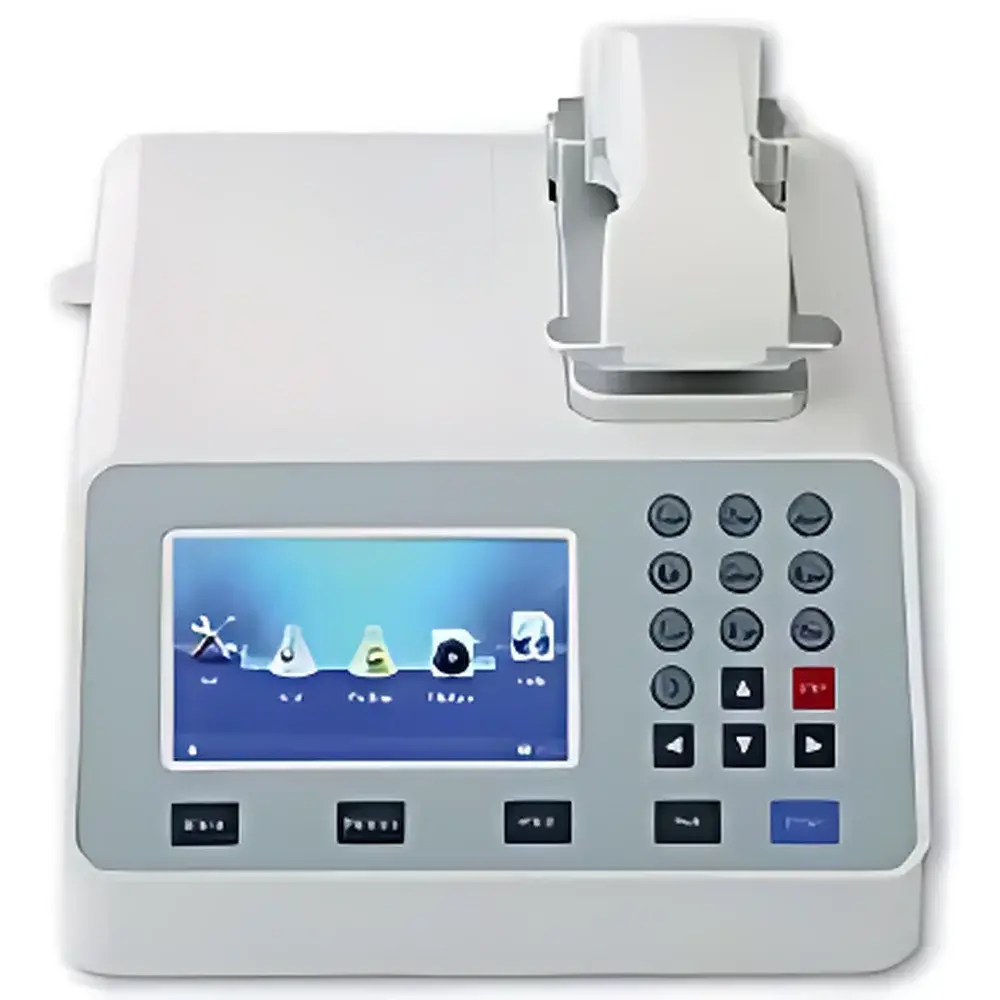
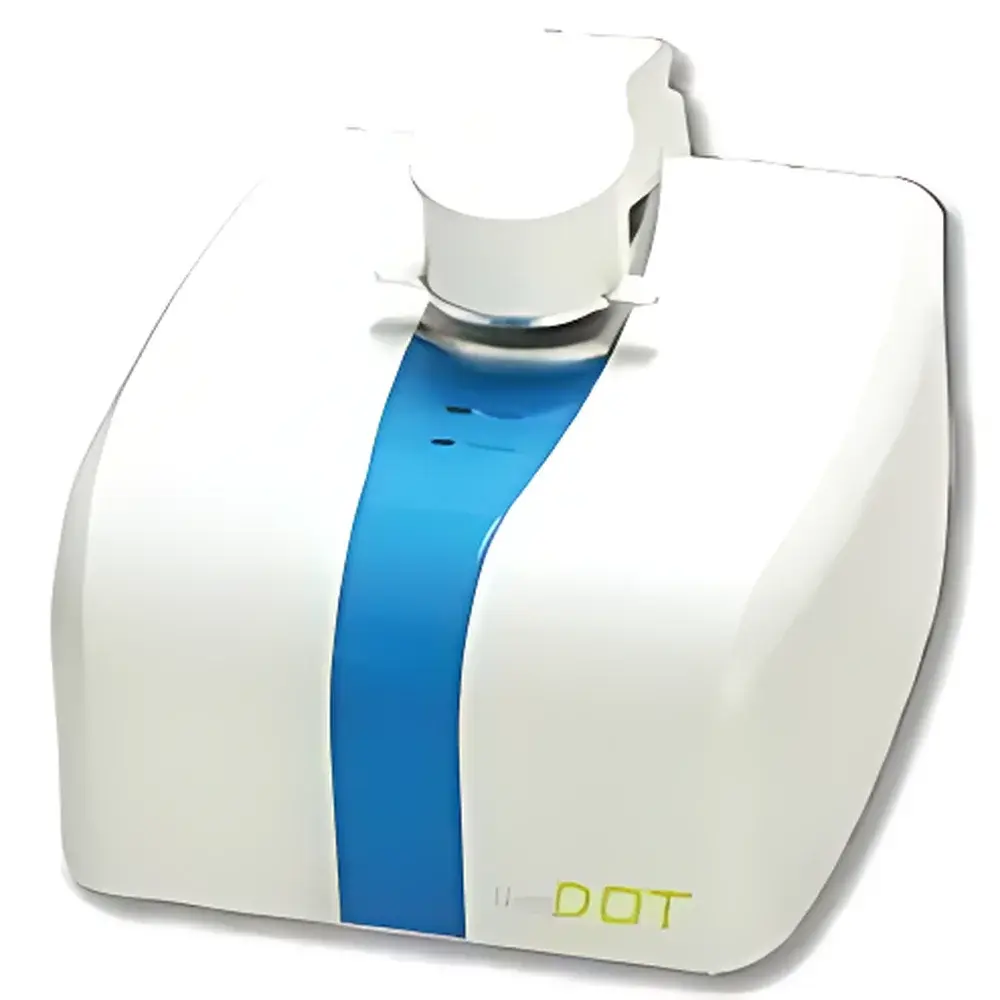
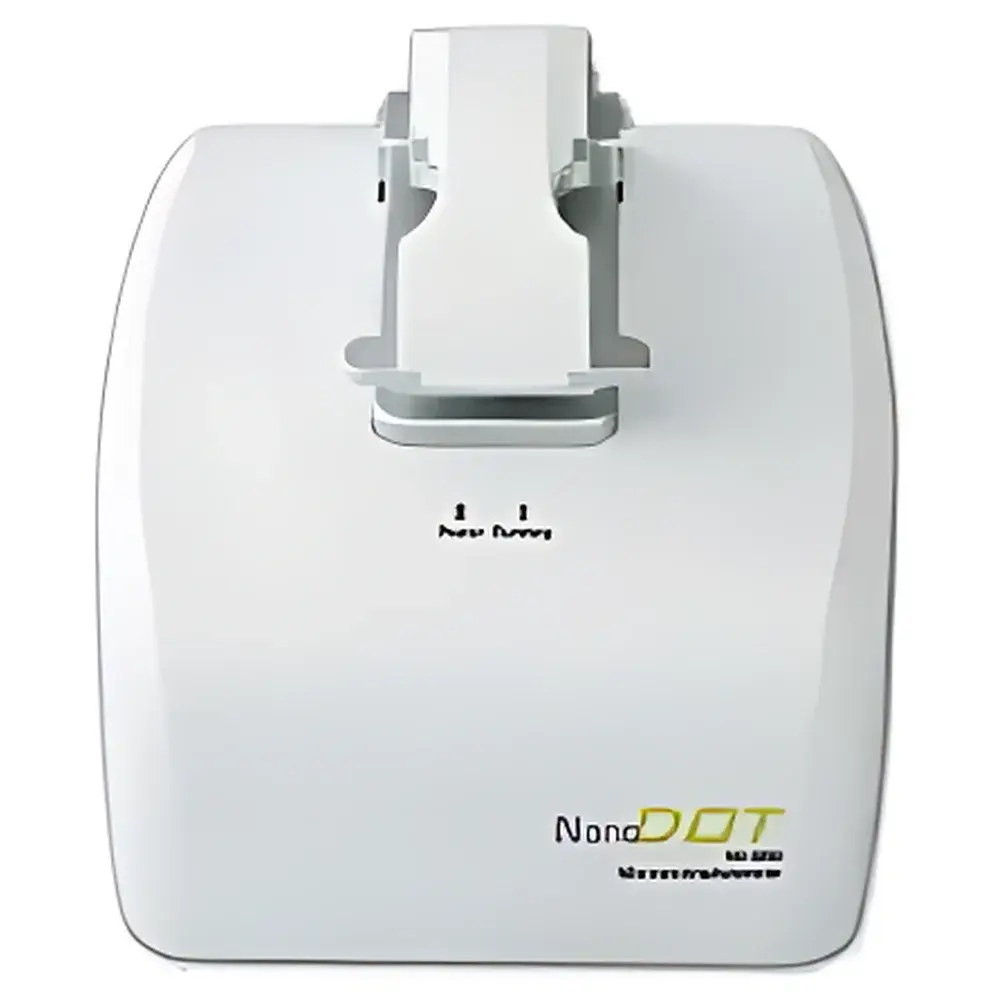
Hercuvan ND-3800 Microvolume UV-Vis Spectrophotometer for Nucleic Acid and Protein Quantification
| Brand | Hercuvan |
|---|---|
| Origin | Malaysia |
| Model | ND-3800 |
| Wavelength Range | 200–800 nm |
| Path Lengths | 1.0 mm & 0.2 mm |
| Sample Volume | 0.5–2 µL |
| Light Source | Pulsed Xenon Lamp |
| Detector | 3864-element Linear Silicon CCD Array |
| Spectral Resolution | 3 nm (FWHM at Hg 456 nm) |
| Absorbance Accuracy | ±1% (at A = 0.76, 350 nm) |
| Absorbance Precision | ±0.003 Abs |
| Absorbance Range | 0.02–90 (equivalent to 10 mm path) |
| DNA Detection Limit | 0.4–3750 ng/µL |
| BSA Detection Limit | 0.01–100 mg/mL |
| Spectral Acquisition Time | <5 s |
| Dimensions | 20 × 26.2 × 15.4 cm |
| Weight | 2.5 kg |
Overview
The Hercuvan ND-3800 is a microvolume UV-Vis spectrophotometer engineered for rapid, accurate quantification and purity assessment of nucleic acids (DNA/RNA) and proteins in research and quality control laboratories. Unlike conventional cuvette-based instruments, the ND-3800 employs fixed-pathlength microfluidic sample retention—leveraging surface tension and capillary action—to enable direct absorbance measurement without disposable cuvettes or dilution steps. Its optical architecture integrates a high-stability pulsed xenon lamp with a 3864-element linear silicon CCD array detector, delivering full-spectrum acquisition from 200 nm to 800 nm in under five seconds. The system operates on Beer-Lambert principles, calculating concentration via user-selectable extinction coefficients or built-in reference standards (e.g., dsDNA at 50 µg/mL per A260 = 1.0, BSA at 1.37 mL·mg−1·cm−1). Designed for walk-up usability in core facilities and biosafety cabinets, it supports routine QC in molecular biology, biopharmaceutical development, and academic genomics workflows.
Key Features
- Full-spectrum scanning (200–800 nm) enables simultaneous analysis of nucleic acids, proteins, and contaminants (e.g., phenol, guanidine) via spectral shape inspection
- Microvolume capability: accommodates 0.5–2 µL samples with dual fixed pathlengths (0.2 mm and 1.0 mm) to extend dynamic range without manual dilution
- No cuvettes, no warm-up time—ready for measurement within 15 seconds of power-on
- High photometric precision: ±0.003 Abs repeatability and ±1% accuracy validated per ISO 8579-1:2020 guidelines for spectrophotometric performance
- Integrated software calculates A260/A280, A260/A230, and A280/A205 ratios automatically for purity evaluation
- Compact footprint (20 × 26.2 × 15.4 cm) and lightweight design (2.5 kg) facilitate benchtop deployment in space-constrained environments
- Non-contact sample loading minimizes cross-contamination risk and eliminates consumable costs associated with quartz cuvettes or microplates
Sample Compatibility & Compliance
The ND-3800 accepts native, unpurified, and purified samples—including plasmid preps, PCR products, in vitro transcription outputs, cell lysates, purified antibodies, and recombinant enzymes—without requiring buffer exchange or dilution. It is compatible with common aqueous buffers (Tris-HCl, TE, PBS, RIPA), low-concentration detergents (<0.1% Triton X-100), and standard nuclease-free water. For regulatory compliance, the instrument supports audit-ready data export (CSV, PDF) with timestamped metadata and user ID logging. While not certified to FDA 21 CFR Part 11 out-of-the-box, its software architecture permits integration with LIMS and electronic lab notebook (ELN) systems compliant with GLP and GMP documentation requirements. All optical calibrations are traceable to NIST-traceable standards, and wavelength accuracy (±1 nm) meets ASTM E275-22 specifications for UV-Vis instrumentation verification.
Software & Data Management
The ND-3800 ships with HerculesQuant™ v3.x software—a Windows-based application offering real-time spectral visualization, batch processing, statistical reporting (mean, SD, CV%), and customizable report templates. Raw absorbance spectra are stored in vendor-neutral .csv format; processed results include concentration, purity ratios, and spectral overlays for comparative analysis. The software implements automatic baseline correction using dual-point referencing (230 nm and 320 nm) and supports user-defined extinction coefficients for non-standard biomolecules. Data integrity is reinforced through password-protected method libraries, version-controlled assay protocols, and optional encrypted local database storage. Export functions comply with ISO/IEC 17025:2017 clause 7.8.2 for result reporting traceability.
Applications
- Quantification of genomic DNA, cDNA, siRNA, and synthetic oligonucleotides prior to sequencing library preparation
- Routine QC of protein expression yields in E. coli and mammalian cell culture supernatants
- Verification of antibody concentration and aggregation status via A280 and A205 deviation analysis
- Assessment of RNA integrity in ribosomal RNA bands (18S/28S ratio estimation via spectral shoulder analysis)
- Cell density estimation in suspension cultures (OD600 mode) and viability screening via dye exclusion assays (e.g., Trypan Blue at 595 nm)
- Supporting DOE (Design of Experiments) in upstream bioprocess development where rapid, low-volume sampling is critical
FAQ
Does the ND-3800 require calibration with external standards before each use?
No. The instrument performs an internal optical self-check at startup and uses factory-calibrated wavelength and photometric references. Users may optionally run a water blank (A260 baseline check) for routine verification.
Can the ND-3800 measure samples in high-salt or viscous buffers?
Yes—within limits. Samples with conductivity <150 mS/cm and viscosity <15 cP are compatible. Excessive salt may cause droplet instability on the pedestal; we recommend dilution into low-ionic-strength buffer if A230 exceeds 2.0.
Is the CCD detector sensitive to ambient light during measurement?
No. The optical chamber is fully enclosed and shuttered during acquisition. Ambient light exposure does not affect spectral integrity or photometric stability.
How is pathlength selected during operation?
Pathlength is manually selected by the user via software interface based on expected concentration range—0.2 mm for high-concentration samples (>100 ng/µL DNA or >1 mg/mL protein), 1.0 mm for low-concentration applications.
What maintenance is required for long-term performance?
Daily cleaning of the quartz pedestals with ethanol and lint-free wipes is recommended. No lamp replacement is needed—the pulsed xenon source has a rated lifetime of >109 flashes. Annual verification using NIST-traceable neutral density filters is advised for ISO 17025-accredited labs.
Related Products



