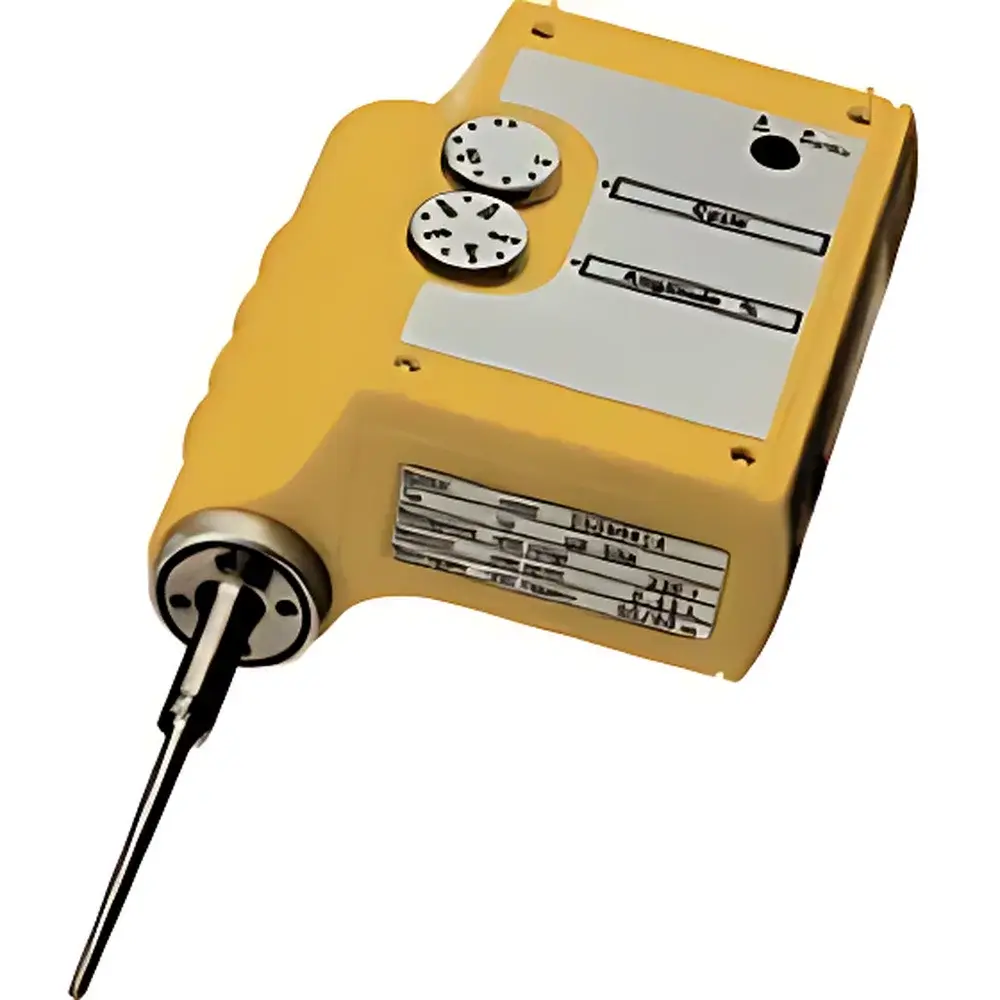
Hielscher UP50H Handheld Ultrasonic Homogenizer
| Origin | Germany |
|---|---|
| Manufacturer Type | Authorized Distributor |
| Origin Category | Imported |
| Model | UP50H |
| Instrument Type | Ultrasonic Cell Disruptor |
| Ultrasonic Power | 50 W |
| Operating Frequency | 30 kHz |
| Amplitude Control Range | 20–100% |
| Pulse Mode | 0–100% duty cycle |
| Sample Volume Capacity | 0.1–500 mL |
| Dimensions (L×W×H) | 180 × 130 × 50 mm |
| Weight | 1.1 kg |
| Power Supply | 230 V, 0.63 A, 50–60 Hz |
| Probe Material | Grade 5 Titanium Alloy (Ti-6Al-4V) |
| Cooling Options | Optional jacketed flow cell or transparent acoustic enclosure |
Overview
The Hielscher UP50H Handheld Ultrasonic Homogenizer is an engineered solution for precise, scalable, and reproducible ultrasonic processing in life science laboratories. Based on piezoelectric transduction and resonant longitudinal wave propagation, the UP50H delivers controlled cavitation energy directly into liquid samples via a titanium alloy probe. Its 30 kHz operating frequency—automatically tracked and stabilized by digital frequency control—ensures consistent energy transfer across variable sample viscosities, densities, and volumes. Designed for low-to-medium throughput applications, the UP50H supports discrete batch processing from 100 µL to 500 mL, making it ideal for early-stage R&D in biopharmaceutical formulation, nucleic acid shearing, protein extraction, nanoparticle dispersion, and microbial cell lysis. Unlike benchtop ultrasonicators requiring fixed mounting, the UP50H’s integrated transducer-housing architecture enables ergonomic handheld operation while maintaining mechanical stability for repeatable probe immersion depth and tip velocity.
Key Features
- Compact monolithic design: All-in-one ultrasonic generator and transducer housed in a single 1.1 kg unit—world’s smallest industrial-grade handheld homogenizer.
- Titanium alloy probe (Grade 5, Ti-6Al-4V): Resistant to cavitation erosion, chemically inert toward organic solvents and biological buffers, and compatible with autoclaving (up to 134 °C, 3 bar).
- Digital amplitude regulation: Maintains constant tip displacement (20–100% of maximum) regardless of load impedance or line voltage fluctuations—critical for inter-laboratory method transfer.
- Pulse mode programmability: Adjustable duty cycle (0–100%) minimizes thermal buildup during sensitive applications such as chromatin fragmentation or enzyme-sensitive extractions.
- Intelligent overload protection: Automatic shutdown upon no-load operation or excessive current draw prevents transducer damage and extends service life.
- Low-noise operation (<65 dB(A) at 10 cm): Enables use in open lab environments without dedicated acoustic shielding; optional transparent acoustic enclosure available for enhanced operator safety and noise reduction.
Sample Compatibility & Compliance
The UP50H accommodates aqueous, organic, and mixed-phase systems—including viscous lysates, lipid emulsions, polymer suspensions, and cryopreserved cell pellets. Probe interchangeability supports standardized processing across sample types: microtips (2 mm, 3 mm) for volumes ≤1 mL; standard probes (7 mm, 14 mm) for 1–500 mL batches. All hardware complies with IEC 61000-6-3 (EMC emission limits) and IEC 61000-6-2 (immunity standards). The device meets CE marking requirements under the EU Machinery Directive 2006/42/EC and Low Voltage Directive 2014/35/EU. While not inherently 21 CFR Part 11 compliant, audit trails and parameter logging can be implemented via optional RS232/USB interface when integrated into validated workflows adhering to GLP or GMP principles.
Software & Data Management
The UP50H operates autonomously via front-panel controls but supports external monitoring and scripting through its TTL-compatible digital interface. When connected to a PC via USB-to-serial adapter, users may log real-time parameters—including elapsed time, cumulative energy delivered (J), amplitude setting, pulse status, and temperature alerts (when paired with optional PT100 probe)—using Hielscher’s free LabSonic software. Data exports comply with CSV and XML formats for integration into LIMS or electronic lab notebooks (ELN). For regulated environments, timestamped logs support retrospective review per ALCOA+ principles (Attributable, Legible, Contemporaneous, Original, Accurate, Complete, Consistent, Enduring, Available).
Applications
- Cell disruption: Efficient lysis of bacterial, yeast, algal, and mammalian cells without denaturation—validated for GFP expression recovery and plasmid isolation.
- Nucleic acid preparation: Controlled fragmentation of genomic DNA for NGS library construction (Covaris-equivalent shearing profiles achievable with optimized pulse settings).
- Emulsification & nano-dispersion: Production of stable oil-in-water nanoemulsions (e.g., curcumin, resveratrol) and uniform liposome suspensions.
- Extraction enhancement: Accelerated release of intracellular metabolites, polyphenols, and alkaloids from plant tissues and fungal mycelia.
- Deagglomeration: Breaking weak physical aggregates in colloidal suspensions prior to DLS or SEM analysis.
- Maintenance cleaning: Removal of biofilm residues from microfluidic channels and capillary tubing using low-amplitude continuous mode.
FAQ
What is the recommended maintenance schedule for the UP50H?
Hielscher recommends visual inspection of the probe tip before each use; ultrasonic performance should be verified weekly using a calibrated calorimetric test (e.g., 10 mL water, 30 sec at 80% amplitude). Annual calibration of amplitude output and frequency tracking is advised for GLP-compliant labs.
Can the UP50H be used in sterile environments?
Yes—the titanium probe and stainless-steel housing are autoclavable (134 °C, 3 bar, 15 min); however, the main unit must remain outside the sterilizer. Sterile processing requires aseptic probe handling and optional laminar flow hood integration.
Is there a difference between “amplitude” and “power” on this device?
Yes: Amplitude (µm peak-to-peak) defines mechanical displacement at the probe tip and directly governs cavitation intensity. Power (W) is the electrical input; due to efficiency variations, amplitude—not power—is the primary process-critical parameter for method development.
Does the UP50H support continuous flow processing?
No—continuous flow requires the UP200H or UIP series with integrated flow cells. The UP50H is strictly batch-oriented, though sequential batch processing up to 500 mL is supported with manual probe repositioning.
How does automatic frequency tracking improve reproducibility?
As sample composition changes during sonication (e.g., viscosity drop from cell lysis), resonant frequency drifts. The UP50H continuously monitors and adjusts drive frequency to maintain resonance—ensuring constant tip velocity and cavitation density across the entire treatment duration.