
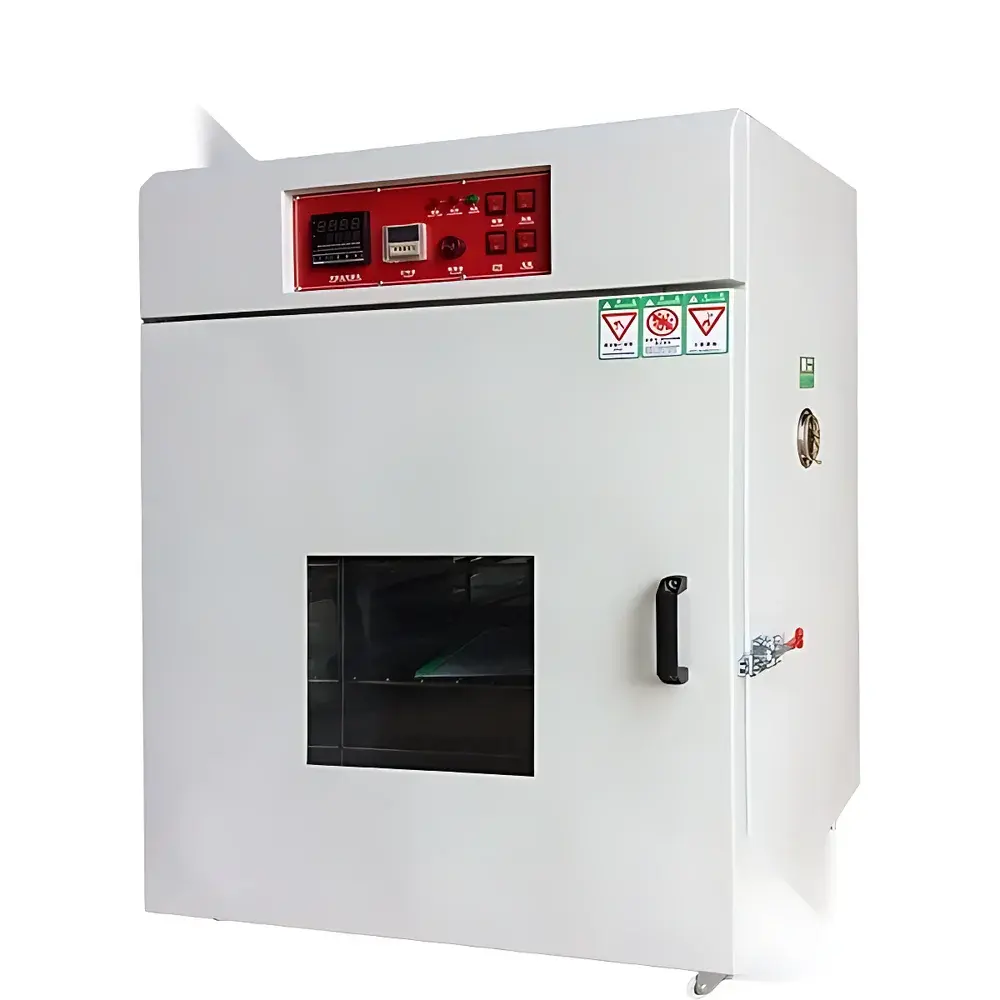
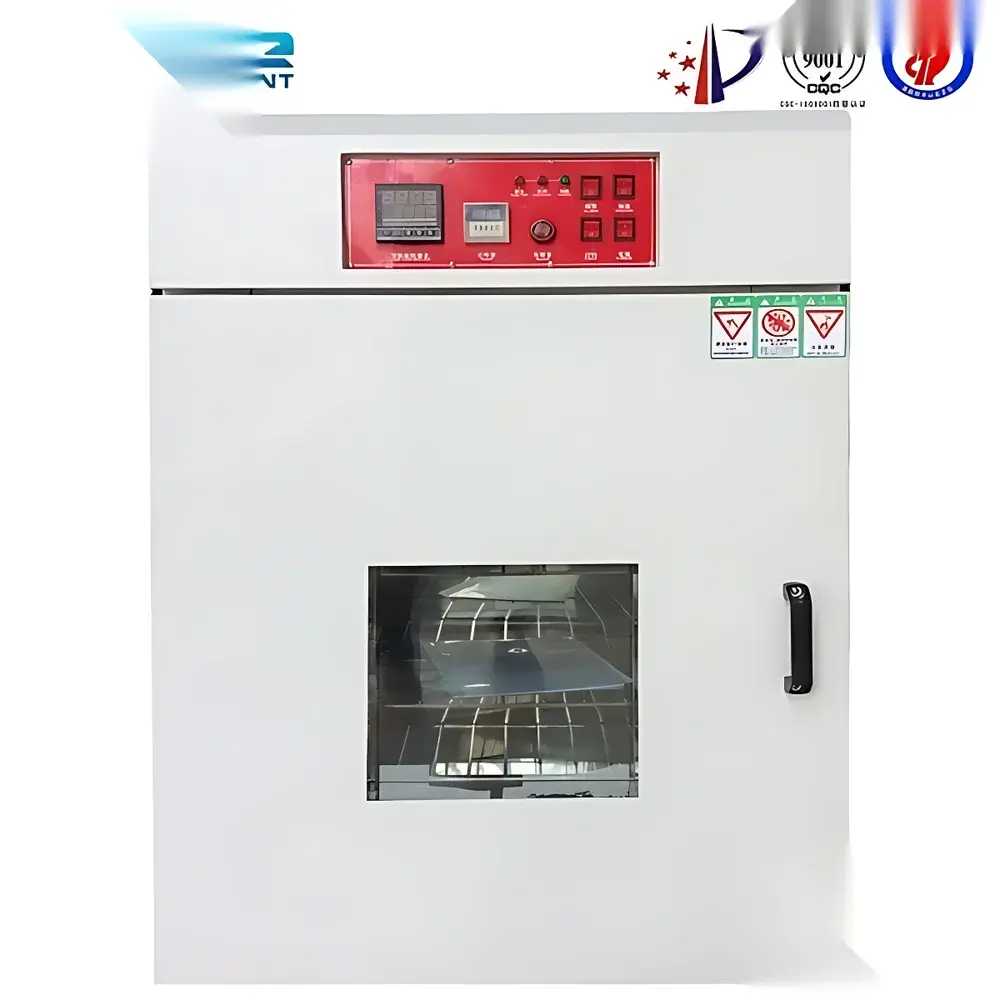
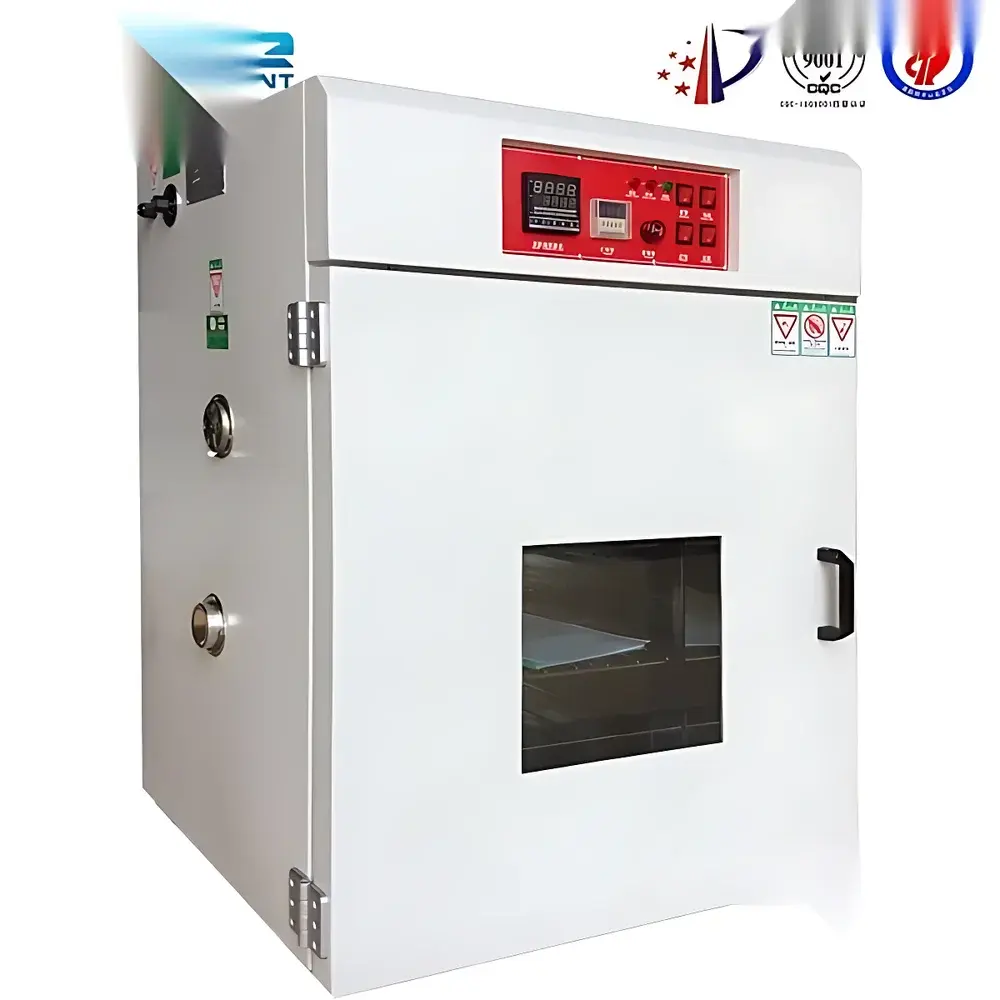
High Temperature Aging Test Chamber – Standard Benchtop Environmental Test Chamber
| Brand | OEM |
|---|---|
| Origin | Imported |
| Manufacturer Type | Authorized Distributor |
| Price | USD 920 (FOB) |
| Internal Chamber Material | SUS304 Stainless Steel |
| Insulation | Rigid Polyurethane Foam + Glass Fiber |
| Door Insulation | Glass Fiber Cotton |
| Outer Casing | 1.2 mm Cold-Rolled A3 Steel with Electrostatic Powder Coating |
| Heating System | 2 kW Far-Infrared Ni-Cr Alloy Heater (Independent Circuit) |
| Temperature Control | Fuji Electric PXR Series PID Controller with Auto-Tuning |
| Sensor | Pt100 Platinum Resistance Thermometer |
| Compliance | GB/T 2423.2-2008 (Equivalent to IEC 60068-2-2:2007, ASTM D3574, ISO 188) |
| Safety Features | Over-Temperature Alarm & Cut-Off, Earth Leakage Protection, Real-Time Monitoring |
Overview
The High Temperature Aging Test Chamber is a precision-engineered environmental test chamber designed for accelerated thermal aging, stability assessment, and high-temperature performance validation of materials, components, and finished products. Operating on the principle of controlled convective and radiant heating within a sealed, insulated enclosure, it maintains stable and uniform thermal conditions across its working volume—enabling reproducible exposure to elevated temperatures per internationally recognized test protocols. This chamber is not a general-purpose drying oven; rather, it is engineered for scientific and industrial qualification testing where temperature accuracy (±0.5 °C), spatial uniformity (±2.0 °C at setpoint), and long-term stability are critical to data integrity. Its architecture complies with the functional and metrological requirements of GB/T 2423.2–2008, which aligns with IEC 60068-2-2:2007 (Test Bb: Dry Heat) and serves as the foundational standard for high-temperature environmental stress screening in electronics, polymers, adhesives, packaging, and automotive subsystems.
Key Features
- Robust dual-layer thermal insulation system combining rigid polyurethane foam (λ ≈ 0.022 W/m·K) and glass fiber cotton (density ≥ 48 kg/m³), minimizing heat loss and ensuring rapid thermal recovery after door opening.
- SUS304 stainless steel inner chamber with seamless welded corners and electropolished finish—resistant to oxidation, corrosion, and outgassing under prolonged exposure up to 300 °C.
- Independent far-infrared heating circuit using high-emissivity Ni-Cr alloy elements (2 kW total power), delivering rapid ramp rates and low thermal inertia for precise transient control.
- Fuji Electric PXR series digital PID controller with auto-tuning algorithm, supporting programmable ramp-soak profiles, deviation alarms, and real-time output power modulation (0–100% SSR-driven).
- Pt100 Class A platinum resistance thermometer mounted in a thermally representative location—calibrated traceable to NIST-equivalent national standards.
- Integrated safety architecture including dual-stage over-temperature protection (mechanical backup cut-off at 320 °C), earth leakage circuit interrupter (ELCI), and audible/visual fault indication.
Sample Compatibility & Compliance
This chamber accommodates a wide range of sample geometries—including PCB assemblies, elastomeric seals, lithium battery cells, polymer films, and coated metal substrates—without compromising thermal uniformity or airflow dynamics. Chamber interior dimensions are customizable per customer specifications while maintaining compliance with ISO/IEC 17025–recommended validation practices for environmental test equipment. All units undergo factory calibration and verification against ISO 17025-accredited reference standards prior to shipment. The design satisfies essential requirements of GB/T 2423.2, IEC 60068-2-2, ASTM D3574 (foam aging), and ISO 188 (rubber—accelerated aging). It supports GLP-compliant test documentation when integrated with external data loggers meeting FDA 21 CFR Part 11 audit trail requirements.
Software & Data Management
While the standard configuration features a stand-alone Fuji controller with local display and keypad interface, optional RS-485 Modbus RTU or Ethernet TCP/IP connectivity enables integration into centralized laboratory information management systems (LIMS) or SCADA platforms. Third-party software packages (e.g., LabVIEW, WinCC, or custom Python-based DAQ tools) can acquire real-time temperature logs, setpoint history, alarm events, and heater duty cycle data at user-defined intervals (1–60 s resolution). All recorded datasets include timestamped metadata (UTC time, operator ID, chamber ID, test protocol ID), facilitating traceability and regulatory review. Firmware updates and configuration backups are performed via USB port without requiring hardware modification.
Applications
- Accelerated life testing of encapsulants, conformal coatings, and thermal interface materials (TIMs) under sustained 85–150 °C conditions.
- Thermal stress screening of printed circuit board assemblies (PCBAs) per JEDEC J-STD-020 and IPC-9701 guidelines.
- Pre-conditioning of sensors, actuators, and MEMS devices prior to functional testing.
- Material degradation studies—including oxidation kinetics of aluminum alloys, embrittlement of polyamide (PA66), and crosslink density evolution in silicone elastomers.
- Validation of shelf-life claims for medical device packaging per ISO 11607–2 accelerated aging protocols.
- Supporting failure analysis workflows by replicating field-relevant thermal histories during root cause investigation.
FAQ
What is the maximum continuous operating temperature?
The chamber is rated for continuous operation up to 300 °C. For extended-duration tests (>100 h), we recommend limiting sustained use to ≤280 °C to ensure long-term sensor stability and heater longevity.
Can this chamber be validated for IQ/OQ/PQ protocols?
Yes—each unit ships with a Factory Acceptance Test (FAT) report including temperature uniformity mapping (9-point grid), stability verification (±0.5 °C over 2 h), and sensor calibration certificate. Optional on-site Installation Qualification (IQ) and Operational Qualification (OQ) services are available.
Is airflow adjustable or controllable?
This model employs natural convection with optimized internal baffle geometry. Forced-air circulation is not included in the base configuration but can be added via optional axial fan assembly (subject to chamber size and temperature rating constraints).
Does it support multi-step temperature profiles?
Yes—the Fuji PXR controller supports up to 30 segments per program, including ramps, soaks, and cycling sequences, with user-defined dwell times and rate limits.
What documentation is provided for regulatory submissions?
Standard delivery includes CE Declaration of Conformity, GB/T 2423.2 compliance statement, electrical safety test report (IEC 61010-1), and calibration certificate for the primary Pt100 sensor.



