
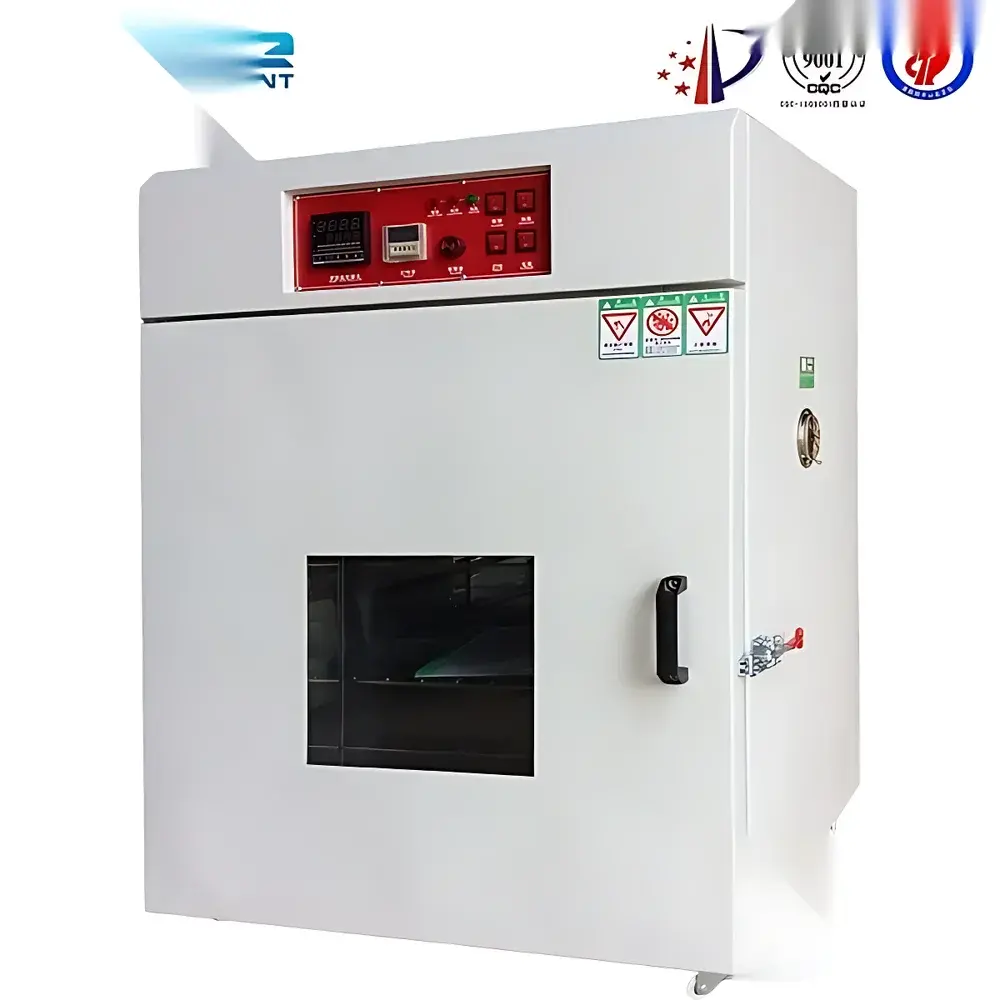
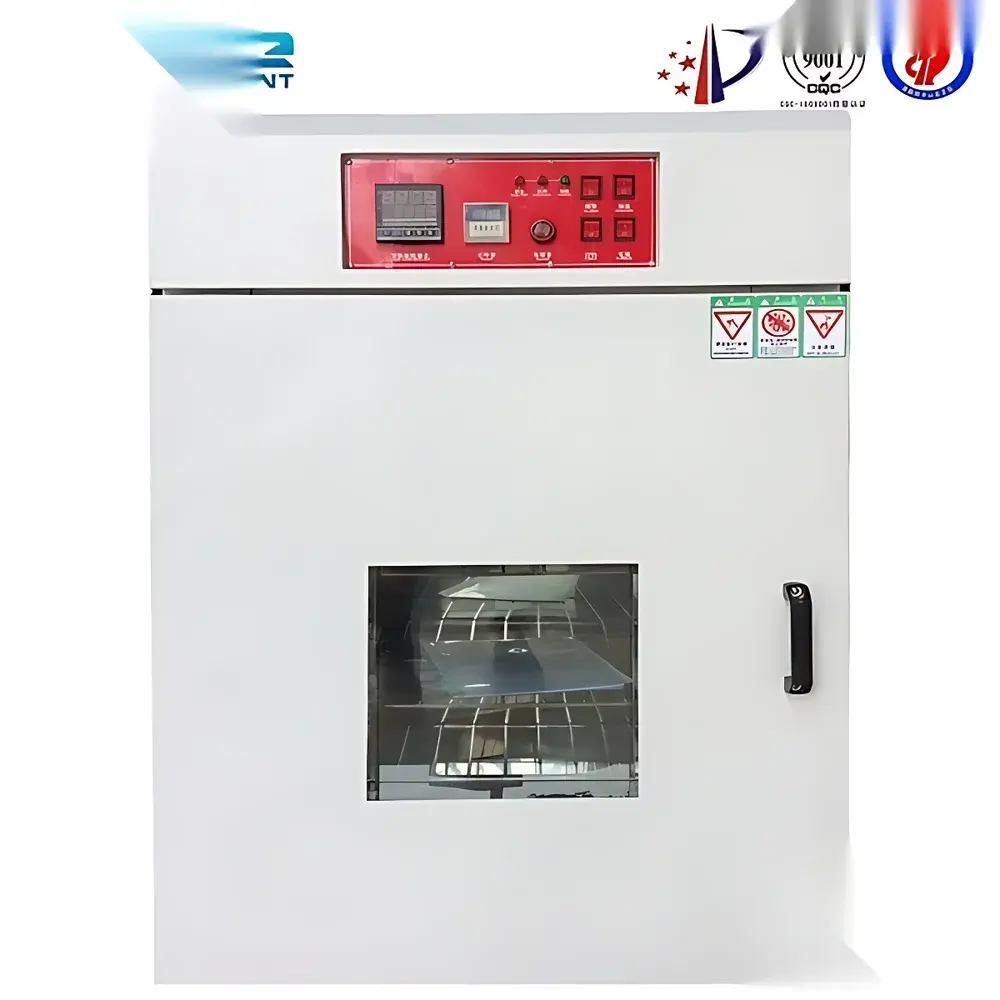
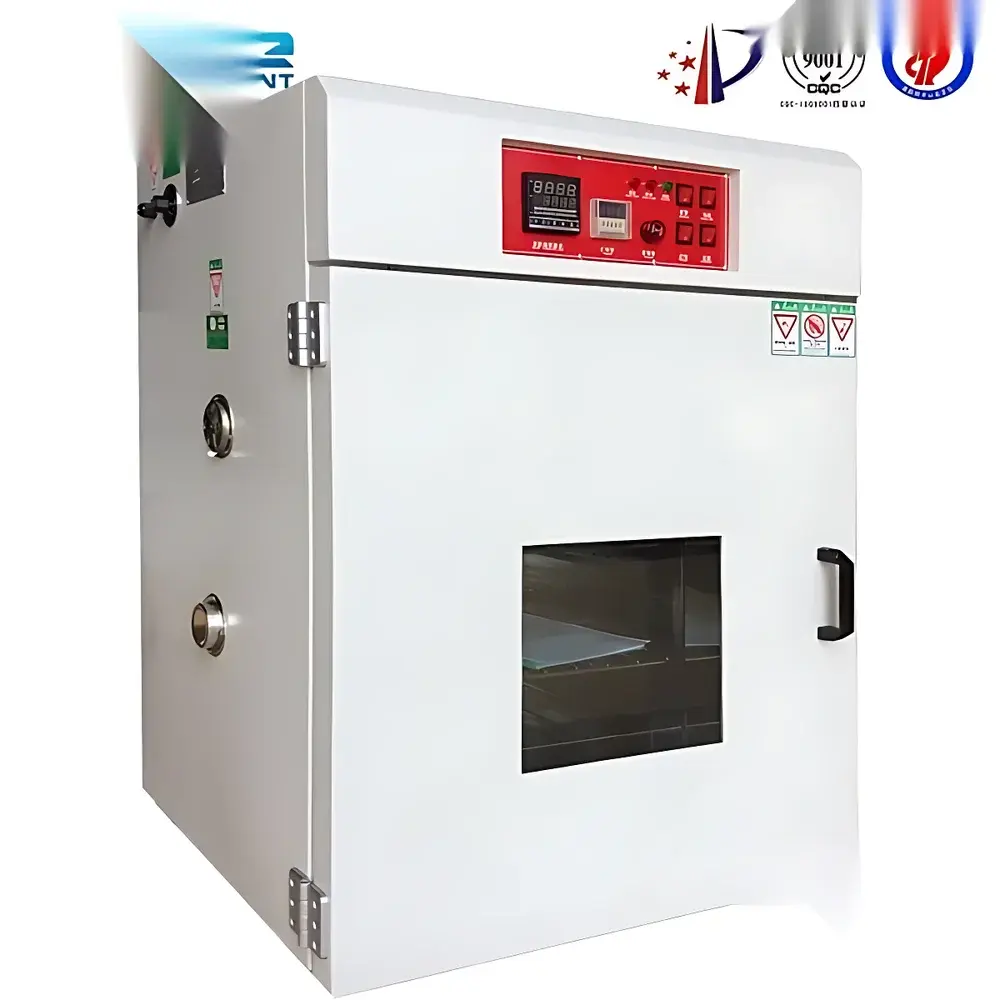
High Temperature Constant-Temperature Environmental Test Chamber
| Brand | OEM |
|---|---|
| Origin | Imported |
| Manufacturer Type | Authorized Distributor |
| Temperature Range | Ambient +20°C to 500°C |
| Construction | SECC External Shell + SUS304 Stainless Steel Interior |
| Insulation | Rigid Polyurethane Foam + Glass Fiber |
| Heating System | 2 kW Nickel-Chromium Far-Infrared Heaters (Independent High-Temp Circuit) |
| Control System | Fuji Electric PID Controller with SSR Output |
| Sensor | Pt100 Platinum Resistance Thermometer |
| Air Circulation | Forced Horizontal Airflow via High-Temperature Turbine Fan |
| Safety | Dual Overtemperature Protection (Fiber Thermal Cut-off + Microprocessor-Based Auto-Shutdown) |
| Compliance | Designed for ASTM D3045, ISO 4892-2, IEC 60068-2-2, and MIL-STD-810H thermal aging protocols |
Overview
The High Temperature Constant-Temperature Environmental Test Chamber is a precision-engineered thermal aging and stability evaluation system designed for rigorous qualification testing in aerospace, automotive, electronics, and materials science laboratories. It operates on the principle of controlled convective heat transfer within a thermally isolated chamber, enabling stable, uniform, and reproducible exposure of test specimens to elevated temperatures ranging from ambient +20°C up to 500°C. Unlike general-purpose ovens, this chamber integrates forced horizontal airflow, high-efficiency insulation, and closed-loop PID temperature regulation—ensuring spatial temperature uniformity ±1.5°C across the working volume and temporal stability within ±0.5°C over extended dwell periods. Its architecture supports both steady-state thermal stress evaluation and accelerated aging protocols required for reliability prediction, failure mode analysis, and material degradation studies under sustained high-temperature conditions.
Key Features
- Robust dual-layer construction: 1.2 mm cold-rolled SECC steel outer shell with electrostatic powder coating, paired with a seamless SUS304 stainless steel interior resistant to oxidation and thermal cycling fatigue.
- High-performance thermal insulation: 100 mm thick composite wall assembly comprising rigid polyurethane foam (λ ≈ 0.022 W/m·K) and glass fiber layers—minimizing heat loss and enabling rapid ramp rates while maintaining energy efficiency.
- Dedicated high-temperature heating subsystem: Two independent 2 kW far-infrared nickel-chromium alloy heaters mounted outside the chamber cavity, decoupled from the air circulation path to prevent localized hot spots and extend heater service life.
- Precision temperature control: Fuji Electric PXR series microprocessor-based PID controller with SSR solid-state relay output, supporting programmable ramp-soak profiles, auto-tuning, and real-time deviation monitoring.
- Uniform thermal distribution: Horizontally oriented high-temperature turbine fan (rated for continuous operation at 550°C) ensures laminar, low-turbulence airflow across the full test zone—validated per IEC 60068-3-5 for temperature homogeneity.
- Multi-tier safety architecture: Redundant overtemperature protection including mechanical glass-fiber thermal cut-off (set at 520°C), software-enforced upper limit (configurable up to 499°C), and automatic power cutoff upon sensor fault or airflow failure.
Sample Compatibility & Compliance
This chamber accommodates standard test specimens—including PCB assemblies, polymer components, battery cells, elastomeric seals, and coated metallic substrates—within customizable internal dimensions (standard models: 400 × 400 × 400 mm; custom configurations available). All structural and control systems conform to internationally recognized environmental testing standards: ASTM D3045 (thermal aging of plastics), ISO 4892-2 (plastics—exposure to laboratory light sources), IEC 60068-2-2 (dry heat testing), and MIL-STD-810H Method 501.5 (high temperature). The control firmware supports audit-ready logging (time-stamped temperature traces, setpoint history, alarm events) compliant with GLP and GMP documentation requirements, and optional integration with FDA 21 CFR Part 11–enabled data acquisition systems.
Software & Data Management
The embedded Fuji controller provides local HMI operation with password-protected parameter configuration, real-time trend display, and non-volatile storage of up to 100 test programs (each supporting multi-segment ramp/soak sequences). Optional Ethernet or RS-485 connectivity enables remote monitoring and centralized fleet management via industry-standard Modbus RTU or TCP protocols. Exported CSV logs include timestamp, chamber setpoint, measured chamber temperature (Pt100), heater output %, and status flags—facilitating post-test statistical analysis in MATLAB, JMP, or LIMS environments. All data records are time-synchronized to UTC and support digital signature verification for regulatory submission readiness.
Applications
- Accelerated thermal aging of polymers, adhesives, and encapsulants to predict long-term service life under elevated operating temperatures.
- Stress screening of electronic assemblies prior to burn-in or HALT/HASS testing.
- Evaluation of thermal stability and outgassing behavior of aerospace-grade composites per ECSS-Q-ST-70-02C.
- Validation of thermal endurance for automotive under-hood components (e.g., sensors, wiring harnesses, ECU housings) against ISO 16750-4.
- Pre-conditioning of reference materials and calibration standards prior to metrological characterization.
- Material compatibility testing for high-temperature sealing compounds and gasketing systems.
FAQ
What is the maximum allowable continuous operating temperature?
The chamber is rated for continuous operation at 500°C, with thermal safety margins validated for 1000+ hours at nominal load.
Can the chamber be integrated into an automated test cell?
Yes—standard Modbus RTU/TCP interface enables seamless integration with PLCs, SCADA systems, and test sequencing software such as NI TestStand or Keysight PathWave.
Is traceable calibration documentation provided?
Each unit ships with a factory calibration certificate (NIST-traceable Pt100 sensor), and optional UKAS-accredited calibration services are available upon request.
What maintenance intervals are recommended?
Fan bearing inspection every 2000 operational hours; heater resistance verification annually; insulation integrity assessment every 3 years or after physical impact.
Does the system support thermal shock profiling?
No—this is a constant-temperature and ramp-rate-controlled aging chamber; thermal shock capability requires a separate two-zone extreme temperature chamber configuration.



