
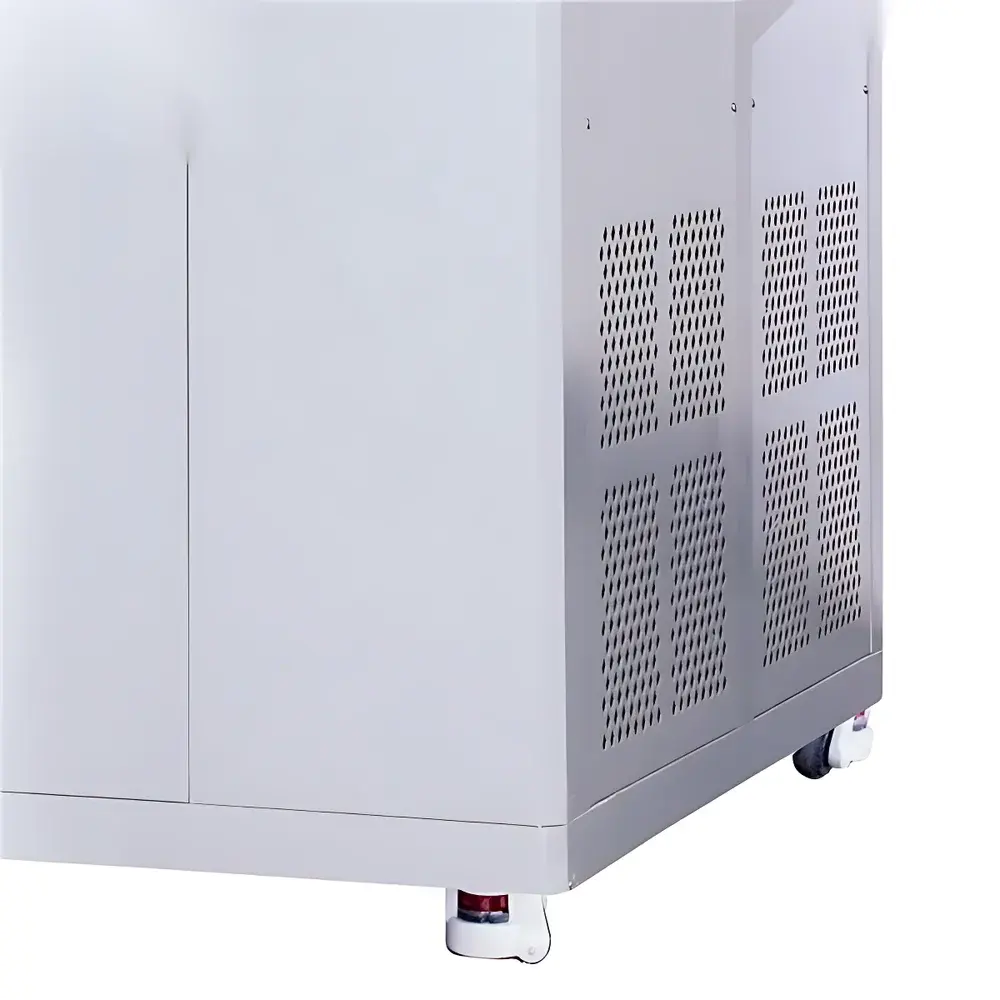
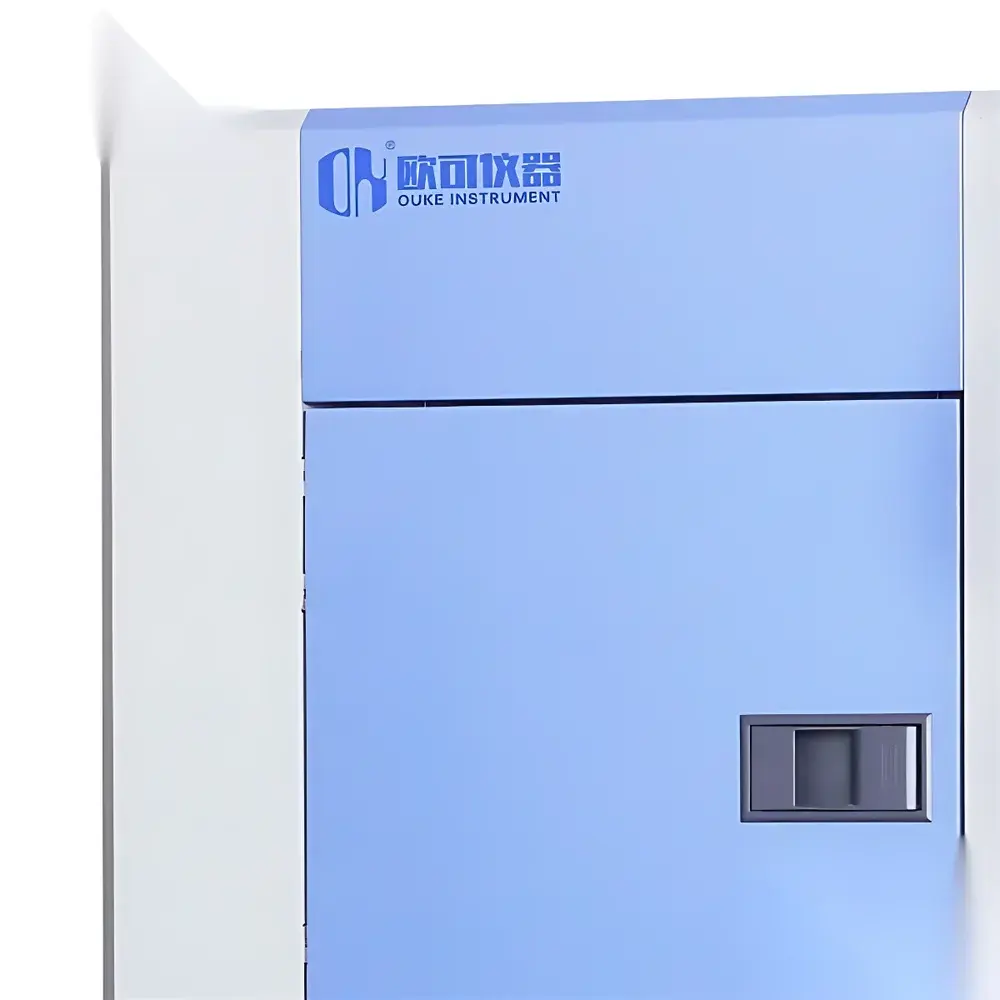
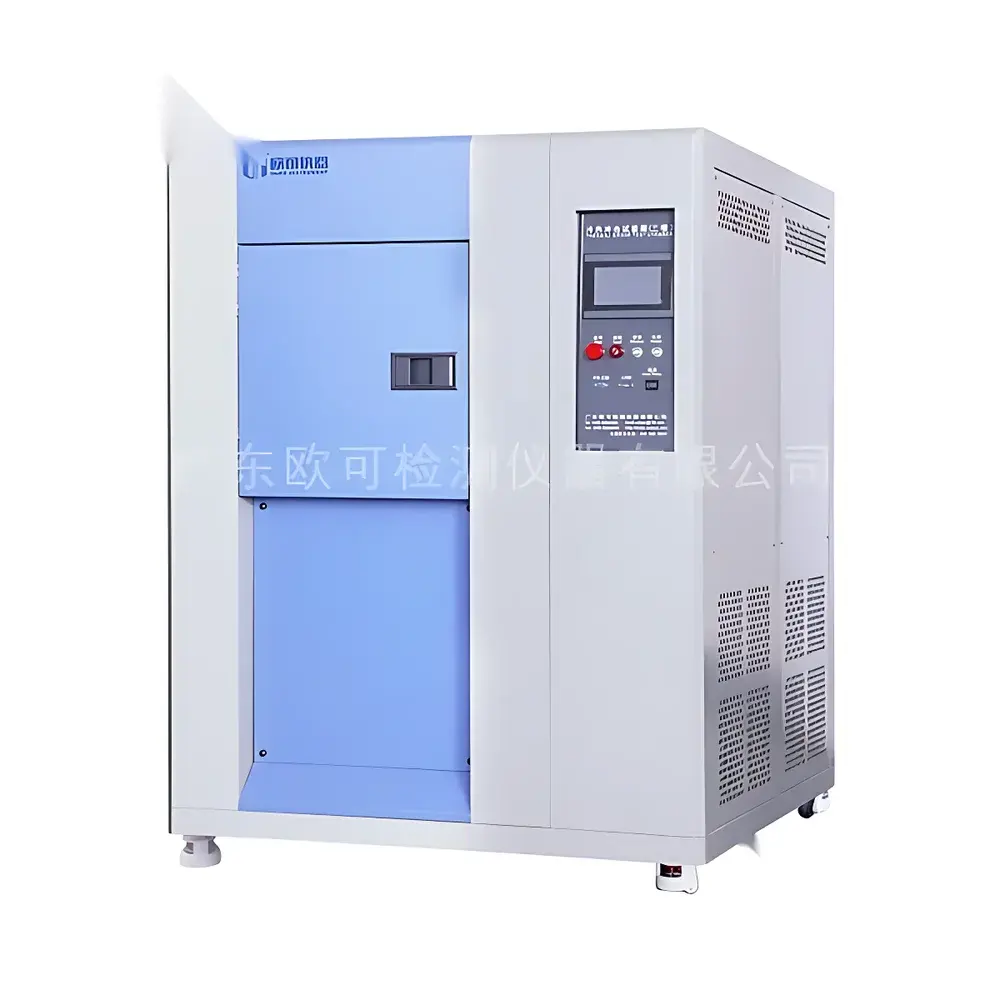
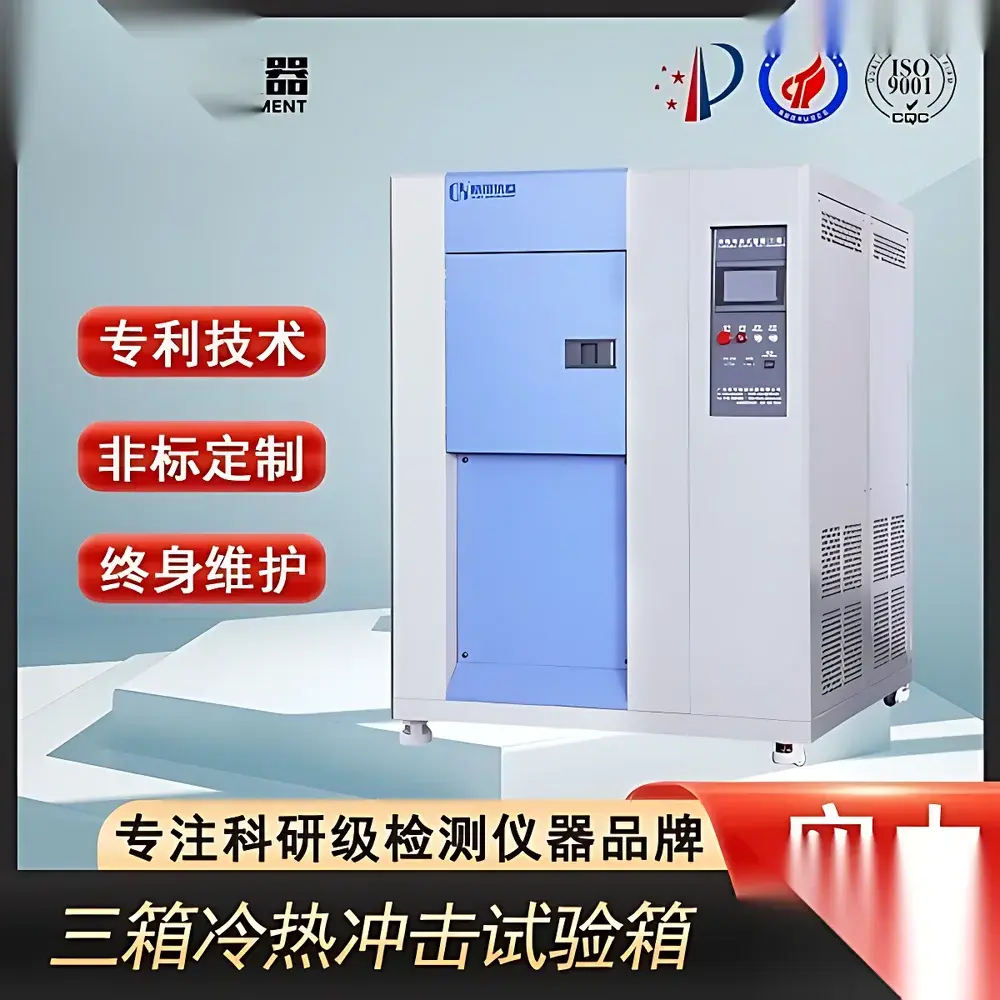
High-Temperature Thermal Shock Test Chamber – OK-HH Series (Customizable Benchtop & Floor-Standing Models)
| Key | Brand: Other Brands |
|---|---|
| Origin | Imported |
| Manufacturer Type | Authorized Distributor |
| Price | USD 12,500–18,000 (FOB) |
| Temperature Range (Hot Zone) | RT to +200 °C |
| Temperature Range (Cold Zone) | RT to −70 °C |
| Test Zone Range | +60 to +150 °C (Hot Shock), 0 to −65 °C (Cold Shock) |
| Transition Time (Door Switch) | < 5 s |
| Recovery Time | ≤ 5 min |
| Temp. Uniformity | ±2.0 °C |
| Temp. Control Accuracy | ±0.5 °C |
| Refrigeration System | Dual-Stage Cascade with Semi-Hermetic German Compressors |
| Refrigerant | R404A / R23 |
| Internal Construction | SUS#304 Mirror-Finish Stainless Steel |
| Insulation | High-Density Fire-Retardant PU Foam |
| Power Supply | AC 380 V ±5%, 50 Hz ±0.5 Hz, 3-Phase 5-Wire |
Overview
The OK-HH Series High-Temperature Thermal Shock Test Chamber is an engineered environmental simulation system designed for accelerated reliability assessment of materials and components under extreme, rapid temperature transitions. It operates on the principle of controlled thermal shock—inducing transient mechanical stress through repeated, high-rate exposure to divergent thermal extremes (e.g., +150 °C ↔ −65 °C). Unlike steady-state thermal cycling chambers, this system delivers discrete, high-magnitude temperature steps via physically isolated hot and cold reservoirs, enabling precise replication of field-relevant thermal fatigue conditions encountered in aerospace avionics, automotive ECUs, power electronics packaging, and military-grade PCB assemblies. The chamber supports both two-zone (hot/cold) and three-zone (hot/cold/test) configurations, with the OK-HH models utilizing a stationary test specimen design—where the sample remains fixed in the central test chamber while thermally isolated zones are alternately engaged via pneumatic air-lock doors. This architecture eliminates mechanical vibration from moving baskets and ensures superior thermal stability during dwell phases.
Key Features
- Configurable dual- or triple-chamber architecture optimized for reproducible thermal shock profiles per MIL-STD-810H Method 503.5, IEC 60068-2-14 (Test N), and GJB 150.5-2009.
- Dual-stage cascade refrigeration system using semi-hermetic compressors (Germany-sourced), delivering stable operation down to −70 °C in the cold zone and up to +200 °C in the hot zone.
- High-efficiency evaporative condenser interface between stages enables efficient heat rejection and consistent cooling capacity across ambient variations.
- Energy modulation control logic dynamically adjusts compressor loading and expansion valve timing to maintain setpoint accuracy while minimizing energy consumption and component wear.
- SUS#304 mirror-finish stainless steel interior (corrosion-resistant, non-outgassing) and reinforced fire-retardant polyurethane insulation (≥150 mm thickness) ensure long-term dimensional stability and thermal integrity.
- Integrated pneumatic door actuation with nitrogen-purged seals guarantees sub-5-second zone transition and prevents cross-contamination between thermal reservoirs.
- Standardized 50 mm diameter cable port (stainless steel flange) and two-tier adjustable SUS#304 test racks support flexible DUT integration without compromising chamber sealing.
Sample Compatibility & Compliance
The OK-HH Series accommodates specimens up to 70 × 60 × 60 cm (W×H×D) and is routinely deployed for qualification testing of metallic alloys (e.g., aluminum 6061-T6, Inconel 718), thermoplastics (PP, PEEK, LCP), elastomeric seals, solder-joint assemblies, and hermetically sealed optoelectronic modules. Its operational envelope satisfies critical regulatory and industry-specific requirements including: ASTM D6987 (thermal cycling of polymer composites), ISO 16750-4 (road vehicles—electrical disturbances), USP (thermal stress testing of pharmaceutical packaging), and DO-160G Section 4.5 (temperature shock for airborne equipment). All units are supplied with factory calibration certificates traceable to NIST standards and support GLP/GMP-compliant audit trails when integrated with optional data logging hardware.
Software & Data Management
Equipped with a 7-inch industrial touchscreen HMI running embedded Linux-based controller firmware, the chamber provides real-time monitoring of zone temperatures, door status, compressor discharge pressure, refrigerant saturation points, and safety interlock states. Optional Ethernet/IP or RS-485 Modbus TCP connectivity enables integration into centralized MES or LabVantage environments. Data export formats include CSV and PDF reports compliant with FDA 21 CFR Part 11 requirements—including electronic signatures, user-level access controls, and immutable audit logs for all parameter changes and cycle executions. Firmware supports user-defined test sequences (up to 99 segments), ramp/soak profiles, and automatic pass/fail evaluation against preset tolerance bands.
Applications
- Qualification of die-attach adhesives and underfill materials under JEDEC JESD22-A104 thermal shock protocols.
- Evaluation of thermal mismatch-induced delamination in multilayer ceramic capacitors (MLCCs) and SiC MOSFET modules.
- Validation of conformal coating integrity on printed circuit boards subjected to automotive under-hood thermal transients (SAE J2223).
- Accelerated aging studies of lithium-ion battery cell housings and thermal interface materials (TIMs) per UL 1642 Annex B.
- Reliability screening of MEMS sensors and RF front-end modules prior to AEC-Q200 stress grading.
- Material compatibility testing for cryogenic-to-high-temperature instrumentation used in satellite payload systems.
FAQ
What distinguishes a two-zone versus three-zone thermal shock chamber?
Two-zone systems alternate between hot and cold reservoirs using a single test space; three-zone variants isolate the test specimen continuously in a neutral chamber while hot/cold zones pre-condition independently—reducing thermal inertia effects and improving repeatability for high-precision metrology applications.
Is external cooling water required for operation?
Yes. The dual-stage cascade system requires a dedicated closed-loop water-cooling circuit with ≥10 m³/h flow rate and ≤32 °C inlet temperature. A standalone cooling tower (user-supplied) must be installed outdoors per ASHRAE Guideline 12-2020.
Can the chamber be validated for IQ/OQ/PQ protocols?
Yes. Full validation documentation packages—including URS, FDS, SAT, and protocol templates aligned with ISO/IEC 17025 and Annex 11—are available upon request and supported by third-party accredited calibration services.
What refrigerants are used, and are they compliant with current environmental regulations?
R404A (high-temp stage) and R23 (low-temp stage) are employed. Both are EPA SNAP-approved and meet EU F-Gas Regulation (EU) No 517/2014 phase-down schedules for laboratory-scale equipment with annual charge < 10 kg.
Does the system support remote monitoring and alarm notification?
Standard SNMP v2c and SMTP alerting are included. Email/SMS notifications can be configured for critical faults (e.g., door left open >30 s, temperature deviation >±3 °C for >60 s, compressor overload).



