
Hiscore Halocounter High-Throughput, Consumable-Free Automated Cell Counter
| Brand | Hiscore |
|---|---|
| Origin | Beijing, China |
| Model | Halocounter |
| Detection Time | 3 s |
| Cell Concentration Range | 1×10³–3×10⁷ cells/mL |
| Sample Volume | 5–40 µL |
| Throughput | 2–8 samples per run |
| Detectable Cell Diameter | 0.8–400 µm |
| Regulatory Compliance Option | FDA 21 CFR Part 11 Audit Trail (Software Module) |
Overview
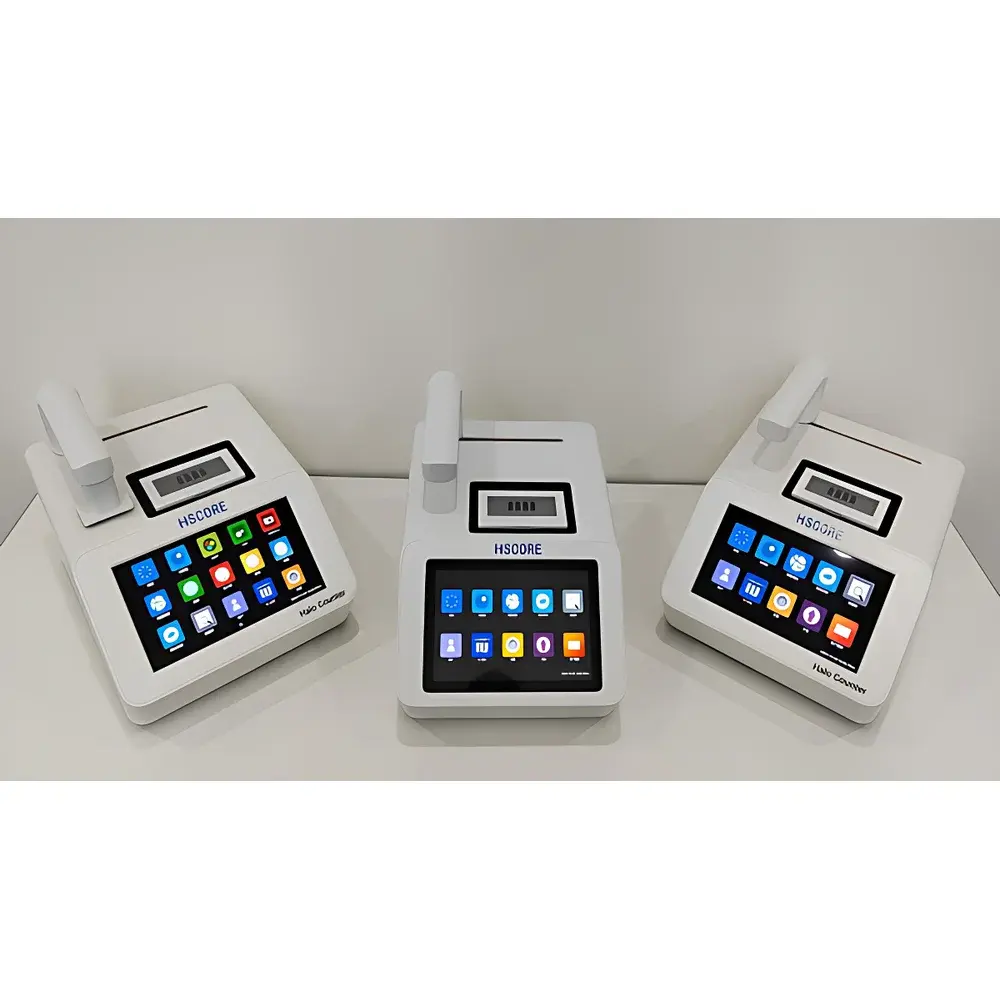
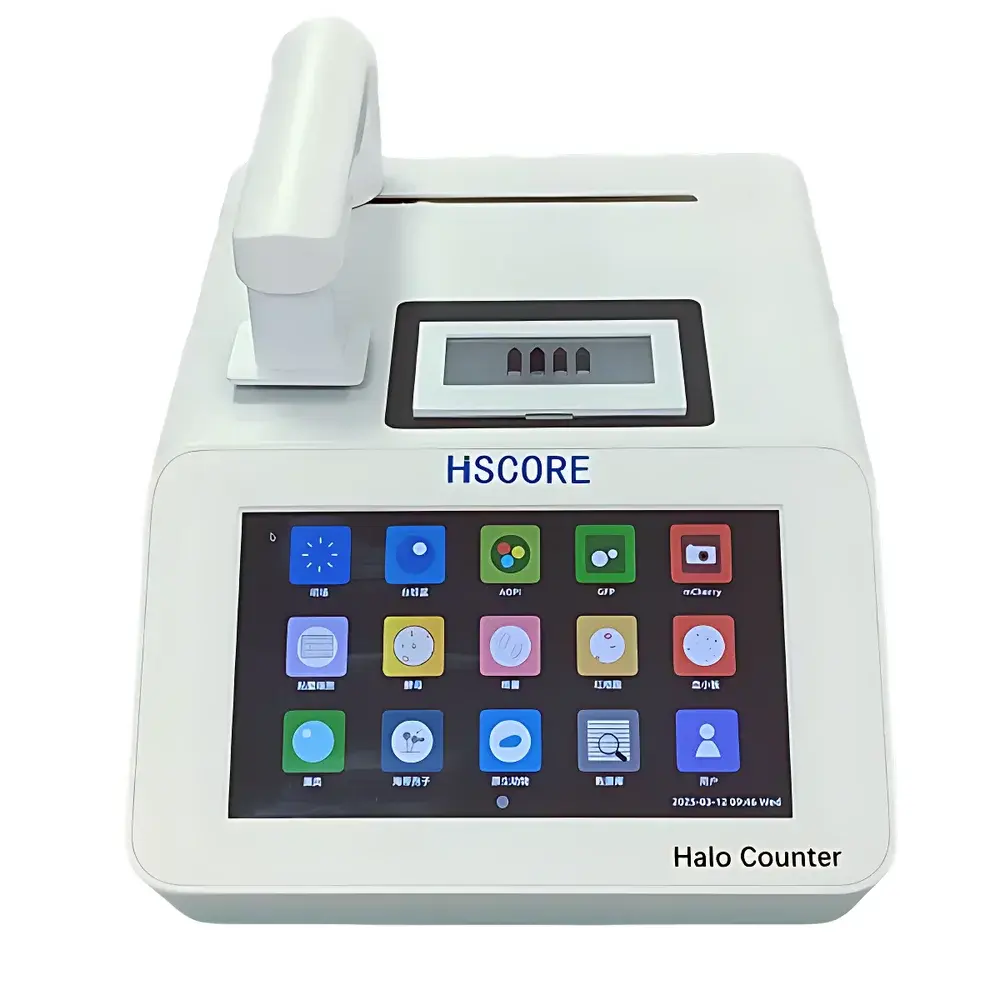
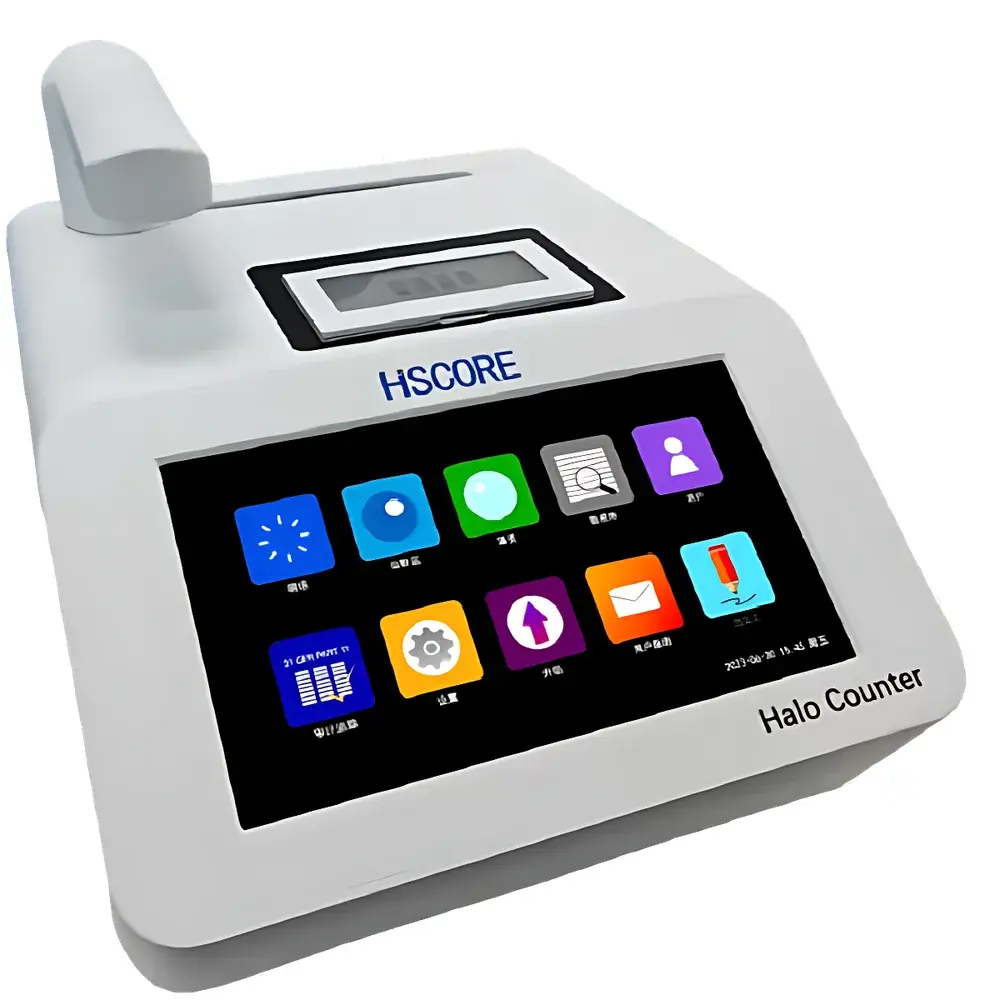
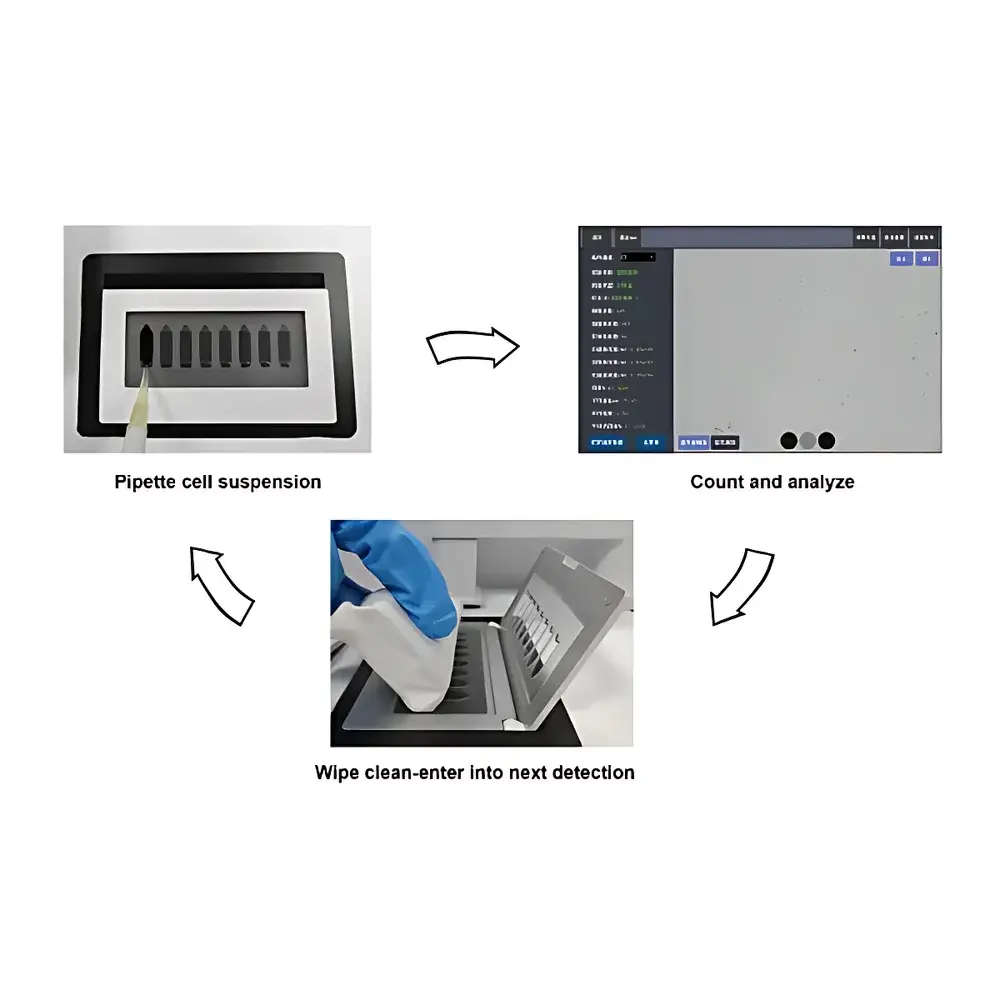
The Hiscore Halocounter is a patent-protected, high-throughput automated cell counter engineered for precision, reproducibility, and operational efficiency in modern life science laboratories. Unlike conventional impedance- or trypan blue-based counters reliant on disposable slides or capillary chambers, the Halocounter employs a consumable-free optical imaging platform based on high-resolution brightfield microscopy coupled with proprietary AI-driven image segmentation and morphometric analysis. Its core innovation lies in a fixed-position quartz sample stage—coated with a hydrophilic nanomaterial layer—that eliminates capillary action artifacts, bubble formation, and residual carryover. This architecture enables direct pipette-based loading onto a rigid, non-movable surface, thereby removing mechanical drift and positional variability that compromise accuracy in slide-based systems. Designed specifically for both suspension and adherent cell workflows, the Halocounter delivers quantitative viability, confluence, transfection efficiency, and morphology metrics without enzymatic detachment—a critical advancement for longitudinal monitoring of cultured cells under physiological conditions.
Key Features
- Consumable-Free Operation: Eliminates dependence on single-use counting chambers, reducing cost-per-test, plastic waste, and calibration drift associated with disposable optics.
- Fixed Quartz Imaging Stage: Precision-ground fused quartz substrate with nano-engineered surface chemistry ensures uniform wetting, zero sample retention, and sub-micron optical flatness for consistent focus and contrast across all channels.
- Sub-3-Second Quantification: Full-field image capture and AI-powered cell recognition completed within ≤3 seconds per sample—enabling rapid screening of multi-well plates without thermal or phototoxic stress.
- Adherent-Cell In Situ Analysis: Integrated Halo Box module supports direct imaging and analysis of cells in standard culture vessels (6–96-well plates, Petri dishes, T25 flasks), enabling real-time confluence tracking and transfection efficiency quantification without trypsinization.
- Wide Dynamic Range: Validated performance across 1×10³ to 3×10⁷ cells/mL and particle diameters from 0.8 µm to 400 µm—covering bacteria, yeast, mammalian cells, spheroids, and primary isolates.
- GxP-Ready Software Architecture: Optional 21 CFR Part 11-compliant software package includes electronic signatures, audit trail logging, role-based access control, and data integrity safeguards aligned with GLP/GMP laboratory practices.
Sample Compatibility & Compliance
The Halocounter accommodates diverse biological matrices—including PBMC suspensions, CHO bioreactor harvests, iPSC aggregates, and confluent monolayers—with no requirement for dilution, staining, or centrifugation. Its optical design avoids fluorescence excitation, making it compatible with live-cell dyes, GFP-tagged lines, and label-free phenotypic assays. The system complies with ISO 21571:2021 (Biotechnology — Methods for enumeration of viable cells) for suspension counting validation protocols. When configured with the regulated software suite, it meets documentation and traceability requirements specified in USP <1043>, ASTM E2577-20, and FDA guidance on computerized system validation (CSV) for analytical instrumentation used in clinical or manufacturing environments.
Software & Data Management
Powered by a full-stack AI inference engine trained on >2.4 million annotated cell images, the Halocounter’s software performs auto-focus optimization, adaptive thresholding, clump deconvolution, and subcellular feature extraction—including nuclear/cytoplasmic ratio, circularity, and texture heterogeneity. All processing occurs locally on an embedded industrial-grade GPU; no cloud upload or external dependency is required. Raw images, processed masks, and metadata are stored in vendor-neutral TIFF + JSON format, supporting integration with LIMS platforms via RESTful API. Batch reporting templates conform to CLIA and CAP reporting standards, with optional CSV/Excel export for statistical packages (R, Prism, Python pandas). Audit trail records include timestamped user actions, parameter changes, and result revisions—fully searchable and exportable for internal QA review or regulatory inspection.
Applications
- High-frequency viability monitoring during bioprocess development and QC release testing
- CRISPR/Cas9 and lentiviral transfection efficiency assessment in adherent cultures
- Organoid and spheroid size distribution profiling in 3D culture models
- Primary immune cell enumeration in clinical trial sample workflows
- Stem cell expansion quality control under cGMP-aligned SOPs
- Antibody-dependent cellular cytotoxicity (ADCC) assay endpoint quantification
FAQ
Does the Halocounter require calibration with reference beads or standard cell lines?
No—its optical path and AI model are factory-validated against NIST-traceable microsphere standards and certified cell reference materials (ATCC CCL-2 and ECACC 93021013). Routine user calibration is not required; periodic verification using supplied control suspensions is recommended every 30 days.
Can the system distinguish between live/dead cells without dye staining?
It provides label-free confluence and density metrics with high fidelity, but definitive viability classification requires optional integration with AO/PI or Calcein-AM imaging modules—available as hardware add-ons.
Is remote instrument monitoring supported?
Yes—via secure TLS-encrypted web interface accessible through institutional VPNs; supports real-time status dashboards, queue management, and push notifications for completion or error events.
What maintenance is required for the quartz sample stage?
A single lint-free wipe with 70% ethanol after each run is sufficient; no ultrasonic cleaning, polishing, or replacement is needed over the instrument’s rated service life (>50,000 measurements).
How does the system handle highly heterogeneous or aggregated samples?
The AI engine applies hierarchical clustering and topology-aware segmentation to resolve partial occlusions and variable brightness gradients—validated on tumor-derived ascites fluid and macrophage-lymphocyte co-cultures with >92.4% concordance vs. manual hemocytometer counts (n=142, CV <4.7%).
Related Products






