
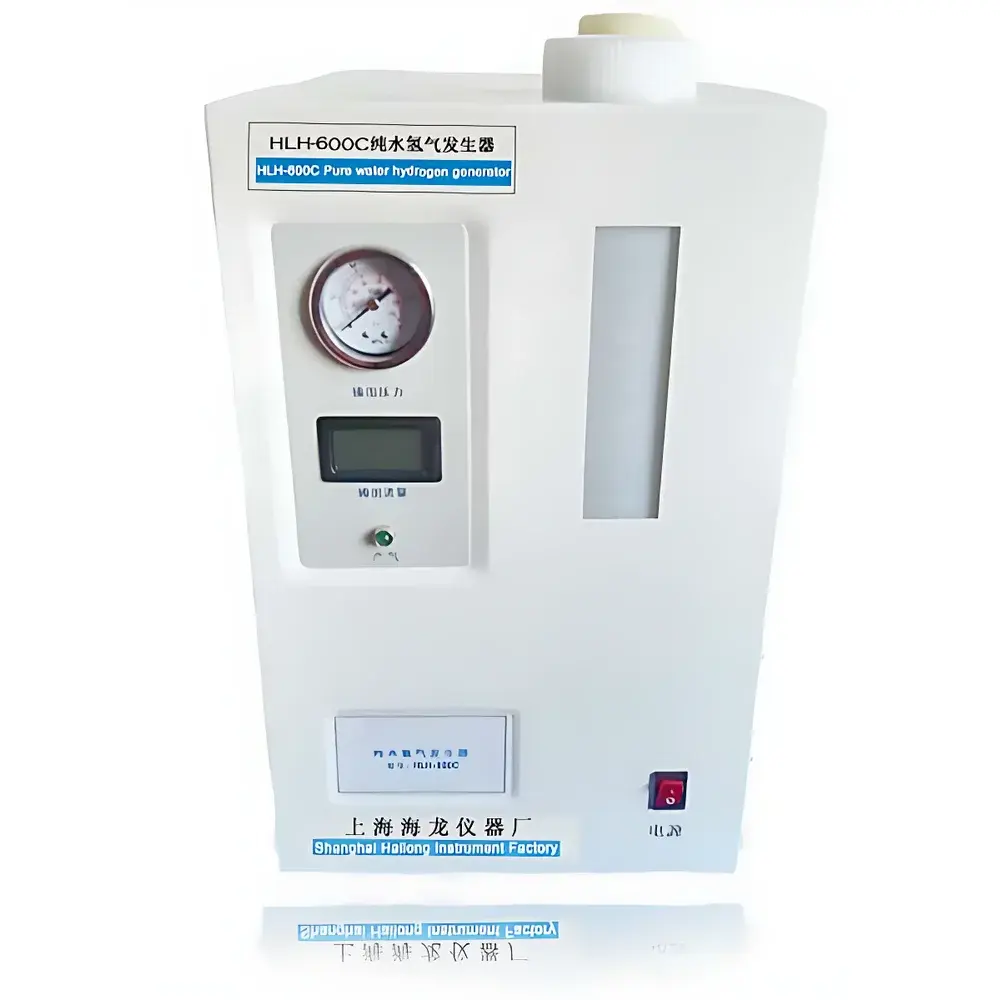
HLH Pure-Water Hydrogen Generator Series (Models: HLH-200C, HLH-300C, HLH-600C, HLH-1000C, HLH-2000C, HLH-3000C)
| Brand | HLH |
|---|---|
| Origin | Shanghai, China |
| Model Range | HLH-200C / HLH-300C / HLH-600C / HLH-1000C / HLH-2000C / HLH-3000C |
| Hydrogen Generation Principle | Proton Exchange Membrane (PEM) Electrolysis of Deionized Water |
| Output Flow Rate | 0–200 mL/min |
| Output Pressure | 0.4 MPa |
| Hydrogen Purity | 99.999% |
| Pressure Stability | < ±0.001 MPa |
| Power Consumption | 200 W |
| Input Water Resistivity | ≥ 2 MΩ·cm (deionized or double-distilled water) |
| Dimensions (W×D×H) | 350 × 220 × 340 mm |
| Net Weight | 12 kg |
Overview
The HLH Pure-Water Hydrogen Generator Series is a line of laboratory-grade hydrogen gas generators engineered for precision, safety, and long-term operational reliability in analytical instrumentation environments. Utilizing proton exchange membrane (PEM) electrolysis technology, these units produce high-purity hydrogen directly from deionized water—eliminating the need for caustic alkaline electrolytes or compressed gas cylinders. The core electrolyzer employs titanium electrodes and a solid polymer electrolyte membrane, enabling efficient, low-oxygen (<0.1 ppm O₂) hydrogen generation via electrochemical water splitting. At the cathode, hydrogen gas is evolved; at the anode, oxygen is generated and safely vented to atmosphere. Integrated gas–water separation and dual-stage desiccant drying ensure consistent delivery of dry, ultra-high-purity H₂ (99.999%) at a stable output pressure of 0.4 MPa. Designed for continuous operation with zero standby consumption, the system features intelligent demand-based control: hydrogen is produced only when required by downstream equipment, minimizing energy use and extending component lifetime.
Key Features
- Proton exchange membrane (PEM) electrolysis technology with titanium electrodes and Nafion™-type solid polymer electrolyte
- Zero chemical electrolyte requirement—uses only ≥2 MΩ·cm deionized or double-distilled water as feedstock
- Automatic pressure and flow regulation with real-time feedback control; pressure stability maintained within ±0.001 MPa
- Dual-stage moisture removal: integrated gas–water separator followed by high-capacity desiccant drying column
- Intelligent on-demand operation—no hydrogen production during idle periods, reducing power consumption and thermal stress
- Compact benchtop footprint (350 × 220 × 340 mm) and lightweight design (12 kg net), optimized for fume hood or instrument cabinet integration
- Comprehensive safety architecture including over-pressure relief valve, leak detection circuit, and automatic shutdown on low-water or high-temperature conditions
Sample Compatibility & Compliance
The HLH series is compatible with all major hydrogen-dependent analytical instruments, including gas chromatographs (GC), GC–MS systems, flame ionization detectors (FID), thermal conductivity detectors (TCD), and hydrogen fuel cell applications requiring ultra-high-purity carrier or fuel gas. It meets essential laboratory safety and performance benchmarks, including ISO 8573-1:2010 Class 1 compressed air purity equivalency for gaseous contaminants (O₂ < 0.1 ppm, H₂O dew point ≤ −40 °C), and complies with IEC 61010-1 for electrical safety in laboratory equipment. While not certified to FDA 21 CFR Part 11 out-of-the-box, its digital control interface supports audit-trail-ready data logging when integrated with validated LIMS or instrument control software under GLP/GMP workflows.
Software & Data Management
The generator operates via embedded microcontroller logic with no external software dependency. All operational parameters—including real-time pressure, flow setpoint, water level status, and temperature—are displayed on a high-contrast LED interface. For integration into automated laboratories, optional RS-232 or analog 0–5 V output ports enable remote monitoring and interlock signaling with GC or other host instruments. Logged operational events (e.g., start/stop cycles, alarm triggers, maintenance alerts) are retained in non-volatile memory for traceability. When deployed in regulated environments, users may configure external SCADA or LabArchives-compatible systems to capture timestamped operational metadata for compliance reporting.
Applications
- Carrier gas supply for capillary GC and GC–MS analysis, eliminating cylinder changeover and associated contamination risks
- Fuel gas source for FID and TCD detectors requiring stable, low-oxygen hydrogen
- Hydrogen supply for portable fuel cells, catalytic hydrogenation reactors, and materials science glovebox purging
- On-site, on-demand hydrogen for semiconductor process validation and surface passivation studies
- Research-grade hydrogen generation in academic and pharmaceutical labs where gas purity, reproducibility, and operational continuity are critical
FAQ
What type of water is required for optimal operation?
Deionized water with resistivity ≥ 2 MΩ·cm (or double-distilled water) is mandatory. Tap water, tap-deionized blends, or low-resistivity water will degrade membrane performance and shorten service life.
Can the generator be used continuously for 24/7 operation?
Yes—designed for unattended, continuous duty cycles. The PEM stack and drying system are rated for >10,000 hours of cumulative operation under recommended maintenance intervals.
Is hydrogen purity verified independently per unit?
Each unit undergoes factory calibration and purity verification using calibrated thermal conductivity analyzers; certificate of conformance includes measured O₂ and H₂O content at rated flow and pressure.
How often does the desiccant require replacement?
Under typical lab use (≤8 hrs/day, 5 days/week), the dual-stage desiccant cartridge requires replacement every 12–18 months. A built-in humidity indicator provides visual end-of-life notification.
Does the system support pressure modulation for variable instrument demands?
No—output pressure is fixed at 0.4 MPa (±0.001 MPa). For instruments requiring lower or adjustable backpressure, an external pressure regulator must be installed downstream.
Related Products



