
HOGON AT-1 Economic-Grade Automatic Potentiometric Titrator
| Brand | HOGON |
|---|---|
| Origin | Shanghai, China |
| Manufacturer Type | Direct Manufacturer |
| Instrument Category | Domestic |
| Model | AT-1 |
| Instrument Type | General-Purpose Potentiometric Titrator |
| Application Scope | Universal |
| Measurement Range | mV: −2000 mV to +2000 mV |
| Meter Accuracy | ±0.5% of full scale |
| Meter Resolution | 0.1 mV |
| Titration Accuracy | ±0.8 mV/h |
| Titration Resolution | 0.1 mV |
Overview
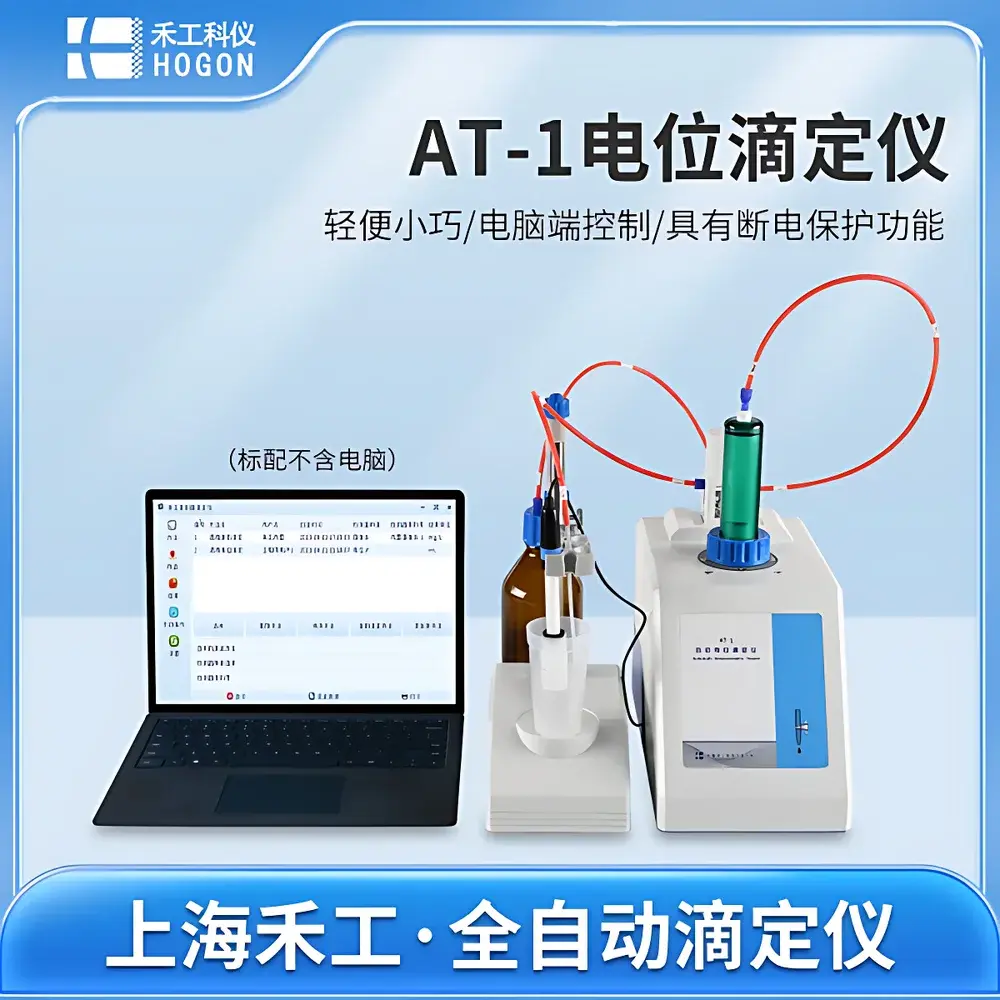
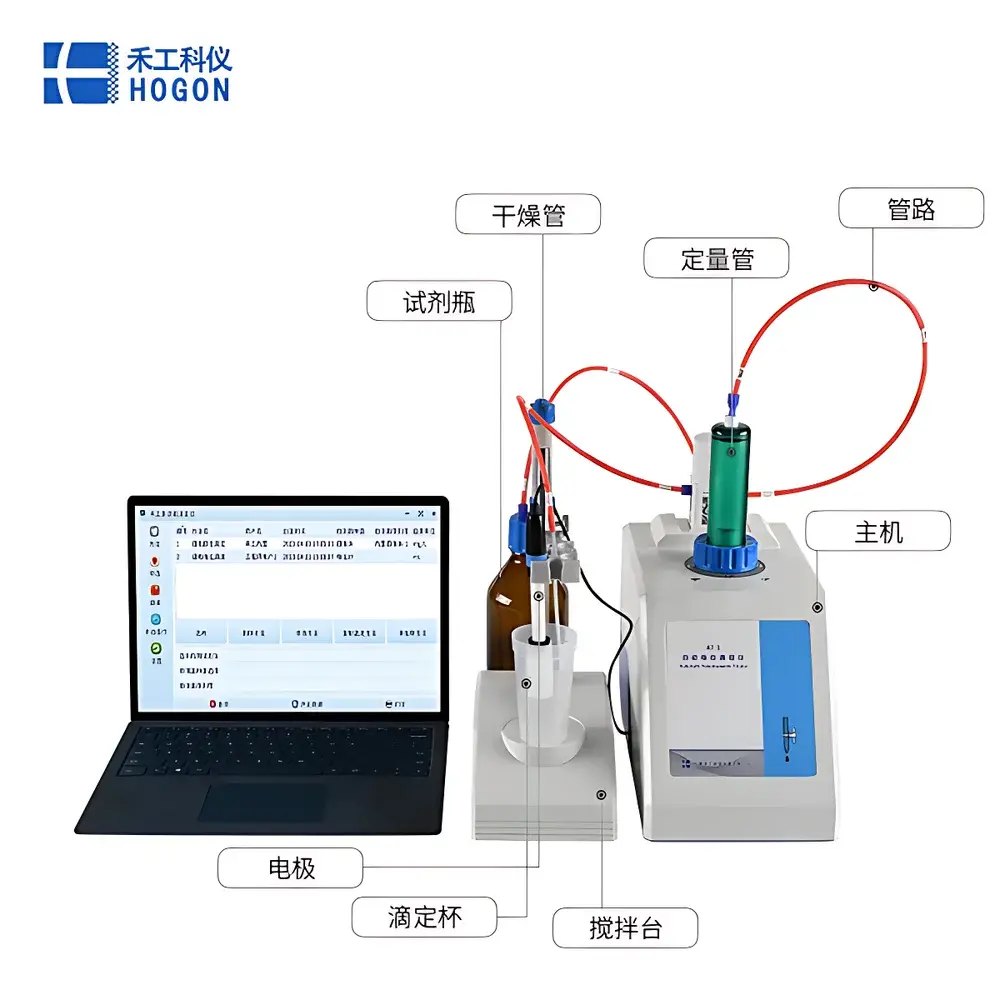
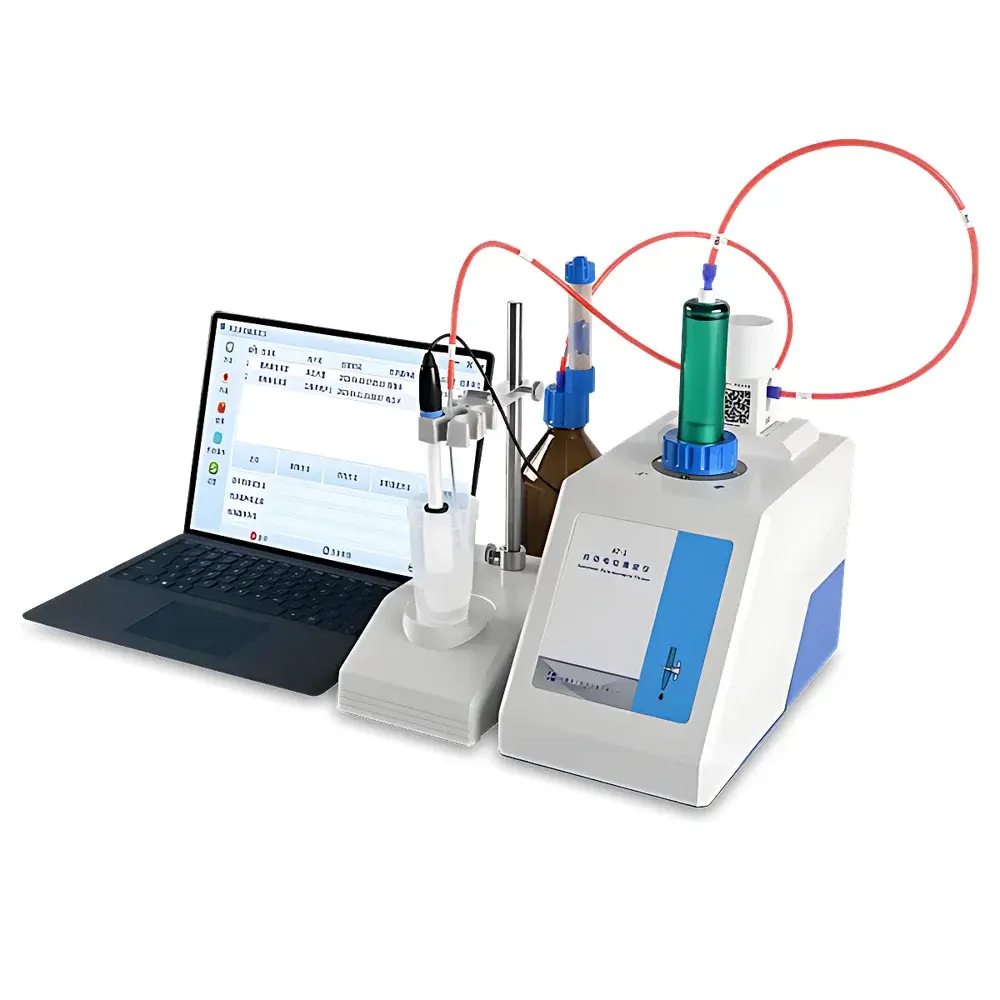
The HOGON AT-1 Economic-Grade Automatic Potentiometric Titrator is a compact, USB-connected benchtop instrument engineered for precision volumetric analysis in regulated and academic laboratory environments. It operates on the fundamental principle of potentiometric titration—measuring the potential difference between a reference electrode and an indicator electrode as a function of titrant volume added—enabling accurate endpoint detection via inflection point analysis of the E–V (potential vs. volume) curve. Designed with direct lineage from HOGON’s validated Karl Fischer titration platform, the AT-1 integrates a maintenance-free high-precision burette system capable of delivering titrant increments down to 3 µL, supporting both aqueous and non-aqueous titrations—including acid-base, redox, complexometric, and precipitation reactions. Its modular electrode architecture accommodates standard combination pH electrodes, separate reference/measuring electrodes, temperature probes, and specialized sensors for non-aqueous media (e.g., perchloric acid-resistant materials), ensuring broad method adaptability without hardware modification.
Key Features
- USB-based PC control with intuitive Windows-compatible software—no dedicated controller required; all operation, real-time monitoring, and data export managed via host computer.
- Multi-mode endpoint detection algorithms: dynamic equivalence point (1st derivative), incremental equivalence point, fixed-potential/pH threshold, EP mode, and manual endpoint override—configurable per method.
- Dual-resolution measurement: 0.1 mV / 0.001 pH / 0.1 °C for electrode signal acquisition; 0.1 mV / 0.01 pH / 0.1 °C for titration output reporting—ensuring traceable resolution across signal chain.
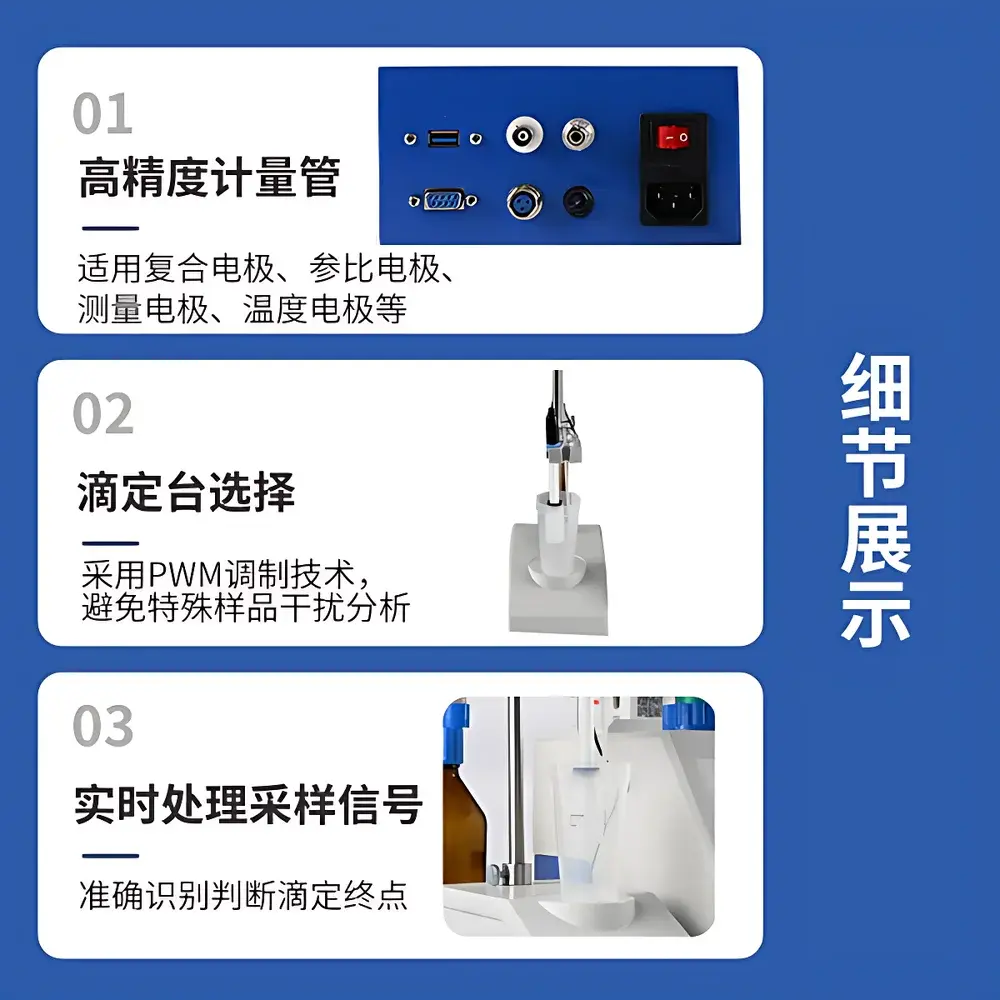
- PWM-controlled magnetic stirrer with adjustable speed profile—minimizes vortex-induced noise and electrode disturbance during titration of viscous or heterogeneous samples.
- Integrated GLP-compliant data management: user authentication with role-based access control (admin/operator), audit-trail-enabled parameter logging, automatic PDF report generation with embedded titration curves and derivative plots (1st and 2nd order), and unlimited record storage.
- Robust hardware safeguards: automated burette rinsing sequence post-titration, overfill/underfill protection, emergency stop logic, and power-failure memory retention preserving method settings and raw data.
- Modular electrode interface supporting BNC, DIN, and mini-DIN connectors—compatible with glass pH electrodes, Ag/AgCl reference electrodes, Pt redox electrodes, ion-selective electrodes (ISEs), and temperature-compensated probes.
Sample Compatibility & Compliance
The AT-1 supports diverse sample matrices across pharmaceutical QC, environmental testing, petrochemical QA, food safety labs, and university teaching. Its non-aqueous titration capability—enabled by corrosion-resistant fluid path components (including PTFE and Hastelloy-compatible seals)—permits safe use with acetic anhydride, glacial acetic acid, and perchloric acid-based titrants. Temperature compensation is applied in real time using integrated Pt100 or NTC thermistors, meeting ISO 8655-5 (burette accuracy) and ASTM E2087 (potentiometric titration practice) requirements. Data integrity conforms to FDA 21 CFR Part 11 principles through electronic signatures, immutable audit trails, and secure user-level permissions—facilitating GMP/GLP audits without third-party validation add-ons.
Software & Data Management
The proprietary titration software provides method-driven workflow automation: preloaded templates for common applications (e.g., total acidity in wine, chloride in wastewater, peroxide value in oils) are editable and saveable as .TMD files. Real-time visualization includes synchronized dual-axis plots (mV/pH vs. volume; dE/dV vs. volume), with zoom, cursor-assisted endpoint re-evaluation, and overlay comparison of up to six runs. All raw data (timestamped voltage, volume, temperature, derivative values) are stored in open CSV format alongside metadata (operator ID, method name, calibration history). PDF reports include instrument ID, serial number, firmware version, calibration certificates, and digital signature fields—fully compliant with ISO/IEC 17025 documentation standards.
Applications
- Pharmaceutical: assay of active ingredients (e.g., amine hydrochlorides via non-aqueous titration), excipient purity (carbonate/bicarbonate content), and residual solvent quantification.
- Food & Beverage: titratable acidity (TA) in juices, free fatty acid (FFA) determination in edible oils, chloride in dairy products, and sulfur dioxide in wines.
- Environmental: alkalinity and hardness profiling in surface water, cyanide in industrial effluents, and fluoride in drinking water using ISE coupling.
- Chemical Manufacturing: concentration verification of acids/bases in bulk reagents, catalyst residue analysis, and stoichiometric validation of synthesis intermediates.
- Academic Research: kinetic studies of proton transfer reactions, pKa determination via Gran plot analysis, and multi-step titration modeling for polyprotic systems.
FAQ
Does the AT-1 support Good Laboratory Practice (GLP) documentation requirements?
Yes—the system enforces user login with password-protected roles, records all method changes and manual interventions in a tamper-evident audit trail, and generates timestamped, digitally signed PDF reports containing full analytical metadata.
Can the instrument perform temperature-compensated pH titrations?
Yes—integrated temperature sensing enables automatic Nernstian correction during pH-based titrations, and the software applies ISO 31-8–compliant temperature coefficients to calculated concentrations.
What burette volumes are supported, and how is precision maintained at low dispense volumes?
Standard configurations include 10 mL and 20 mL glass burettes with PTFE stopcocks; volumetric accuracy is maintained to ±3 µL via stepper-motor-driven syringe displacement and closed-loop position feedback, validated per ISO 8655-3.
Is method validation support available for regulated industries?
The software includes IQ/OQ protocol templates aligned with USP , EP 2.2.43, and ASTM D664, and HOGON provides factory-issued calibration certificates traceable to NIST SRMs upon request.
How does the system handle electrode drift or noisy signals during slow-reacting titrations?
Adaptive sampling intervals (100–5000 ms configurable) and real-time Savitzky-Golay smoothing reduce high-frequency noise; second-derivative peak detection further improves endpoint robustness in low-signal-to-noise scenarios.





