
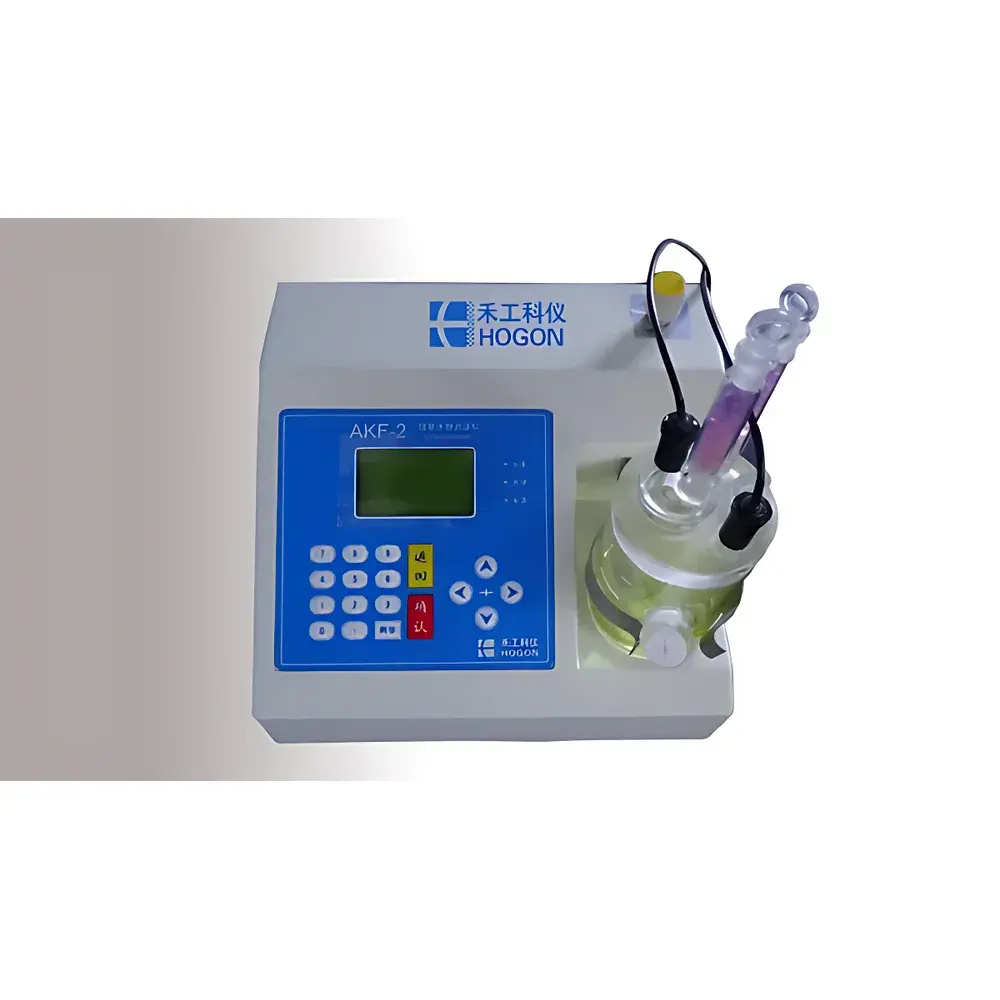
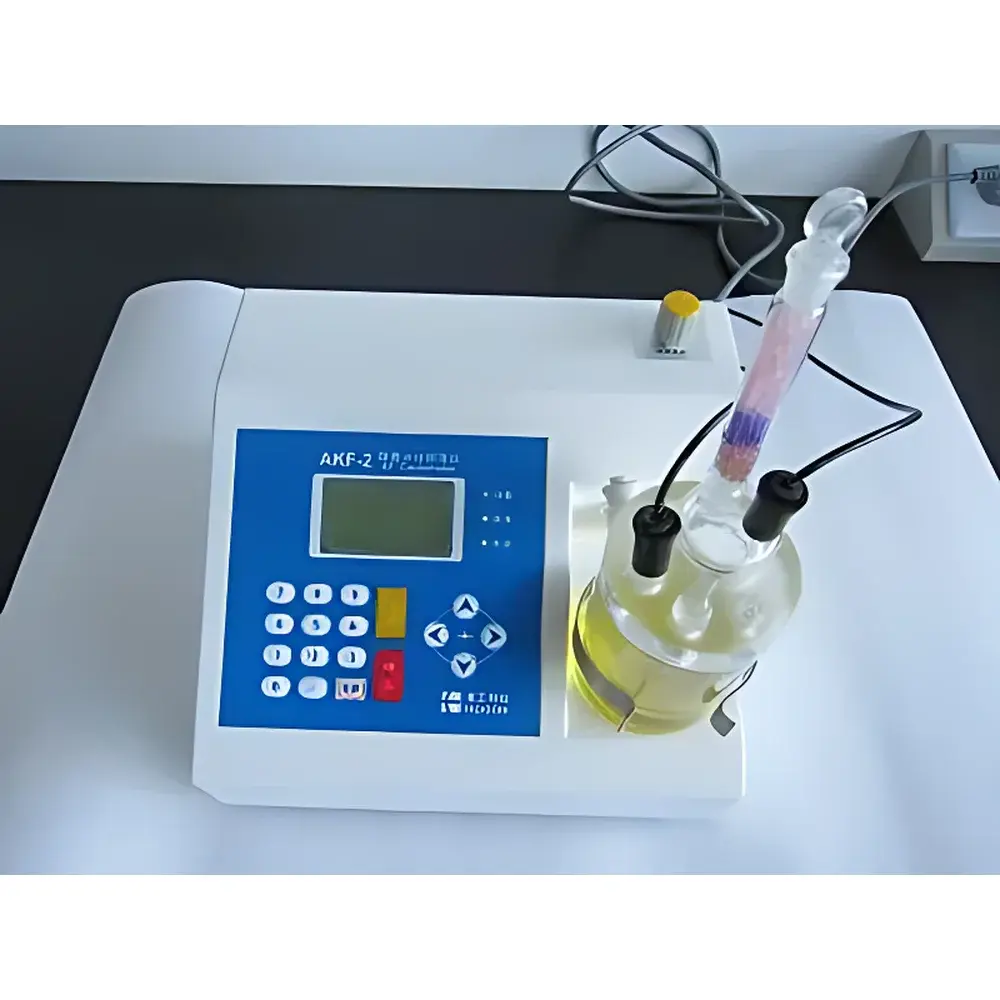
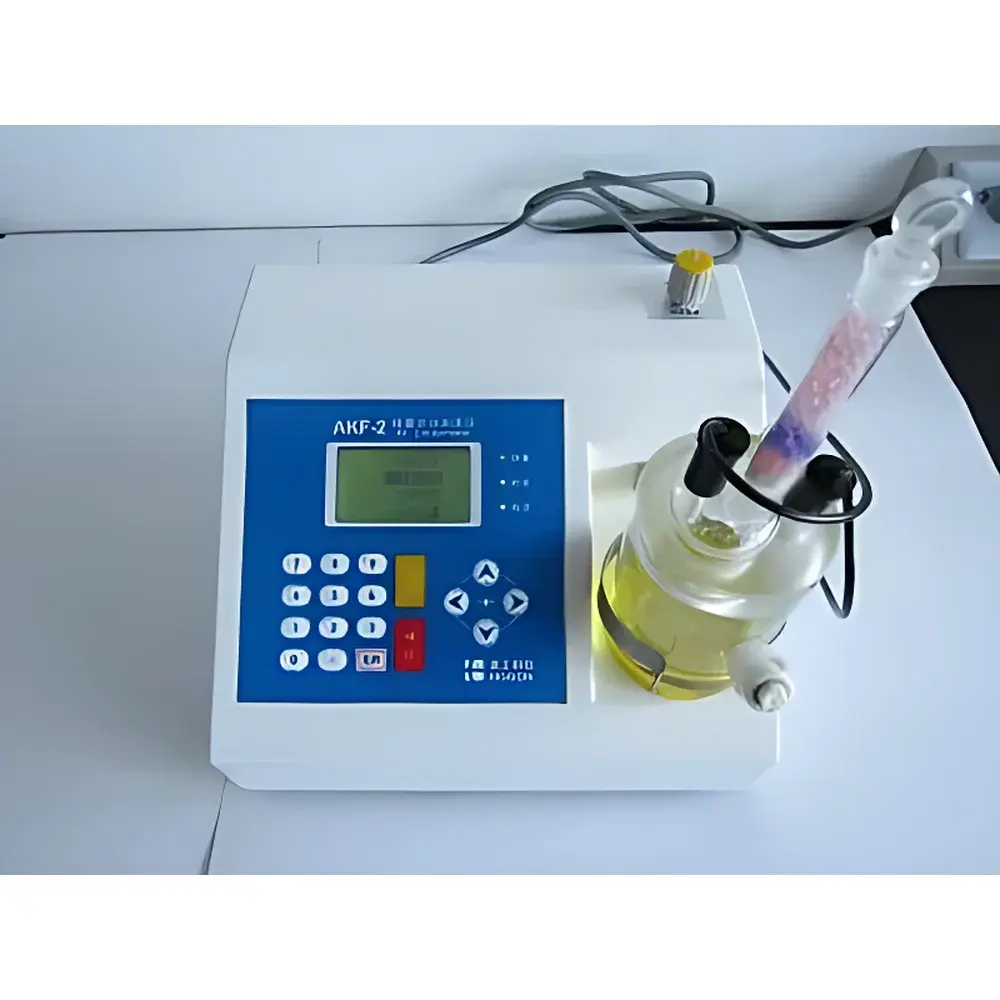
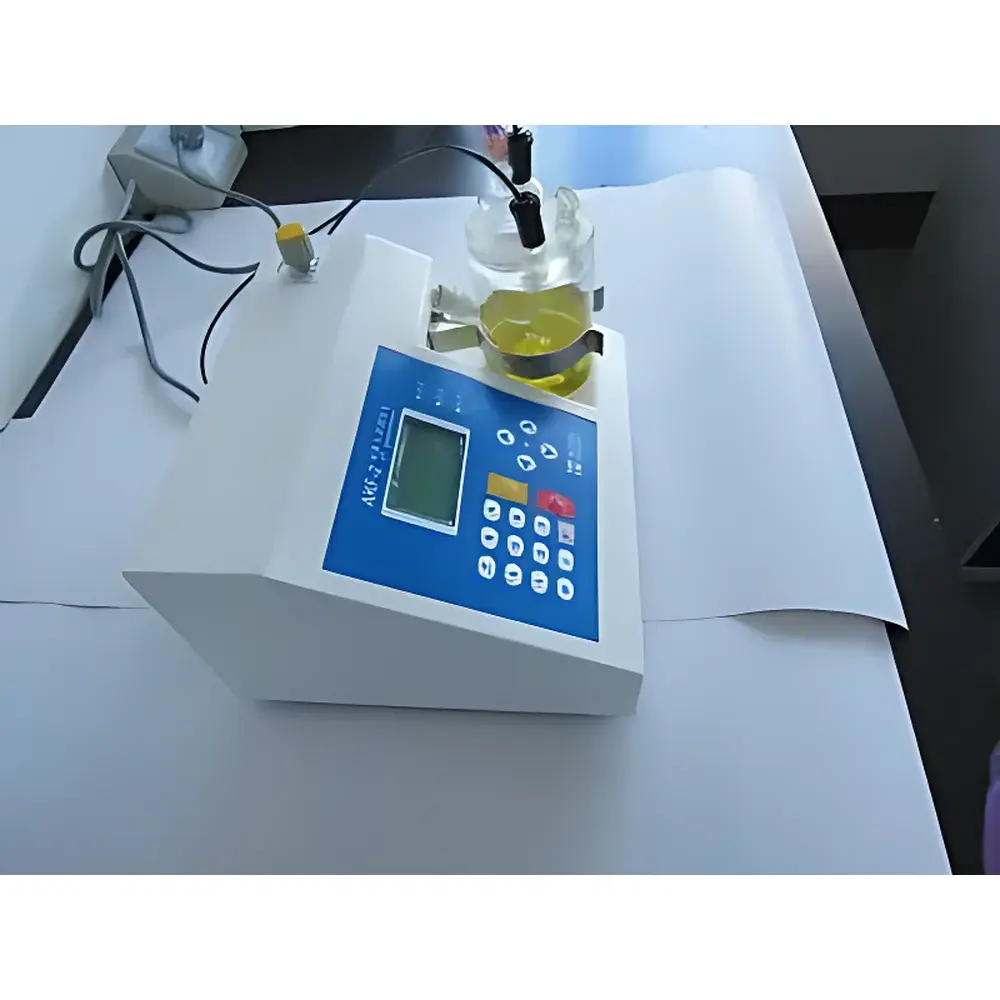
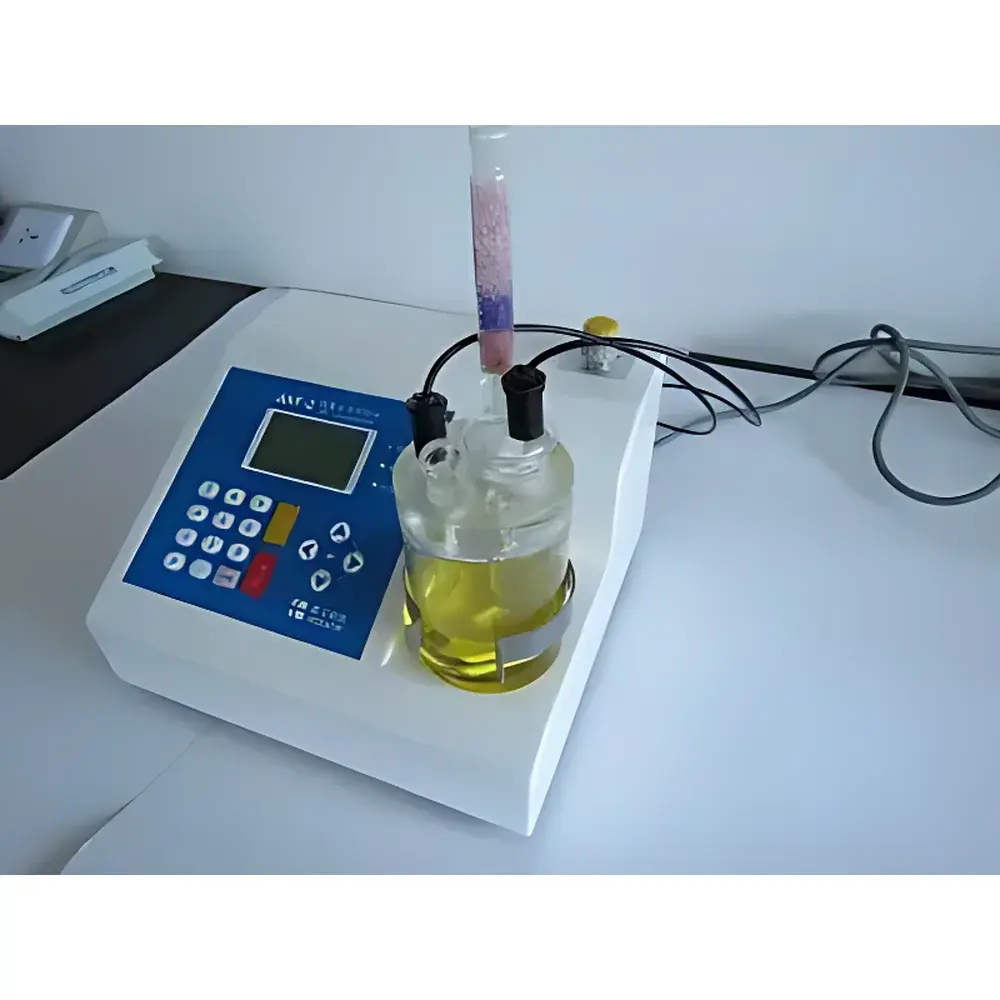
HOGON AKF-2 Coulometric Karl Fischer Moisture Titrator
| Brand | HOGON |
|---|---|
| Origin | Shanghai, China |
| Manufacturer Type | Direct Manufacturer |
| Instrument Type | Coulometric Karl Fischer Moisture Analyzer |
| Water Content Range | 3 µg – 30 mg H₂O |
| Measurement Accuracy | ≤ 0.3% (relative) |
| Minimum Dispensing Resolution | 1/2000 of burette volume |
| Electrolysis Current | Auto-controlled, up to 400 mA |
| Detection Sensitivity | 1 µg H₂O |
| Typical Quantitation Range | 10 µg – 10 mg H₂O |
| Maximum Titration Rate | 0.6 mg H₂O/min |
| Endpoint Detection | Visual LED indicator + audible buzzer + automatic stop |
| Display | 5-digit LED |
Overview
The HOGON AKF-2 Coulometric Karl Fischer Moisture Titrator is a precision laboratory instrument engineered for trace-level water quantification in diverse sample matrices using the electrochemical principle of coulometric Karl Fischer titration. Unlike volumetric KF methods—which rely on standardized reagent delivery and are susceptible to ambient moisture ingress and reagent degradation—the AKF-2 generates iodine electrochemically at the anode via Faraday-controlled electrolysis, eliminating the need for manual reagent standardization or sealed burette systems. This architecture ensures inherent stability, long-term reagent shelf life, and immunity to environmental humidity interference during operation. The instrument is optimized for applications requiring high sensitivity (down to 1 µg H₂O), low measurement uncertainty (≤ 0.3% relative), and minimal sample consumption—making it suitable for quality control laboratories operating under ISO/IEC 17025, USP , ASTM E203, and EP 2.5.10 compliance frameworks.
Key Features
- Coulometric generation of iodine with auto-adjusting electrolysis current (0–400 mA), enabling dynamic response to variable water load and maintaining stoichiometric accuracy across the full 3 µg–30 mg H₂O range.
- Microprocessor-controlled endpoint detection: dual-signal validation (stable polarization current + time-based confirmation) minimizes false endpoints and improves reproducibility.
- High-resolution dispensing system with 1/2000 burette volume resolution, supporting precise reagent management and reducing carryover risk between analyses.
- Integrated self-diagnostic routines: real-time monitoring of electrode potential, cell conductivity, and electrolyte saturation status; alerts for membrane fouling, anode/cathode imbalance, or electrolyte exhaustion.
- Robust dual-compartment titration cell design with platinum electrodes and glass frit separator, compatible with both standard KF solvents (e.g., Hydranal-Coulomat AG/CG) and low-toxicity alternatives.
- Compact benchtop footprint (280 × 220 × 350 mm) with front-accessible cell chamber and tool-free electrode cleaning ports—designed for routine maintenance in regulated environments.
Sample Compatibility & Compliance
The AKF-2 accommodates solid, liquid, and gaseous samples through optional accessories including oven samplers (for thermally released moisture), gas-tight syringe injectors (for volatile liquids), and headspace vial adapters (for residual moisture in packaging). It supports direct analysis of hygroscopic materials (e.g., lithium salts, APIs), petroleum fractions (gasoline, lubricants), polymers (PET, nylon), and pharmaceutical excipients without derivatization. All operational parameters—including titration curves, endpoint timestamps, user IDs, and calibration logs—are timestamped and stored locally with audit-trail capability, aligning with FDA 21 CFR Part 11 requirements when paired with validated LIMS integration. Method validation documentation (ICH Q2(R2)-compliant linearity, LOD/LOQ, repeatability, intermediate precision) is supported by built-in statistical reporting functions.
Software & Data Management
The instrument operates via embedded firmware with no external PC dependency; however, optional USB or RS-232 connectivity enables export of CSV-formatted raw data (current vs. time, cumulative charge, calculated water mass) to laboratory information systems. Each analysis record includes metadata: operator ID, sample ID, solvent lot number, cell conditioning status, and environmental temperature/humidity (if external sensor is connected). Data integrity safeguards include write-protected memory partitions, cyclic redundancy checks (CRC) on stored files, and password-protected method editing. For GxP environments, optional software modules provide electronic signatures, role-based access control (RBAC), and automated report generation compliant with GLP and GMP Annex 11 expectations.
Applications
- Pharmaceutical QC: Residual moisture in lyophilized products, active pharmaceutical ingredients (APIs), and excipients per USP and Ph. Eur. 2.5.10.
- Petrochemical testing: Water content in jet fuel (ASTM D6304), transformer oil (IEC 60814), and crude fractions where trace water impacts corrosion and refining efficiency.
- Materials science: Moisture uptake kinetics in battery cathode materials (e.g., NMC, LFP), polymer pellets prior to extrusion, and semiconductor-grade solvents.
- Agrochemical R&D: Water determination in pesticide formulations and wettable powders where hygroscopicity affects stability and dosing accuracy.
- Academic research: Fundamental studies of hydration thermodynamics in metal–organic frameworks (MOFs) and ionic liquids using controlled-temperature titration protocols.
FAQ
What distinguishes coulometric KF from volumetric KF titration?
Coulometric KF generates iodine electrochemically in situ, offering superior precision for samples containing ≤ 1000 µg water; volumetric KF uses pre-standardized iodine-containing reagents and is preferred for higher water concentrations (> 1000 µg) and faster throughput.
Can the AKF-2 analyze viscous or suspended samples?
Yes—when used with the optional heated sample injector (up to 130°C) and magnetic stirring enhancement, it reliably handles silicone oils, resins, and slurries without clogging or incomplete dissolution.
Is method validation support available for regulatory submissions?
HOGON provides application notes and raw data templates aligned with ICH Q2(R2); full validation packages (including equipment qualification IQ/OQ/PQ protocols) are available upon request for qualified laboratories.
How often does the titration cell require maintenance?
Under typical usage (≤ 20 samples/day), the dual-compartment cell requires cleaning every 50–100 analyses; platinum electrodes may be regenerated via nitric acid soak and ultrasonic rinse every 2–3 months.
Does the instrument comply with environmental safety standards?
The AKF-2 meets IEC 61010-1 for electrical safety and RoHS 3 for hazardous substance restrictions; solvent vapor containment is enhanced when operated inside a certified fume hood per local occupational exposure limits (e.g., OSHA PEL for methanol).





