
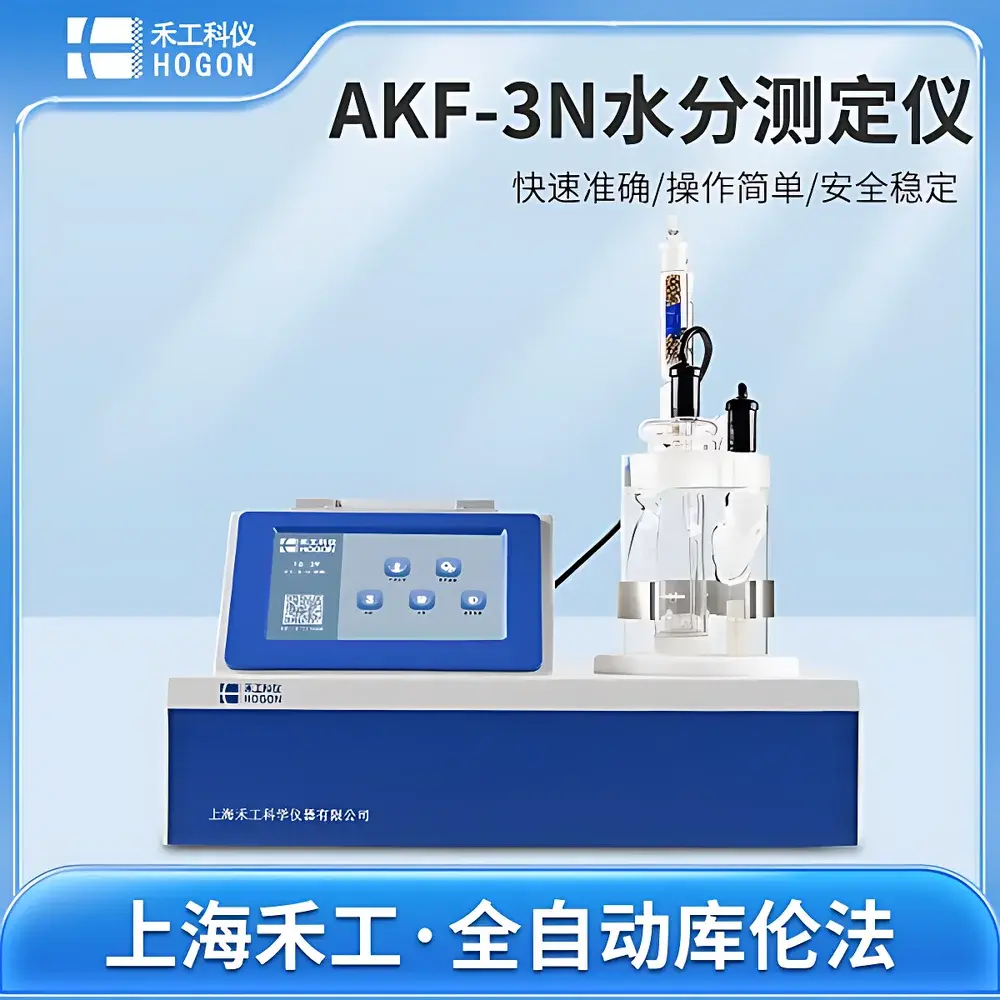
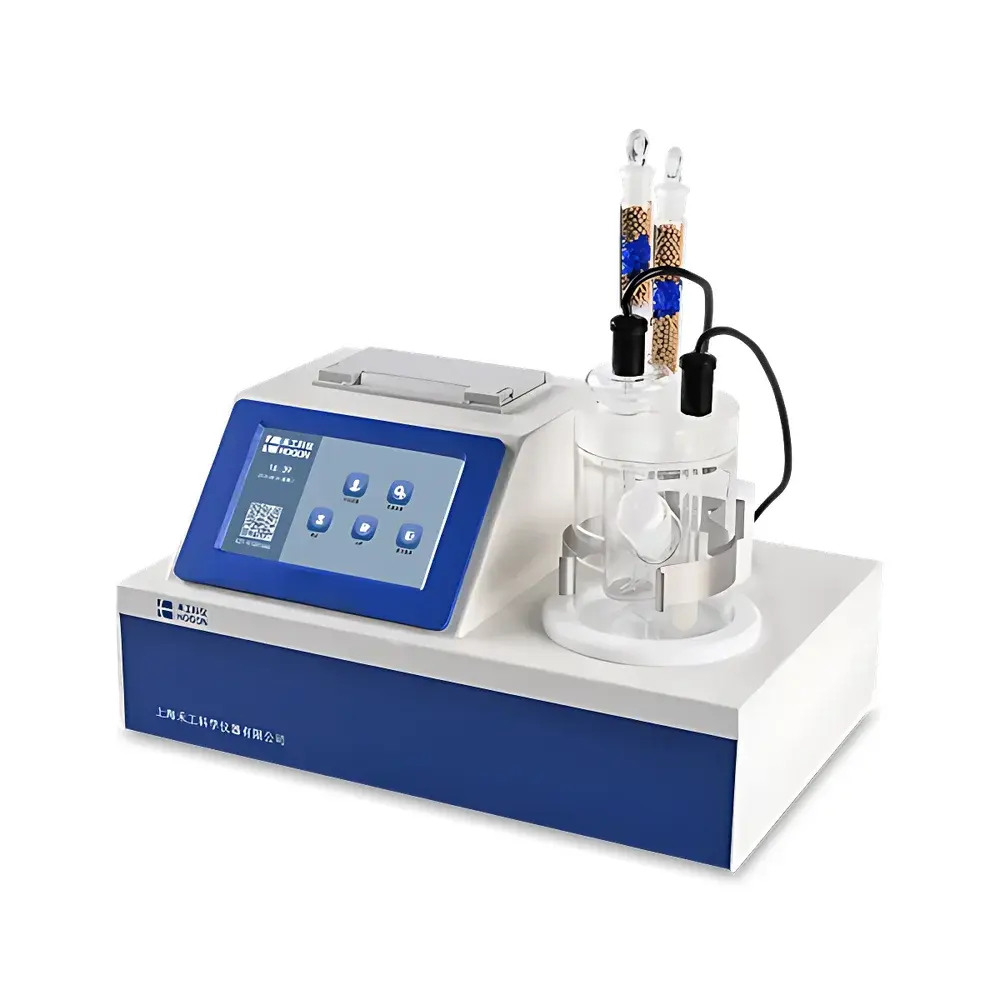
HOGON AKF-3N Fully Automated Coulometric Karl Fischer Moisture Analyzer
| Brand | HOGON |
|---|---|
| Origin | Shanghai, China |
| Manufacturer Type | Direct Manufacturer |
| Instrument Type | Coulometric Karl Fischer Moisture Analyzer |
| Model | AKF-3N |
| Titration Mode | Fully Automatic |
| Resolution | 0.01 µg (H₂O mass) |
| Water Content Range | 3 µg – 100 mg |
| Measurement Accuracy | 0.01 µg |
| Minimum Dispensing Volume | 10 µL |
| Repeatability | 99.7% |
| Linearity (R²) | 0.999 |
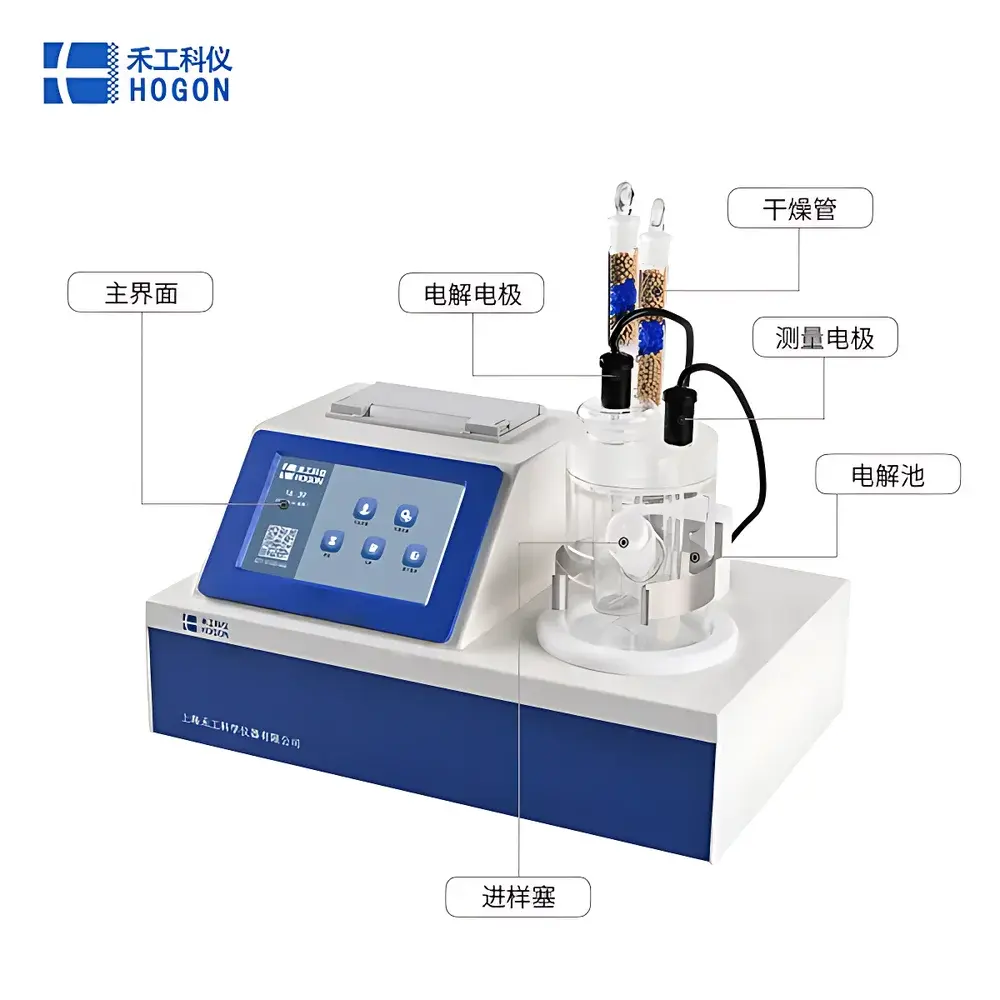
| Electrode Type | Electrolytic Electrode |
| Current Control Precision | ±0.1 mA |
| Power Supply | 110–240 V AC, 50–61 Hz |
| Data Storage Capacity | 200 test records |
Overview
The HOGON AKF-3N is a fully automated coulometric Karl Fischer moisture analyzer engineered for trace-level water quantification in demanding laboratory and industrial quality control environments. Unlike volumetric KF titrators, the AKF-3N employs coulometric generation of iodine at the anode via controlled electrolysis—enabling direct, stoichiometric quantification of water based on Faraday’s law. This principle delivers exceptional sensitivity and reproducibility for samples containing ultra-low moisture content (down to 3 µg), making it ideal for pharmaceutical actives, lithium battery electrolytes, high-purity solvents, polymer precursors, and specialty chemicals where residual water compromises stability or reactivity.
Key Features
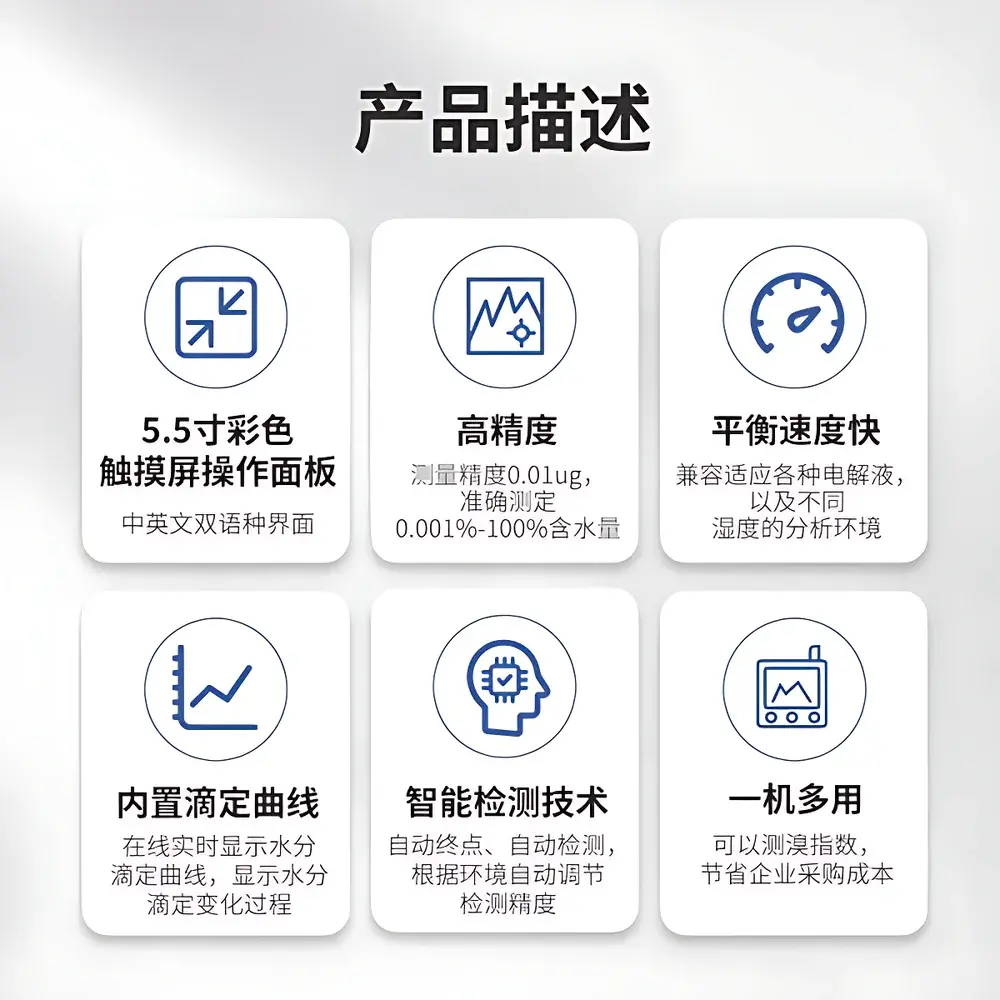
- Sub-microgram resolution: Capable of detecting and quantifying water mass with 0.01 µg resolution—validated across multiple matrix types including hygroscopic solids, viscous oils, and low-conductivity organic solvents.
- Adaptive current regulation: Electrolytic current dynamically adjusts between 1–400 mA with ±0.1 mA precision, ensuring optimal iodine generation rate for rapid endpoint attainment and minimized over-titration risk.
- Dual-function capability: Native support for both water content determination and bromine number analysis (per SH/T 1551–1993) without hardware modification—reducing capital expenditure and method validation burden.
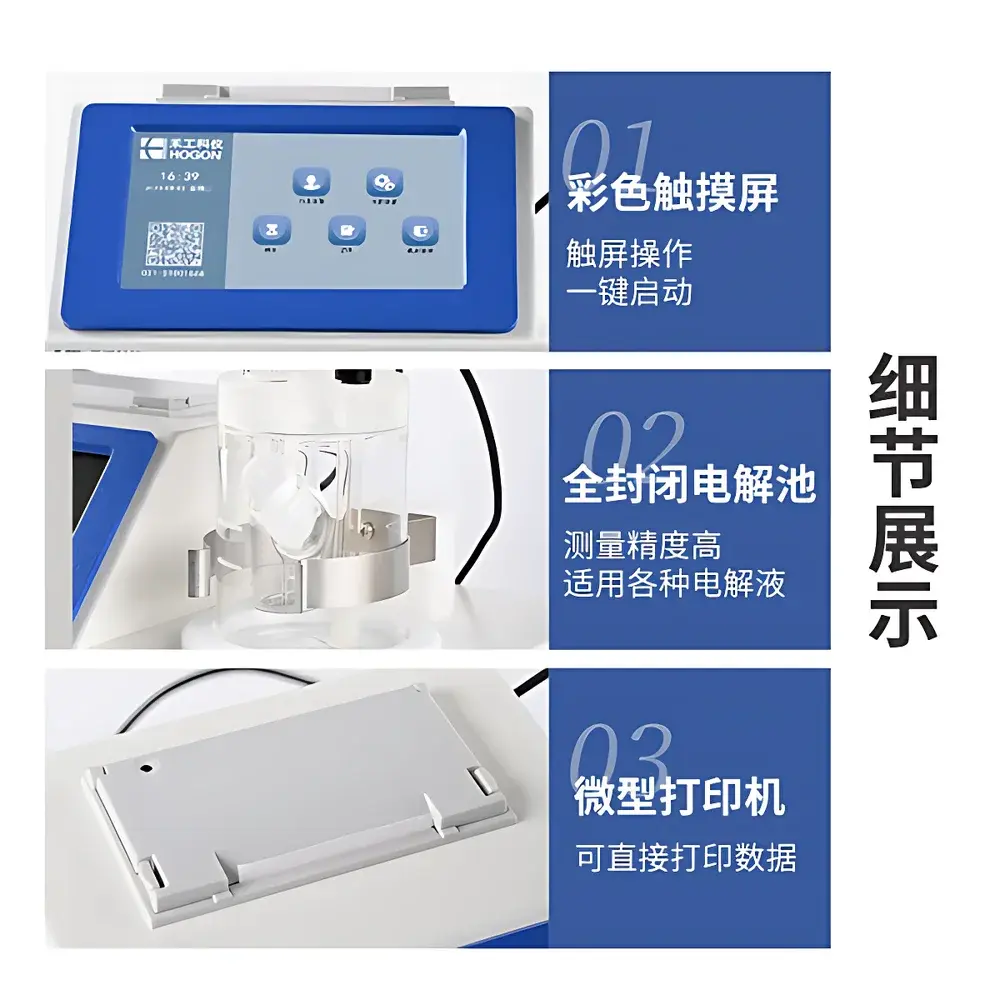
- Integrated real-time titration curve visualization: High-resolution color touchscreen displays dynamic current response, drift correction, and endpoint detection waveform—enabling immediate troubleshooting of electrode passivation, solvent degradation, or sample incompatibility.
- Intelligent environmental adaptation: Built-in humidity compensation algorithms and multi-stage electrolyte compatibility modes allow stable operation across ambient conditions ranging from 30% to 80% RH.
- Method-driven workflow: Supports user-defined, password-protected method libraries—including preconfigured protocols for gases, liquids, solids, and bromine index—with full parameter logging (e.g., stirring speed, cell temperature, blank subtraction mode).
- Expandable platform architecture: Compatible with optional accessories such as heated titration stands, Karl Fischer ovens (for headspace analysis), and multi-position autosamplers—extending applicability to thermally labile, non-soluble, or heterogeneous samples (e.g., resins, graphite powders, lubricating greases).
Sample Compatibility & Compliance
The AKF-3N accommodates diverse sample types—including volatile liquids (e.g., acetone, THF), high-boiling-point solvents (e.g., DMF, NMP), solid polymers, catalysts, and inorganic salts—via customizable sample introduction methods. Its coulometric cell design minimizes reagent consumption and eliminates volumetric pipetting errors inherent in traditional titrators. The instrument complies with internationally recognized standards including GB/T 6283–2008 (general KF method), SH/T 0246 (light petroleum products), GB/T 11133–1989 (liquid petroleum), and SH/T 1551–1993 (bromine number). While not FDA 21 CFR Part 11–certified out-of-the-box, audit trails, electronic signature support, and method locking can be enabled through firmware configuration to meet GLP/GMP-aligned documentation requirements.
Software & Data Management
Equipped with embedded Linux-based firmware and a 7-inch capacitive touchscreen interface, the AKF-3N provides intuitive navigation via numeric keypad and context-sensitive soft keys. All measurement data—including raw current traces, calculated water mass, drift-corrected values, and method metadata—are timestamped and stored locally (200-record capacity). Data export is supported via USB flash drive in CSV format for external LIMS integration or statistical process control (SPC) analysis. System diagnostics—including electrode impedance monitoring, power supply stability checks, and cell contamination alerts—are logged automatically and accessible via maintenance menu.
Applications
The AKF-3N serves critical roles in QC laboratories across regulated and non-regulated sectors: quantifying residual moisture in lyophilized biopharmaceuticals per USP ; verifying dryness specifications for Li-ion battery cathode materials; assessing hydrolytic stability of silicone sealants and epoxy resins; determining water ingress in aviation fuels (ASTM D6304); and measuring bromine index in aromatic hydrocarbons used in petrochemical synthesis. Its robustness and repeatability have been validated by national research institutes including the Ningbo Institute of Materials Technology & Engineering (CAS), Changchun Institute of Applied Chemistry (CAS), and Shanxi Institute of Coal Chemistry (CAS).
FAQ
What is the difference between coulometric and volumetric Karl Fischer titration?
Coulometric KF generates iodine electrochemically within the titration cell, enabling precise quantification of sub-microgram water amounts without manual reagent dispensing. Volumetric KF relies on standardized iodine-containing solutions dispensed via burette—suited for higher water concentrations (>100 µg) but less accurate at trace levels.
Can the AKF-3N analyze solid samples directly?
Yes—when paired with the optional KF oven or heated sample stage, the instrument supports headspace analysis of thermally stable solids (e.g., pharmaceutical tablets, polymer pellets) by releasing bound water under controlled temperature and inert gas purge.
Is method validation support available?
HOGON provides application notes, standard operating procedures (SOPs), and performance qualification (PQ) templates aligned with ISO/IEC 17025 and ICH Q2(R2) guidelines—facilitating internal method transfer and regulatory submission readiness.
How does the system handle high-drift conditions?
The AKF-3N implements dual-drift compensation: real-time background current monitoring combined with programmable blank subtraction intervals ensures accurate net water calculation even under elevated ambient humidity or aging reagent conditions.
What maintenance is required for long-term reliability?
Routine maintenance includes weekly cell cleaning with methanol, quarterly reference electrode calibration using certified water standards (e.g., 1.00 mg/g Hydranal®), and annual verification of current output linearity using precision shunt resistors—procedures documented in the included technical manual.






