
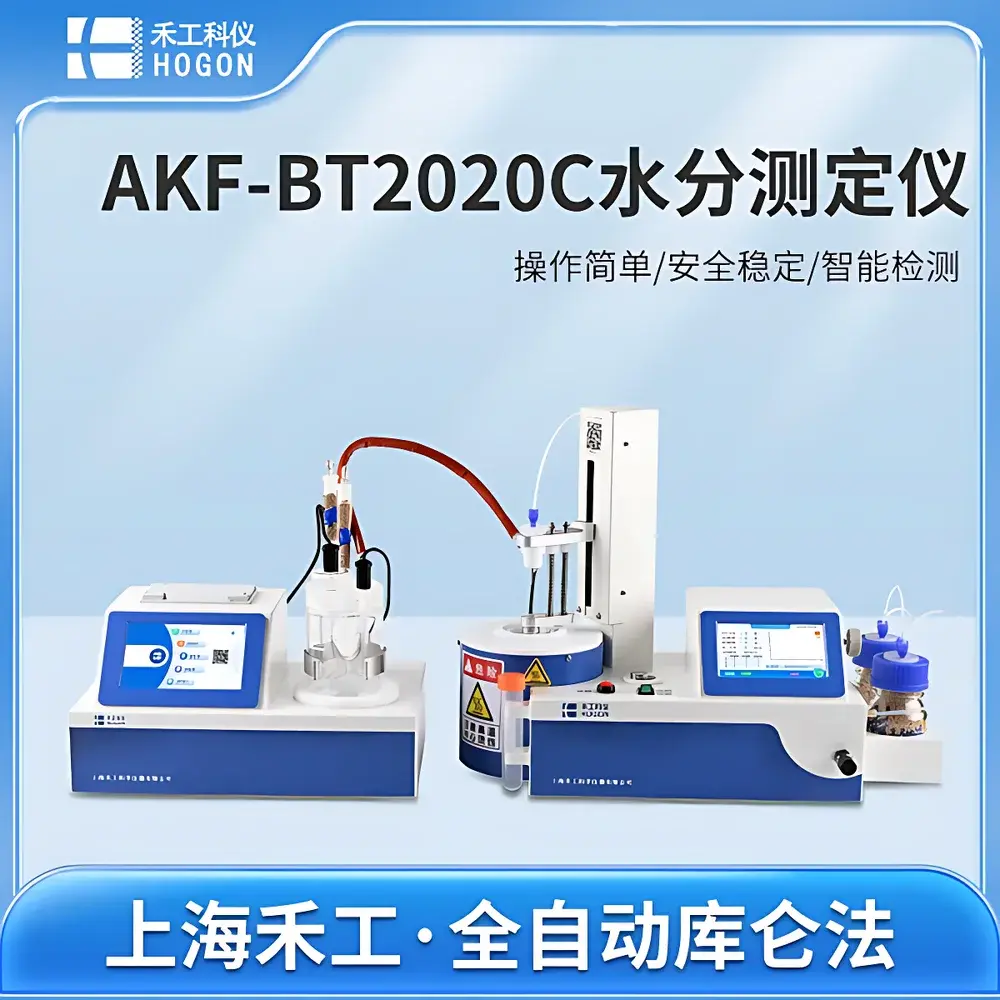
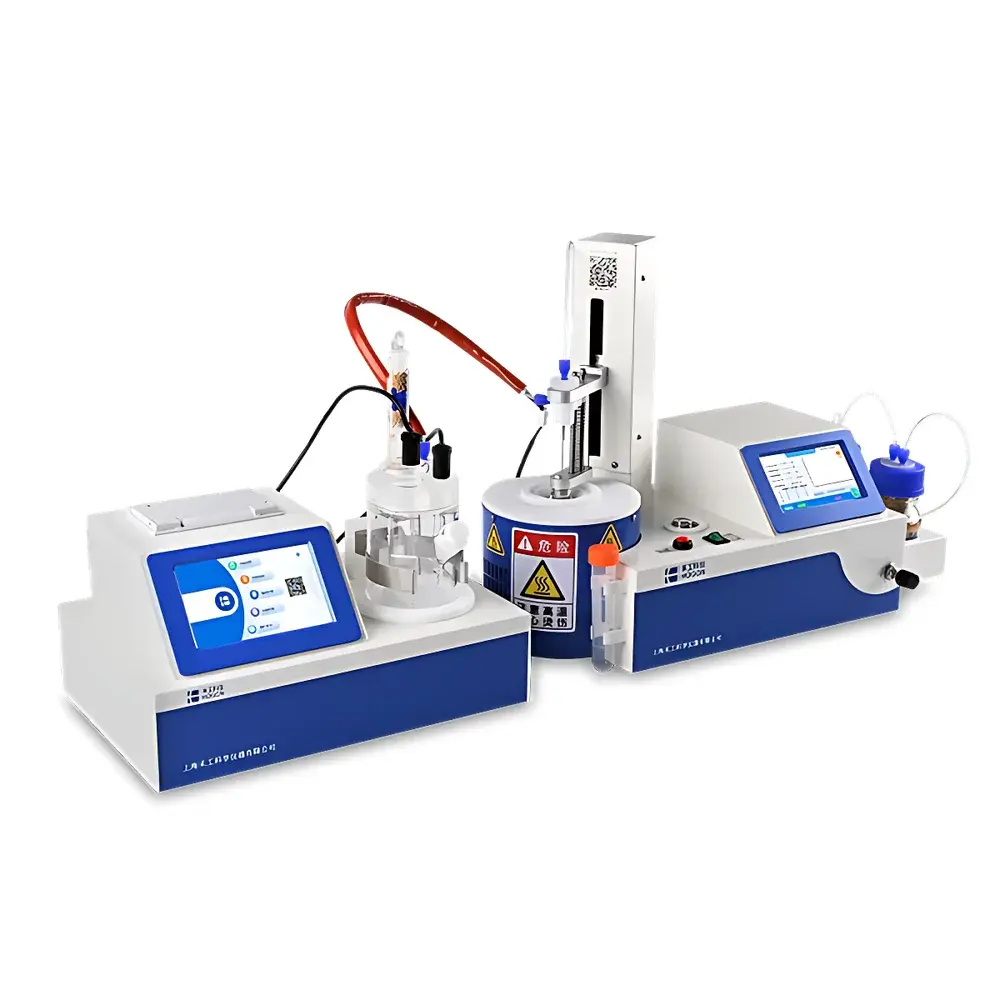
HOGON AKF-BT2020C Coulometric Karl Fischer Moisture Analyzer for Lithium Battery Materials
| Brand | HOGON |
|---|---|
| Origin | Shanghai, China |
| Manufacturer Type | Direct Manufacturer |
| Instrument Type | Coulometric Karl Fischer Moisture Analyzer |
| Titration Mode | Fully Automatic |
| Measurement Resolution | 0.1 µg H₂O |
| Moisture Range | 1 ppm – 100% w/w |
| Accuracy | ≤0.3% RSD |
| Minimum Dosing Increment | 3 µg |
| Repeatability | ≥99.7% |
| Linearity (R²) | ≥0.999 |
| Electrode Configuration | Dual Platinum Electrolysis Electrodes |
| Current Control Precision | ±0.1 mA |
| Power Supply | 110–240 V AC, 50–61 Hz |
| Data Storage Capacity | 200 test records |
Overview
The HOGON AKF-BT2020C is a purpose-engineered coulometric Karl Fischer moisture analyzer designed specifically for the stringent analytical requirements of lithium-ion battery material manufacturing and quality control. Unlike volumetric KF systems, the AKF-BT2020C employs controlled-current coulometric titration—generating iodine electrochemically in situ within the titration cell—enabling ultra-trace quantification of water content with sub-microgram resolution. This principle ensures high sensitivity, minimal reagent consumption, and exceptional stability during extended analysis sequences—critical for routine QC of cathode active materials (e.g., LiFePO₄, NMC, LCO), anode components (graphite, silicon composites), electrolyte solvents (EC/DMC/LiPF₆ blends), and separator films. The instrument complies with ISO 8533:2014 (determination of water in petroleum products), ASTM E203 (Standard Test Method for Water Using Volumetric or Coulometric Karl Fischer Titration), and supports method validation per ICH Q2(R2) guidelines.
Key Features
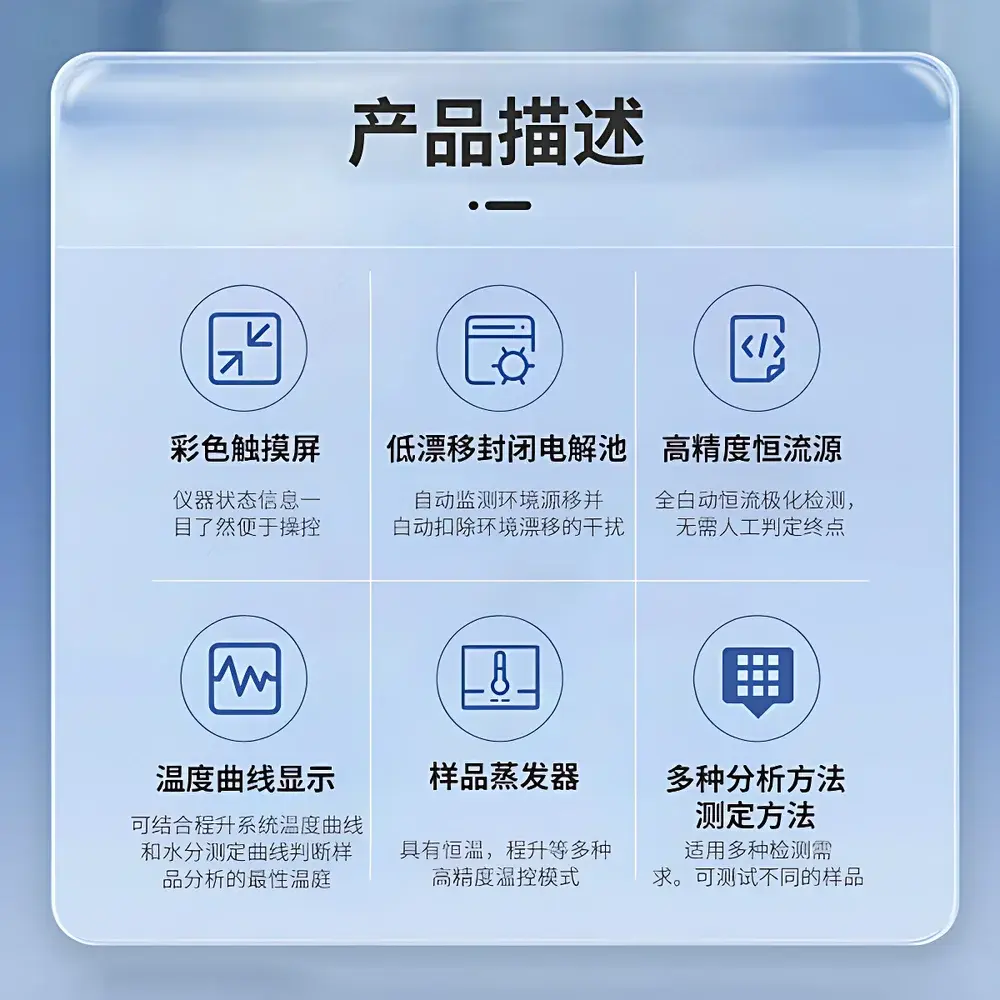
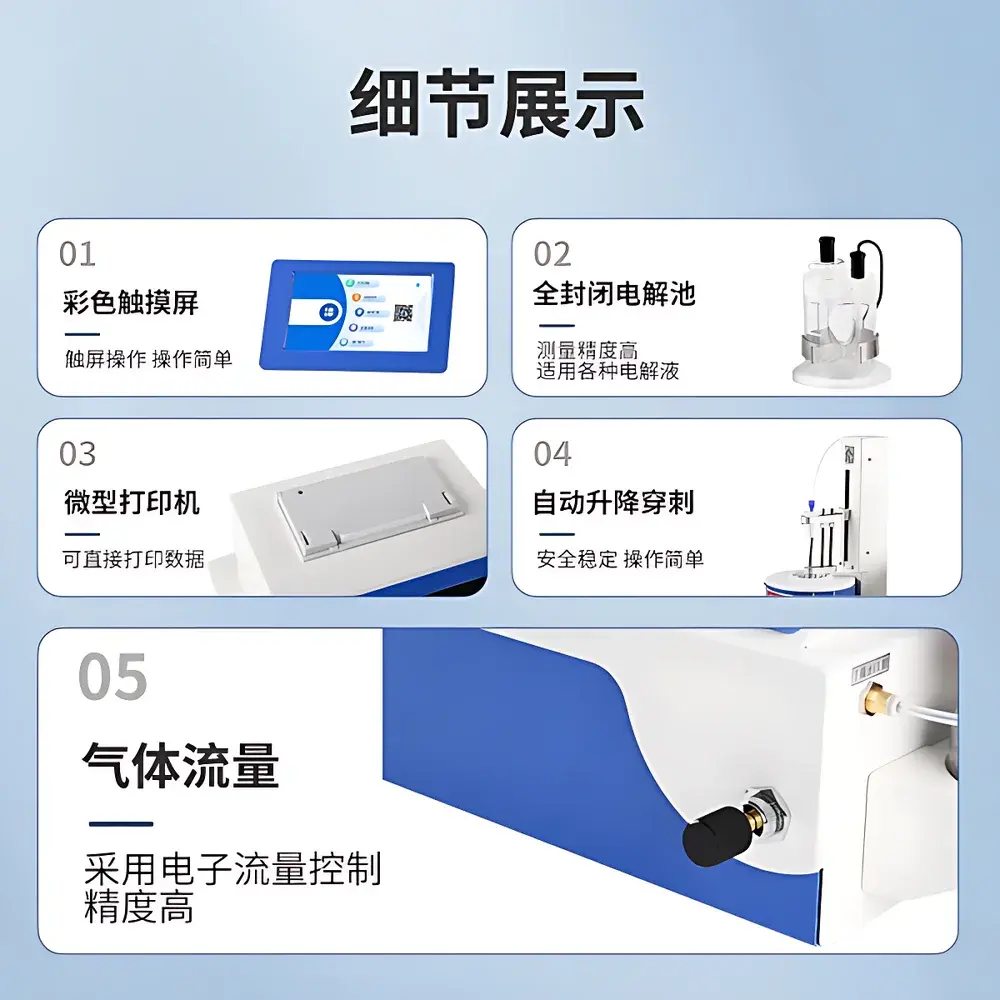
- 10.1-inch full-color capacitive touchscreen with intuitive icon-driven interface; no specialized training required for daily operation
- HOGON Smart Equilibration Algorithm: dynamically adjusts baseline drift compensation based on ambient humidity and temperature fluctuations, reducing pre-titration stabilization time by up to 40%
- High-fidelity coulometric current regulation (±0.1 mA) enabling reliable detection down to 0.01 µg H₂O—validated using Merck 1.00% KF oven standard reference material (RSD < 0.8%, n = 8)
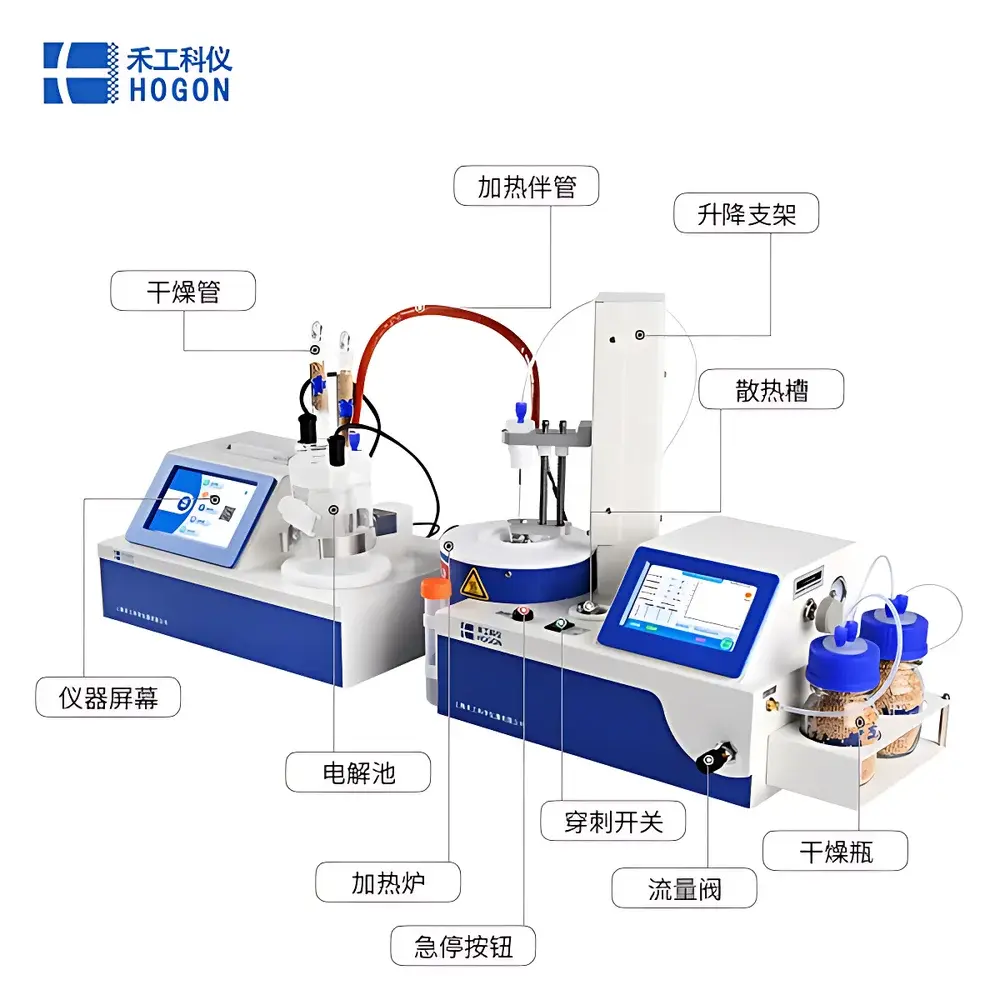
- Dual-mode sample introduction: direct injection into the titration cell for liquids and soluble solids, plus integrated compatibility with HOGON’s heated headspace sampler (temperature-controlled up to 250 °C, programmable ramping, real-time temperature/flow monitoring)
- Active carrier gas management: digitally regulated dry nitrogen flow (0–200 mL/min), insulated heated transfer line (up to 120 °C) to prevent condensation, and inline desiccant monitoring
- Triple-tier user access control (Operator / Supervisor / Administrator) with audit-trail logging compliant with FDA 21 CFR Part 11 and GLP data integrity requirements
- Onboard method library supporting >50 customizable protocols—including differential heating profiles, adaptive endpoint detection, and multi-point calibration curves
Sample Compatibility & Compliance
The AKF-BT2020C accommodates diverse lithium battery-related matrices without derivatization or solvent extraction: slurries, powders (LiCoO₂, LiMn₂O₄, LiNiₓCoᵧMn_zO₂), coated electrodes, binder solutions (PVDF/NMP), and low-volatility electrolytes. Its headspace evaporation module enables quantitative recovery of bound and occluded water from hygroscopic solid-phase materials—validated against certified reference materials (CRMs) including Merck KF Oven Standard (1.00 ± 0.02% H₂O). All firmware and data handling routines conform to ISO/IEC 17025:2017 clause 7.7 (control of data integrity), and electronic records meet ALCOA+ principles (Attributable, Legible, Contemporaneous, Original, Accurate, Complete, Consistent, Enduring, Available).
Software & Data Management
Embedded HOGON KF-Studio v4.2 firmware provides real-time visualization of titration curves, temperature gradients, carrier gas flow dynamics, and moisture evolution kinetics. Each analysis generates a timestamped .CSV report containing raw current/time data, calculated water mass (µg), concentration (% w/w), RSD, linearity coefficient, and operator ID. Data export supports USB flash drive and optional Ethernet connectivity for LIMS integration. Audit trails record all parameter modifications, method selections, and user logins—with immutable hashing to prevent tampering. Backups are retained locally and support scheduled cloud sync via secure TLS 1.3 channels.
Applications
- QC release testing of cathode/anode active materials per GB/T 30835–2014 (Lithium-ion Battery Cathode Materials – Moisture Content Specification)
- Electrolyte purity verification prior to cell filling (target: <20 ppm H₂O for high-nickel NMC cells)
- In-process monitoring of slurry drying efficiency and electrode calendering moisture retention
- Stability studies of solid-state electrolytes under controlled humidity exposure
- Failure analysis of swollen pouch cells linked to residual moisture-induced HF generation
FAQ
What distinguishes coulometric from volumetric Karl Fischer titration in battery material analysis?
Coulometric KF eliminates syringe-based reagent delivery variability and minimizes reagent degradation—essential for reproducible sub-ppm measurements in air-sensitive electrolyte formulations.
Can the AKF-BT2020C analyze sealed coin cells or pouch cell components directly?
Yes—using the optional headspace sampler with puncture-capable vials and inert gas purging, enabling non-destructive moisture profiling of electrode laminates and separator layers.
Is method validation documentation provided with the instrument?
Yes—the system ships with IQ/OQ documentation templates, performance qualification (PQ) test protocols aligned with USP , and a traceable calibration certificate for the internal microbalance and current sensor.
How does the instrument handle high-salt-content samples like LiPF₆ solutions that may corrode electrodes?
The dual-platinum electrolysis electrodes feature PTFE-coated leads and modular design for rapid replacement; optional gold-coated electrodes are available for extended service life in aggressive halide environments.
Does the software support automated report generation for regulatory submissions?
Yes—customizable PDF reports include digital signatures, instrument metadata, environmental logs, and compliance statements for ISO 17025, GMP Annex 11, and IATF 16949 audits.
Related Products






