
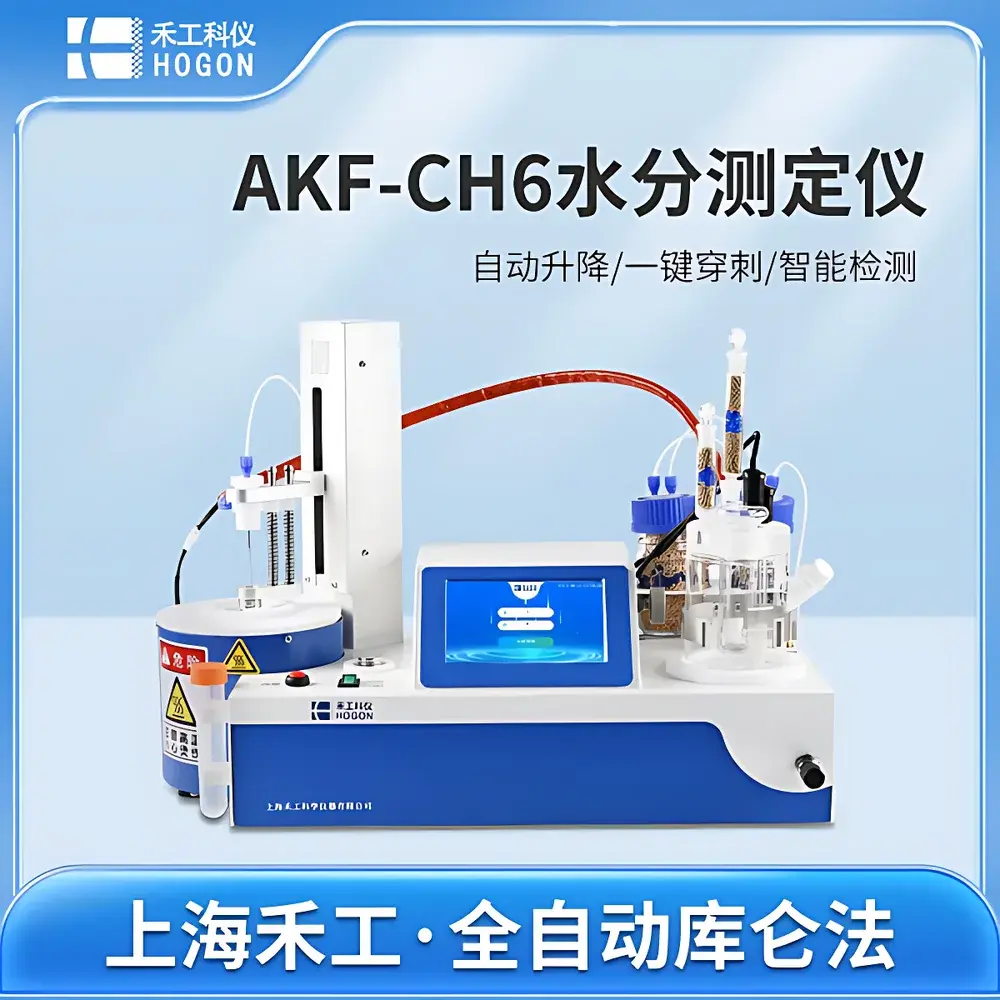
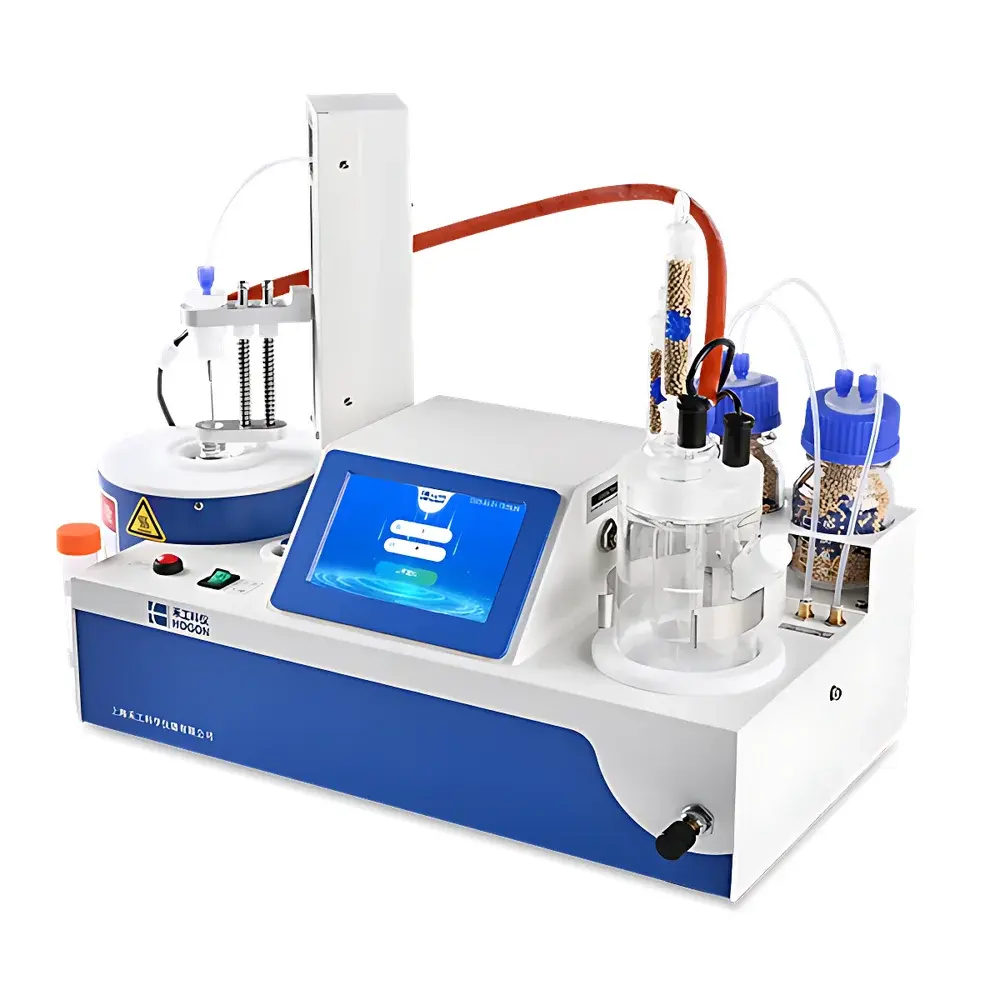
HOGON AKF-CH6 Coulometric Karl Fischer Moisture Analyzer for Sulfide-Based Solid-State Battery Electrolytes
| Brand | HOGON |
|---|---|
| Origin | Shanghai, China |
| Manufacturer | Yes |
| Type | Integrated Coulometric Karl Fischer Moisture Analyzer with Heated Oven |
| Measurement Principle | Coulometric Karl Fischer Titration (ASTM E203, ISO 15512, USP <921>) |
| Detection Range | 1 µg – 200 mg H₂O |
| Resolution | 0.1 µg |
| Accuracy | ±2 µg (for <100 µg), ±0.2% (for >100 µg) |
| Sample Heating Temperature | 50–300 °C (adjustable in 1 °C increments) |
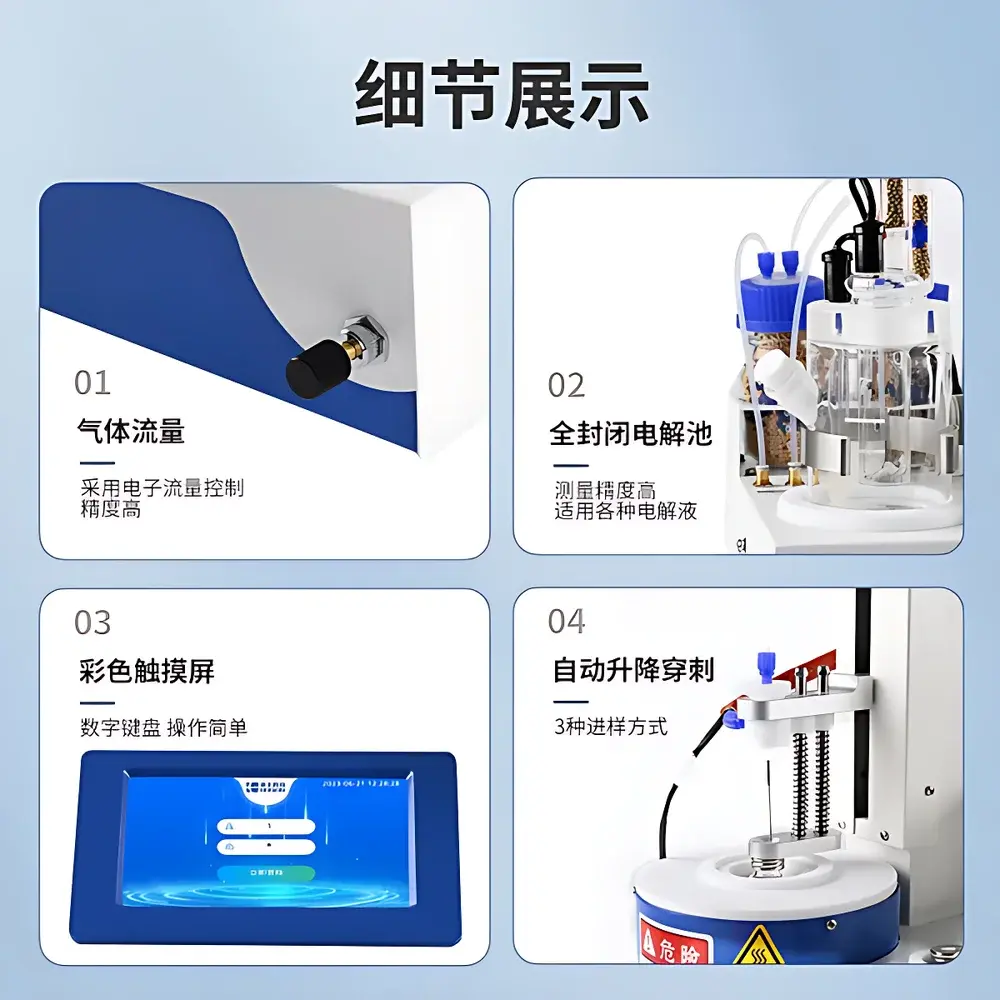
| Carrier Gas Flow Rate | 20–200 mL/min (N₂, dry and oil-free) |
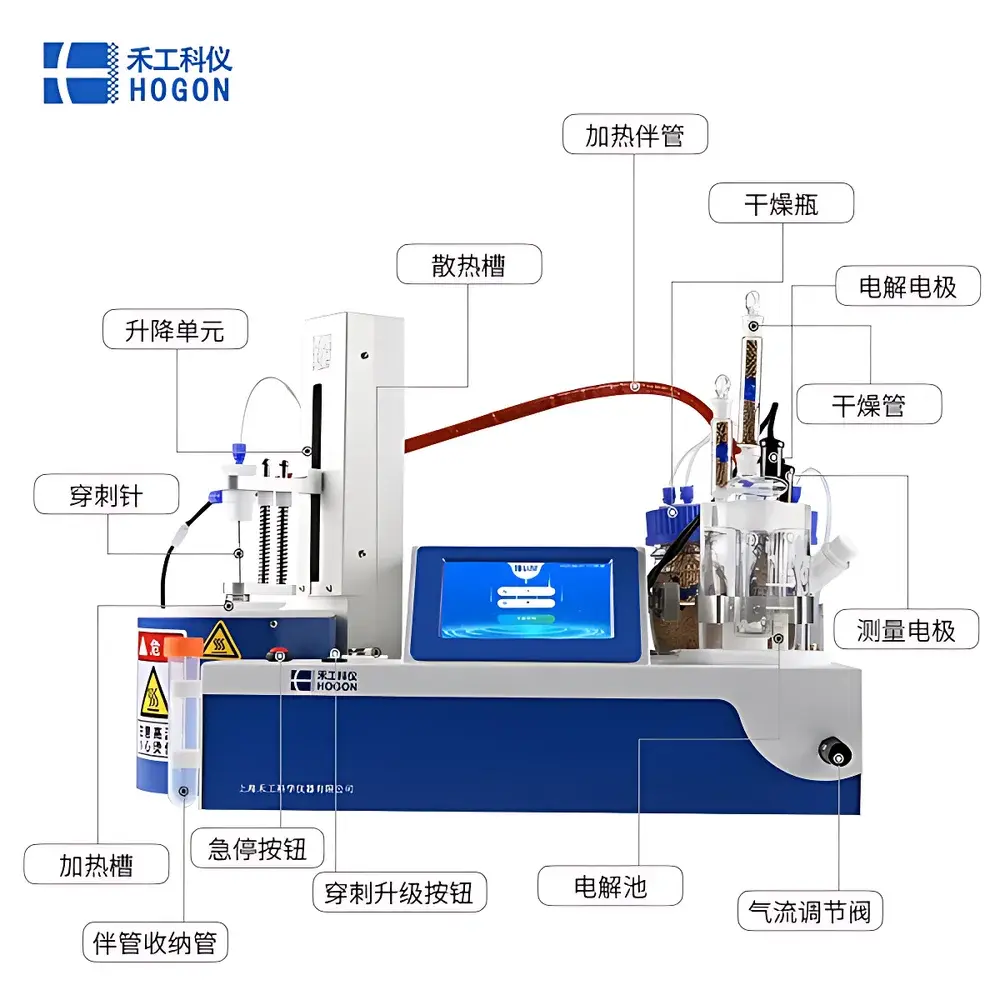
| Electrode System | Dual-platinum indicator electrodes + diaphragm-separated generator electrode |
| Cell Design | Fully enclosed, moisture-tight titration cell with PTFE-coated seals |
| Compliance | GLP-compliant data logging, 21 CFR Part 11 ready (audit trail, electronic signatures, user access control) |
Overview
The HOGON AKF-CH6 is a fully integrated coulometric Karl Fischer moisture analyzer engineered specifically for the ultra-trace water quantification in hygroscopic sulfide-based solid-state electrolytes used in next-generation all-solid-state lithium batteries. Unlike conventional volumetric or hybrid KF systems, the AKF-CH6 employs a closed-loop coulometric titration principle—where iodine is electrogenerated in situ at the anode of a dual-compartment cell—enabling sub-microgram-level detection (down to 0.1 µg H₂O) with exceptional reproducibility (RSD < 0.5% at 10 µg level). Its integrated high-precision oven module enables controlled thermal extraction of bound water from dense, low-permeability sulfide ceramics (e.g., Li₆PS₅Cl, Li₁₀GeP₂S₁₂, Li₃PS₄) without oxidative degradation, ensuring representative release kinetics and minimizing matrix interference. Designed for R&D labs and pilot-scale battery material production facilities, the system meets stringent metrological requirements for quality control under ISO/IEC 17025-accredited environments.
Key Features
- Integrated coulometric KF titration cell with PTFE-sealed, double-wall glass construction and inert gas purging—eliminates ambient moisture ingress and reagent volatility during analysis.
- Dual-platinum indicator electrodes paired with a diaphragm-isolated generator electrode ensure stable endpoint detection and long-term electrolyte stability—even under high-salt, sulfur-rich sample headspace conditions.
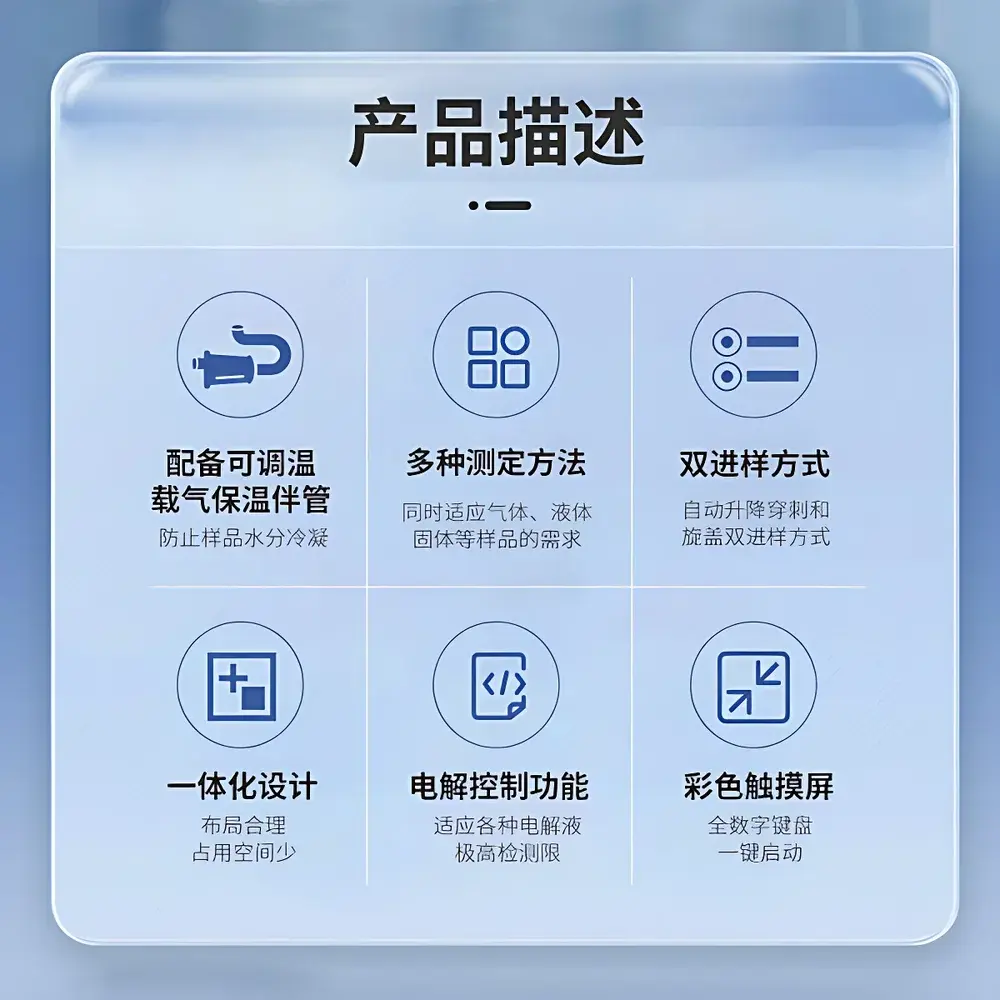
- Programmable oven module with ±0.5 °C temperature accuracy (50–300 °C range) and precise mass-flow-controlled N₂ carrier gas delivery (20–200 mL/min, calibrated to ±1% FS).
- Real-time coulometric current monitoring and adaptive endpoint algorithm—automatically adjusts electrolysis duration based on water release profile, preventing over-titration in slow-desorbing sulfides.
- GLP-compliant onboard data storage with timestamped method parameters, raw current curves, and final moisture results—including automatic calculation of ppm and wt% water relative to sample mass.
Sample Compatibility & Compliance
The AKF-CH6 is validated for direct analysis of air-sensitive sulfide electrolyte powders, cold-pressed pellets, and thin-film coated substrates. Samples are introduced via glovebox-compatible sample vials (with septum-sealed crimp caps) and transferred into the oven chamber under inert atmosphere. The system complies with ASTM E203 (Standard Test Method for Water in Organic Liquids by Coulometric Karl Fischer Titration), ISO 15512 (Plastics — Determination of Water Content), and USP (Water Determination). Full audit trail functionality supports FDA 21 CFR Part 11 compliance when configured with role-based user accounts, electronic signatures, and immutable result archiving. All calibration records, maintenance logs, and performance verification reports (e.g., drift tests with 1.00 mg H₂O standard) are retained in encrypted internal memory.
Software & Data Management
The embedded HOGON MoistureControl™ software provides intuitive method setup, real-time graphical display of titration curves (current vs. time), and automated report generation in PDF/CSV formats. Preloaded application methods include “Sulfide Electrolyte – Low-Mass Powder”, “Sulfide Pellet – High-Temp Desorption”, and “Blank Correction Protocol for Li₂S-rich matrices”. Data export supports LIMS integration via OPC UA or secure FTP. All measurement sessions are automatically tagged with operator ID, instrument serial number, environmental humidity/temperature (via optional external sensor input), and QC reference check results—ensuring full traceability required for GMP-aligned battery material qualification.
Applications
- Quantitative moisture profiling of Li₆PS₅Cl, Li₃PS₄, and argyrodite-type electrolytes pre- and post-ball milling, annealing, or slurry casting.
- Stability assessment of sulfide electrolytes exposed to controlled humidity chambers or residual moisture in dry-room environments (≤0.1 ppm H₂O).
- Validation of packaging integrity for sealed electrolyte shipments (e.g., Al-laminated pouches under Ar backfill).
- Root-cause analysis of premature capacity fade or interfacial resistance growth linked to hydrolytic decomposition products (e.g., H₂S, LiOH).
- Supporting DOE-funded solid-state battery development programs requiring certified moisture data for DOE Vehicle Technologies Office (VTO) reporting standards.
FAQ
What sample forms can be analyzed directly on the AKF-CH6?
Powders, granules, pressed pellets (diameter ≤ 8 mm), and thin-film samples on conductive substrates—provided they fit within the 10 mL quartz sample boat and do not exceed 2 g mass.
Is the system compatible with non-aqueous solvents commonly used in sulfide processing?
Yes—the coulometric cell is chemically resistant to anhydrous acetonitrile, propylene carbonate, and THF-based electrolyte formulations; solvent compatibility must be verified per ASTM D6304 Annex A1.
How is system performance verified between analyses?
Daily verification uses certified 1.00 mg H₂O standards (traceable to NIST SRM 2890); drift testing and blank subtraction are performed before each batch of electrolyte samples.
Can the AKF-CH6 interface with enterprise laboratory information systems?
Yes—via Ethernet-connected API or configurable CSV export with metadata fields aligned to ASTM E1468 and ISA-88 batch record structures.
What safety provisions exist for handling H₂S-generating sulfide samples?
The oven exhaust line connects to an external scrubber or fume hood; optional H₂S sensor module triggers automatic shutdown and alarm if >1 ppm is detected in the carrier gas effluent.
Related Products





