
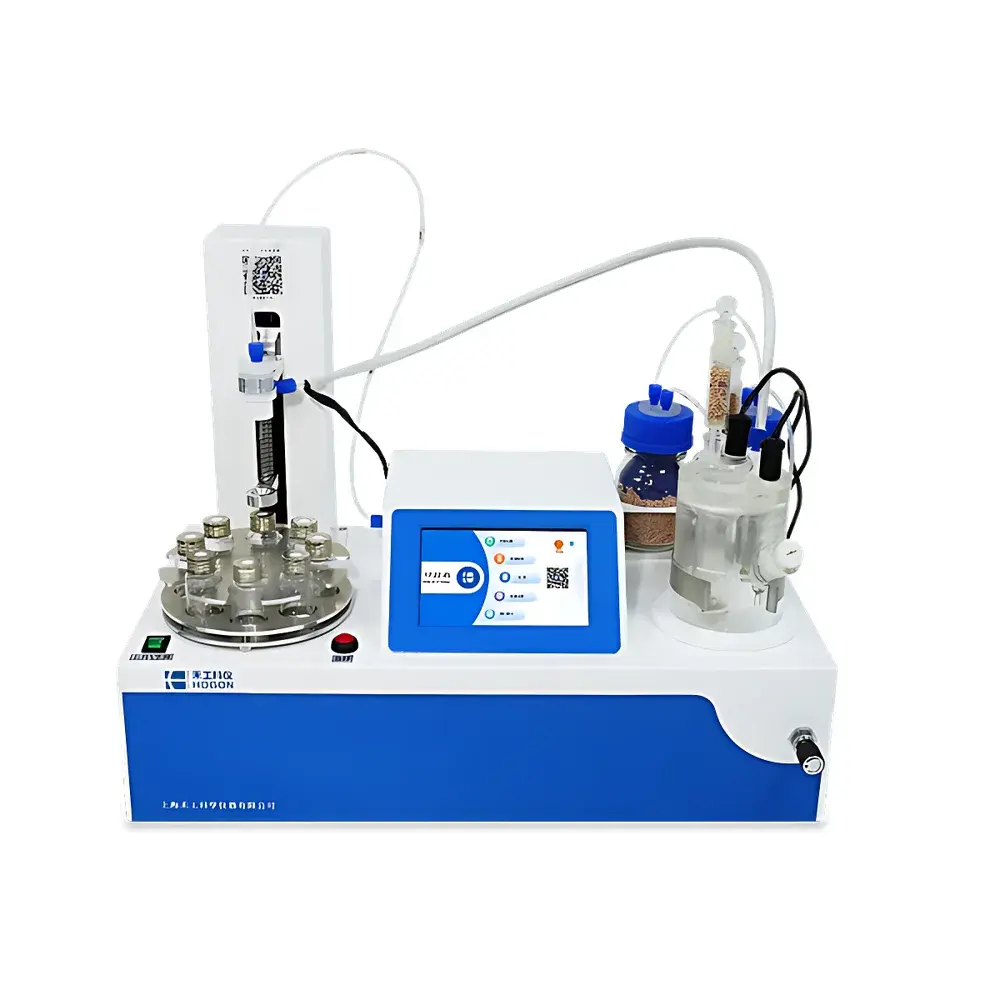
HOGON AKF-CH7 Coulometric Karl Fischer Moisture Analyzer for Carbon Nanotubes in Lithium Battery Materials
| Brand | HOGON |
|---|---|
| Origin | Jiangsu, China |
| Manufacturer Type | Direct Manufacturer |
| Instrument Type | Coulometric Karl Fischer Moisture Tester |
| Model | AKF-CH7 |
| Detection Limit | 0.1 µg (equivalent to 0.1 ppm in 100 mg sample) |
| Repeatability | RSD < 1.5% |
| Analysis Time | ≤10 min per sample |
| Sample Heating Temperature | Up to 180 °C |
| Carrier Gas Flow Rate | Adjustable up to 20 mL/min |
| Compliance | ISO 760, ASTM E203, USP <921>, EP 2.5.12 |
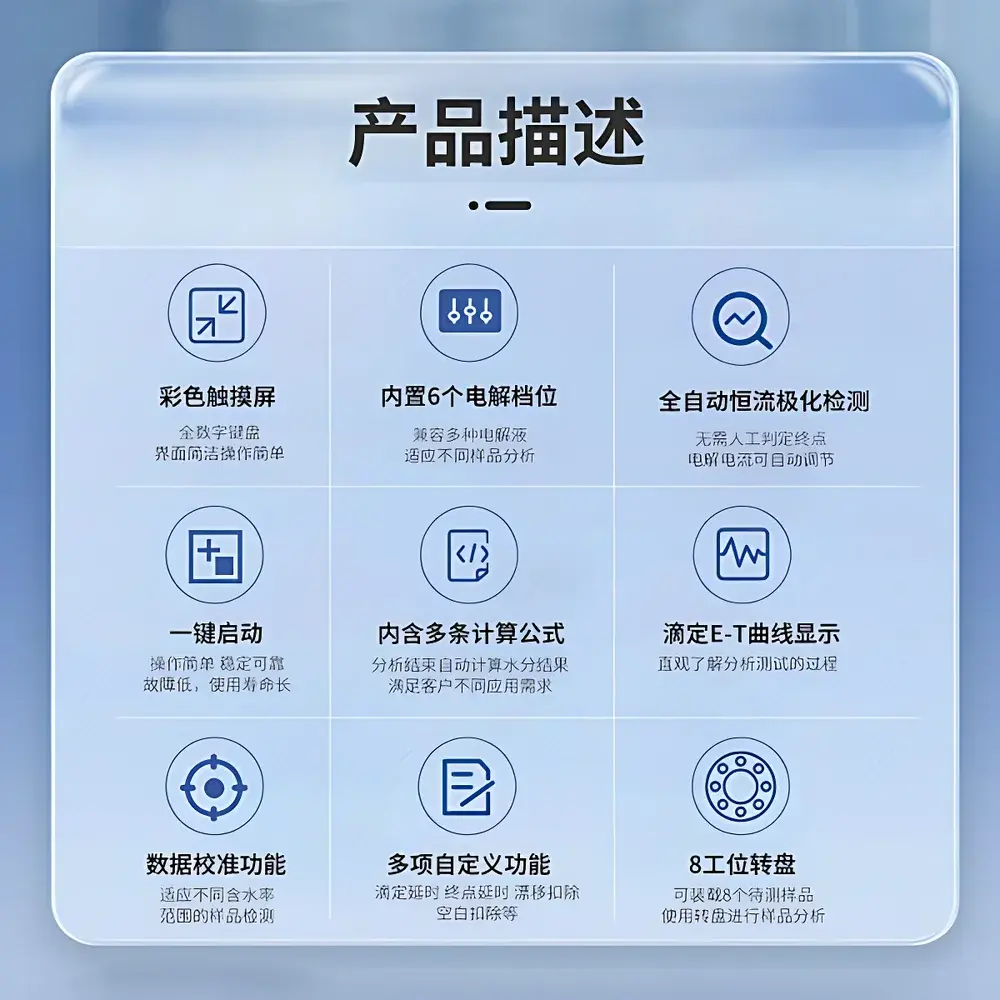
| Software Features | Touchscreen GUI, Pre-programmed CNT Mode, Audit Trail, Data Export (CSV/PDF), Cloud Sync Capability |
| Regulatory Support | 21 CFR Part 11-compliant user access control and electronic signature options available |
Overview
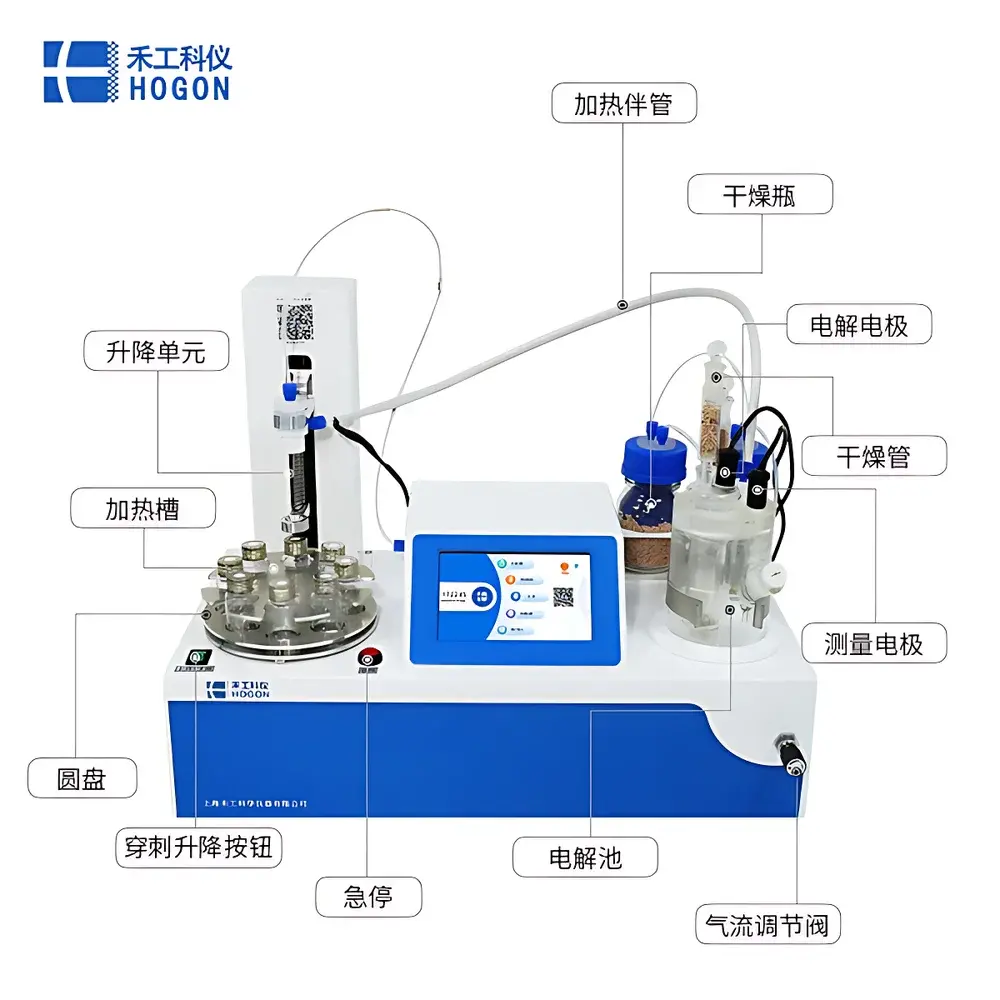
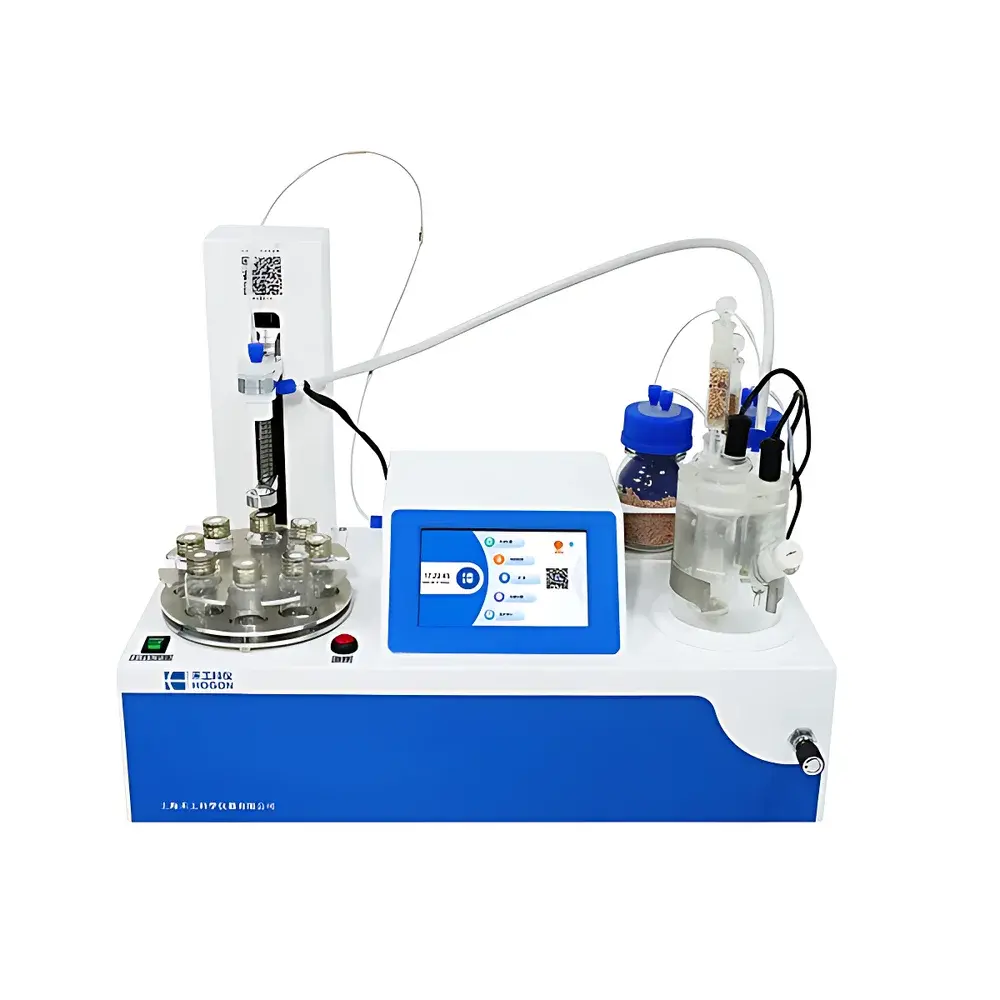
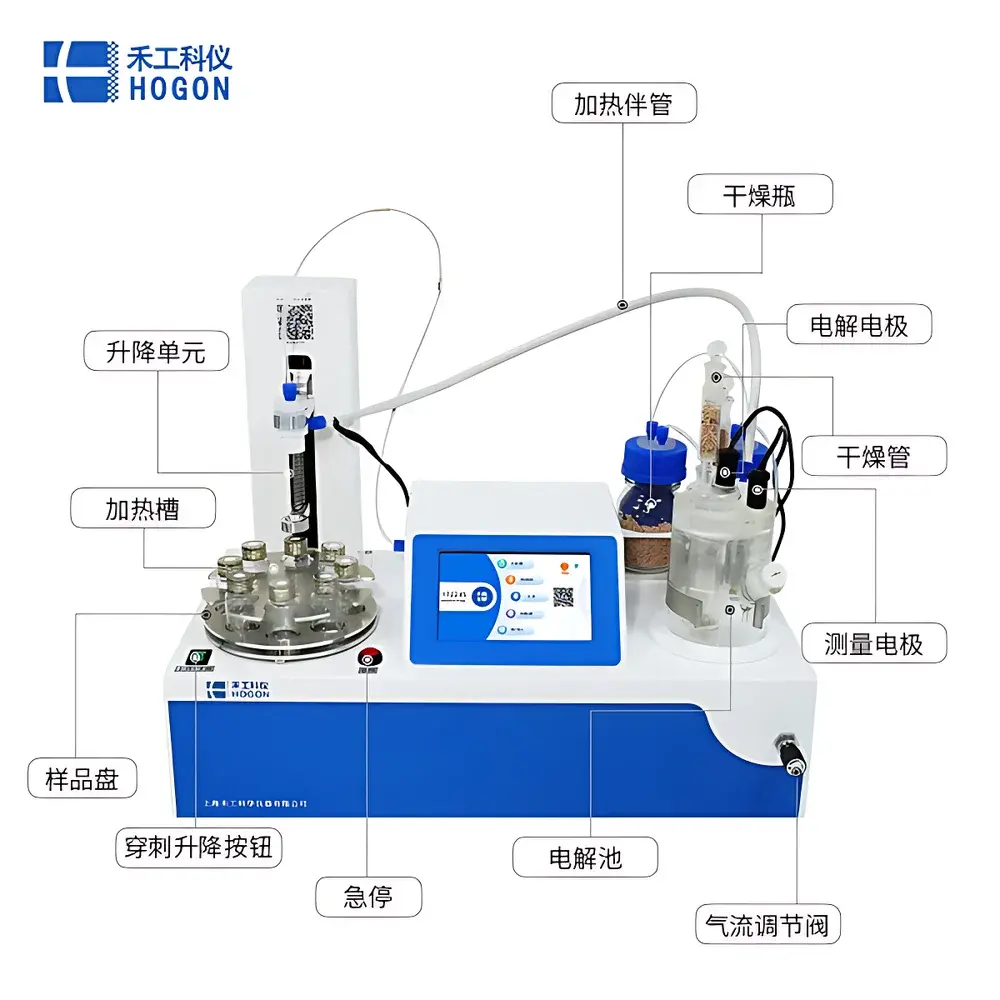
The HOGON AKF-CH7 is a dedicated coulometric Karl Fischer moisture analyzer engineered for the precise quantification of trace water content in advanced nanomaterials—specifically carbon nanotubes (CNTs) used as conductive additives or anode components in lithium-ion battery manufacturing. Unlike volumetric KF titrators, the AKF-CH7 employs a generator-anode cell configuration where iodine is electrochemically generated in real time, enabling direct, stoichiometric determination of water at sub-microgram levels. This principle ensures high specificity, minimal reagent consumption, and exceptional reproducibility—critical when monitoring moisture at ≤10 ppm in hygroscopic nanomaterials where even nanogram-level deviations impact slurry rheology, electrode adhesion, and SEI layer formation. Designed for integration into R&D labs, pilot-scale coating lines, and QC environments, the AKF-CH7 bridges the gap between laboratory-grade accuracy and production-floor robustness.
Key Features
- Coulometric Trace Sensitivity: Achieves a detection limit of 0.1 µg absolute water mass (0.1 ppm relative concentration in typical 100 mg CNT samples), validated per ISO 760 Annex B using certified water standards.
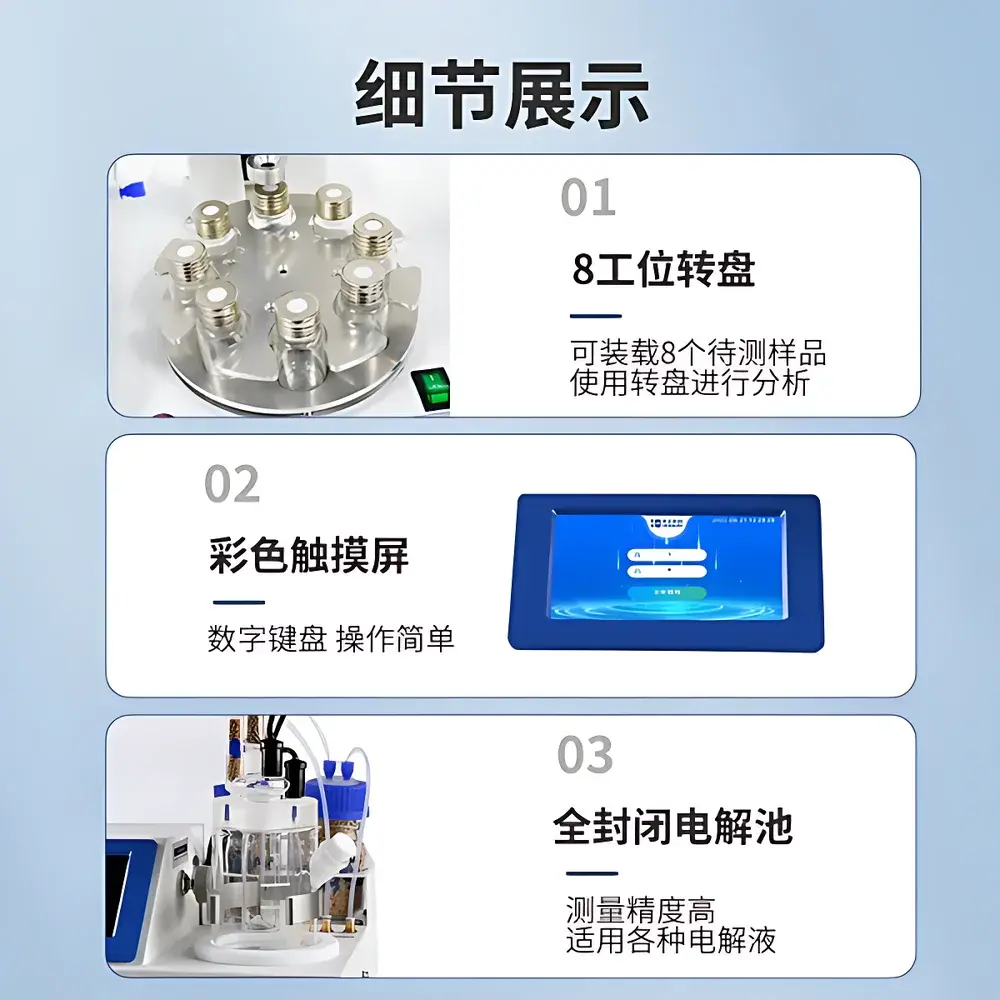
- Enclosed, Inert Sample Handling: Features a sealed oven-coupled vaporization chamber with inert gas purging (N₂ or dry air), eliminating ambient moisture ingress during thermal extraction—essential for low-bulk-density, high-surface-area CNT powders.
- AI-Enhanced Environmental Compensation: Real-time correction for ambient humidity and temperature drift via integrated environmental sensors, maintaining RSD < 1.5% across 24-hour continuous operation.
- Material-Specific Method Presets: Includes factory-calibrated “Carbon Nanotube Mode” with optimized heating ramp (180 °C), carrier gas flow (20 mL/min), and electrolyte stabilization parameters—reducing method development time by >70%.
- Regulatory-Ready Architecture: Supports role-based user authentication, full audit trail logging (including method changes, calibration events, and result approvals), and optional 21 CFR Part 11 compliance modules for GMP-aligned battery material release testing.
Sample Compatibility & Compliance
The AKF-CH7 accommodates solid, powder, and paste-like samples within the 10–500 mg range. Its heated oven interface enables quantitative water release from tightly bound surface hydroxyls and interstitial moisture in multi-walled CNTs without decomposition. Validation data confirm linearity (r² ≥ 0.9998) across 0.5–500 ppm water content in commercial CNT batches (e.g., NC7000™, TUBALL™). The system meets ISO 760:1978 (determination of water by coulometric KF titration), ASTM E203–22 (standard test method for water content by KF titration), and EP 2.5.12 (water determination in pharmaceutical excipients)—making it suitable for IATF 16949-certified battery material suppliers requiring documented metrological traceability.
Software & Data Management
The embedded 7-inch capacitive touchscreen runs HOGON’s proprietary MoistureControl v4.2 firmware, offering intuitive workflow navigation, live coulometric current monitoring, and automatic endpoint recognition based on dynamic current decay thresholds. All analyses generate timestamped reports with metadata (operator ID, instrument serial, method version, environmental logs), exportable in CSV (for LIMS integration) or PDF (for QA documentation). Optional cloud synchronization enables centralized fleet monitoring, remote method deployment, and automated report archiving compliant with GLP record retention requirements (minimum 10-year storage).
Applications
- R&D Material Screening: Quantifying moisture uptake kinetics post-surface oxidation or polymer functionalization to guide CNT dispersion stability studies.
- Process Validation: Verifying dryer performance across fluidized-bed, vacuum, and freeze-drying steps—correlating residual moisture with slurry viscosity and electrode sheet resistance.
- Release Testing: Final batch certification against internal specs (e.g., ≤500 ppm) prior to cathode/anode slurry mixing, ensuring consistent wetting behavior and minimizing HF generation during cycling.
- Failure Investigation: Root-cause analysis of premature capacity fade or gassing incidents by retrospective moisture profiling of suspect CNT lots.
FAQ
What sample preparation is required for CNT analysis?
No derivatization or solvent extraction is needed. Simply weigh 0.1–0.5 g of dried CNT powder directly into the sample vial; the system performs thermal extraction automatically.
Can the AKF-CH7 analyze other battery materials besides CNTs?
Yes—it supports graphite anodes, NMC/LFP cathodes, PVDF binders, and electrolyte solvents via customizable method templates, though CNT-specific calibration is preloaded.
How is system performance verified daily?
Daily verification uses certified 1.00 mg/g water standard (e.g., Hydranal®-Water Standard), with acceptance criteria: recovery 97–103%, RSD ≤ 2.0% across three replicates.
Is method transfer possible between AKF-CH7 units?
Yes—method files (.mcf) include all hardware parameters, calibration constants, and environmental compensation coefficients, enabling identical analytical conditions across multiple instruments in multi-site operations.







