
HOGON AKF-V6 Karl Fischer Moisture Analyzer for Butyl Acrylate
| Brand | HOGON |
|---|---|
| Origin | Shanghai, China |
| Manufacturer Type | Direct Manufacturer |
| Instrument Type | Volumetric & Coulometric Karl Fischer Titrator |
| Moisture Range | 10 ppm – 100% (0.001–100 wt% H₂O) |
| Resolution | 0.1 ppm |
| Accuracy | RSD ≤ 0.3% (at 1500 µL reagent consumption) |
| Minimum Dispensing Volume | 0.5 µL (20 mL burette) |
| Repeatability | ±0.3% |
| Linearity (R²) | 0.999 |
| Polarization Voltage Adjustment Range | 0–120 mV |
| Burette Options | 20 mL / 10 mL |
| Titration Precision | ±0.5 µL (20 mL burette) |
| Power Supply | 110–240 VAC, 50–65 Hz |
| Data Storage Capacity | 200 test records |
Overview
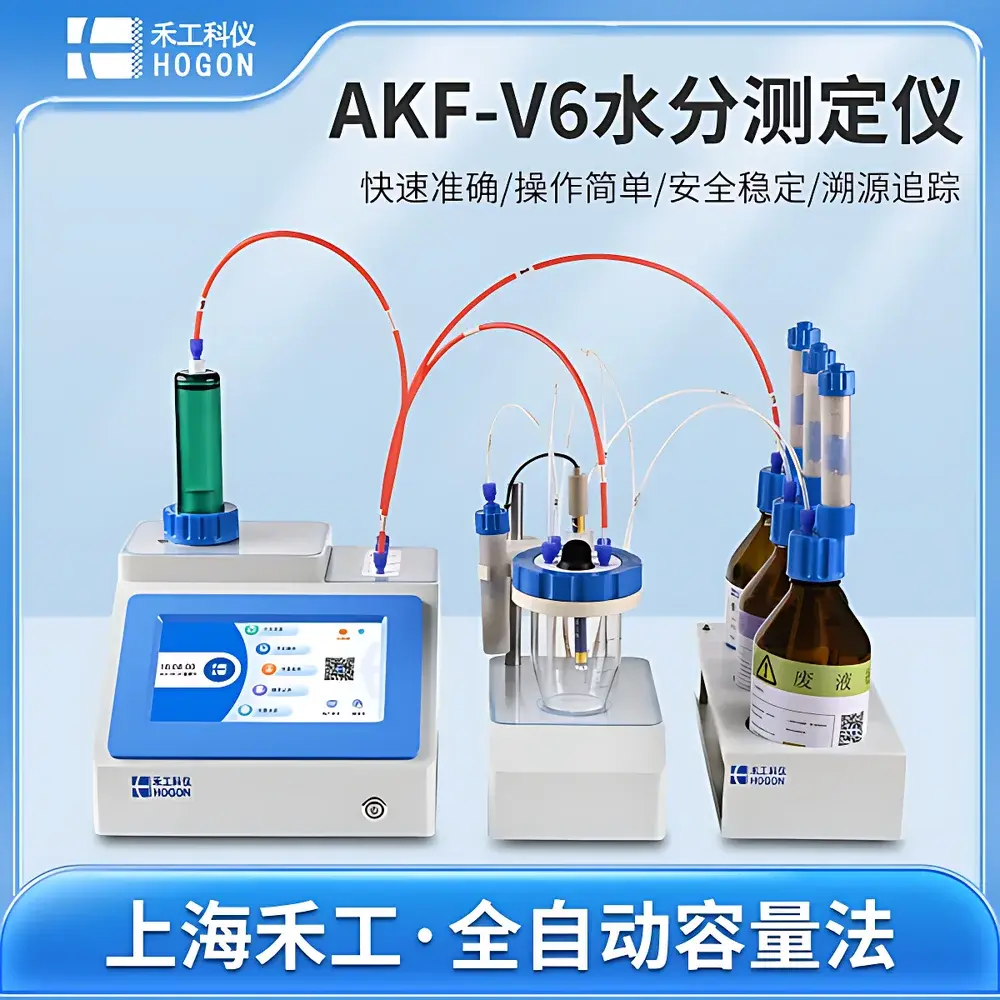
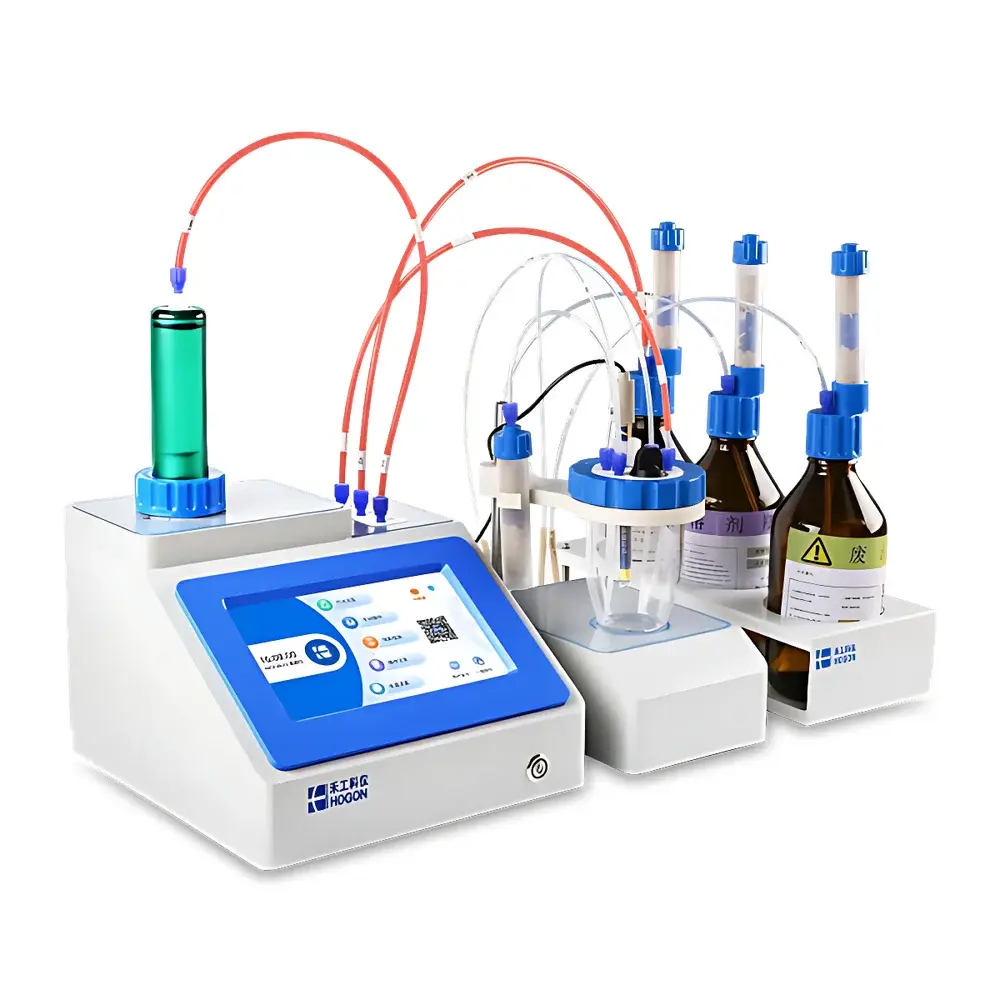
The HOGON AKF-V6 Karl Fischer Moisture Analyzer is a dual-mode (volumetric and coulometric) titration system engineered for high-precision water content determination in hygroscopic, volatile, or chemically reactive organic liquids—particularly optimized for butyl acrylate and structurally similar acrylic monomers. It operates on the electrochemical principle of the Karl Fischer reaction, where iodine quantitatively reacts with water in the presence of sulfur dioxide, a base (e.g., imidazole), and methanol. The endpoint is detected potentiometrically using a dual-platinum electrode pair, enabling robust discrimination of the stoichiometric equivalence point even in low-conductivity matrices. Designed for routine QC laboratories and R&D environments in chemical manufacturing, pharmaceutical excipient control, and polymer synthesis, the AKF-V6 delivers trace-level sensitivity (down to 10 ppm) while maintaining compliance-ready architecture for regulated workflows.
Key Features
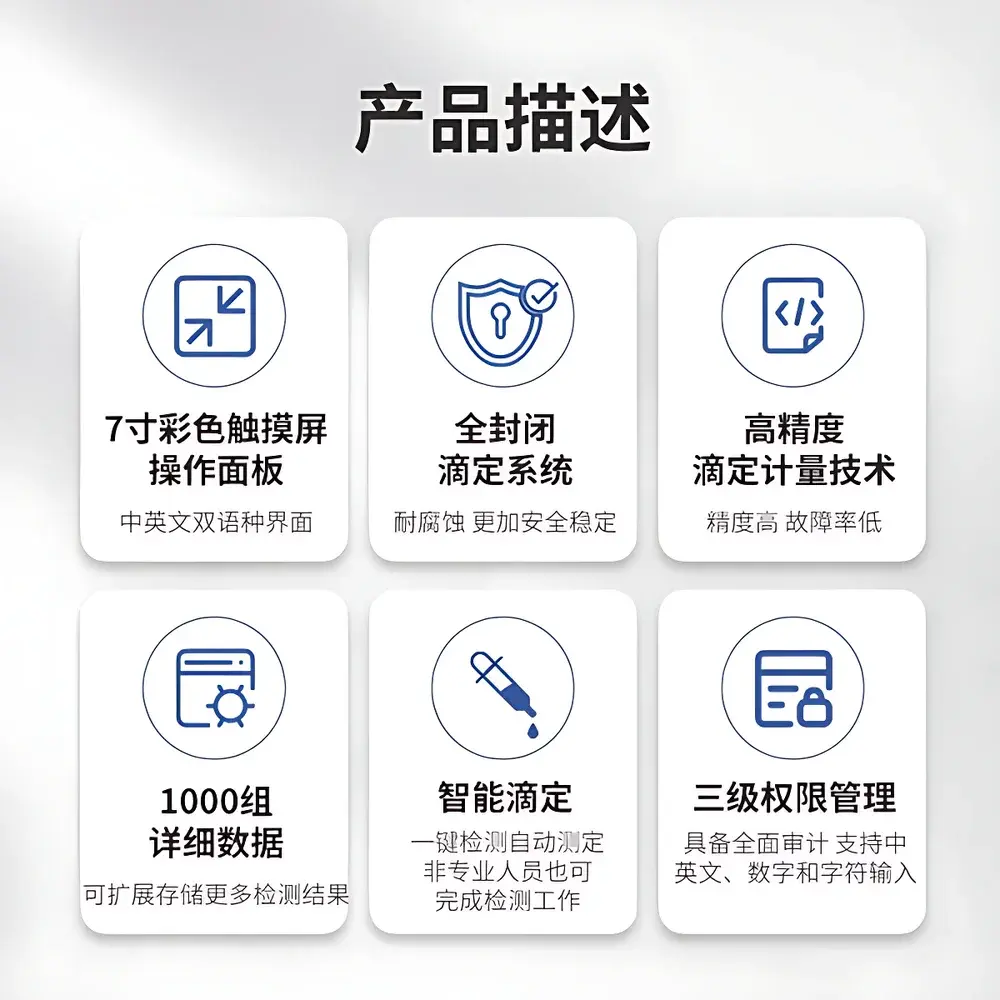
- Dual-Mode Flexibility: Switch seamlessly between volumetric titration (for samples with >100 ppm moisture) and coulometric mode (for ultra-trace analysis down to 10 ppm), without hardware modification.
- High-Fidelity Electrode System: Dual-platinum indicator electrodes with adjustable polarization voltage (0–120 mV) ensure stable endpoint detection across diverse solvents—including acetonitrile-based KF reagents commonly used for acrylate stabilization.
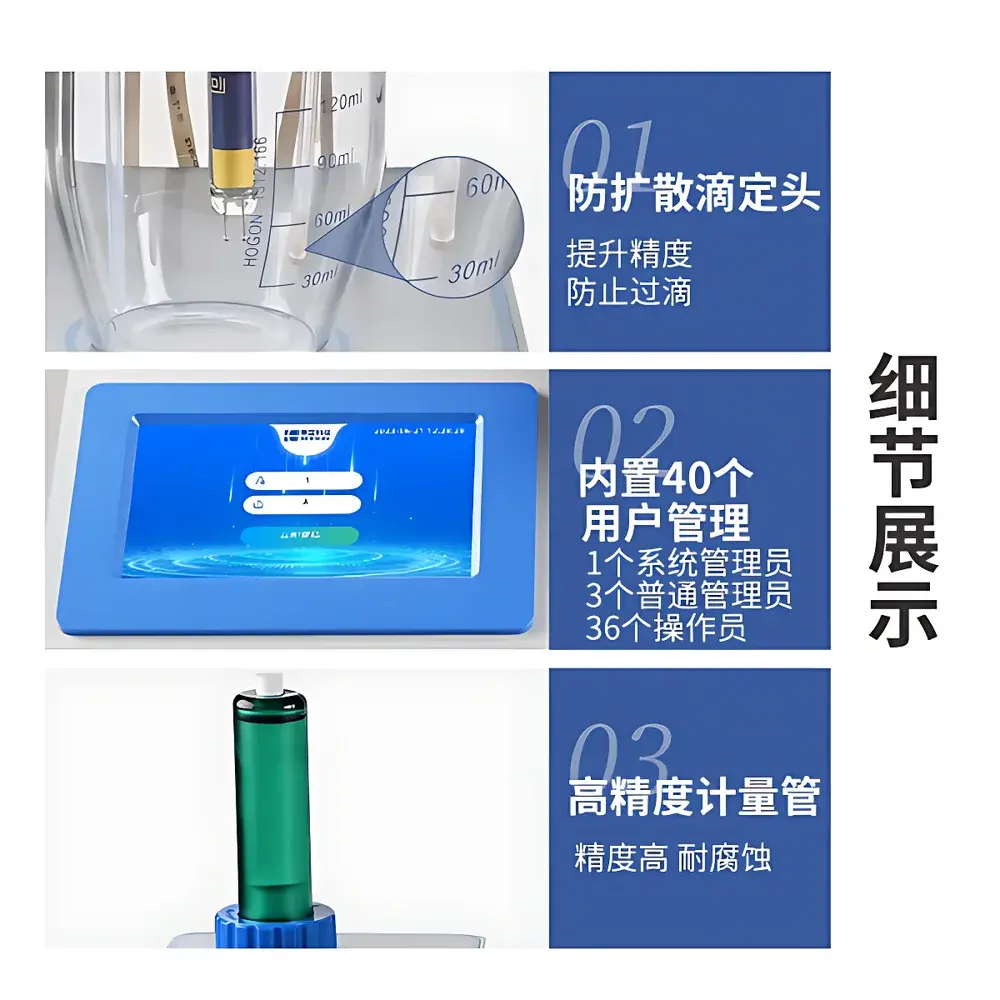
- Precision Fluid Handling: Motor-driven 20 mL glass burette with ±0.5 µL dispensing accuracy and 0.5 µL minimum increment enables reproducible reagent delivery, critical for low-volume, high-sensitivity titrations.
- Sealed Reaction Environment: Integrated hermetic titration cell minimizes ambient moisture ingress and solvent evaporation—essential for accurate analysis of volatile monomers like butyl acrylate (BP: 145 °C, vapor pressure ~0.5 kPa at 25 °C).
- Regulatory-Ready Operation: Onboard parameter logging (including titrant consumption, endpoint delay, drift correction), timestamped results, and non-volatile memory support audit trails required under GLP and GMP frameworks.
Sample Compatibility & Compliance
The AKF-V6 is validated for direct analysis of neat butyl acrylate, methyl methacrylate, ethyl acrylate, and other α,β-unsaturated esters without derivatization or extraction. Its sealed cell design and optimized reagent compatibility mitigate side reactions (e.g., Michael addition of iodide to acrylate double bonds) that compromise accuracy in conventional KF systems. Method validation adheres to ASTM E203–22 (“Standard Test Method for Water Using Volumetric Karl Fischer Titration”) and ISO 760:1978 (“Determination of Water—Karl Fischer Method”). Data integrity features—including user-accessible audit logs, electronic signature support, and 200-entry non-volatile storage—align with FDA 21 CFR Part 11 requirements for electronic records in pharmaceutical and medical device manufacturing.
Software & Data Management
The embedded firmware supports fully automated sequence execution: solvent purging, blank titration, reagent standardization, sample injection, and endpoint calculation—all programmable via intuitive soft-keys. Each measurement stores raw titration curve data (potential vs. volume), drift-corrected water mass (µg), % H₂O, RSD, and operator ID. Export is supported via USB to CSV format for integration with LIMS or statistical process control (SPC) platforms. Built-in statistical functions compute mean, SD, RSD, and confidence intervals across up to 200 stored runs—enabling real-time SPC charting without external software. All calibration and maintenance events are time-stamped and retained in the system log for internal quality audits.
Applications
- QC release testing of butyl acrylate monomer per ICH Q5C (water content specification typically ≤500 ppm for polymerization-grade material)
- Stability-indicating assay of acrylate-based adhesives and coatings during accelerated aging studies
- Moisture monitoring in solvent recovery streams from acrylic resin production
- Raw material verification of polyol blends prior to polyurethane synthesis (where residual water causes CO₂ foaming)
- Pharmaceutical excipient qualification (e.g., PVP, crospovidone) where water affects tablet disintegration kinetics
FAQ
Can the AKF-V6 analyze butyl acrylate without sample dilution?
Yes—the instrument’s sealed cell, optimized reagent formulation (low-alcohol, high-stability KF reagent), and adjustable polarization voltage enable direct titration of neat butyl acrylate with <0.3% RSD.
Does it support USP or Ph. Eur. 2.5.12 compliance?
The system meets instrumental requirements of both chapters; method validation (including specificity, linearity, LOD/LOQ) must be performed per laboratory SOPs, but the hardware and firmware provide all necessary controls and documentation capabilities.
How is reagent stability managed during long-term operation?
The system includes automatic drift compensation algorithms and real-time background current monitoring. Users can schedule periodic blank titrations and set drift alarm thresholds (e.g., >10 µg/min) to trigger maintenance alerts.
Is remote diagnostics or firmware update capability available?
Firmware updates are performed locally via USB drive; remote access is not implemented to preserve data security and regulatory compliance in controlled environments.
What maintenance intervals are recommended for the 20 mL burette and electrodes?
Burette piston lubrication and electrode cleaning are recommended every 500 titrations or quarterly—whichever occurs first. Full calibration verification (using certified water standards) is advised before each production shift in GMP settings.






