
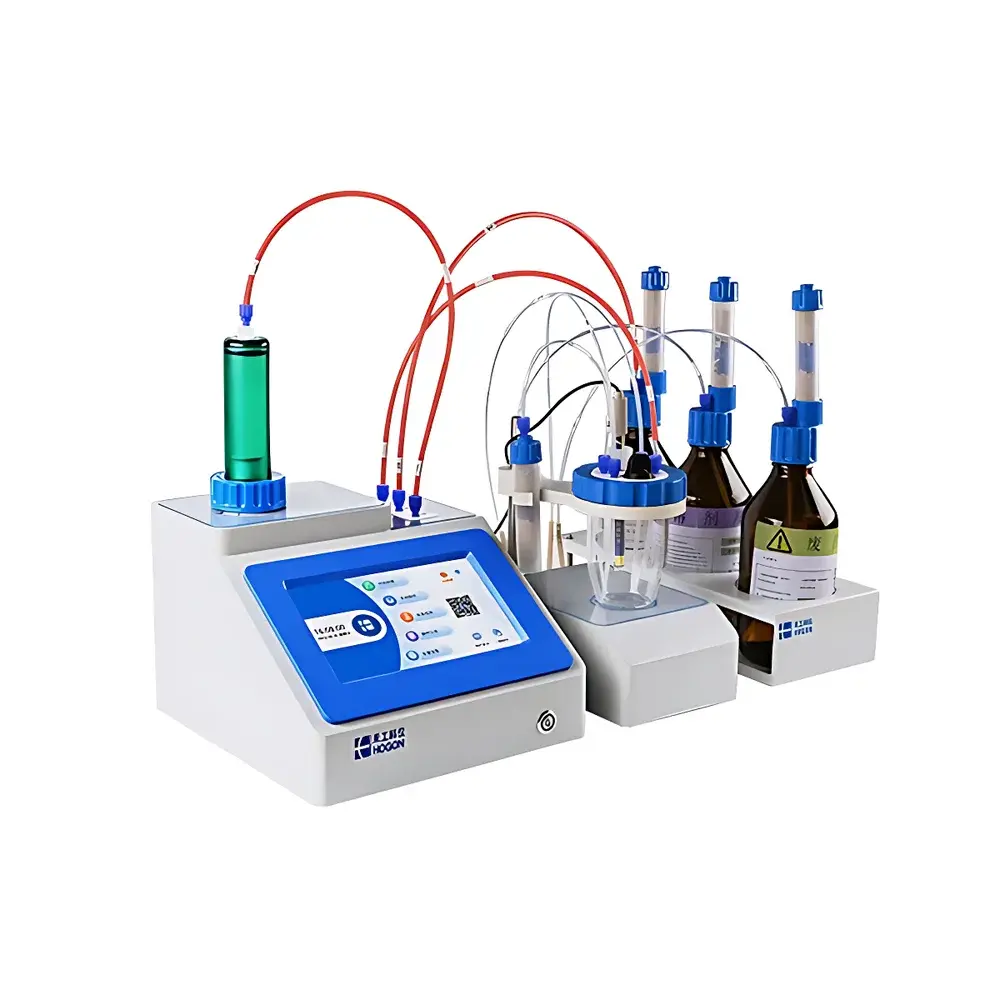
HOGON AKF-V6 Povidone K30-Specific Volumetric Karl Fischer Moisture Titrator
| Brand | HOGON |
|---|---|
| Origin | Shanghai, China |
| Manufacturer Type | Original Equipment Manufacturer (OEM) |
| Regional Classification | Domestic (China) |
| Model | AKF-V6 Povidone K30-Specific |
| Pricing | Upon Request |
Overview
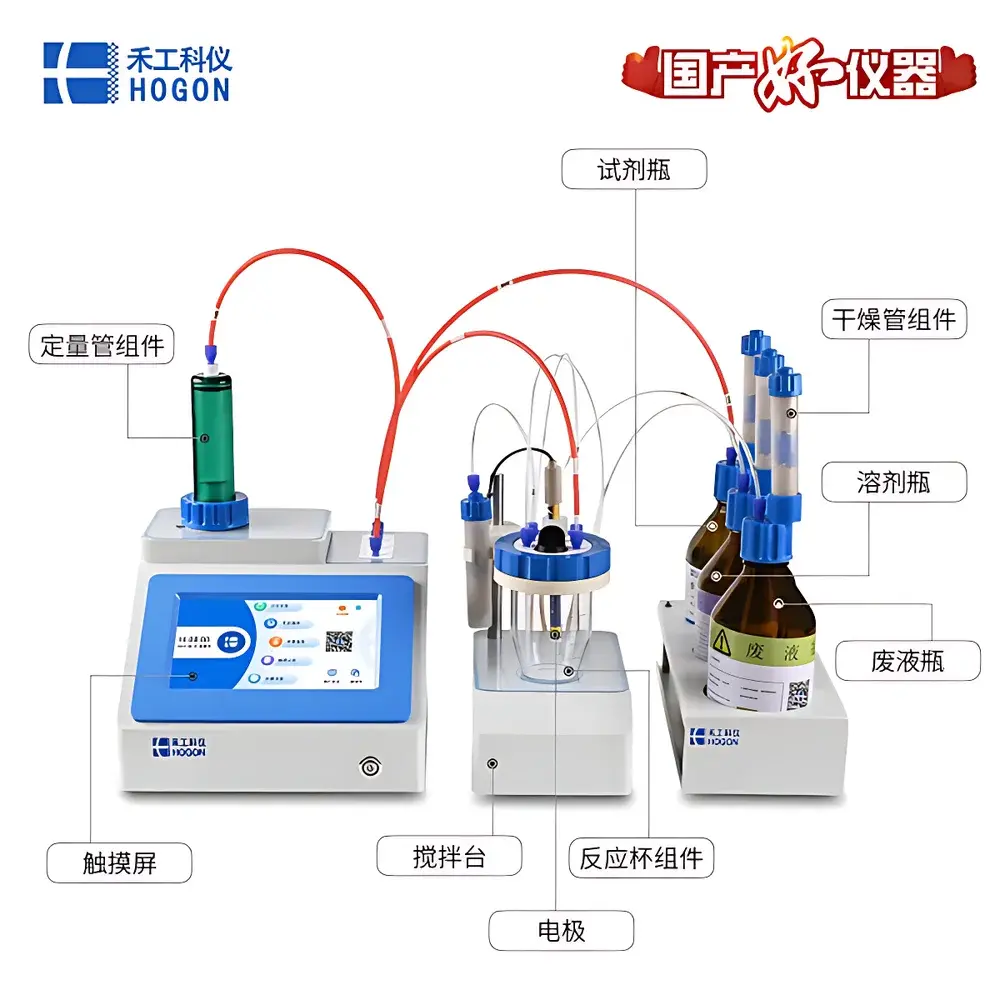
The HOGON AKF-V6 Povidone K30-Specific Volumetric Karl Fischer Moisture Titrator is a fully automated, high-precision analytical instrument engineered for trace to macro-level water content determination in pharmaceutical and biotechnology-grade materials. It operates on the classical volumetric Karl Fischer (KF) titration principle—where iodine generated electrochemically or delivered via standardized KF reagent reacts stoichiometrically with water in the sample matrix (1 mol I₂ ≡ 1 mol H₂O). Designed specifically for challenging, hygroscopic, or low-solubility excipients such as povidone K30, the AKF-V6 integrates optimized reagent delivery kinetics, adaptive endpoint detection algorithms, and sealed reaction chamber architecture to ensure reproducible quantification across diverse solid, semi-solid, and liquid pharmaceutical formulations—including lyophilized proteins, sterile ophthalmic solutions, polymer-based medical devices (e.g., surgical sutures, PLA/PGA scaffolds), and highly viscous or reactive solvents (e.g., acetonitrile, chloroform, glacial acetic acid).
Key Features
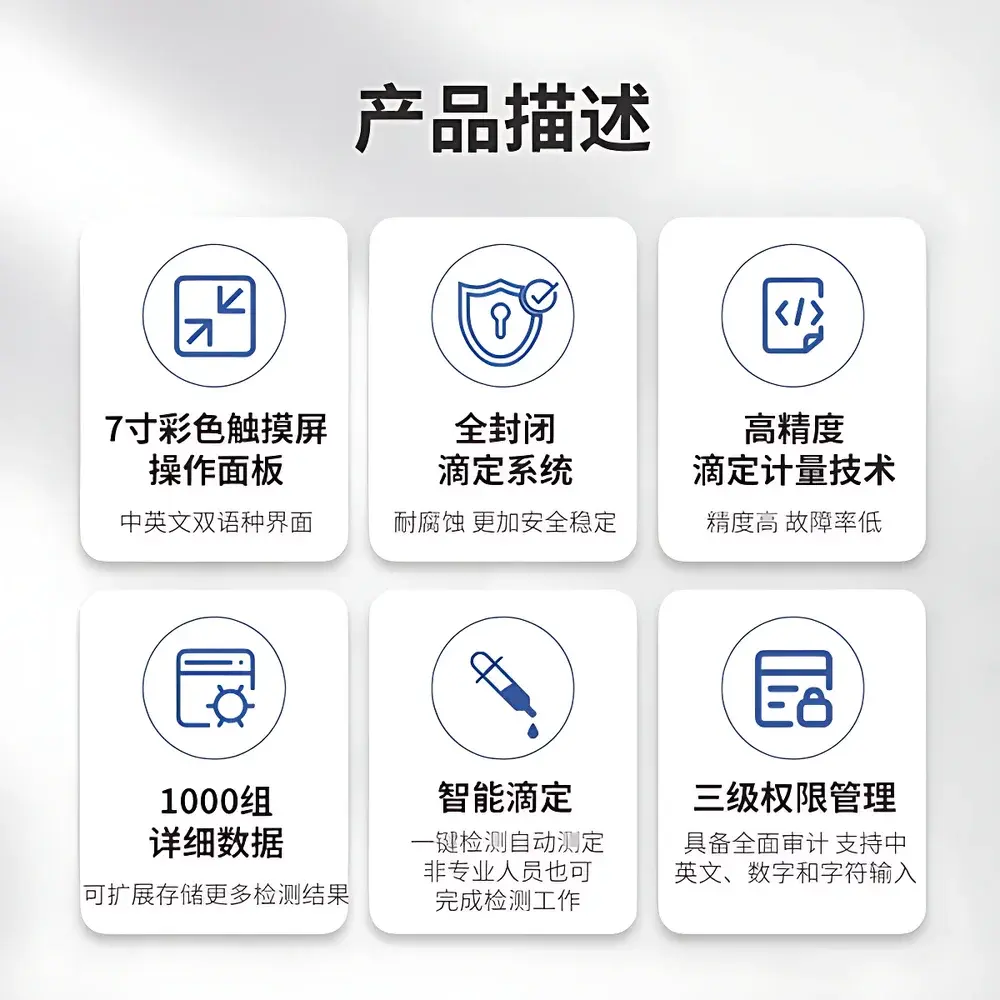
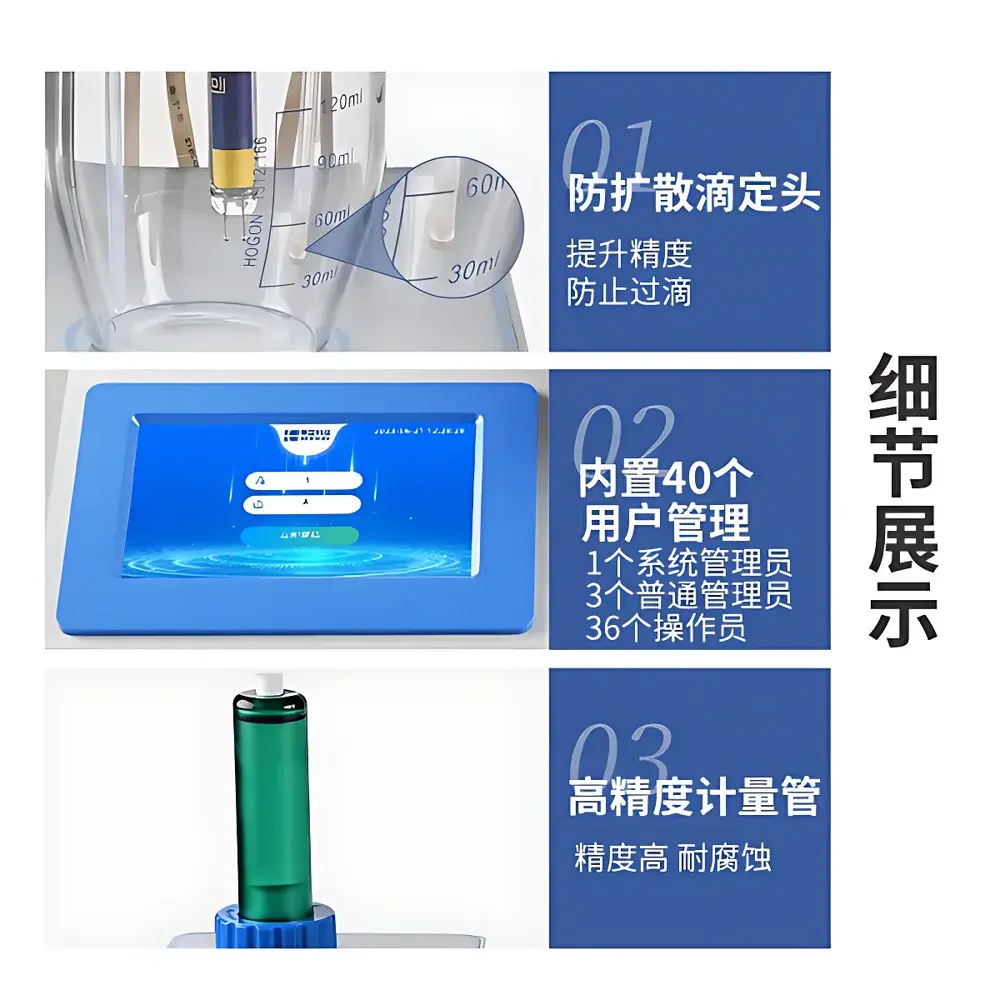
- 7-inch full-color capacitive touchscreen with intuitive bilingual (English/Chinese) UI and real-time display of titration curve, current drift, titrant consumption, and calculated moisture content (% w/w or ppm)
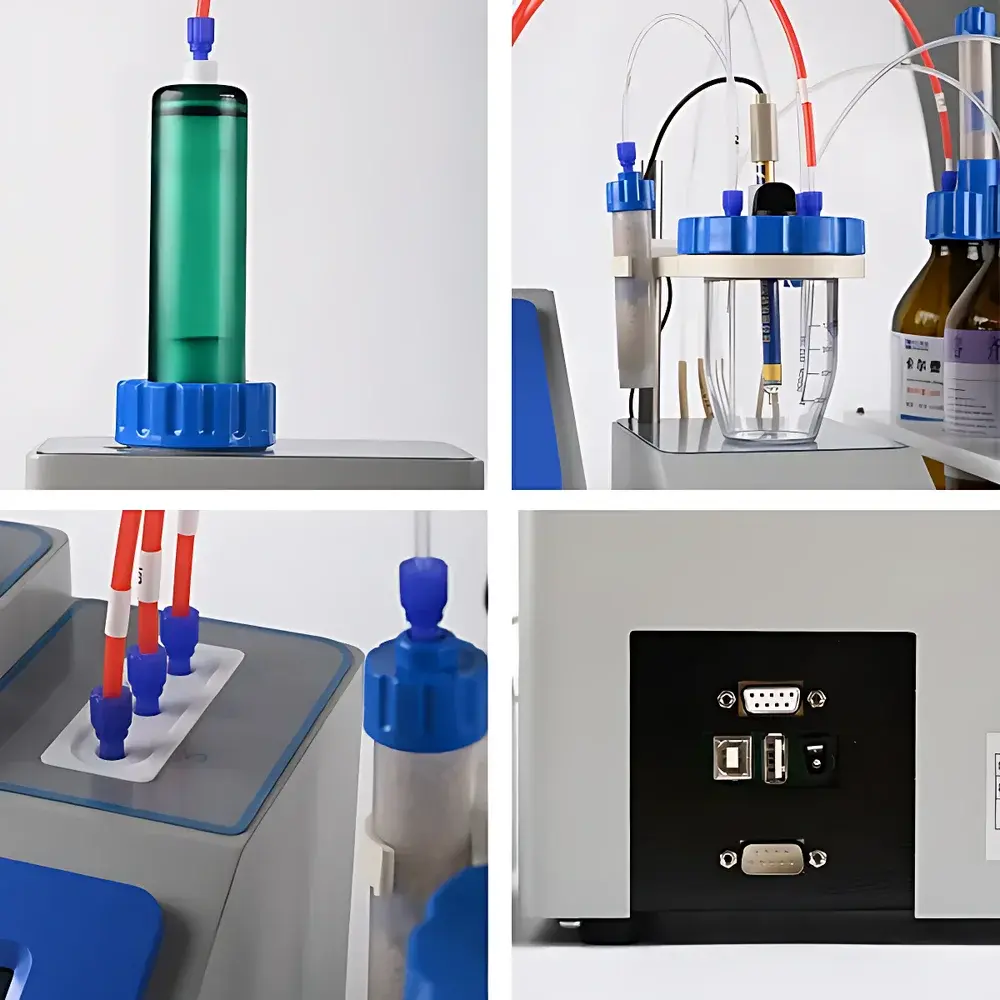
- Fully enclosed, corrosion-resistant titration cell with integrated magnetic stirring, inert gas purging capability, and leak-proof sealing—ensuring operator safety and minimizing atmospheric moisture interference
- HOGON proprietary high-precision burette dosing system with ≤0.001 mL resolution and long-term volumetric repeatability (RSD < 0.2% at 1 mL dispense)
- Automated fluid handling: auto-sampling (with optional oven-heated headspace adapter), reagent aspiration, waste evacuation, electrode cleaning, and quantitative reagent dispensing—reducing manual intervention and inter-operator variability
- Multi-mode endpoint recognition: dynamic drift-based termination, fixed-time stabilization, and slope-detection algorithms—calibrated for low-water-content matrices (<100 ppm) and heterogeneous samples (e.g., soft/hard gelatin capsules, starch-lactose blends, magnesium chloride hexahydrate)
- Built-in audit trail with time-stamped, user-attributed records for all method edits, sample runs, calibration events, and maintenance logs—fully compliant with FDA 21 CFR Part 11 and EU Annex 11 requirements
Sample Compatibility & Compliance
The AKF-V6 is validated for direct analysis of pharmacopeial-grade materials per USP <921>, EP 2.5.12, and JP 2.05. It accommodates solids (e.g., povidone K30, amoxicillin granules, calcium carbonate tablets), semi-solids (e.g., medical adhesives, ointments), and solvents (e.g., ethanol, DMF, ethyl acetate) without derivatization. For poorly soluble or thermally labile compounds—such as freeze-dried serums, gadobutrol, or etifoxine—the system supports integration with HOGON’s optional heated headspace sampler (up to 250 °C) and micro-reaction cups (1–5 mL volume). All hardware and firmware conform to IEC 61010-1 (safety) and IEC 61326-1 (EMC) standards. Data integrity protocols align with GLP/GMP environments, including role-based access control (three-tier permissions: Operator, Supervisor, Administrator) and immutable electronic signatures.
Software & Data Management
The embedded titration software enables method creation with customizable parameters: titrant concentration, sample weight range, endpoint threshold, drift tolerance, and post-titration rinse cycles. Raw data—including mV vs. time plots, equivalence point interpolation, and residual drift correction—are stored in encrypted SQLite databases with automatic backup to external USB drives. Export formats include CSV, PDF (with embedded chromatograms), and XML for LIMS integration. Audit trails capture all user actions with ISO 8601 timestamps, IP addresses (for networked units), and reason-for-change fields—supporting regulatory inspections under FDA, EMA, and NMPA frameworks.
Applications
- Quantification of residual moisture in lyophilized biologics (e.g., monoclonal antibodies, vaccine intermediates)
- QC release testing of excipients: povidone K30, lactose monohydrate, microcrystalline cellulose, and hydroxypropyl methylcellulose
- Stability-indicating assay for moisture-induced degradation in oral solid dosage forms (OSDs)—including ibuprofen capsules, aspirin tablets, and enteric-coated pellets
- Water content verification in diagnostic reagents (e.g., ELISA buffers, PCR master mixes) and ophthalmic preparations (e.g., sodium hyaluronate eye drops)
- Raw material qualification of solvents used in API synthesis: acetonitrile, toluene, dichloromethane, and ethyl acetate (per ICH Q5C guidelines)
FAQ
Is the AKF-V6 compliant with 21 CFR Part 11 for electronic records and signatures?
Yes—equipped with role-based authentication, electronic signatures, and tamper-evident audit trails meeting all predicate rule requirements.
Can the instrument analyze samples containing ketones or aldehydes that interfere with standard KF reagents?
Yes—compatible with aldehyde/ketone-tolerant two-component KF reagents (e.g., pyridine-free methanol-based systems) and optional aldehyde scavengers.
What is the minimum detectable water mass for solid samples?
At 10 mg sample mass and 1 mg/mL titrant concentration, LOD is ~2 µg H₂O (equivalent to ~0.02% w/w for 10 mg sample).
Does the system support remote monitoring or integration with laboratory information management systems (LIMS)?
Yes—via Ethernet TCP/IP interface with HL7 and ASTM E1384-compliant data export protocols.
How frequently does the titration cell require maintenance or recalibration?
Under routine use (≤20 samples/day), electrode cleaning and system verification are recommended weekly; full calibration every 30 days or after reagent batch change.





