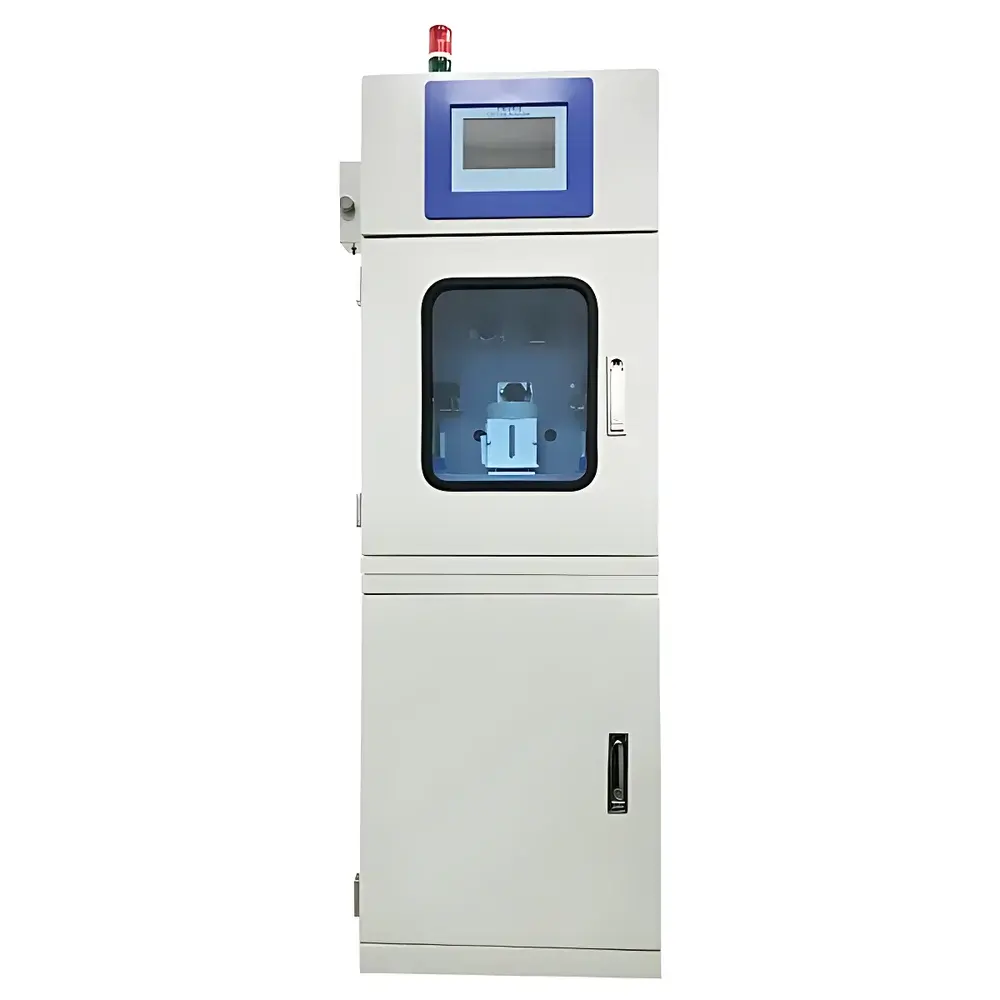
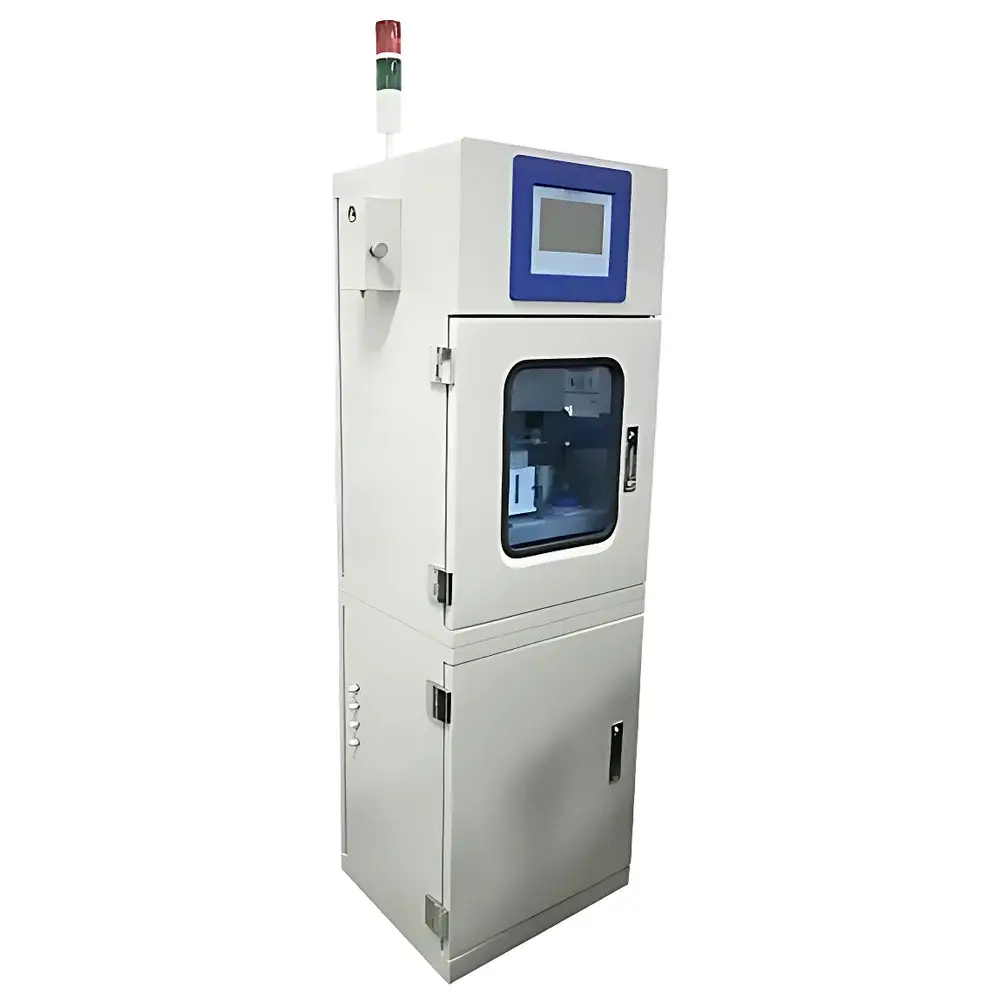
HOGON ALT Chloride Ion Online Analyzer
| Brand | HOGON |
|---|---|
| Origin | Shanghai, China |
| Manufacturer Type | Manufacturer |
| Origin Category | Domestic (China) |
| Model | ALT Chloride Ion Online Analyzer |
| Pricing | Upon Request |
Overview
The HOGON ALT Chloride Ion Online Analyzer is an industrial-grade, fully automated potentiometric and photometric titration system engineered for continuous, unattended monitoring and control of chloride ion concentration in process streams. It operates on the principle of endpoint detection via dual-mode sensing—real-time measurement of electrode potential shift (for potentiometric titration) and high-resolution optical color transition analysis (for visual or photometric endpoint recognition). Designed for integration into closed-loop process control environments, the analyzer autonomously executes sample aspiration, reagent dosing, reaction mixing, endpoint determination, result calculation, system rinsing, and data transmission—eliminating manual intervention while maintaining analytical traceability and repeatability per ISO/IEC 17025 and ASTM D512-22 guidelines.
Key Features
- Industrial-grade modular architecture with ARM-based A8 processor for deterministic real-time control and low-latency response
- 7-inch full-color capacitive touchscreen HMI supporting multilingual interface (English default), intuitive workflow navigation, and secure user-level access control
- Dual-mode endpoint detection: high-precision Ag/AgCl or double-platinum redox electrodes combined with 12-bit CMOS color-sensing module (400–700 nm spectral range)
- Two independent high-accuracy burettes (±0.1% volumetric accuracy, 0.01 mL resolution) with PTFE-coated syringe pumps and electromagnetic multi-port selection valves (rated for >500,000 cycles)
- Universal titration platform supporting pH, redox, complexometric, precipitation (e.g., argentometric Cl⁻ determination), non-aqueous, and photometric titrations
- Integrated process control interface: configurable analog/digital I/O, Modbus RTU/TCP, RS232, and Ethernet (TCP/IP) for PLC synchronization and SCADA integration
- Self-diagnostic routines for fluidic integrity, electrode health, optical path cleanliness, and reagent depletion alerts
Sample Compatibility & Compliance
The ALT analyzer accommodates aqueous process liquors across pH 2–12 and conductivity up to 20 mS/cm, including electroplating baths, cooling tower water, flue gas desulfurization (FGD) scrubber solutions, wastewater effluents, and chemical synthesis intermediates. Sample inlet pressure range: 0.1–0.6 MPa; particulate tolerance: ≤50 µm (pre-filtration recommended). Compliant with CE marking requirements (EMC Directive 2014/30/EU, Low Voltage Directive 2014/35/EU), RoHS 2011/65/EU, and supports audit-ready operation under FDA 21 CFR Part 11 (electronic records/signatures) when deployed with validated software configuration and change control procedures. Meets GLP/GMP environmental monitoring expectations for chloride specification control in pharmaceutical water systems (USP ) and metal finishing QC.
Software & Data Management
The embedded titration control software enables full method lifecycle management: creation, versioning, parameter locking, and electronic signature enforcement for SOP compliance. Each analysis generates a timestamped audit trail—including raw sensor data, titrant consumption curves, endpoint confirmation logic, calculated [Cl⁻] (mg/L or ppm), and system status flags. Data exports automatically to SQL databases via ODBC or MQTT brokers; supports CSV, XML, and OPC UA protocols. Remote firmware updates and diagnostic telemetry are secured via TLS 1.2. All stored records retain metadata required for ISO 9001 clause 8.5.2 and IATF 16949 clause 8.5.1.2 traceability.
Applications
- Real-time chloride monitoring in zinc/nickel/copper electroplating baths to prevent pitting corrosion and maintain bath stability
- Automated dosing control of silver nitrate or mercury(II) nitrate titrants in FGD slurry lines to meet EPA 40 CFR Part 63 emission limits
- Continuous verification of deionized water purity in semiconductor rinse stations (ASTM F631-21)
- Regulatory compliance tracking for chloride in municipal wastewater discharge per EU Urban Wastewater Treatment Directive (91/271/EEC)
- Quality gate enforcement in food-grade brine preparation (Codex Alimentarius STAN 237-2003)
- In-process control of pickling acid regeneration units in stainless steel cold rolling mills
FAQ
What titration methods does the ALT support for chloride quantification?
It primarily employs argentometric (silver nitrate) potentiometric titration using a double-platinum or Ag/AgCl reference electrode, with optional photometric endpoint confirmation using dichlorofluorescein or ferric ammonium sulfate indicators.
Can the system interface with existing DCS or MES platforms?
Yes—via native Modbus TCP, OPC UA, or custom REST API integration; hardware I/O modules support 4–20 mA analog inputs/outputs and dry-contact alarm relays.
Is calibration traceable to NIST standards?
Electrode calibration uses certified reference solutions (e.g., NIST SRM 3116 for chloride); volumetric accuracy is verified per ISO 8655-3 using gravimetric methodology.
What maintenance intervals are recommended for long-term reliability?
Electrode refurbishment every 6 months; valve manifold cleaning quarterly; optical window inspection biweekly; full system performance verification semiannually per IQ/OQ protocol.
Does the analyzer support multi-point calibration and drift compensation?
Yes—up to 5-point standard addition or external calibration curves; automatic baseline correction during each analysis cycle using blank subtraction and electrode offset tracking.
Related Products